
Why Did The Former Guy Pilfer Highly Classified Documents When He Left Office?

Fred Kaplan wonders in Slate. After some informative context setting, Kaplan cuts to the chase:

“And so we are left to ponder the final, most puzzling question: Why did Trump hang on to these documents? What could he gain from doing so? Some on Twitter speculate that he might want to sell the documents to foreign governments. I wouldn’t put much past Trump, but even I consider this theory extremely unlikely. (That said, storing these materials at a public place like Mar-a-Lago is stunningly irresponsible. It is proper that the FBI also sought surveillance video showing who was wandering into the storage area.)

My guess about Trump’s motives (and, at this point, it can only be a guess): pure, testosterone-driven ego.

The Washington Post reported back in February, when the National Archives retrieved 15 boxes of materials from Mar-a-Lago, that Trump retained much of his correspondence, including the ‘love letters’—as he once described them—with North Korean dictator Kim Jong-un. The Post attributed this information to ‘two people familiar with the’ documents. This suggests that Trump showed the letters to people. Who were these people? We don’t know. Was he showing the letters in order to show off? It seems likely.”

Put me firmly in the “might want to sell the documents to foreign governments” camp. That’s what I concluded when the story started to take shape. There’s a lot I don’t understand about The Former Guy, but there is one thing I believe to be irrefutable. Having more money has always been his primary motivation. Follow the obsessive drive for more money.

And if your righty friends try to ruin your weekend with talk of Hillary’s emails, lay this little bit of Kaplan on ’em:

“While we’re on the subject, what about Hillary’s email? Of the 30,000 emails that the FBI examined, eight were found to contain Top Secret information. Seven of them were about CIA drone strikes, which had been reported in the newspapers (but were still technically classified). The other one was an account of a telephone conversation with the president of Malawi. (All conversations with foreign leaders are, by definition, Top Secret.) In other words, she revealed nothing remotely about nuclear weapons, signals intelligence, or anything that might have enlightened a foreign spy.”

When it comes to cattle futures, Vince Foster, and Benghazi, you’re on your own.
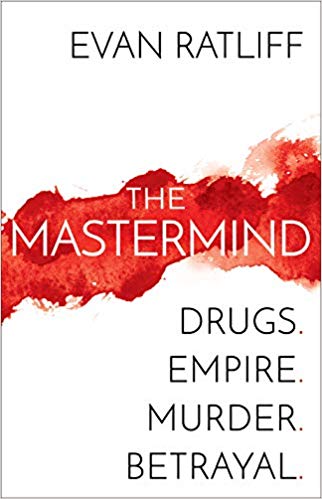
The Mastermind

Evan Ratliff tells the story of “the decade-long quest to bring down Paul Le Roux—the creator of a powerful Internet-enabled cartel who merged the ruthlessness of a drug lord with the technological savvy of a Silicon Valley entrepreneur.”

Paragraph to ponder:

“Some people speculated that his drive was fueled by some submerged pain—his hurt over being adopted, or some other childhood affront for which he was forever exacting revenge on the world. Maybe so. I always suspected that at least a part of the answer dwelled in his life as a programmer. Le Roux had found his place inside code, a universe in which he could bend reality to his will. It seemed to me that he tried to apply the detached logic of software to real life. That’s why the DEA schemes must have appealed to him. ‘Nothing involves emotion for him,’ the former 960 agent put it to me. ‘Everything is a calculation.’ His approach was algorithmic, not moral: Set the program in motion and watch it run.”

Since I’ve watched Breaking Bad and am watching another season of Narcos, I’m kinda an expert on criminality :). Some take-aways.

The poorer the country, the more explicit the corruption tends to be. In my late 20’s, I was in a van in Kenya when our driver was pulled over by a local cop for no reason other than to “make a payment”. The casualness with which he paid the bribe blew my mind. When police and army salaries are super low, it’s relatively easy to co-opt them through regular “payments”. In countries like the Philippines, where most of The Mastermind takes place, when criminals like Le Roux strike it rich—at one point he was making $6m/week—they can bribe local, provincial, and federal police; military officers; lawyers and judges; and key politicians. Then they can really “scale their business up”.

The Mastermind reveals a seriously flawed United States judicial system. As illustrated so poignantly in post 9-11 analysis, inter-agency rivalries are endemic. Not just between the CIA and the FBI, but also between local, state, and federal policing agencies. People with state-wide authority routinely look down on local officials, federal officials look down on everyone. The greater one’s authority, the greater their sense of superiority. Yet, in the end, the Feds made the worst decisions and ensured justice would not be served.

Criminals benefit massively from interagency rivalries because information is treated as a valuable asset that shouldn’t be shared “down” the line with less competent, less trustworthy underlings. And because each agency wants credit for the biggest busts, competitiveness trumps cooperation. Consequently, all the agencies are much less effective than they could be. This persistence of this phenomenon strikes me as a serious failure of modern social science.

If your television viewing sometimes Breaks Bad, you’re down with Narcos, and/or you’re a student of social sciences, I recommend it.

41Yn4cEd46L._SX320_BO1,204,203,200_.jpg