The ‘Secret’ To Happiness

Home from Belgium, and of this morning, the bod is back on Pacific Standard Time. Welcome new readers from China.

From the paper of record. “What’s the Secret to Happiness? These Researchers Have a Theory.” This piece is an unusually thoughtful rumination on an increasingly popular and illusive phenomenon, happiness. Based on a newish book titled “How to Feel Loved”.

A few key excerpts:

“Sonja Lyubomirsky has been a leading researcher on the science of happiness for decades. And for just as long, people have asked her: What is the secret?

Dr. Lyubomirsky . . . has always chafed at this question. The secret to happiness? How ridiculous and reductive.

When pressed, she told me she tends to say something along the lines of: ‘Connection and relationships. Positive thinking, which includes gratitude. And a sense of control in your life.’

But if she really had to choose one thing, she said, the secret to happiness is “feeling loved.”

Well then, what’s the ‘secret’ to feeling loved?

“Research on love and happiness has tended to focus on the love one feels for others. But . . . what really makes us happy is how much love we feel coming back to us.

People who want to feel more loved tend to take one of two approaches that aren’t necessarily effective. . . : They try to fix themselves (if only I were better, kinder, more attractive, etc.) or they try to fix the other person (if only my partner would finally figure out my love language!).

But if you want to feel more loved . . . don’t focus your energy on trying to change anyone. Instead, change the conversations you’re having.

How?

“In order to feel more loved by others, you must begin by making them feel loved by you, the authors write. And becoming a better listener is one of the most powerful ways to do that.

Many of us think we’re pretty good listeners, Dr. Lyubomirsky said, but really, we’re mostly just waiting for our turn to speak. . . So she recommends adopting a “listening to learn” mind set. Basically, shift your focus from responding to understanding.

‘When someone feels deeply seen, valued, and understood by you, they become more willing, motivated, and even eager to do the same for you,’ the authors write.

But becoming a better listener takes practice. Some simple best practices: Don’t interrupt, Dr. Lyubomirsky said, and don’t offer advice unless the person you’re talking to asks for it.

And ask follow-up questions. Dr. Reis often defaults to three words he said rarely fail: ‘Tell me more.'”

A seesaw, really?

“The authors believe giving and receiving love function together like a seesaw: You lift a person up with the weight of your curiosity and attentiveness — and they do the same in turn.

‘The other side is very important also, to be sharing what’s important to you, to be sharing what you’re concerned about, so it can really become a two-way street.’

Reciprocity isn’t guaranteed, but it is a powerful social norm, . . . We have a tendency to respond with care and kindness to those who show them to us.

What if it doesn’t work?

“Of course, sometimes you can do your best to listen and be open, and the other person gives you zilch in return. If that’s the case — or if you are finding it challenging to muster genuine curiosity — those are signs this isn’t the right relationship to invest a lot of effort and energy in.

‘“’Sometimes we choose the wrong person that we want to feel more loved by,’”’ Dr. Lyubomirsky said.”

I wonder if two related challenges are explored in the book, challenges that inevitably complicate how loved one feels, particularly males.

The first is an inability to “share what’s important to you”. Put more simply, to express one’s feelings. Too often, boys are discouraged from expressing their feelings, then, as men, they struggle to communicate much at all about their inner lives. So the seesaw gets stuck with males feet safely and firmly planted on the ground.

The second is less gender-specific. Many people are convinced that they are way too broken to be loved, let alone deeply. No one ever learns perfect self-compassion or self-love, we’re all prone to be too hard on ourselves. At best, we are works-in-progress.

But it will become obvious that you and I are eminently lovable the more we listen, learn about, and love one another.

Scott Galloway Gets Schooled

Scott Galloway was two years behind me at UCLA. Never met him which is no surprise given the size of the student body and the fact that he was in a fraternity and I was in Powell Library.

I listen to most of his podcasts and would like to know him. He’s super funny, profane, whip smart, a dedicated father, and leans into his emotions in ways one rarely sees in the male species. Also, he describes his 18 year old self as “unremarkable” and still has tremendous gratitude for the Regents of the University of California taking a gamble on him. That sentiment always hits hard with your humble blogger. I see you and raise you SG. I was probably more “unremarkable” than you. I don’t know what prompted the Regents of the UC to gamble on me, but I too will be forever grateful. But unlike you, I doubt Gavin Newsom will ever appoint me to be a Regent.

Despite all the love I have for SG, he sporadically expresses some views, about gender especially, that make me shudder.

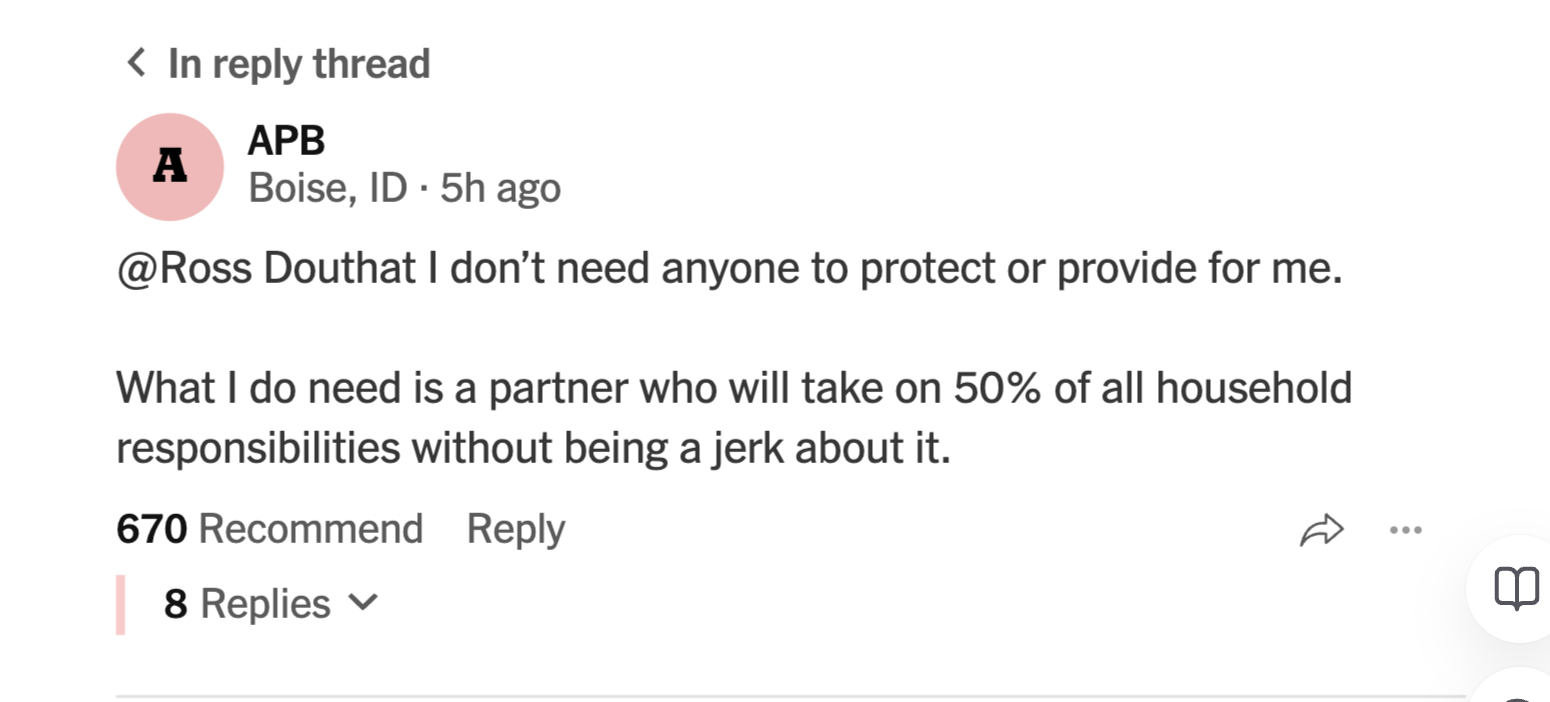
Turns out, I’m not alone. Today, he’s featured on the front page of the New York Times via Ross Douthat’s podcast. The title is, “Scott Galloway: America Abandoned It’s “Unremarkable’ Young Men.”

Dig the top two “Readers Comments”.

Double mic drops. To his credit, SG unplugs for August. Completely. When he resurfaces in September on his pods, I expect him to address these most thoughtful and recommended comments and others like them. Why? Because he’s a Bruin and that’s the way we roll.

Getting Our Ass Kicked

By Canada. British Columbia more specifically. Victoria’s Dallas Road Waterfront Trail even more specifically.

That was my thought this morning walking back from my dentist’s office through downtown Olympia. Specifically, at this point on the Fifth Street Bridge.

Rando bushes, three feet tall, growing out of the sidewalk curb. Next to chipped paint. Maybe I’m overreacting. Or maybe it’s symbolic and I’m not.

If you want to know the financial condition of a college or university ask about one thing—deferred maintenance. Financially strapped private arts liberal colleges are patching roofs because they can’t afford to replace them. Look for buckets in libraries on the proverbial rainy days and you will likely find them. Dead give-away.

The sidewalk “greenery” is symbolic of not being able to keep up with maintenance of public spaces. Is it possible that Canada’s higher tax rates translate into superior social infrastructure which consists of places were people are prone to gather and make friends? Positive social infrastructure, of course, depends upon comfortable, accessible, clean, physical infrastructure like you see all over the Dallas Road Riverfront Trail. In the form of clean bright yellow chaise lounges, tables and benches, drinking fountains, ubiquitous trash cans, dog parks, and groovy public art.

Which all combine to make the shore of the Strait of Juan de Fuca a magnet for walking, running, cycling, socializing. Sunday morning I couldn’t get my AirPods to connect to my watch for some reason so I did that most scary of things, ran with my own thoughts swirling around in my peabrain. So many smiley people said “hello” wonderfully oblivious to my citizenship. I don’t think it’s a coincidence that they were so cheerful.

Dig this video, especially from 1:42-1:50 where you can catch a glimpse of the yellow chaise lounges, and at the very end, some public garbage cans. On parts of the trail, there are large numbered garbage cans every 50-100 meters. Numbered, I suspect, because someone is keeping close track of their status.

Olympia’s sidewalk bushes are not numbered. They may very well turn into trees before my fellow citizens realize, often, you get what you don’t pay for.

What Well-To-Do Retirees Get Wrong

Look at me with the click-baity title. Somehow forgot the word “Some”. Some wealthy “seasoned-citizens” sacrifice their present well-being for their heirs’ future well-being. I normally applaud selflessness, but in this case, wealthy retirees are missing the forest for the trees.

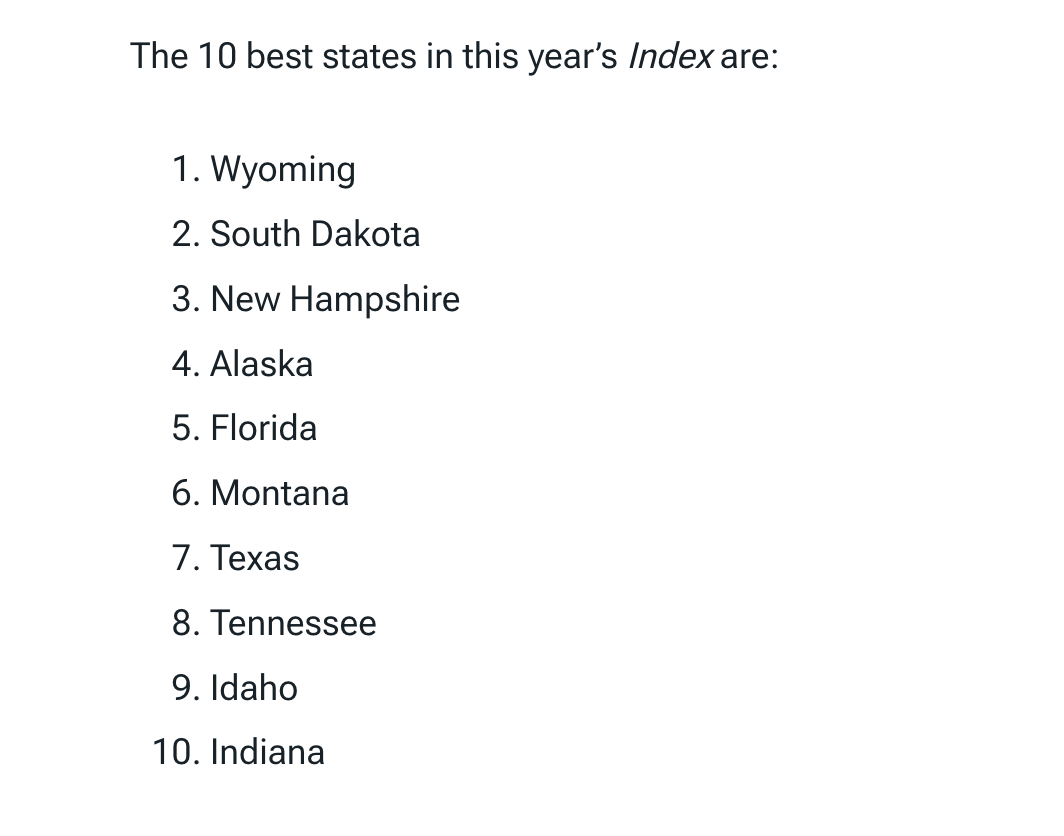
Increasingly, as some states, like these ten jack up their estate taxes to make up for budget shortfalls, the monied class in the (dis)United States talk of moving . . .

. . . to these ten states in order to save their heirs lots of money on future taxes.

Relocating, of course, means abandoning established friendships, the exact thing social scientists point to as most important to one’s well-being and longevity. That friend-group coffee, bike ride, dog walk, dinner party, book club, it’s the closest thing there is to a panacea for improved health and happiness.

You protest, “Ron, knucklehead, I can make new friends while saving big bucks at the same time.” Tru dat, but you can’t rush the building of truly close interpersonal relationships. There’s no short cut to true familarity and intimacy. They take serious time.

Also, a common thread of especially close interpersonal relationships is a shared history. My friends and I routinely tell the same stories over and over, stories from our collective past that we no doubt embellish as we do. Those exaggerated stories are the scaffolding of our friendships. There’s no fast-forwarding to a shared history. And spoiler alert, the older one is, the less time there is.

So go ahead, pack up, sell your crib, move out-of-state, hug your spreadsheet, and stick it to your state government. That is, if you haven’t built meaningful friendships and like being penny wise and pound foolish.

Source.

Paragraph To Ponder

From London Falling by Patrick Radden Keefe.

“But the truth is, everybody lies. We all do it, in ways large and small, more often than we might care to admit. Scholars known as “deception scientists” have studied the psychology of lying and concluded that as a human behavior, it is incredibly common. Most studies on the subject have found that the average person lies at least once or twice a day. But this may be an underestimate, because the methodology of these studies usually depends on self-reporting by subjects, and when people answer questions about how often they lie, they might very well be lying.”

Since you are likely average, what have you fibbed about today? I have not stretched the truth at all today. Yowza, upon further review, there’s my first one. Or is it the second? Third?

The “Truth” Is Always In The Middle

Think of it as the flip side of “woke mind disease”. Suburban moderates in Greater Seattle, and especially right wing nutters, love nothing more than complaining about all things Seattle. It gives their lives purpose. More specifically, the leftist politicians in charge, homelessness, decaying public spaces, and lax policing.

Then you come across a story like this one. “Alongside World Cup, Seattle’s street soccer scene is alive at Judkins Park.”

Major props to Carly Dykes and the Seattle Times for restoring some balance and so poignantly reminding us that our Big City, despite real challenges, has redeeming qualities too.

Shrinking Isn’t Even Remotely Believable

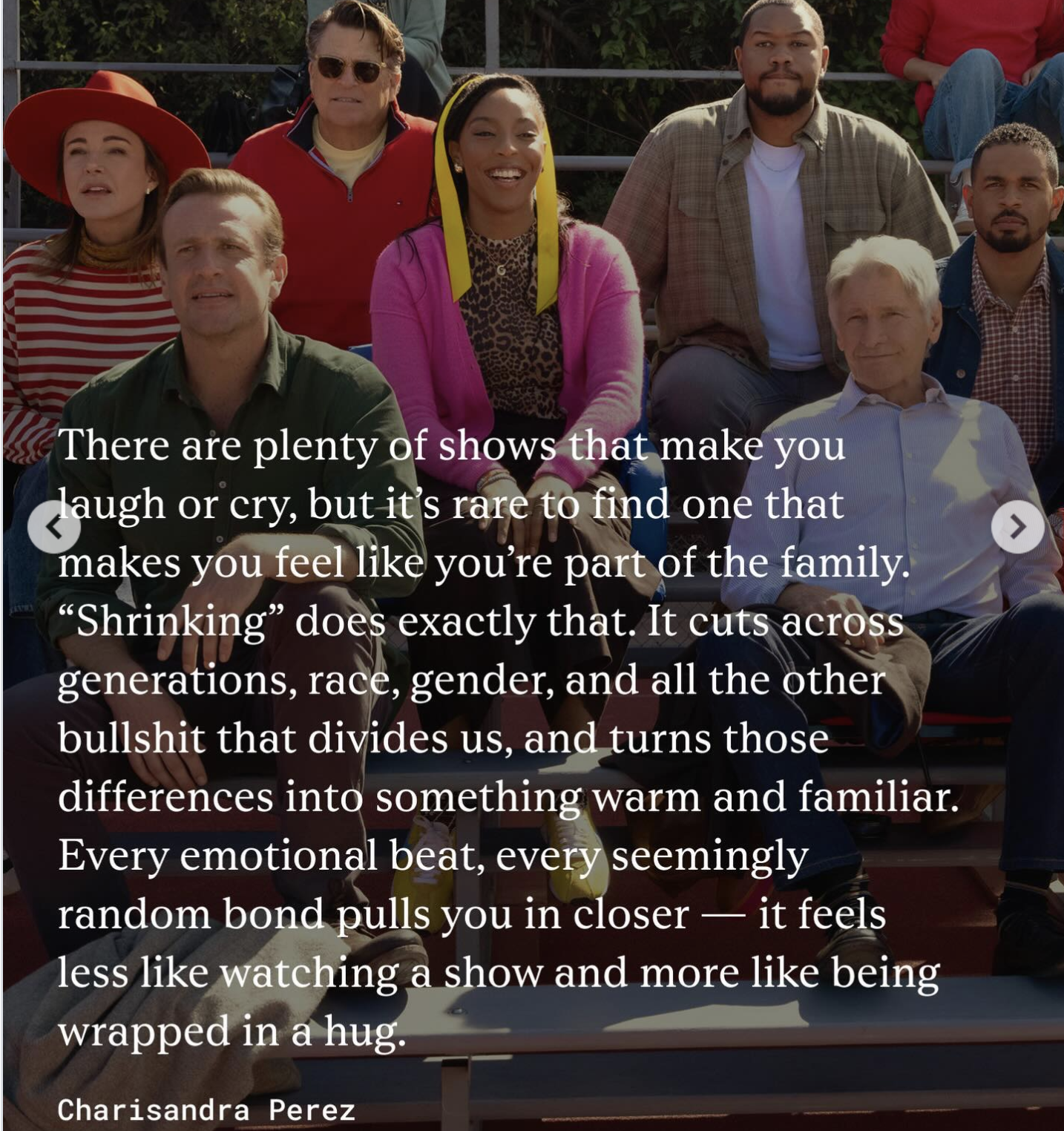
Charisandra Perez is forgiven for getting lost in the feel good Apple TV series Shrinking. For the exact reasons she outlines.

But, come on CP, as the Brits say, wake the feck up. The show should be labeled “fantasy”. It’s a cool show only in the sense that it’s hopelessly aspirational. Wouldn’t it be great if we could somehow, miraculously, throw a switch and suddenly rise above all the “bullshit that divides us”.

“Warm and familiar”? Kidding, right? Raise your hand if having an intensely diverse inner circle of especially close friends is “warm and familiar”. I think CP meant, “seductively strange and unfamiliar”.

Newsflash. We’re all insecure, in different ways and to different degrees, but insecure nonetheless; as a result, we surround ourselves with people who are more like us than different than us. People from similar backgrounds who tend to look, think, and mostly act like us so we don’t have to work too hard to get along.

At least we have one thing in common. We’re lazy, and when relationship building, almost always choose the paths of least resistance.

Sign-Holding As Therapy

Everyone once in awhile, a reader enlightens me. This especially poignant example is from Richie, who I had the privilege of teaching and playing noon basketball with in Greensboro, NC back in the day. If Richie was just a little taller he would’ve been an NBA point guard instead of a distinguished social scientist/author.

“I have gone to the big protests (Hands Off, No Kings, with casts of thousands), and now for many months I have been spending Tuesdays, from 12-1, with a group of 20-30 protesters, at an intersection in Friendly Shopping Center, outside Senator Thom Tillis’ Greensboro office.  We all hold signs, some of which are easily read as people drive by, especially when they have to stop for the light, and some of which may not be so easy to read depending on how much text there is, and how fast the car or truck is going.    On a typical day,  many drivers honk their horns in support, many give thumbs up, and some roll down their windows and thank us for being there.  For every 20-25 such indications of support, there will be one person who gives us the finger, or thumbs  down, or yells at us to “get a life” (at which point I usually remark to whoever is standing near me that they used to yell ” get a haircut”j.

     Some of my fellow protesters — mostly but not all, older, mostly white — go to another protest on Thursdays, on Wendover, on a bridge over the road,  where it is probably harder to read the signs, and no one stops to converse.

     I doubt that the weekly protests, or even the big Hands Off or No Kings protests, change people’s minds.  Rather I think they remind people,  including politicians, that many Americans (and, today, people attending the Olympics)  are outraged by what is going on.  They remind people who do not like what is happening that they are not alone, even in the reddest of states.  For me personally, I rarely think I am changing anyone’s mind.  Mainly I consider it a form of therapy.  It.makes me feel better, that I am not just phoning our awful Senators and congresspeople (which I sometimes do), or giving money to causes that I support, but doing something that might in a small way contribute to the extensive evidence that people are horrified at who we have become.”

Silver Linings

If I press pause long enough to reflect on my wife’s Multiple Systems Atrophy, and the toll it is taking on her and us, it’s almost too much to bear. So I tend not to. Yes, you’re right, of course it will catch up with me eventually. Right now, cue the cliche, it’s one task and one day at a time.

Even though I resist completely coming to a stop, I do sporadically slow down enough to take account of ways that I’ve changed as a result of our travails.

There are some silver linings.

For example, I have become a much better cook. Am I a good cook? The Gal Pal says I am, but I don’t know. All I know is I’m a lot more confident in the kitchen. My repertoire has expanded and we eat healthily.

I’ve also adopted more of a contractor’s mindset towards life. After we bought our current crib, we contracted with our builder to make some accommodations for the Good Wife. We threw in a cut-out for a t.v. and a bath tub for good measure. As a result, I got to know the builder and I was blown away by how calmly he went about problem solving. I was always afraid to bring up a problem, but he anticipated them, and rolled with them, immediately shifting to solutions. In fact, from watching and working with him, I realized that all contracting consists of is identifying problems, prioritizing them, and solving them. Full stop. Without drama or fanfare.

That’s not a bad approach to life. Being mechanically challenged, I’ve almost always freaked out whenever something breaks or doesn’t work as it should. Now, not so much. I think to myself. “This can be fixed. How can I fix it?”

And just as I’ve grown more confident in the kitchen, my home project bonafides have shot up from zero, to I don’t know, something more than zero. Just yesterday, I completed a home project that pre-MSA Ron would’ve never dreamed to attempt.

Long story short. Our Mitsubishi heat pumps came with nice digital thermostats on the second floor and mind numbingly bad remote controls on the first. By which I mean, the Japanese team that designed the user interface of the remotes should be brought before the International Court of Justice and slapped around.

So I did some research. And then bought and installed new digital thermostats on the main floor. Which entailed finding the circuit boards in each heat pump and attaching wireless dongles to the CN105 ports.

But like Rors after making birdie on 15 (shoulda been another eagle) on Sunday, I had too much momentum to stop there. Recently, I learned about apps that enable users to control heat pumps from their phones and said to myself, “Lets swing for the fence.” I know what you’re thinking. Then Ron channeled Rors on 13 and inexplicably dumped his wedge into the creek when he had the WHOLE FREAKING green as a backstop.

Not today friends. I bought second dongles only to learn I then needed to purchase splitters and then I had to connect everything to the circuit board and the dongles to the wireless network. Let’s just say when Olga came to my office this morning and said to me, “Can you turn off the heat in the kitchen, it’s too warm?” I said, “Sure, let me get my phone and PRESTO heat off.”

Felt like I hit a walk off homer. Or at least what I imagine that feels like.

DanDantheTranspoMan and Las Vegas had the odds of me succeeding on this project as the same as the Trump administration coming up with a coherent economic plan.

But sometimes miracles happen.

Women For The Win

My wife’s debilitating illness has given me a front row seat to a profound gender dynamic. A dynamic that informs today’s mostly mindless discussion of masculinity.

First, even before we dive in, let me muddy the water a little. Some men, albeit small in number, are superseding the ways males are typically raised.

Cases in point. When we moved into the new crib 11 months ago, Travis, unannounced, showed up with dinner for us on the first, exhausting night. A few weeks ago, Michael dropped in with (amazing) carrot cake and two loaves of Wagner’s (amazing) cinnamon bread. Allen (okay, sure with Patty’s help) baked dinners and drove over hill and valley to lighten our fall when I was teaching. Brian fills Lynn’s hummingbird feeder and repairs her recumbent.

National Public Radio ran on oddly common story on it’s website last week about a dying woman who needed lots of home care. A female friend of the woman ended up singlehandedly providing most of it until the very end.

I would’ve placed the odds of the woman’s key caregiver being female at 95%.

Almost exclusively, my wife’s female friends have taken action. The men in our orbit, on the other hand, have almost always offered sympathetic words. One close male friend recently sent me an email in which he said, “Let me know if I can do anything to help.” That, as it turns out, is the male default. It’s safe. A way to maintain distance. A sure-fire way to not be too bothered.

To my “one close male friend” who I hope isn’t going to read this, I need so much help I don’t even know how to start articulating it.

Most women, in my recent experience, don’t wait around for a guidebook on how to help, content not to receive it. Instead, a larger proportion of them move towards people in need.

Joan heard Lynn say she wasn’t enamored with the industrial gray plasticware I purchased on-line for her. So she showed up one day with much spiffier tumblers. Vivian routinely shows up unannounced with soup and gets down on her knees and huddles with Lynn when her body shuts down. She doesn’t really bother to email or text, she just appears at the door.

I watch Little Chris during one of her regular visits and tell her, “Man, you are so skilled and comfortable at meeting Lynn exactly where she is. It’s a beautiful thing.” She proceeds to tell me that when she was in high school, she cared for a housebound woman every day after school for a few years. And how formative that experience was. I don’t know if Little Chris had a brother of similar age, but if she had, I’m 95% sure her parents would not have suggested him for the job.

We expect girls and women to be nurturing as if they’re somehow uniquely built for it. We give boys and men a pass in the form of exceedingly low expectations. And so most males don’t develop that wonderful female instinct to act. Not to wait to be told how to help, just to show up. To look ailing people in the eyes. To hold their hands. To help them get undressed and dressed. To feed them. To console them. Until the end.

More men will be more hands-on caregivers when we expect boys to be more nurturing. Absent that expectation, women will continue do the vast majority of kind-hearted caregiving.