It’s Okay, To Be Okay

Clay Routledge dropping wisdom in “Stop Pathologizing Ordinary Life”.

Routledge starts with one of the more vexing conundrums of our times—Americans are focused on mental health more than ever before, and yet, our mental health appears to be getting worse.

His thesis:

“This broadening of what we think counts as a disorder — known as concept creep — encourages us to pathologize ordinary life and see ourselves as mentally unhealthy.

Then there’s our perception of how widespread mental illness is. By broadening what counts as a disorder, we begin to see it everywhere, including in ourselves.” 

Of course our pocket computers don’t help:

“. . . research suggests that people who rely on social media for information about mental illnesses tend to have less accurate knowledge about them.

But the problem isn’t just that many people give themselves incorrect diagnoses. It’s also that these misperceptions can put people on the path to developing poor mental health — a kind of self-fulfilling prophecy.” 

An example:

“. . . consider anxiety. A certain amount is useful; it helps keep us alert and motivated to reach our goals. But start viewing anxiety as a disorder and you can become hypervigilant about avoiding anxiety-provoking situations — which, in turn, can increase the risk of developing an actual anxiety disorder.”

Routledge wraps by suggesting specific fixes and then summarizes more generally:

“. . . we should . . . try to spend less time stuck in our heads and more time out in the world, pursuing the kinds of activities that support mental health without making us so obsessed with it.”

During and after the ‘rona, I began addressing my students’ mental health directly, in an effort to support them given their obvious struggles. I’d begin with the maxim, “It’s okay, to not be okay.” But I’d always add, fairly quickly, that “It’s also okay, to be okay.” Routledge would heartily endorse that message.

Do Better

Normally, I’m pretty chill. Just don’t survey me, or drive into me in downtown Olympia, or call me Slip twenty plus years after one fall and hella athletic recovery on wet grass.

Oh and one more thing. If you’re going to build a lap pool make it 25 or 50 yards or even better 25 or 50 meters. Don’t make it slightly less than any of these four standards unless you want me to turn completely chilly.

Today I found myself at the Skamania Lodge in Stevenson, WA. First things first, check out the pool and fitness center. Decent pool, but looks a little short. Pace it off, 23 golf steps times 3 feet equals 69 feet. Let’s call it 70. FIVE FEET SHORT of the bare minimum! Code Red! Blood pressure check!

Trying to contain my rage, I double check with the attendant, a middle aged woman who has no idea who she’s dealing with. “Do you know how long the pool is?” I inquire. “Yeah,” looking at her desktop computer for help, “60 feet? 64 feet?” Looking more intently at her monitor, she says more confidently, “It’s 84 degrees.” Which, of course, is too warm, but I digress.

There should be a severe penalty for anyone involved with building short pools. No trial by jury. Just me issuing a final judgement. Something less than life in prison, but not by much.

What Well-To-Do Retirees Get Wrong

Look at me with the click-baity title. Somehow forgot the word “Some”. Some wealthy “seasoned-citizens” sacrifice their present well-being for their heirs’ future well-being. I normally applaud selflessness, but in this case, wealthy retirees are missing the forest for the trees.

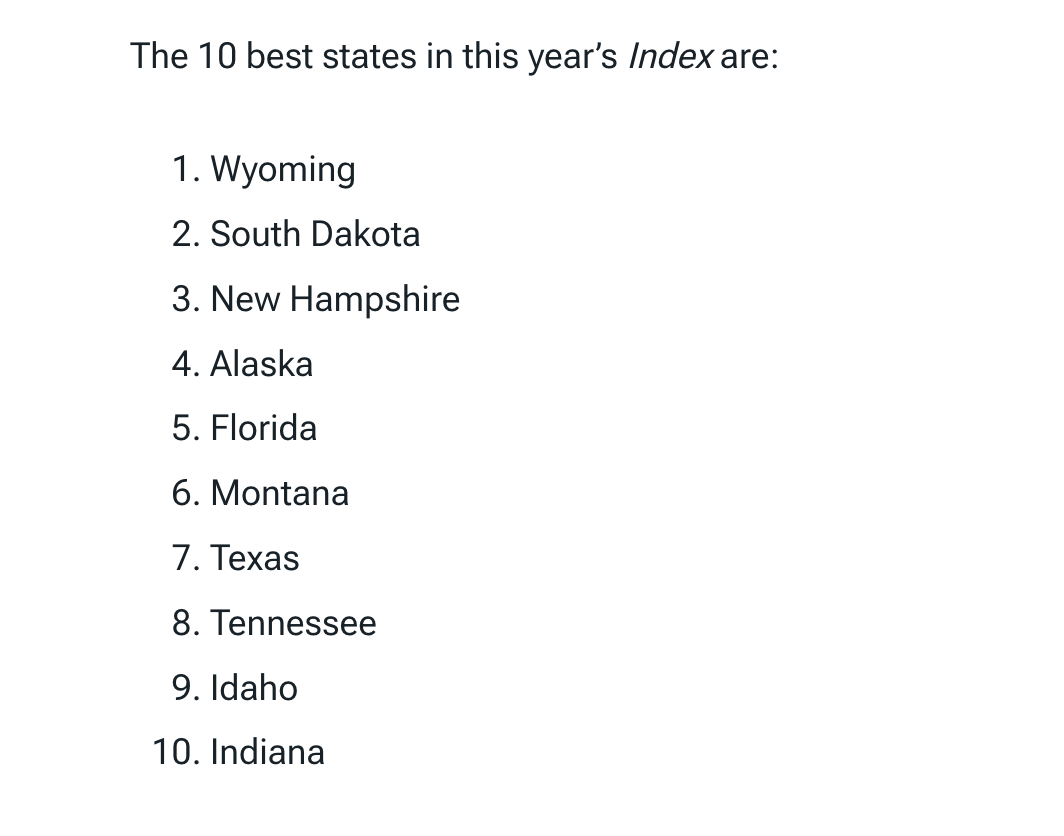
Increasingly, as some states, like these ten jack up their estate taxes to make up for budget shortfalls, the monied class in the (dis)United States talk of moving . . .

. . . to these ten states in order to save their heirs lots of money on future taxes.

Relocating, of course, means abandoning established friendships, the exact thing social scientists point to as most important to one’s well-being and longevity. That friend-group coffee, bike ride, dog walk, dinner party, book club, it’s the closest thing there is to a panacea for improved health and happiness.

You protest, “Ron, knucklehead, I can make new friends while saving big bucks at the same time.” Tru dat, but you can’t rush the building of truly close interpersonal relationships. There’s no short cut to true familarity and intimacy. They take serious time.

Also, a common thread of especially close interpersonal relationships is a shared history. My friends and I routinely tell the same stories over and over, stories from our collective past that we no doubt embellish as we do. Those exaggerated stories are the scaffolding of our friendships. There’s no fast-forwarding to a shared history. And spoiler alert, the older one is, the less time there is.

So go ahead, pack up, sell your crib, move out-of-state, hug your spreadsheet, and stick it to your state government. That is, if you haven’t built meaningful friendships and like being penny wise and pound foolish.

Source.

A Novel Idea—Have Some Fun

Slate notes that Erling Haaland, the Striking Viking, is having hella fun while on a Scandinavian run of a lifetime.

“The Norway national team striker scored two goals to send soccer royalty Brazil home. After the game, he’s chuckling to himself, telling reporters that even he’s surprised he won that game. Haaland has spent most of this World Cup looking like two completely different people. On the field, he is still the ‘Striking Viking,’ a terrifying 6-foot-4 goal machine who runs at defenders like a marauding berserker. Off the pitch, he’s posting selfies with Shrek, trying on a Southern accent, and generally behaving less like one of the most accomplished athletes on Earth than a very tall guy having the best summer of his life.”

And then this.

“There’s a clip of him in Dallas trying on a cowboy hat and cowboy boots, and then with Team Norway, doing the Viking Row after games with a huge smile on his face. It’s clear: The dude is having so much fun out there doing something that you’d think an 8- or 9-U soccer team would do.”

That Viking Row clip is so great. Everyone, unabashed joy.

Brad Stulberg with another paragraph to ponder:

“Imagine Michael Jordan and the Bulls in the middle of the NBA playoffs—not after winning it all, mind you, just after winning a playoff game—going to half-court and doing a celebration. They’re not doing that. They’re all business. They’re going back to the locker room. The Michael Jordan thing is: You’ve got to suffer for greatness, everything needs to be serious, you always need to be angry.”

Further into the piece, Stulberg shares how he approaches his teens’ athletic endeavors.

“I don’t pretend that winning doesn’t matter, because I think that’s dumb. Competitive kids are going to be like: ‘Dad, that’s dumb. Winning matters. Why else do we keep score?’ So I say: ‘Winning matters. Winning is part of the game. We’re trying to win. And you know how you’re going to have the best chance of winning? By having fun. If you’re not having fun, I can almost guarantee that you’re not going to win over the long haul.”

Then, prob without realizing it, he sprinkles some Stoic “trichotonomy of control” on top.

“Then I tell them that there are things we can’t control. We can’t control the points, because we don’t know how the other team is going to play. We don’t know what the weather is going to be like. All we can control are these two things: What’s our effort—are we trying hard? And are we appreciating the moment and having fun? If we do those things, then we’ve already kind of won the internal game. And if you play sports for long enough—which is the goal, because you’re having fun—you’re going to lose a lot and you’re going to win a lot.”

There’s a lot of ink being spilled about the exorbitant costs of US junior soccer travel teams. And how that is an impediment to the USMNT being among the best in world. This Slate conversation makes me think it’s probably the raised expectations that come with all the $. More specifically, having fun gets lost in parents’ emphasis on some sort of return for their investment. Like winning each match, increased social status, and college scholarships. Again, that combo drowning out Viking Striking-like fun.

If Only Women Weren’t So Delicate

Yesterday a large contingent of elite endurance athletes competed in the Western States 100 in Northern California’s mountains, the most prestigious ultra running event in the (dis)United States.

If the 101 miles seems doable, don’t forget to save something for the 17,000′ of elevation. Those numbers would make for a very, very difficult day on a road bike.

This snippet, about the runner up female, is bonkers.

“Third time’s a charm for American Riley Brady with a second-place finish. After a 14th-place finish in 2023 and a DNF last year, Brady stormed back to run at the front back and forth all day, battling through losing vision in one eye for a large chunk of the race due to a lack of salt and projectile vomiting in the final third of the race.”

Prior to 1984, the International Olympic Committee and medical establishments argued that the marathon distance was too physically demanding for women.

I’m here for badass women saying to “the establishment”, here, hold my beer, while I run four consecutive marathons up and down mountains. LOL.

Footnote: The women’s winner, Jenn Lichter, is from Missoula, Montana by way of Colombia.

In The Presence Of Company And Snacks

What has the post-‘rona world wrought? People connecting. Hell yeah.

Patricia Marx in The New Yorker:

“When my editor asked whether I’d be interested in writing about the growing trend of friends getting together to tackle to-do lists, I thought, “Sounds about as fun as a group root canal.” I e-mailed back, “YES!” It was February; I hate the cold; the research would take place indoors. Also, I figured, it might take a village to make me get that comptroller form notarized, memorize the map of South America (don’t ask), and write my will—an item on my list for eighteen years. (As for to-do-list items that never die, thirty-three years ago, the agenda of a friend of mine included: No. 1, get my figure back; No. 2, dance lessons . . . No. 8, figure out if I should break up with Tim; No. 9, leave Tim. Not his real name, because my friend is still wondering about divorcing him.)

Everyone, it turns out, has a lot of shit to do, and many find the drudgery easier to slog through in the presence of company and snacks. Over the course of two months, I sat in on eight Admin Nights, as these gatherings are often called. (“Are they, like, fossils of extinct mollusks?” a hedge-fund guy at a dinner party asked me, thinking of ammonites.) There was a meetup of young mothers who had a lot of children’s birthday parties to organize, a group of Gen Z-ers whose morning session had a live soundtrack provided by a d.j., and a group of people with A.D.H.D., based mostly in Australia, who meet regularly on Zoom. At the Women in Games get-together, a seven-year-old attendee, brought by her mother, marvelled that grownups have homework, too.”

This morning, on the way to Masters swim practice at the Y, I saw three women running shoulder to shoulder on the Henderson Rd sidewalk by Olympia High School. They were not fast, at all, but that’s irrelevant. They had found each other, agreed to meet up, and were clearly vibbing, talking through who knows what. Simultaneously improving their physical and mental health.

And props for your introverted humble blogger for livening up Masters by asking the women in Lane 3, “Do you know the Masters swim team secret?” Looking perplexed, they repeated, “Masters swim team secret?” “Yeah, this lane has the best technique.” They were touched and proudly added their lane was also the most jovial. Five women connected, happier together, living fully.

Maybe I shoulda started this out by writing . . . some people connecting. Social anxiety shows no sign of abating. And we’re way less likely to see our lonely, socially anxious neighbors struggling to find connection. Because often, they can’t even leave their homes.

Here’s to celebrating connection while continuously extending the circles of friendship we’re lucky enough to enjoy.

On The Sidewalk Ramp Above Deschutes Parkway

Last night I went for a beautiful sunset run. West Bay, Tugboat Annie’s flyby, and back to Cap Lake for a short out and back. I unplugged and started walking at the base of the sidewalk ramp beside the Fifth Street Bridge. And that’s where our story begins. A story I could use your help processing.

Halfway up the first switchback, just above Deschutes Parkway, a women was lying on a blanket seemingly going through her bedtime routine. All sorts of accessories were spread across her blanket which covered the entire width of the sidewalk. As I approached, she said, “You can go around the other way.” Haha, I thought to myself, I’m not taking the unnecessarily long route tonight.

So your intrepid reporter stepped over and around her with one of my dogs landing smack dab on her blanky. Which set her off a bit. “I’m going to say you raped me.” Unable to process that, I kept walking. And then, “Faggot.” That got me to u-turn and engage. Feel free to deduct points at this point.

What I should’ve said is “Homophobic much?” Instead, I asked a question, “Why don’t you think people should be able to walk on this public sidewalk?” Brown skinned, maybe even indigenous, she said, “Because it’s my land.” To which I said, “Well, thank you for letting me use it tonight.” Close curtains.

Come on, you have to give me back the points you previously deducted for the smoothish ending.

This story is either a run-of-the-mill anecdote or an important case study about class differences, urban life, and how we will or won’t get along. Or something in between, I’m not sure.

The only thing I know for sure is that I don’t know my neighbor’s story. Nothing could explain away what she said, but I’m disinclined to castigate her more generally for being troubled and impoverished since I have no idea how she ended up going to sleep on the sidewalk ramp above Deschutes Parkway.

Lean In

You are anxious and want to take a “cognitive behavioral therapy” approach to becoming less anxious. Meaning more practice exposing yourself to anxiety inducing content. Or maybe your life is just way too peaceful and you want/need more drama.

I have just the thing. The “Thurston County Scanner, News, and Weather” Facebook site. Which reveals the seamy underside of ThursCounty. Let’s get down and dirty and embrace the underside. Shall we?

Exhibit A. May 15th. Olympia Police Department are responding to the Olympia Farmer’s Market for a report of a naked man with a beard, dancing on the stage. While coming in the area, law enforcement had eyes on the male and reported that he was now wearing pants.

Of all places to nude bomb, why the bucolic center of our charming community?! My fave part of this report is the phrase “man with a beard” as if there were multiple dancing nudies. Thank you for that helpful detail.

Get’s worser.

Exhibit B. May 16th. Another peaceful day at the Olympia Farmers Market was interrupted when Olympia Police Department responded to reports of a male who had climbed onto the roof of Pithos Gyros and began urinating from the roof. After finishing his business, he continued wandering around the rooftop. The subject is also said to be associated with a second individual inside the market. No word on what inspired the elevated decision-making, but we can confirm the Farmers Market does not currently offer rooftop restroom facilities. It does not sound like he has been located.

So, if you’re like me, and enjoy frequenting the Olympia Farmer’s Market, prepare yourself for more than flowers, fruit and veggies, and snow cones. Sheriff Sanders reply, “I hate it when I find myself on the roof of an unassuming business and nature calls” for the win.

On Mental Illness

Here’s one especially thought provoking paragraph from Dr. Awais Aftab’s New York Times essay, “We’re Thinking About Mental Health Diagnoses All Wrong”.

The symptoms of mental illness reinforce one another. An important theory in psychiatry, known as network theory, posits that mental health problems emerge from symptoms pushing and pulling on one another in self-reinforcing loops. Being unable to sleep can fuel daytime nervousness; nervousness can drain energy; low energy can lead to social isolation; isolation can worsen depressive rumination; and rumination can make it difficult to sleep. And so on. Symptoms are often triggered by life stressors, but once the symptom arrangement becomes self-sustaining, it continues on long after the stressor has disappeared.”

I liked the essay, but found it a little too abstract for my peabrain. I wish Aftab had illuminated his intriguing insights with examples from his patients’ lives. I assume, maybe incorrectly, that therapists can finesse client-patient privilege by tweaking contexts and names.

Aftab’s readers, unsurprisingly with bigger brains than me, embraced his insights sans examples. Dig this top comment.

Awais Aftab for the win.