Recall the shortest possible answer. “Feeling loved”. That resonants with me.
After Lynn died, I pressed pause, for not nearly as long as my grieving daughters would’ve liked, but I reflected on my life to this extremely sad and disorienting turning point and had an epiphany.
My default tends to be optimism, confidence, and happiness because I’ve been so damn lucky in love.
And as the authors of the aforementioned book explain, feeling loved isn’t just a romantic thing. Why does a parent who gets a tender note of appreciation from their young adult child immediately attach it to their refrigerator? Because it’s a constant reminder that they are loved. Today, two friends who I’m not in regular contact with, both out of the blue, asked me how I’m doing. Making me feel like I matter a wee bit more. Loved, if you will.
Most fundamentally, from the beginning, my mom’s unconditional love convinced me I mattered. That I was lovable. Her affection for me was the single most important source of my well-being until the middle of high school when I fell in love for the first time. After 3.5 years, Cindy dropped kicked me, and shortly thereafter Sally did the same. WAIT, I’m detecting a pattern!
More seriously, I had this overwhelming sense of being loved by my mom, then Cindy, then Sally, then there was, in the grand scheme of things, an incredibly short period of maybe eighteen months where I was adrift, unsure that I was loved much before meeting Lynn who deeply loved me for four decades.
So, for those keeping score at home, I’ve known I’m loved about 97.7% of my life.
The authors of “Feeling Loved” might say that’s less lucky than me being attentive, kind, and caring enough to family, friends, and romantic partners that love has almost always been reciprocated. A boomerang effect.
Both/and I suspect. I have tremendous gratitude for everyone that has loved me and is loving me currently. I will continue doing my best to hold up my end of the seesaw by striving to be more attentive, kind, and caring, so that, in the end, love and well-being prevail.
“Sonja Lyubomirsky has been a leading researcher on the science of happiness for decades. And for just as long, people have asked her: What is the secret?
Dr. Lyubomirsky . . . has always chafed at this question. The secret to happiness? How ridiculous and reductive.
When pressed, she told me she tends to say something along the lines of: ‘Connection and relationships. Positive thinking, which includes gratitude. And a sense of control in your life.’
But if she really had to choose one thing, she said, the secret to happiness is “feeling loved.”
Well then, what’s the ‘secret’ to feeling loved?
“Research on love and happiness has tended to focus on the love one feels for others. But . . . what really makes us happy is how much love we feel coming back to us.
People who want to feel more loved tend to take one of two approaches that aren’t necessarily effective. . . : They try to fix themselves (if only I were better, kinder, more attractive, etc.) or they try to fix the other person (if only my partner would finally figure out mylove language!).
But if you want to feel more loved . . . don’t focus your energy on trying to change anyone. Instead, change the conversations you’re having.
How?
“In order to feel more loved by others, you must begin by making them feel loved by you, the authors write. And becoming a better listener is one of the most powerful ways to do that.
Many of us think we’re pretty good listeners, Dr. Lyubomirsky said, but really, we’re mostly just waiting for our turn to speak. . . So she recommends adopting a “listening to learn” mind set. Basically, shift your focus from responding to understanding.
‘When someone feels deeply seen, valued, and understood by you, they become more willing, motivated, and even eager to do the same for you,’ the authors write.
But becoming a better listener takes practice. Some simple best practices: Don’t interrupt, Dr. Lyubomirsky said, and don’t offer advice unless the person you’re talking to asks for it.
And ask follow-up questions. Dr. Reis often defaults to three words he said rarely fail: ‘Tell me more.'”
A seesaw, really?
“The authors believe giving and receiving love function together like a seesaw: You lift a person up with the weight of your curiosity and attentiveness — and they do the same in turn.
‘The other side is very important also, to be sharing what’s important to you, to be sharing what you’re concerned about, so it can really become a two-way street.’
Reciprocity isn’t guaranteed, but it is a powerful social norm, . . . We have a tendency to respond with care and kindness to those who show them to us.
What if it doesn’t work?
“Of course, sometimes you can do your best to listen and be open, and the other person gives you zilch in return. If that’s the case — or if you are finding it challenging to muster genuine curiosity — those are signs this isn’t the right relationship to invest a lot of effort and energy in.
‘“’Sometimes we choose the wrong person that we want to feel more loved by,’”’ Dr. Lyubomirsky said.”
I wonder if two related challenges are explored in the book, challenges that inevitably complicate how loved one feels, particularly males.
The first is an inability to “share what’s important to you”. Put more simply, to express one’s feelings. Too often, boys are discouraged from expressing their feelings, then, as men, they struggle to communicate much at all about their inner lives. So the seesaw gets stuck with males feet safely and firmly planted on the ground.
The second is less gender-specific. Many people are convinced that they are way too broken to be loved, let alone deeply. No one ever learns perfect self-compassion or self-love, we’re all prone to be too hard on ourselves. At best, we are works-in-progress.
But it will become obvious that you and I are eminently lovable the more we listen, learn about, and love one another.
My mom was famously antisocial on planes, which is a bit odd since she was quite personable. She’d literally psych herself up not to talk to her neighbor(s). And she had strategies. Other people in my lineage lean anti-social.
So on my way to London yesterday, I decided to blaze a new path of airplane neighborliness. My next-door neighbor was a young, East Indian man with two phones. Uber courteous when I first sat down, he took my man purse and stowed it for me since there were no seats in front of us. An hour into the flight I dishonored my mom by asking him, “Are you from London?” He smiled and said, “No, I’m from Seattle, but I travel to London frequently for work.”
Definitely the most interesting dude I’ll meet on my two week Euro sojourn. When I told two of my friends that in Heathrow, they were hurt, but I clarified “most interesting new dude”.
Can’t believe I didn’t get his name because I’d love to follow his career. 33 years old. Ohio State grad, but let’s not hold that against him. Got a PhD from Rice University in Oncology at 26. Works for Eli Lilly doing “small and large” drug development deals. Was on his way to Barcelona for a conference.
I knew he had serious science chops when he was familiar with Multiple Systems Atrophy. We talked about Lynn’s passing and his grandfather dying in India right before his 90th birthday. And him, afterwards, moving his parents from Chennai to Lynnwood, WA.
He met his wife when he was 19 and she was 18. Despite him spending the next 10 days in Barcelona, they’re trying to get pregnant. They’re vacationing in Japan in October.
He speaks English, Tamil, Hindi, French, German, Arabic, and Spanish poorly. He learned Arabic while teaching English in Cairo as a part of his high school education.
We bonded in ways my mom would never understand. So much so, when British Airways informed half the plane, him and me included, that our bags didn’t make it on our flight, he felt comfortable bitching about it. “What am I going to wear out to dinner tonight?” First world problem for a high flyer, figuratively and literally.
Second in a possible series of intros of especially loyal PressingPausers.
Full name, Dan Dan the Transpo Man. Dano is retired, but gets more done in a day than Travis or Scottie who allegedly “work” fulltime.
He’s from Minneapolis and has all the classic signs of Upper Midwest niceness—does not swear, prefers music from the 1950s-1970s, has wood tennis racquets in the garage—until a high school referee making $12/hour makes a questionable call against the local team. Then he loses it a bit. Or when the announcer says, “It’s another Olympia first down!” He despises that.
Why the Transpo Man? Because when he was a working stiff, he was in charge of Washington State’s federal highways. Which was fun because other friends and I had someone to vent to as our commutes worsened. He was always so sympathetic to our plight. Not!
Dan is a physical marvel. He runs a few times a week. Really fast for just having turned 69. And walks a few times a week. And hits the Tumwater Stairs really hard every Tuesday morn. And roller blades. And mows his ginormous yard. And goes to Adoration every Friday morning and prays in advance for a miracle for me once I’m at the Pearly Gates.
Start with Minnesota and add a progressive Catholicism and you get one goodhearted, generous dude. The type of dude who saved up his timeshare weeks to take twelve of his closest friends to Hawaii when he retired. The type of dude who returns from Alaska with salmon for everyone. The type of dude who will invite you to his Sunriver casa if you’re lucky. The type of dude who will take delivery of your new car for you when you’re stuck in Colorado.
He’s not perfect though. He still roots for all the sad (sick) Minnesota teams despite having lived in the PNW longer. He insists on using a nickname for your humble blogger mostly because I’ve never liked it. And, in a nod to Catholic brotherhood, he is likely to vote for Vance for President in 2028.
Just kidding on that last one. Dan is as blue as they come. And he’s an activist, writing letters to public officials and postcards to NC voters and even fancying himself a poet at times. An engineer with writing skills, who’d a thunk it?! A true Renaissance Man. And one of the nicest, best friends a guy could ever hope for.
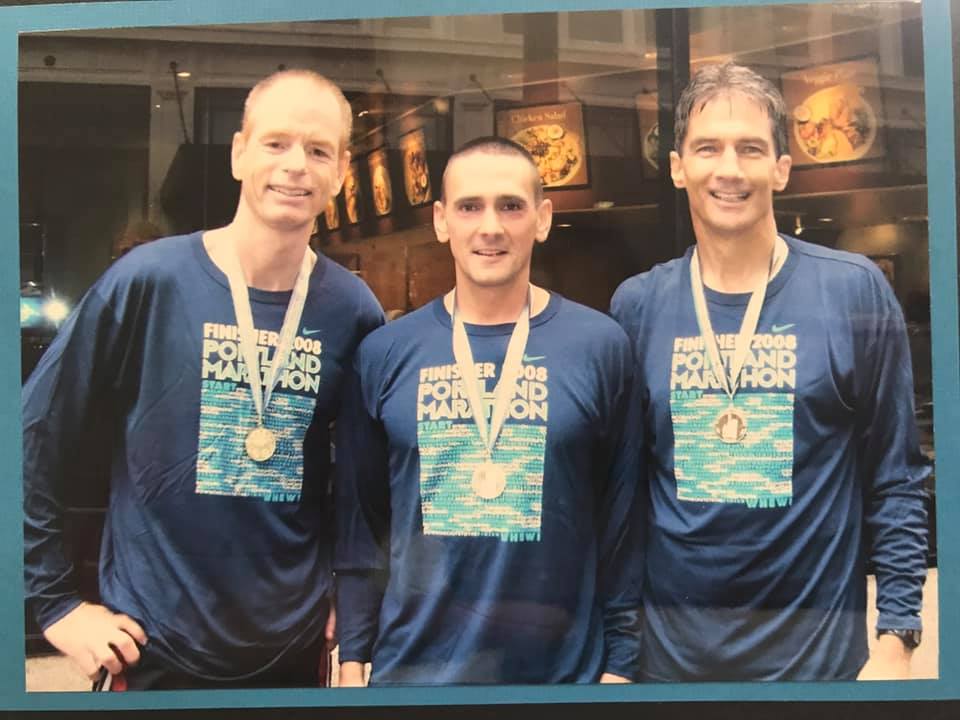
Back in the day. DDTTM on the far right after trouncing Scottie and me.
First in a series. Possibly. Depending. Upon your response. A series where I introduce you to the most loyal PressingPausers. The peeps who read regularly and respond sporadically, in Z’s case almost always behind the scenes using something known as electronic mail. Or actually, snail mail half the time.
Z was a mentor, friend, lunch bball brother back in the day when I taught at Guilford College in Greensboro, NC. Is still a dear friend, despite living on the wrong side of the country. A now retired psychology professor whose wheelhouse was really social psychology, and even more specifically, the power elite. He was the rare small liberal arts college professor who managed to maintain a large university-like research agenda, pumping out articles and books on men and women he followed over decades from their admission to the “A Better Chance” program into the uppermost levels of business, government, law, and other professions. Lucid, imminently interesting, substantive stuff.
And he’s also The Commissioner. The guy who holds the M-W-F noon basketball game together, now I think half a century old, through court closures, pandemics, and Father Time. He published a great book on that part of his life too. When angry and much larger Joe Groves didn’t like my defense and/or my committee’s general education curriculum revision proposal, Z would reign Joe in with a look or quick comment in the locker room. Everyone always respected The Commissioner. Even angry Joe Groves.
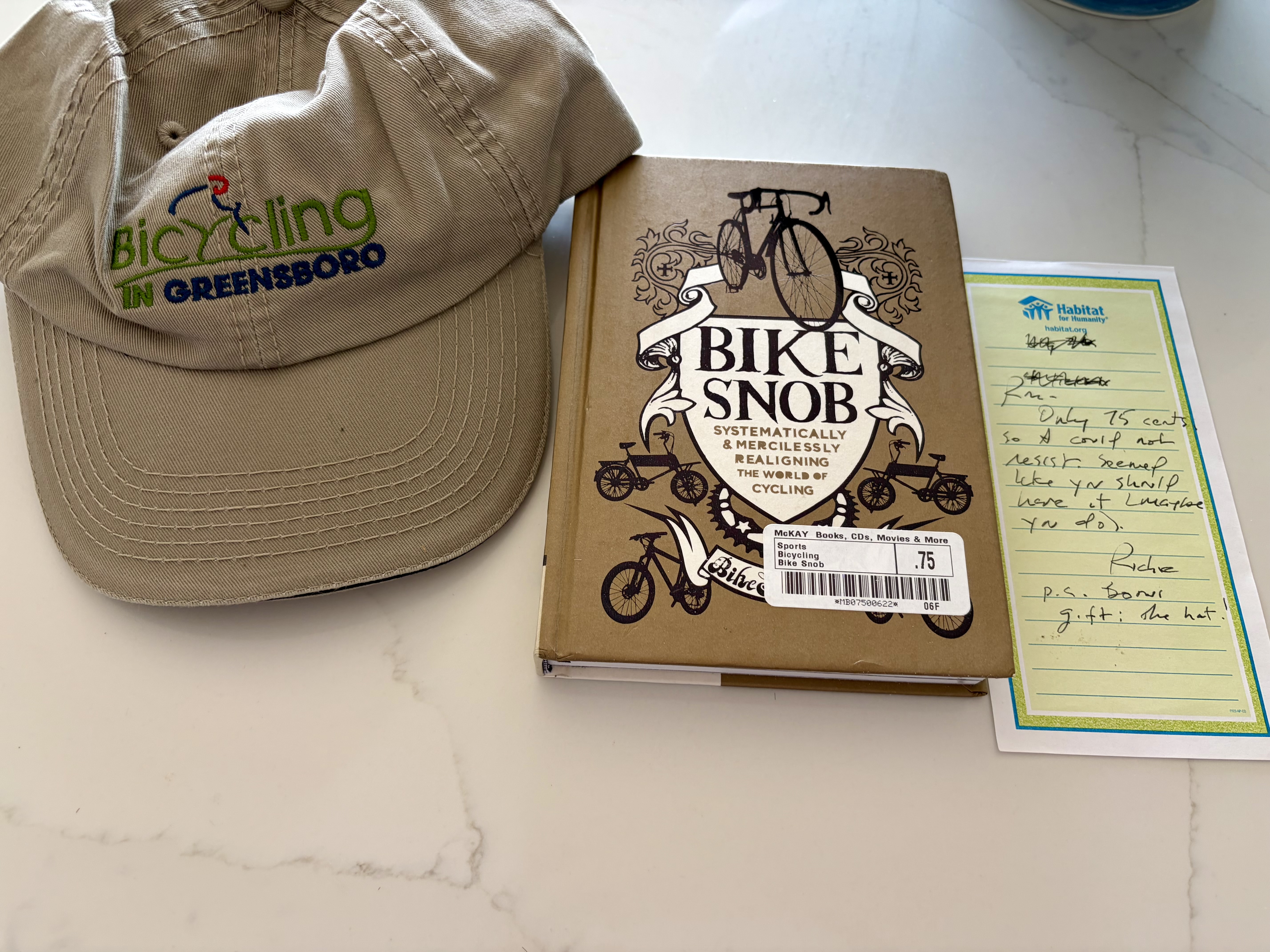
Today, by chance, this was on the doorstep. Sent by Z.
I can’t believe how lucky I am to have a friend who still thinks about me almost twenty five years since I padded his assist totals with my silky J.
Z or I sent the other a winning t-shirt every April depending on how the NCAA tournament played out, I took a handful of west coast teams, he took an equivalent number of east coast ones, but conference craziness fecked all of that up, so now it’s the occasional book. Like with too many of my friends, I need to pick up the slack. Note to self. Find a book, send it.
Z, like me, really dug his students. He also loves his border collies and L, a wonderful pottery artist.
Ironically, I just bought something in his parts, Wilmington, NC more specifically, that I can’t tell Z anything about. Interesting things about Wilmington, NC, it’s where Michael Jordan grew up and where I competed in my first triathlon. Threw my back out the day before, didn’t know if I could go, but got through the intracoastal waterway swim feeling okayish. Then the out-n-back 40k flat/windy bike. I could swear it was a side wind! At the turn around I learned it had been a full-on tail wind, so that last 20k into the wind was when I realized I’d seriously overcooked myself. Let’s just celebrate that there’s no internet archive where you can find my 10k split and leave it at that. But I digress.
Why can’t I tell Z about my Wilmington, NC purchase? Because it was everything he’s not. It was spendy, frivolous, flat out silly. Z likes to remind me that the mountain bike that he rides all the time he picked up at a garage sale, back in the day, for $50. When we were hangin’ he drove a worn in Toyota Corolla wagon with more miles than he had lunch ball points. His computer was ancient. I remember a landline in the crib. Prob still there. Because why not, it works, he’d correctly say. Z is a reminder that you never have to recycle, reuse, or reduce if you don’t ever replace.
So, no, he’ll never know what is on a 3,042 mile journey from his NC to my WA. Like my 10k run split, a national secret of the highest order. Better that way. He’d be disappointed. And Z, the best guy in the world, is that last person I’d want to disappoint.
Scott Galloway was two years behind me at UCLA. Never met him which is no surprise given the size of the student body and the fact that he was in a fraternity and I was in Powell Library.
I listen to most of his podcasts and would like to know him. He’s super funny, profane, whip smart, a dedicated father, and leans into his emotions in ways one rarely sees in the male species. Also, he describes his 18 year old self as “unremarkable” and still has tremendous gratitude for the Regents of the University of California taking a gamble on him. That sentiment always hits hard with your humble blogger. I see you and raise you SG. I was probably more “unremarkable” than you. I don’t know what prompted the Regents of the UC to gamble on me, but I too will be forever grateful. But unlike you, I doubt Gavin Newsom will ever appoint me to be a Regent.
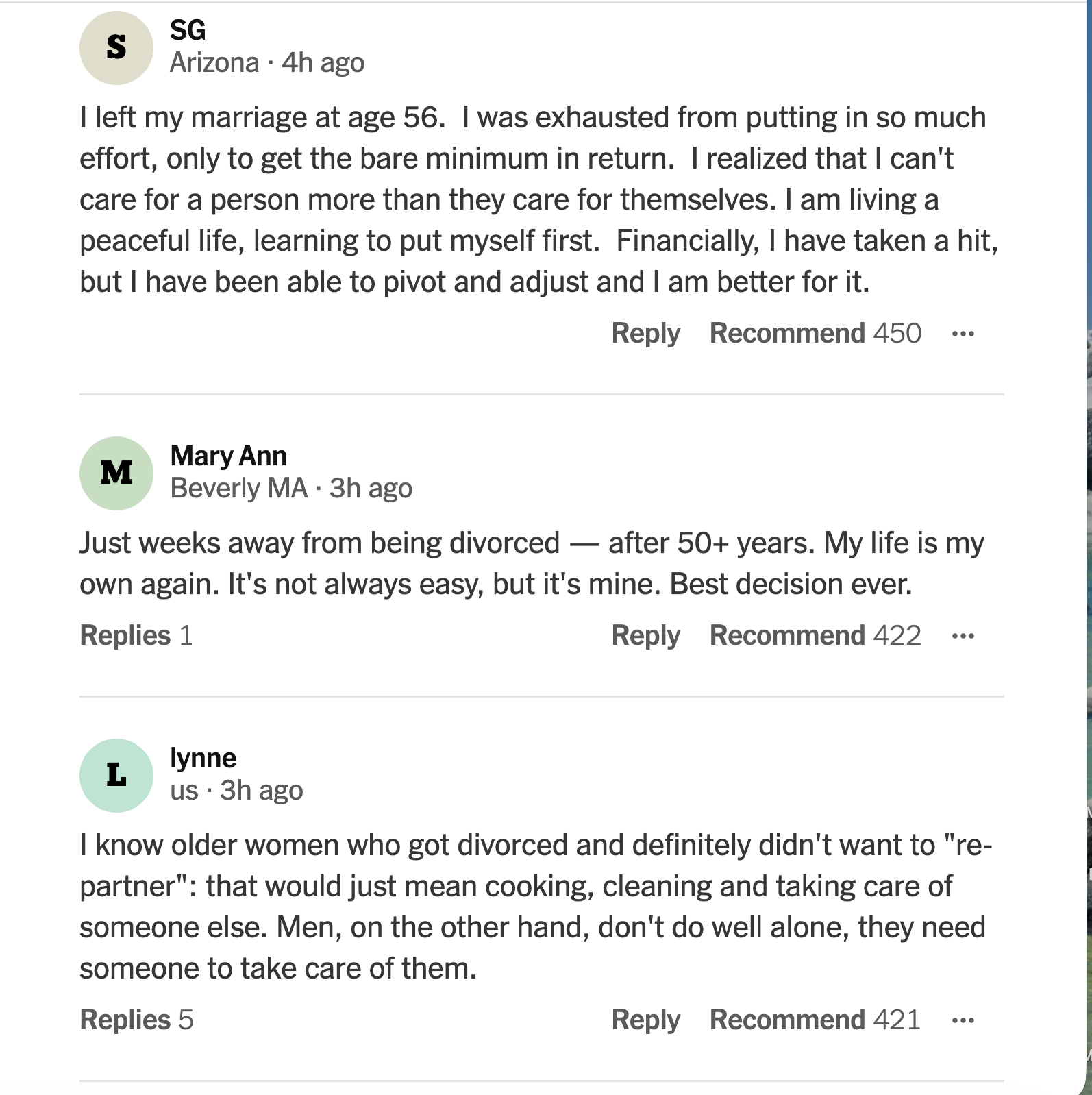
Despite all the love I have for SG, he sporadically expresses some views, about gender especially, that make me shudder.
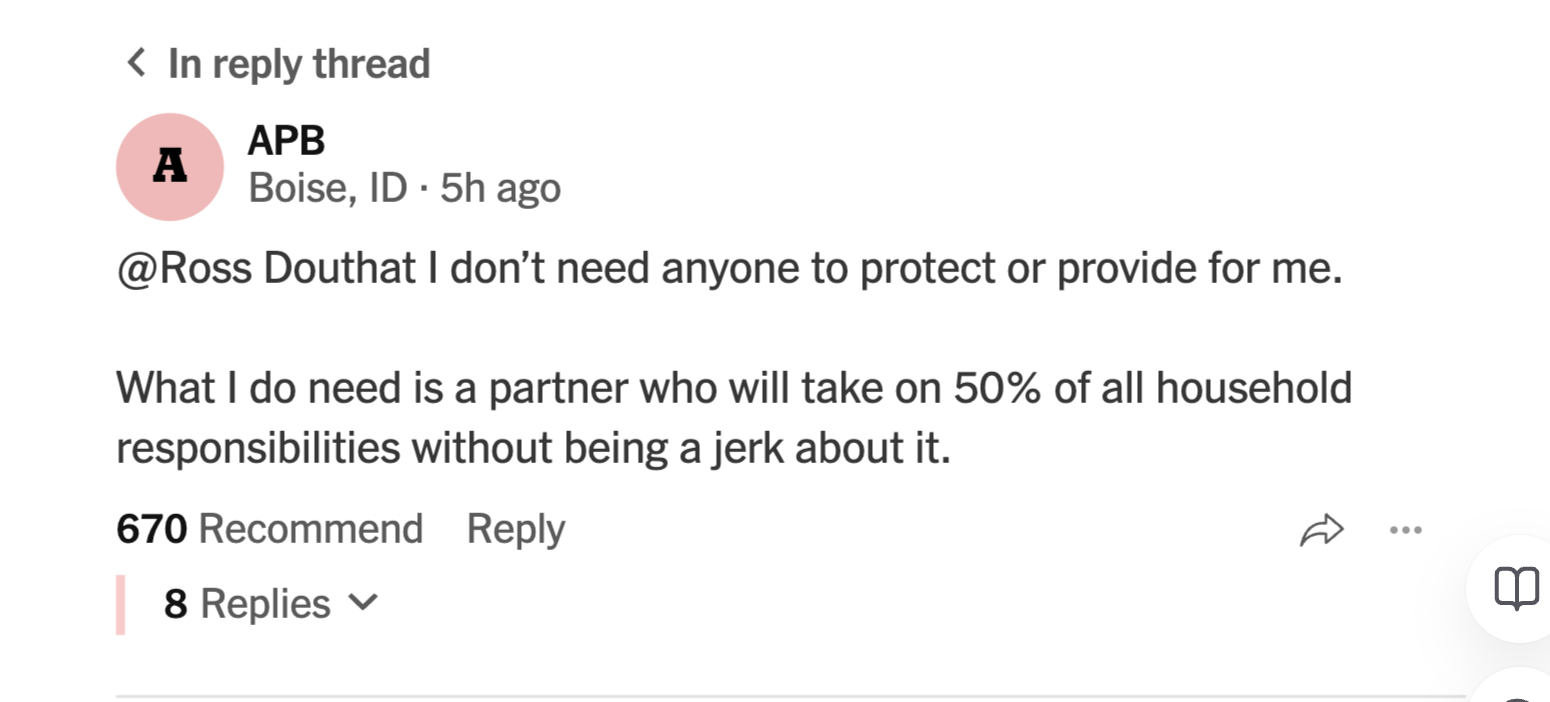
Double mic drops. To his credit, SG unplugs for August. Completely. When he resurfaces in September on his pods, I expect him to address these most thoughtful and recommended comments and others like them. Why? Because he’s a Bruin and that’s the way we roll.
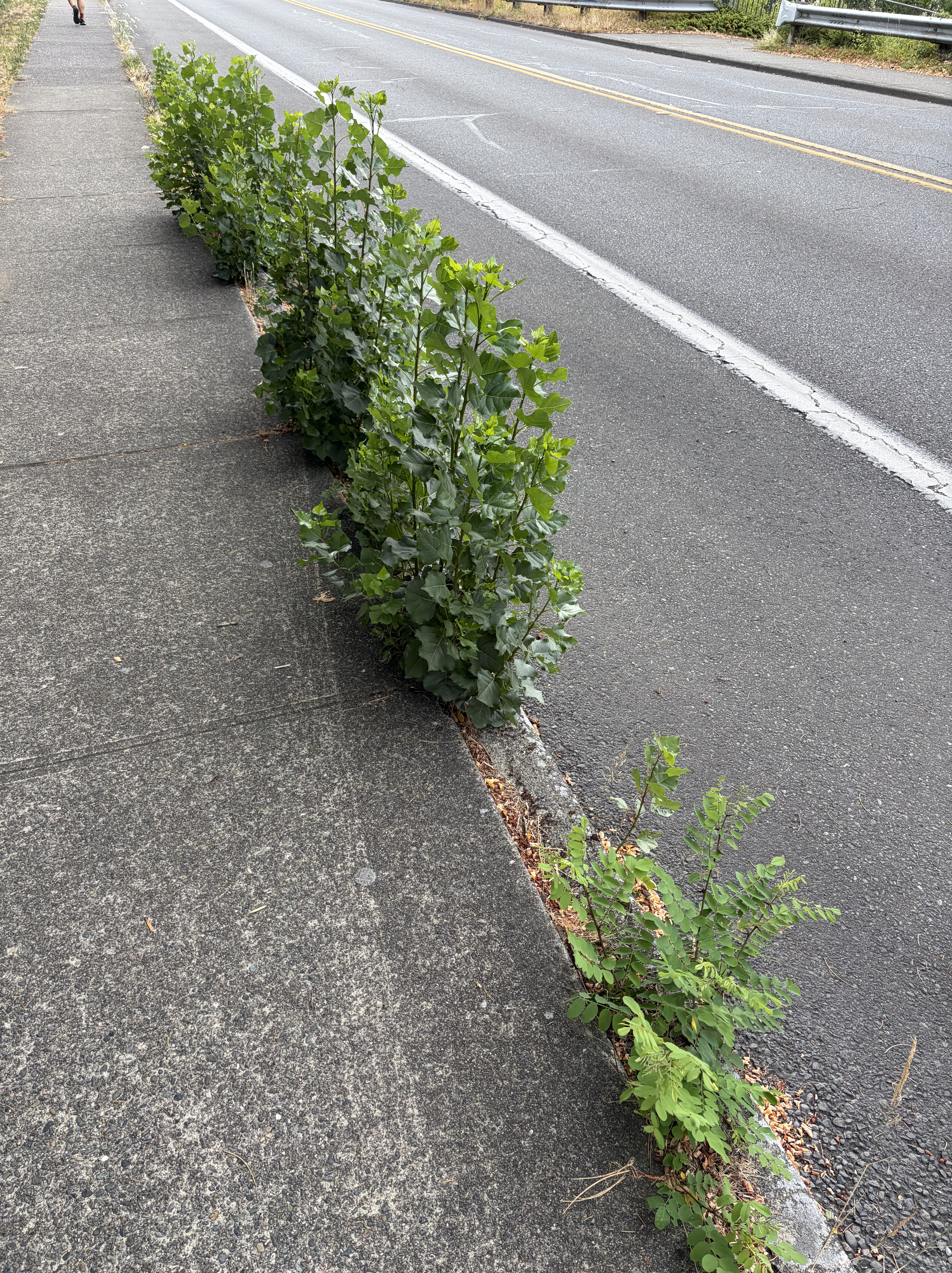
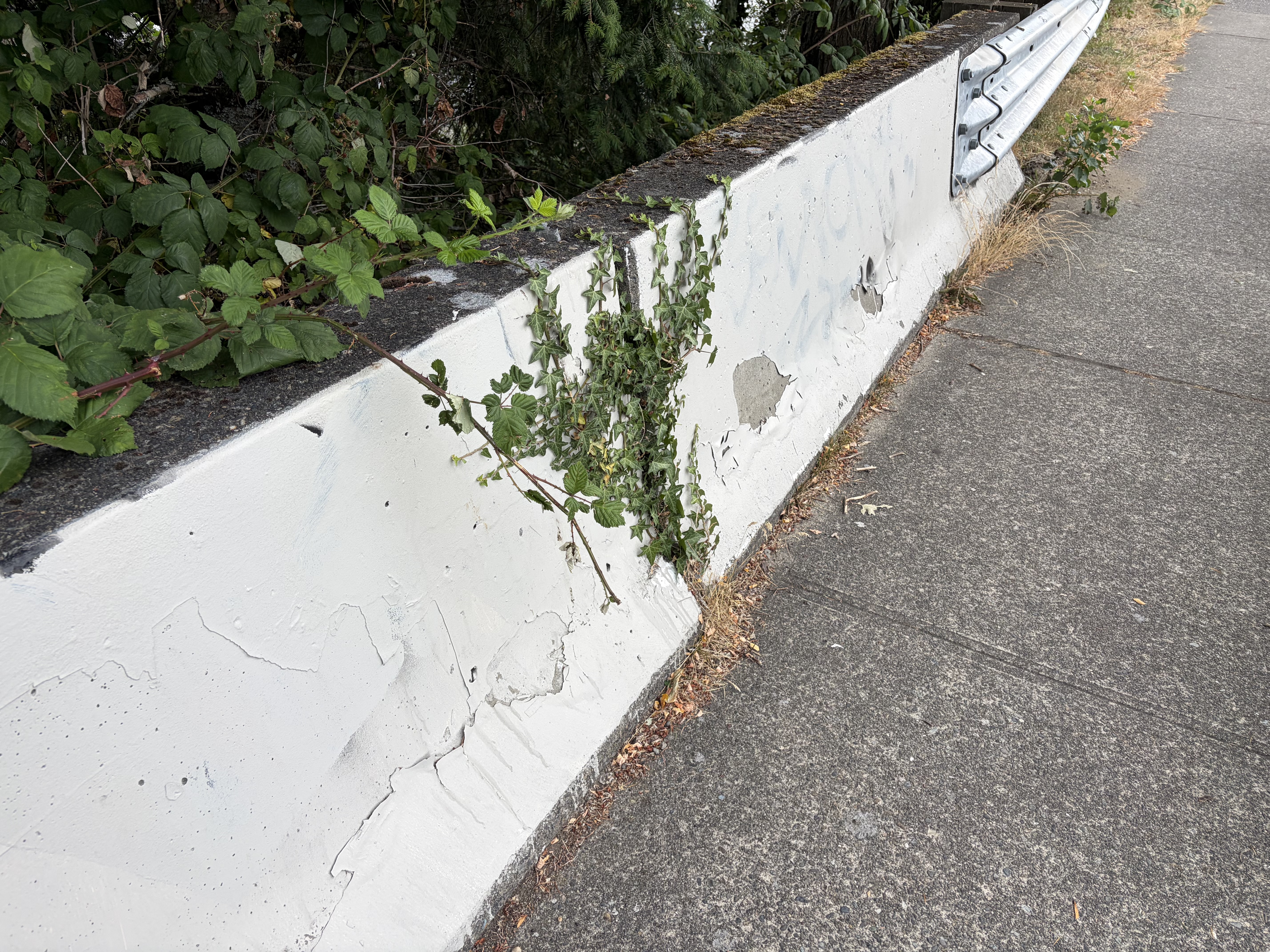
That was my thought this morning walking back from my dentist’s office through downtown Olympia. Specifically, at this point on the Fifth Street Bridge.
Rando bushes, three feet tall, growing out of the sidewalk curb. Next to chipped paint. Maybe I’m overreacting. Or maybe it’s symbolic and I’m not.
If you want to know the financial condition of a college or university ask about one thing—deferred maintenance. Financially strapped private arts liberal colleges are patching roofs because they can’t afford to replace them. Look for buckets in libraries on the proverbial rainy days and you will likely find them. Dead give-away.
The sidewalk “greenery” is symbolic of not being able to keep up with maintenance of public spaces. Is it possible that Canada’s higher tax rates translate into superior social infrastructure which consists of places were people are prone to gather and make friends? Positive social infrastructure, of course, depends upon comfortable, accessible, clean, physical infrastructure like you see all over the Dallas Road Riverfront Trail. In the form of clean bright yellow chaise lounges, tables and benches, drinking fountains, ubiquitous trash cans, dog parks, and groovy public art.
Which all combine to make the shore of the Strait of Juan de Fuca a magnet for walking, running, cycling, socializing. Sunday morning I couldn’t get my AirPods to connect to my watch for some reason so I did that most scary of things, ran with my own thoughts swirling around in my peabrain. So many smiley people said “hello” wonderfully oblivious to my citizenship. I don’t think it’s a coincidence that they were so cheerful.
Dig this video, especially from 1:42-1:50 where you can catch a glimpse of the yellow chaise lounges, and at the very end, some public garbage cans. On parts of the trail, there are large numbered garbage cans every 50-100 meters. Numbered, I suspect, because someone is keeping close track of their status.
Olympia’s sidewalk bushes are not numbered. They may very well turn into trees before my fellow citizens realize, often, you get what you don’t pay for.
“Rates of ‘gray divorce’ — splits among those 50 and older — have risen sharply in the United States, doubling between 1990 and 2010. Though those rates have stabilized since the pandemic, nearly 40 percent of divorces today occur between people 50 and older.”
Key definition.
“‘Empty-shell marriages’ are ones in which there is no real connection or vitality, where one or both partners are not happy. . .”
The key reasons according to Justin Garcia, the executive director of the Kinsey Institute in Bloomington, Ind., and the author of The Intimate Animal: The Science of Sex, Fidelity, and Why We Live and Die for Love.
“’We as a species are in longer relationships than our ancestors ever were,’ he said. ‘Lifelong monogamy maybe meant a few decades.’ Now, though, there are couples who have been together for 50, 60 or even 70-plus years.
‘That is evolutionarily unprecedented for our species,’ Dr. Garcia said.
At the same time, societal expectations for what marriage can or should be have changed. Baby boomers who got married relatively young — in part because that was simply the norm — are now living through a time when marriage is seen as a vehicle for love and self-actualization, said Claire Kamp Dush, a professor of sociology at the University of Minnesota.
‘We’re not just partnering based on this idea that someone’s going to be the breadwinner and someone’s going to be the homemaker,’ she said. It is possible, she added, that our collective tolerance for staying in just a so-so relationship ‘is going down.'”
RX from the Bay Area, commented, “. . . it’s mostly because women are over it.”
Three other top commenters point to an uneven and unfair division of labor as a key catalyst for calling it quits after decades of being together.
Because the author of the piece only used heterosexual examples, and the author and top commenters focused almost exclusively on unfair workloads, we end up with what feels like a relatively simplistic understanding of “gray divorce”.
For example, the author of the piece references, and the top commenters repeatedly emphasize, that women want to finally be free of caring for their male partners while men who divorce tend to remarry, often quite quickly, because “men need to be taken care of”.
Classic painting with a broad brush. “Some” men, even “many men” would be a much better way to word that.
Let’s consider a counter example. Your fave blogger. At first glance, your fave blogger’s decision to begin dating someone three months after his beloved wife died, after 38 years together, might be further proof of men being woefully dependent upon someone to cook and clean for them. Because, as the female author and top commenters seem to think, men can’t cook and clean for themselves.
Sigh. I don’t know how much depth to go into here, with respect to sharing with you dear reader my rationale for deciding to date before learning it was way, way before my daughters were ready for it. But suffice to say, my rationale had nothing to do with being taken care of. Nothing. Nada. Zilch. Not to brag, but I can hold my own in the kitchen and I will out clean you. Just sayin’.
How ’bout a four-word summary of what could be a four thousand word explanation. I began dating because I sought emotional connection. Which is one word more than it takes to say I was lonely. Weirdly, the concept of emotional intimacy is completely skirted around in the article and top comments.
A friend and I have been sparing a bit on the topic of the patriarchy. Often while hiking. This will surprise no one. I’m losing. She runs circles around me on the topic because she thoughtfully articulates the negative consequences of the patriarchy on men. A key point that too many feminists gloss over. In particular, she correctly points out that entrenched patriarchal norms make it very difficult for men to develop much, if any, emotional intelligence. Without which, emotional intimacy is a non-starter.
Despite some countervailing evidence, most men can learn to vacuum and load and unload dishwashers. And pick up their underwear. Much, much more easily than they can learn to communicate about their inner lives. And much, much more easily than they can learn to tap into their partner’s innermost thoughts and feelings.
I am not an expert and any reader of the female persuasion correct me if I’m wrong about what follows.
I have a strong hunch that many women would like to have their partners do a load or ten of laundry and make them dinner and clean up afterwards, but what every woman would love, especially in empty-shell marriages, is the opportunity to talk about each other’s inner lives in as vulnerable and patient and regulated a manner as possible. So as to feel safe, to feel seen, to feel loved unconditionally. And then to reciprocate. Over and over. For however many years are left.
What has the post-‘rona world wrought? People connecting. Hell yeah.
Patricia Marx in The New Yorker:
“When my editor asked whether I’d be interested in writing about the growing trend of friends getting together to tackle to-do lists, I thought, “Sounds about as fun as a group root canal.” I e-mailed back, “YES!” It was February; I hate the cold; the research would take place indoors. Also, I figured, it might take a village to make me get that comptroller form notarized, memorize the map of South America (don’t ask), and write my will—an item on my list for eighteen years. (As for to-do-list items that never die, thirty-three years ago, the agenda of a friend of mine included: No. 1, get my figure back; No. 2, dance lessons . . . No. 8, figure out if I should break up with Tim; No. 9, leave Tim. Not his real name, because my friend is still wondering about divorcing him.)
Everyone, it turns out, has a lot of shit to do, and many find the drudgery easier to slog through in the presence of company and snacks. Over the course of two months, I sat in on eight Admin Nights, as these gatherings are often called. (“Are they, like, fossils of extinct mollusks?” a hedge-fund guy at a dinner party asked me, thinking of ammonites.) There was a meetup of young mothers who had a lot of children’s birthday parties to organize, a group of Gen Z-ers whose morning session had a live soundtrack provided by a d.j., and a group of people with A.D.H.D., based mostly in Australia, who meet regularly on Zoom. At the Women in Games get-together, a seven-year-old attendee, brought by her mother, marvelled that grownups have homework, too.”
This morning, on the way to Masters swim practice at the Y, I saw three women running shoulder to shoulder on the Henderson Rd sidewalk by Olympia High School. They were not fast, at all, but that’s irrelevant. They had found each other, agreed to meet up, and were clearly vibbing, talking through who knows what. Simultaneously improving their physical and mental health.
And props for your introverted humble blogger for livening up Masters by asking the women in Lane 3, “Do you know the Masters swim team secret?” Looking perplexed, they repeated, “Masters swim team secret?” “Yeah, this lane has the best technique.” They were touched and proudly added their lane was also the most jovial. Five women connected, happier together, living fully.
Maybe I shoulda started this out by writing . . . some people connecting. Social anxiety shows no sign of abating. And we’re way less likely to see our lonely, socially anxious neighbors struggling to find connection. Because often, they can’t even leave their homes.
Here’s to celebrating connection while continuously extending the circles of friendship we’re lucky enough to enjoy.
Three weeks after ejecting from my roadbike and skimming across Center Street, I feel somewhere between two-thirds to three-fourths of the way back depending upon how much I’m asking of my bod. I don’t cry when choking on pistachios anymore. And I’m walking a lot, cycling a little, and I ran all of two miles yesterday even though I couldn’t breath very deeply at all. And I’m hoping to get the gills wet Monday at Masters swimming. Thanks to everyone who has checked in. Your texts and calls have meant a lot. They have made me feel a lot less alone.
More importantly, how is my soul five months after Lynn’s passing?
The second hardest adjustment has been the near complete loss of the connectedness to everyone who showed up for Lynn so consistently until the very end. Everyone, of course, quickly returned to their normal lives. I understand that, but it has still been disorienting. The house is so dang quiet.
However, the single hardest adjustment has been the loss of Lynn’s constant love, which as it turns out, I grew more dependent upon than I realized. As an introvert who digs solitude, I always fancied myself as fairly independent and resilient. LOL. In the immediate aftermath of her dying, I felt like the guy in the opening of MadMen.
Despite MSA’s slow motion devastation, I was unprepared for what, at the very end, felt like the pulling of a trap door. Which compelled me, two months ago, to go on a couple of dates which really upset my daughters whose well-being is as important to me as my own. And so now, as a result, I am disconnected from them. So disconnectedness upon disconnectedness.
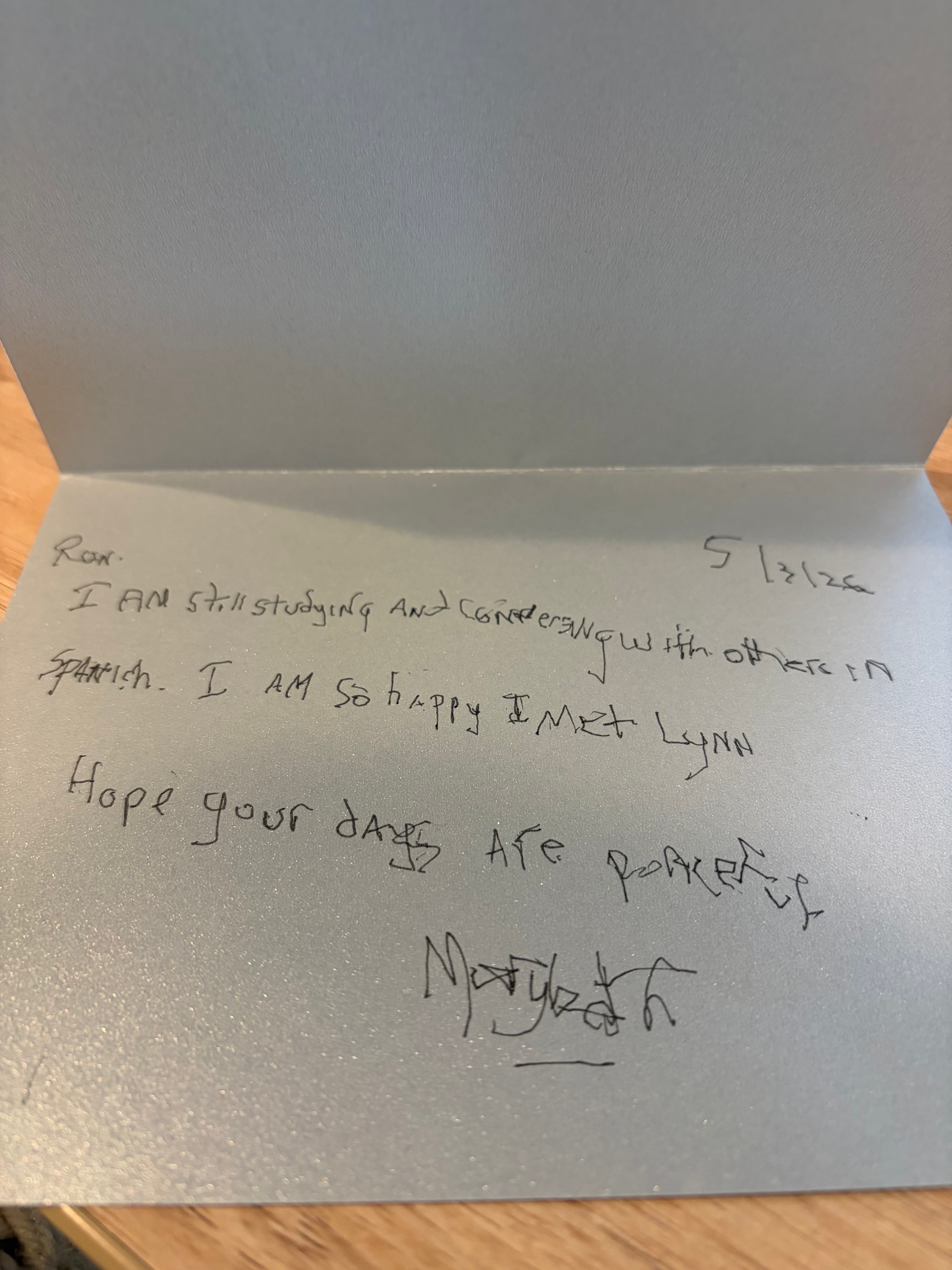
Within that larger context, there have been what we in the Pacific Northwest call “sunbreaks”. Moments in the week, when the clouds separate just enough for warm, healing light to briefly shine through. When Steve calls during one of his Camino training walks to see how I’m doing. When Kevin calls. When MARN calls. When Lou, from high school, reaches out. When Mark invites me to walk. When Kris reaches out and comes over and listens to me ramble like the wonderful counselor she is. When Lil’ Chris sends a heartfelt card and note and invitation to a community event. When the college roommates write to see how we’re doing. When Marybeth sends this card.
Damn, that’s what everyone said, “I’m so happy I met Lynn.” I miss the KChrises, the roommates, Marybeth. Lynn’s people.
More sunshine than a sunbreak, I am not dating anymore because I’ve met someone special. Someone incredibly sensitive to my grieving and the family’s. Someone who watched Lynn’s memorial service on YouTube and said, “I wish I had known her.” Someone who gives me confidence that I will be alright. Especially when my daughters can accept my free falling self and we reconnect.
Sunday, Mother’s Day will be especially hard for A and J. Here’s what I want them to know. I turned on Lynn’s phone recently and there were 99 text messages. One dated 12/16/25, the day after she died, was piercing. Lisa, her boxing coach texted, “I love you Lynn. No more pain. Rest in peace.” Followed by a purple heart and strong arm emoji.
I want them to find solace in their mom’s legacy. So many people loved her. So deeply. We were very fortunate to be among them for as long as we were.