The College That Refused to Die. I challenge you to find a more depressing case study of a liberal arts college on life support. I felt like I needed to take a shower after reading the story of its downward spiral.
Some situations are not salvageable. This is Exhibit A.
A lengthy New York Times article suggests a two-part answer.
First, he couldn’t handle going from being internationally renown following 9/11 to becoming completely irrelevant following his disastrous 2008 Presidential run. Long story short, he decided he’d do whatever was necessary, including help lead an attempted coup, to try to regain some modicum of his former relevance.
Second, he is an alcoholic.
Now, at age 79, he’s running out of money and facing serious jail time. Deserved jail time, not because he’s a threat to the public, but as a deterrent to the next wanna be dictator enablers.
Rudy’s demise is an unparalleled precautionary tale for anyone enamored with the bright lights of media fame. If only someone had slipped him some Marcus Aurelius when he was “America’s Mayor”.
For those scoring at home, give me an error. I would blame my editorial staff if I had one. I recommended ‘The Rich Men North of Richmond’ way too quickly.
If I had a dollar for every time the GalPal told me I would’ve been a great coach, I could afford more Talenti gelato.
She may have been right. I dabbled back in the day when I assisted a high school swim coach for a few years and that went well despite our philosophical differences. I don’t know what kept me from committing more to it.
Which brings us to today’s vid of Taylor Knibb, probably the greatest female triathlete in the world. I’m a fan of the 25 year old. She is a charming mix of hyper-intelligent and super nerdy. In this vid she’s coming off a $100k victory at a 100k race in Milwaukee. This weekend she races in Paris in a 2024 Olympic qualifier.
I dig the way her coach adapts to her intelligence and unique personality. The story that illustrates that best begins at the 3 minute mark. All he wants to do is give Taylor the information she needs about the person behind her in second and then he trusts her situational awareness and decision making.
I also really like their rapport. He says her spirit animal is not the dog on the leash it’s a “grumpy bear” and she chuckles. He has a very soft touch and they seem completely in sync. That does not bode well for the world’s female professional triathletes.
If, in a different life, I had acted on the GalPal’s affirmations, he is the exact type of coach I would’ve wanted to be.
I’m officially in the ‘squeezing out’ part of summer.
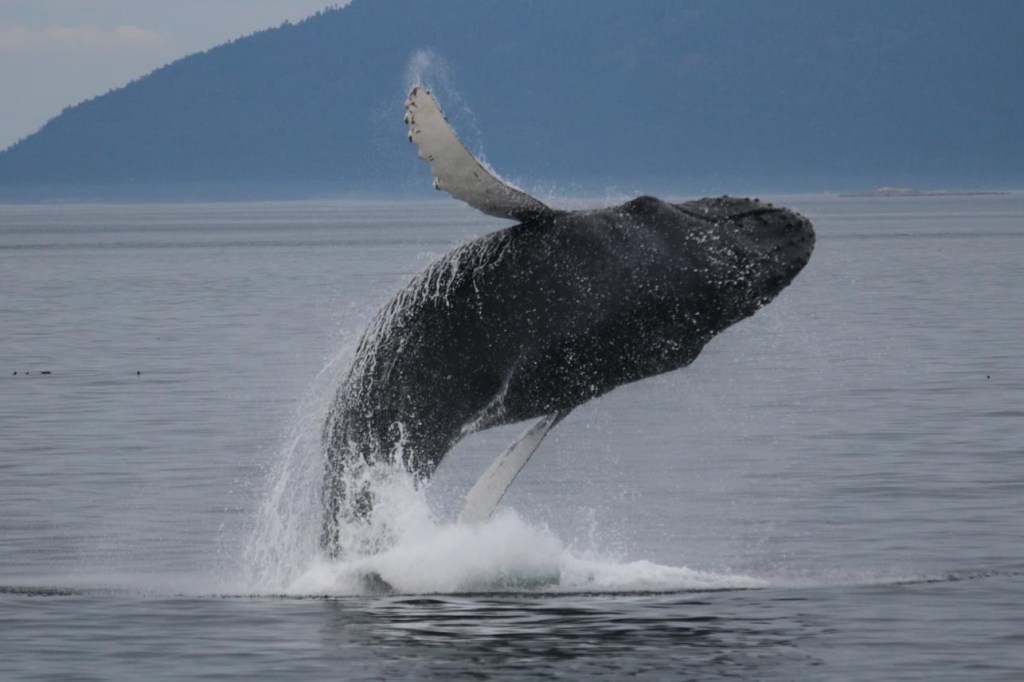
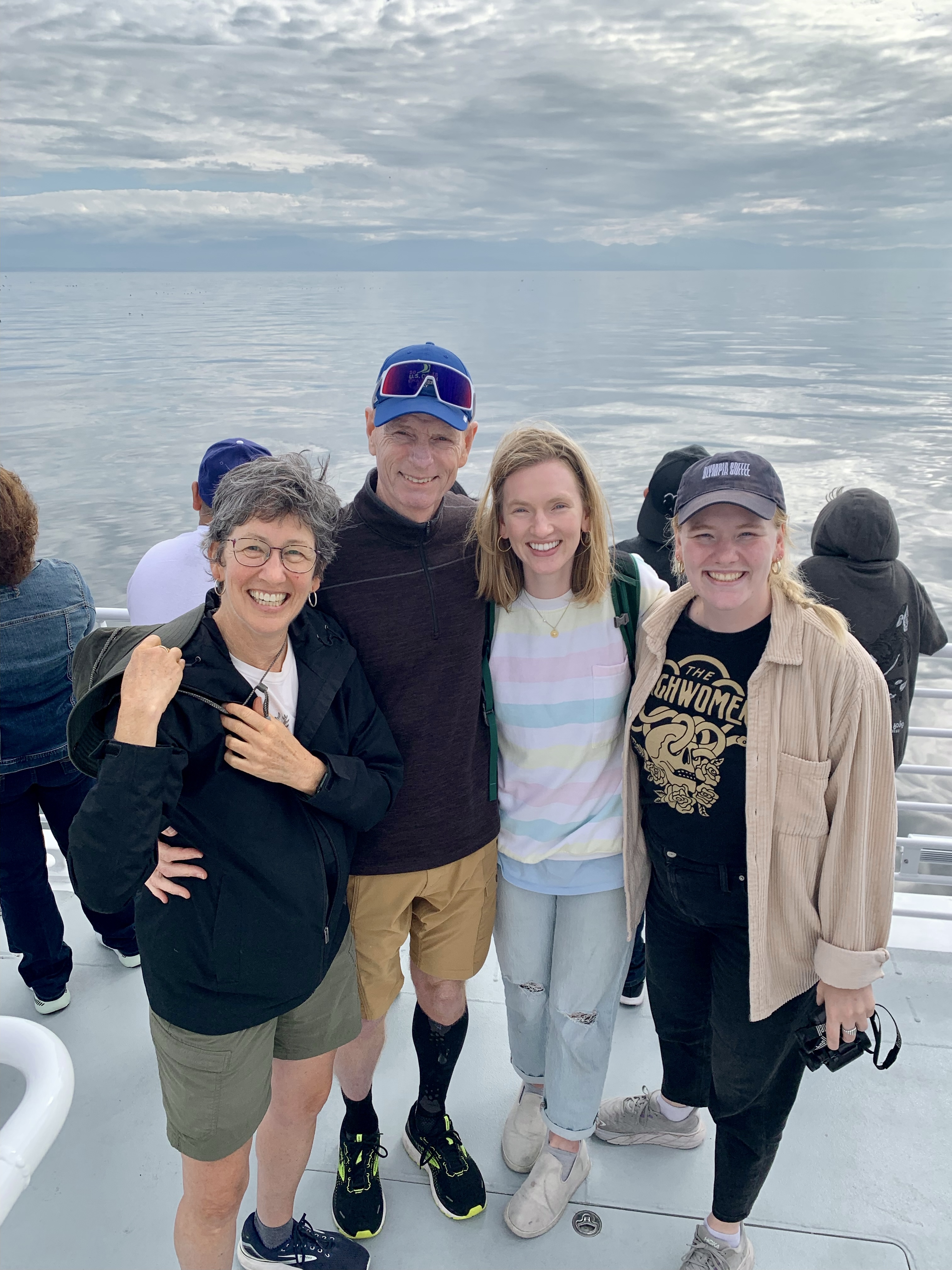
Yesterday, to see whales, the fam traveled from the Southernmost part of Puget Sound to the Northernmost. Off the coast of San Juan Island, our tour operator found two young adult humpbacks. The sight and sound of their exhalations every few minutes were mesmerizing. Off and on we were party to a smallish portion of their backs and small dorsal fins with an occasional flashing of their giant, gray and white splotted flukes.
Then, out of nowhere, one breached, getting about 90% out of the water. Immediately afterwards, their partner did their best to match them. Even having seen whales breach in photographs and video, it was among the most unique/surreal experiences of my life. The boat’s naturalist said they see whales breach about six times a year.
When I woke up today my body spoke to me. It said, “Don’t run, walk.” And surprisingly, I listened.
I walked all the way to the end of Cushman, picking and eating blackberries as I went, then through SeaShore Villa, then down to the Salish shore and home on a hidden wooded path that even Google Earth won’t help you locate.
This happened to be recycling Monday, including, drumroll please. . . glass! I love Glass Day because I get to snoop around and play cultural anthropologist. Yes, Indy-Cush friends, I am taking very close note of your glass contents.
I concede this may be a violation of your privacy, but it’s for a higher purpose, making sense of people’s drinking habits. My research questions are how much alcohol are people drinking and what kind?
My findings. People are drinking a lot despite what seems like an increasing drumbeat of studies which suggest any amount of alcohol isn’t good for you. Wine bottles, like normal, were quite numerous this morn with some households clearly preferring beer.
Maybe people are smart not to pay too much heed to the constantly shifting scientific research. Just wait for the pendulum to swing back, right? And maybe an occasional glass of wine or bottle of beer is a nice break from trying to always do the right thing health-wise. I mean, we’re going to die either way, right? Unfortunately though, some households go beyond moderation.
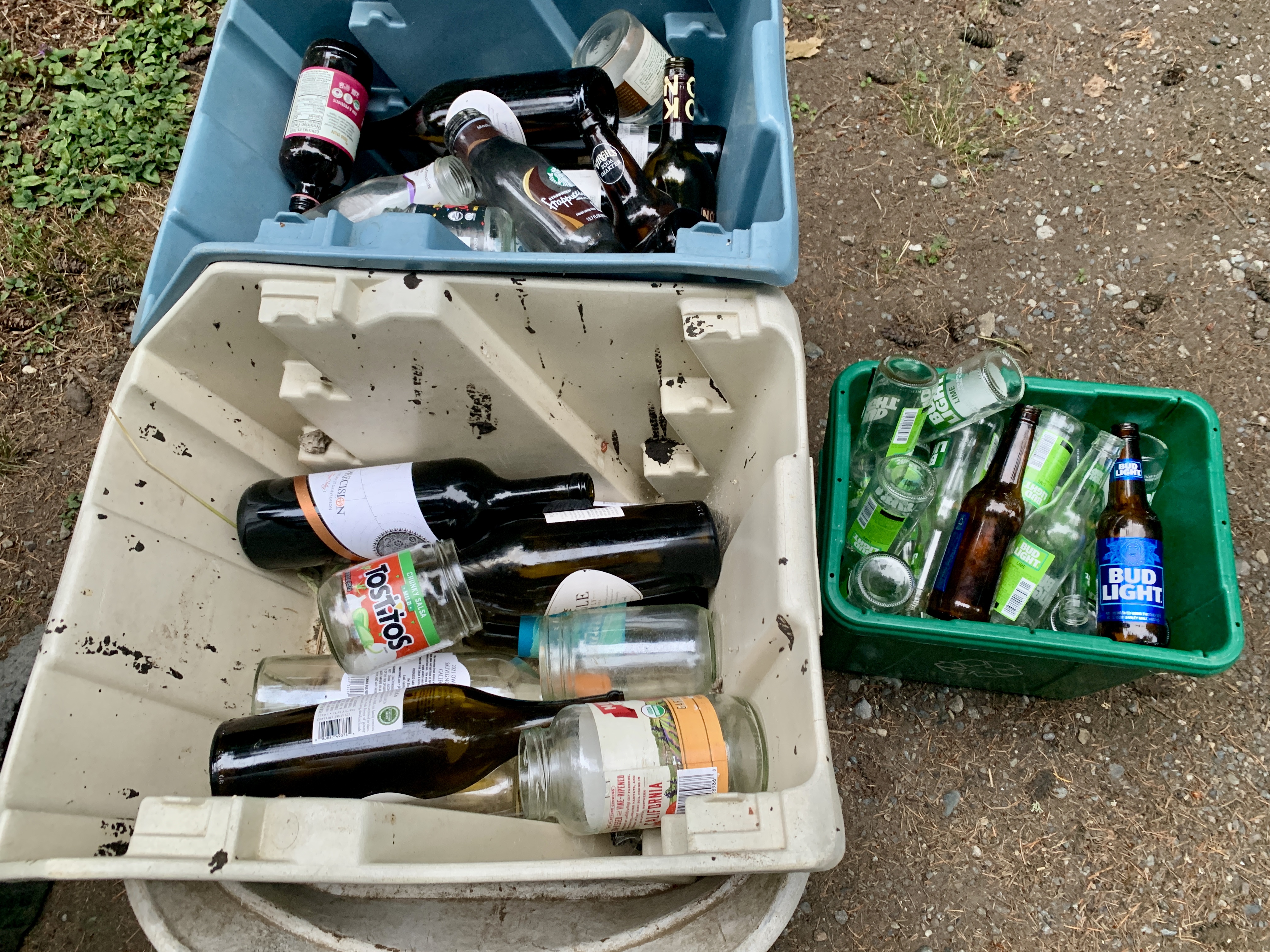
Let’s take a closer look at a few examples.
This is a fairly representative sample of moderate drinking over a four week span. It looks like four wine bottles and maybe a dozen beer bottles. Bud Light is a sad choice given the plethora of excellent local craft brews from which to choose, but maybe they’re Lefties supporting the maligned beverage.
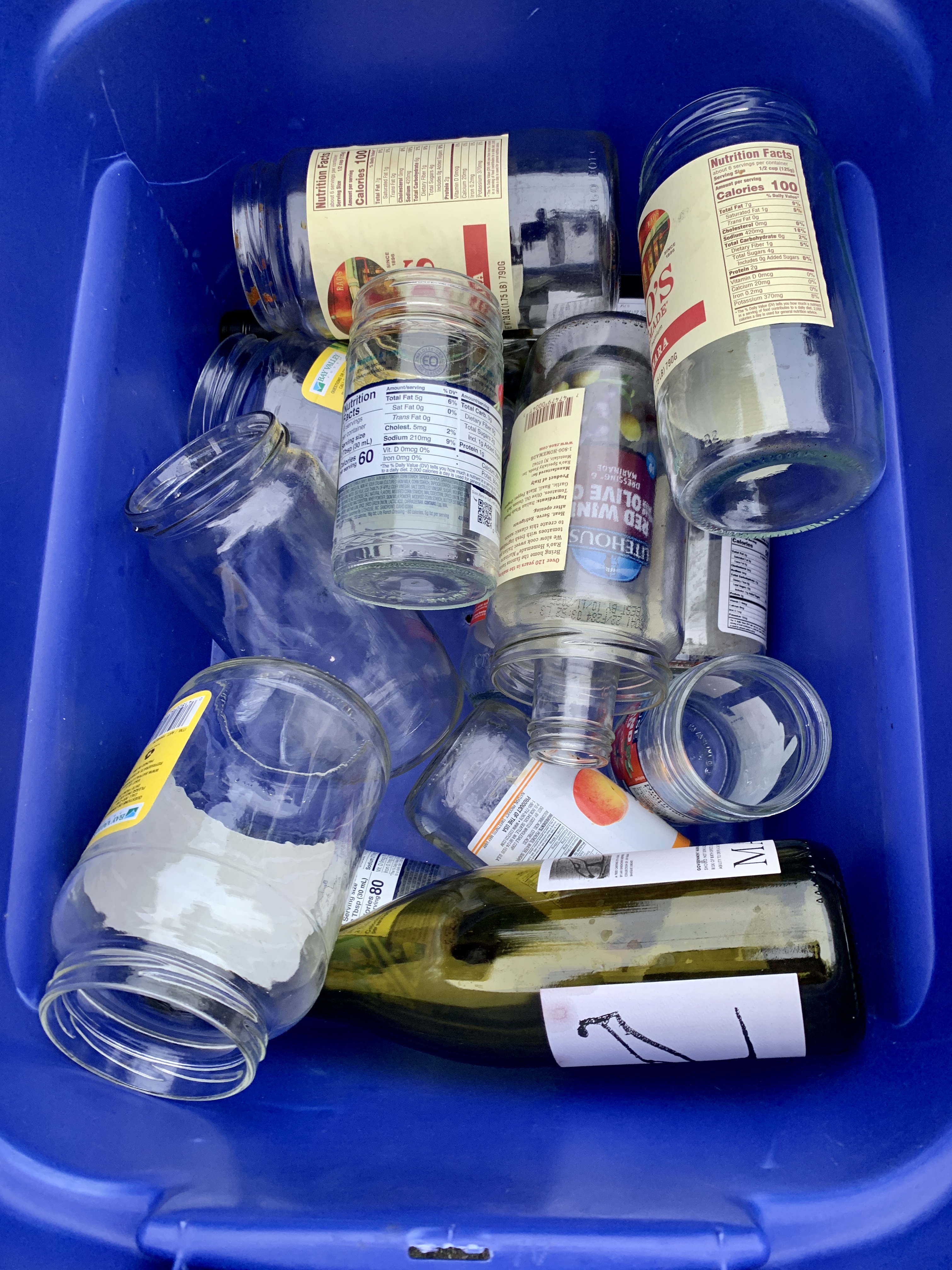
Here’s our month worth of glass.
Boring! Some pasta, pickles, peaches, salad dressing and only two wine bottles compliments of the college roommate reunion. Come on California Lutheran University Class of 1982, do better! Drink more. . . like in Thousand Oaks back in the day.
One limitation of my research is that I hosted a cycling party after a particularly long ride, but we drank beer out of cans, so the above snapshot doesn’t represent all of our intake. Oh no, I guess that means some of my neighbors may drink more than meets the eye too.



 Pressing Pause