
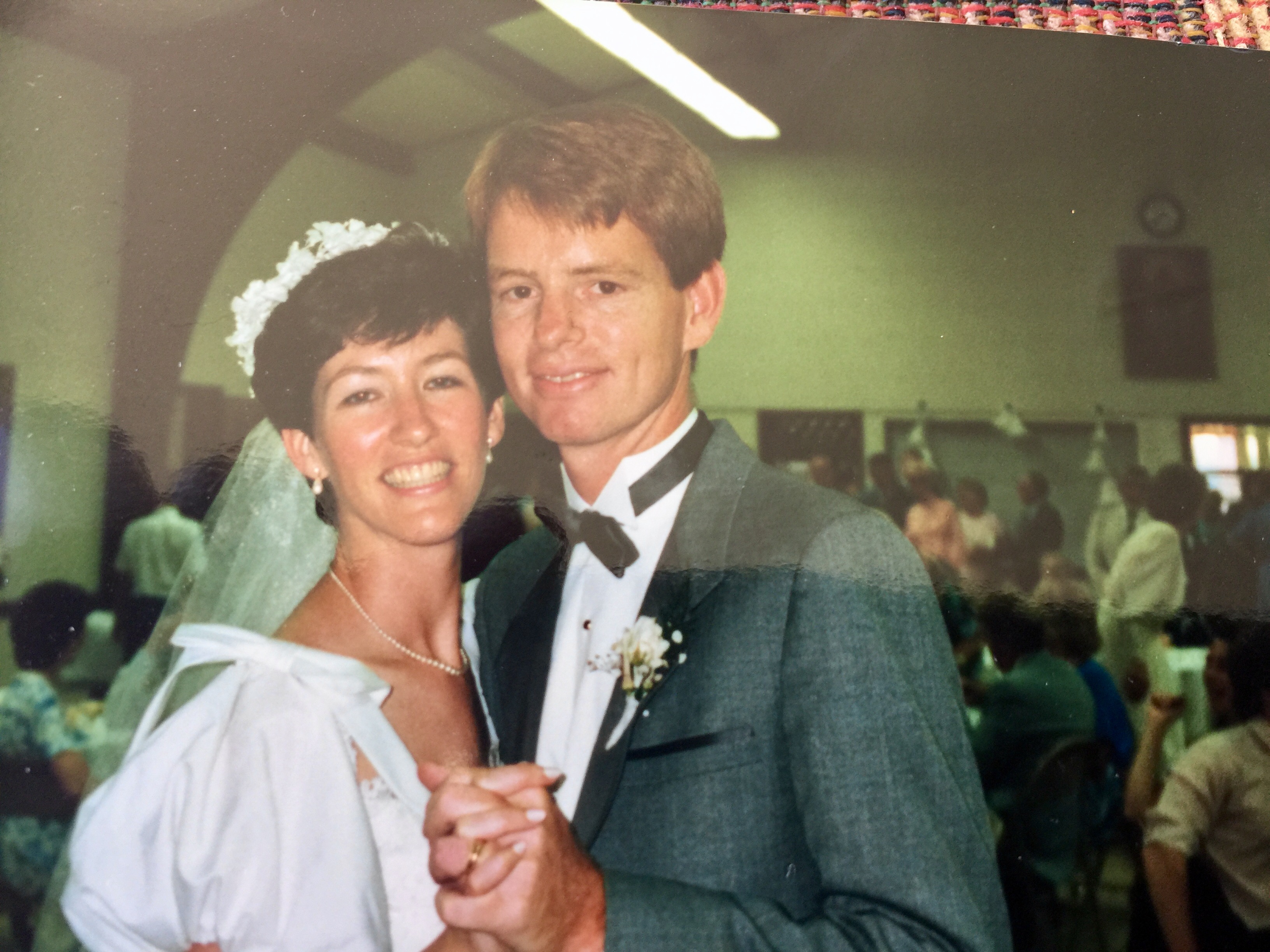
Maybe the answer is as simple as my wife, Lynn, is aging at warp speed due to her Multiple Systems Atrophy, a rare degenerative neurological disorder for which there’s no cure. But one thing gnaws at me. Compared to most caregivers, I have so many more resources. So, what’s my problem?
Physically, I am healthy. Not all caregivers are.
Most significantly, we can pay for her care without undue worry. That includes two health care aides who work weekdays. It’s not cheap. Together, they account for about 45% of Lynn’s total care. I am also fortunate to have two helpful daughters who I team with on weekends. Their help equates to about 10% of the total, meaning I fly solo the other 45% of the time.
Also, there are numerous friends and family who love Lynn and are supporting us in myriad ways. Especially my niece and sister, who, like clockwork, fly to Seattle from Salt Lake City and Northwest Indiana, drive down to Olympia where we live, and rent a place for five days every three months. My niece is an ace physical therapist, and when she visits, she works with Lynn almost non-stop mostly making accommodations to our house and improving Lynn’s routines.
Then, there’s Kris, Marybeth, and Joan, who show up every Saturday at noon with Lynn’s favorite lunch from the local deli. They talk, and talk, and talk. And giggle. And garden. And inject much needed levity and normality.
Also, there’s Susan, who brought dinner over this week despite her dad dying, in Seattle, at age 98, a few days ago.
Then, there’s Vince, who knocks at the door, hands over amazing Ziploc bags filled with wonderful produce from his garden and jets. Kevin sends UberEats gift certificates from SoCal. And similar to Susan, Michael, Dan, Mary, and Travis show up with food and good cheer. And Monica. And a few of my daughters’ friends who I have never even met. If I stop long enough to reflect on these random acts of kindness, they bring me to tears.
Altogether, Lynn’s CaringBridge website has 94 people from other neighborhoods, states, and countries who are reading my manic/dorky updates, praying for us, sending supportive messages, and ultimately, seeing us from afar.
And despite this all-world support, I’m completely broken. So again, I wonder, what’s wrong with me? Why am I shattered. Emotionally bereft. Socially toxic as a result of not a short fuse, but no fuse. Why have I not just hit an MSA wall, but been completely crushed by one?
How about an anecdote to give you a feel for my sadsackness. First though, let me summarize how my work colleagues talk about me. In short, they say they most appreciate my poise, thoughtfulness, and calm demeanor. LOL.
Lynn decides to make an ice cream cone. To get the cone, she has to get into a cupboard in the smallish laundry room. She ends up repeatedly moving her wheelchair forwards and backwards in the tight space. Fast forward a few minutes. Part of the door frame lies on the ground. There’s ice cream all over the floor. And counter. The ice cream container fared poorly in this ordeal too and is now too crumpled for the top.
Because you’re rational, you’re thinking, “Big shit. The door can be repaired. The floor and counter quickly and easily cleaned. The container and top? Come on bruh, get real. Altogether, minor trade-offs for Lynn feeling a wee bit independent.”
But what you’re not factoring in is the cumulative effect of this type of experience hundreds of times over. Combined with other, way more substantive challenges, that have completely chipped away at my reservoir of patience, kindness, and humor.
I lost it, yelling, “WHY DIDN’T YOU ASK ME TO MAKE YOU AN ICE CREAM CONE?!” And then stayed Mad. Yes, you’re absolutely right, a complete and total overreaction.
There are two ways I could pivot from here. The more obvious one is to ask the question on most people’s minds, what can/should I do to better manage my anger and heal more generally? Or more specifically, when the hell is Ron going to find a good therapist? Sorry sports fans, I’m choosing the second, less obvious one, where I ask, what exactly has been MSA’s toll on me? Buckle up.
The losses are overwhelming because the challenges are multilayered. Some hard, others harder, two especially hard.
Hard
• We can’t do the ordinary day-to-day things we always took for granted because they were so easy to do. Things you mostly like still take for granted because they’re still easy for you and yours to do. We can’t go out to dinner. We can’t go for a walk. Or for a lake swim. We can’t go to Victoria for the weekend. In the end, these small things are the lifeblood of intimate friendship. Gone.
• We can’t plan for the future. Before MSA hit, we never made the time to make a list of fun future activities, but it’s still hard to come to grips with the fact that there’s nothing to look forward to on our calendar. The four of us will not be going to Spain or hanging in an Alderbrook cabin anymore. Hope for fun in the future. Gone.
Harder
• It feels like my second global pandemic with all the lockdown rigamarole. Since returning from a cycling trip to Bend, Oregon on June 1, 2024, I have been completely housebound because Lynn’s so dependent upon her meds, her bathroom, and her hospice bed. I’ll spare you the details, but her digestive system is completely whacked, meaning even day trips are too difficult to tackle. Spending a few hours at Alison’s apartment in Seattle recently felt like an international trip.
For fourteen straight months my daily routine has been the same. I wake up and wait for Lynn to ring my intercom doodad which I can’t wait to chuck in the trash. Then, absent our healthcare aides, I help her with everything, pretty much non-stop. Because MSA is like a demented dimmer switch that someone’s slowly turning, she needs more help each month, meaning my breaks have grown increasingly short. And ultimately, insufficient. Lynn mistakenly thinks if I could just get away for a few days I’d be fine. I tell her I don’t need 4-5 days, I need 4-5 months where I don’t have to cook, clean, or care for anyone. At all. Any meaningful flexibility of movement. Gone.
• We’ve had a modern marriage meaning we’ve split the work pretty evenly. Now, I’m wilting from the pressure of having to do everything I’ve always done plus everything Lynn always did. Among other things, she used to help with groceries and she did the bulk of the cooking, and all of the laundry, and half of the housework. And she called the service peeps. Now, it’s all me, all the time. I cook every meal, clean the kitchen every night, do the dishes, the laundry, take care of the trash/recycling/compost, vacuum, take care of the yard, stay on top of our personal finances, and ended up having to partner with a CPA to close Lynn’s parents’ estate for which she was the executor. That old energy saving division of labor. Gone.
Hardest
• Overwhelmed by her symptoms, Lynn has lost the ability to perspective take. She’s always been uber-caring, but now, not so much. Here’s what I wish she’d say, “I’m really sorry for what this disease has taken from you.” I’ve tried to understand this change. All I can come up with is her life is so hard, there’s not any psychic energy left for anyone else, even me. Whenever I try to express my profound sadness, she tends to take it personally, gets defensive, and immediately starts talking about her own feelings. Instead of doing the only thing that creates connection, asking follow up questions, and genuinely probing for more insight. I want her to say, “Tell me more so I can understand even better.” But it’s not going to happen. Because of MSA. Curiosity and perspective. Gone.
• I am the loneliest I’ve ever been. There’s two parts to it. The first is I’m disconnected from my friends. Because, remember, I’m housebound. On top of everything else, I keep Lynn’s social calendar. I organize friend visits for her almost daily. But ironically, I almost never see my friends. Not to mention, meet anyone new. Zilch socializing.
On top of that, right now, my connection with Lynn is tenuous at best. We’ve always enjoyed an intense physical connection. Now, MSA has doused those flames. The mind is willing, but the body is not. Which saddens both of us greatly.
We don’t have in-depth conversations either. The other day I told her about an article I had read about “anchor offs” which you can see from our deck. These are destitute people living on boats anchored in Budd Inlet. I summarized the article, explained how they prefer the water to the streets, and . . . nothing. I’m sure she was thinking about what I was saying, she just couldn’t communicate her thoughts. She doesn’t really maintain eye contact either. So, it’s like playing tennis against a wall instead of with another person. Mark told me Lisa got a real kick out of his story about the 30 mopeders who passed us on 113th on a recent ride. I was a little jelly. Lynn isn’t able to ask about where I’ve cycled or how it’s gone. Post ride, I think to myself, she’ll never have any feel for those two hours of my life.
A few weeks ago, I told her I was thinking of buying a house in Bend. I wanted her to say, “You’re crazy” or “Cool, which ones are you considering? Show me.” Ultimately, like with the “anchor off” story, I was looking for connection. But there was none. If a convo happens in the forest and no one is around to hear it, does it make a sound? Deep-seated, profound connection, built over decades. Going.
 Pressing Pause