
Guess I Should Buy An Axe

Unless you’ve been backpacking in a remote wilderness the past few years, you’ve heard some part of the increasingly heated discussion around masculinity. The starting point, as a Washington Post headline writer recently put it is, “Men are lost”.

Christine Emba’s July 10th article, “Men are lost. Here’s a map out of the wilderness” has received lots of positive attention. Slightly different than her headline writer, Emba’s starting point is young men’s “weirdness”.  Whether “lost” or “weird” the suggestion is that a positive vision of masculinity is the way forward. Men will be less lost and weird when we recognize some gender distinctiveness without pathologizing differences.

“For all their problems,” Emba writes, “the strict gender roles of the past did give boys a script for how to be a man. But if trying to smash the patriarchy has left a vacuum in our ideal of masculinity, it also gives us a chance at a fresh start. . .”. She adds, “We can find ways to work with the distinctive traits and powerful stories that already exist—risk-taking, strength, self-mastery, protecting, providing, procreating. We can recognize how real and important they are. And we can attempt to make them pro-social—to help not just men but also women, and to support the common good.”

All quite vague, making the reference to a “map” just one more example of headline exuberance.

Further along, Emba gets slightly more specific. “In my ideal,” she adds, “the mainstream could embrace a model that acknowledges male particularity and difference that doesn’t denigrate women to do so. It’s a vision of gender that’s not androgynous but still equal, and relies on character, not just biology. And it acknowledges that certain themes—protector, provider, even procreator—still resonate with many men and should be worked with, not against.”

Since most gender differences are exaggerated, I propose a radical approach to this discussion and that is chucking the concept of masculinity altogether. Instead of ruminating on what it means to be a boy or a man, we’d be better off encouraging young people to “cut and paste” from caring and kind human beings across the gender continuum. Notice how they listen. Consider their sense of humor. Notice their humility. Reflect on their quiet strength. Nothing positive comes from thinking about gender as a competition of sorts.

In Emba’s piece, Scott Galloway, whose podcasts I enjoy, says, “Where I think this conversation has come off the tracks is where being a man is essentially trying to ignore all masculinity and act more like a woman. And even some women say that—they don’t want to have sex with those guys. They may believe they’re right, and think it’s a good narrative, but they don’t want to partner with them.”

For being a UCLA grad, Galloway struggles with subtlety and nuance. The patriarchy is so pervasive, some women are hopelessly wedded to it. Many others are not. Galloway’s reference to “acting more like a woman” implies women are the kinder, more caring, more nurturing, and more emotionally intelligent half of the population.

I can cycle up and down mountains, lift weights, and climb on the roof and clean the gutters while trying to listen to others more patiently and empathetically. All while trying to be more vulnerable on top. The touchy-feely stuffs probably excites the Good Wife at least as much as the physical activities which come more naturally to me.

If asked, she’d probably say, “Why should I have to choose between those things?” My entire point is that women shouldn’t.

One tongue-in-cheek commenter in an expectedly mindless on-line discussion on what masculinity entails had a great response. “Everything is there except wood chopping,” he joked. You are not a man until you fell a tree with an axe, split the wood and heat the house with it.”

At least I think he was joking.
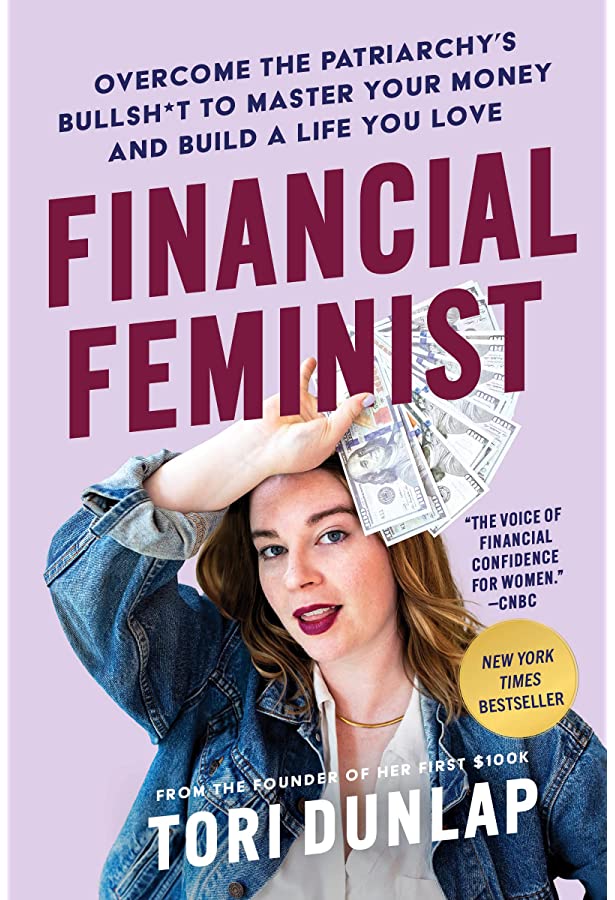
There’s A Lot of Bullshit To Go Around

There I was, spinning furiously down Lemon Rd NE in brilliant, balmy (low 50’s) sunshine. Listening to this author talk about her book on a podcast.

I like the way Dunlap talked about the patriarchy as not anti-men as much as anti-gender conforming. I liked her related insight too—that the patriarchy harms men as much as it does women.

But she really lost me when she said that unlike women, men are always talking about money, “at the golf course, at the whiskey bar”. Here’s a direct quote, “They’re (men) talking openly and honestly about money in ways that women are not.” Hahaha. LOL. Stop, you’re killing me!

Makes me wonder how many men Dunlap knows. My friends and I NEVER talk about money. I don’t know how much they make, how much they’ve saved, how they invest, what they worry about financially. Nothing, nada, zilch.

Note to Dunlap—money may be the last great taboo.

Then Dunlap said girls are criticized for spending too much money on frivolous things. Another direct zinger, “And for girls the very things that are deemed frivolous are always lattes, manicures, and purses, but not NFL season tickets or golf clubs.”

I’m wondering if she had a bad experience on a golf course.

Dunlap started out so well, subtle, nuanced, insightful, but then dove head first into, borrowing from her title, bullshit stereotypes.

It was enough to make me stop mid-Lemon Road and switch to Spotify. It takes A LOT to get me to stop mid-workout. And Dunlap is A LOT (at times).

Warren Exits—Patriarchy Remains Undefeated

In 1997 I traveled to China with Guilford College colleagues compliments of the Freeman Foundation. One female sociologist in our group, a firebrand feminist, had never traveled outside of the U.S.

One night we strolled through an open air market. Separately, she and I ended up purchasing some “peasant paintings”, inexpensive, beautiful folk paintings with farming themes done by rural artists. Afterwards, she wanted to know what I had paid for mine. When I told her, she lashed out, “Sexism!”

I couldn’t help but chuckle. I had cut my teeth negotiating with street vendors all over Mexico, Ethiopia, Kenya, and Zimbabwe. I know the song and dance, how to walk away, just slow and far enough for the vendor to come and get me and say my price is okay. She knew nothing of the sort.

Being wise to the ways of patriarchy and misogyny meant she saw sexism around every corner. She’s the exact opposite of my close male friends, whose intelligence I respect, because they discount ANY talk of patriarchy and misogyny when it comes to Elizabeth Warren’s aborted candidacy for the Democratic nomination for President. Never mind that this will the 46th time in a row that we’ve just happened to select male candidates. It’s just a coincidence.

Megan Garber cleverly and cogently explains how patriarchy and misogyny doomed Warren in this piece titled “America Punished Elizabeth Warren For Her Competence”. But when it comes to my close male friends, who tend to be college educated, treat women with respect, and are (mostly) anxious to turn the page on the Trump administration, Garber has a heap of problems getting them to acknowledge that their dislike for Warren had anything to do with patriarchy and misogyny.

Because they are me in China. They think the Garber’s of the world see patriarchy and misogyny where it doesn’t exist. Being blind to it, they are highly skilled at rationalizing their choices. Of course, mens’ worst rationalization is this, “We definitely would’ve elected a woman one of the forty six times if one was as qualified as the men.” Most men’s rationalizations are more subtle and nuanced than that, but almost as pernicious.

Here are Garber’s problems more specifically:

  1. My male friends will choose not to read her piece. It’s exactly twelve paragraphs too long. They will think they know what it alleges, that she’s seeing things that don’t exist, that they’re heard it all before.
  2. Even if they were to defy the odds and read it, they won’t take the time to consider whether it applies to them. They won’t ask, “Was my negative reaction to Warren even in part a result of what Garber argues, that the U.S. still doesn’t know what to make of a woman—in politics, and beyond—who refuses to qualify her success? If so, why am I prone to that line of thinking?”
  3. They won’t ask that because that would require them to consider changes not just in their thinking, but in their behavior. How do you undue thinking of especially competent female candidates negatively anyways?

Were they to truly grapple with how to not penalize women candidates for their competence and ambition, the patriarchy would begin to falter. As Warren’s candidacy illustrated, there’s no risk of that. Yet. Patriarchy remains undefeated.