19

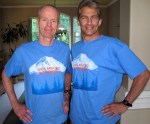
Another birthday. And so two characters exit the stage, Fifteen and Eighteen, and two enter, Sixteen and Nineteen.

I’m at a stage in life, most likely late-middle, where I don’t take mine or other close friends’ or family members’ birthdays for granted. Increasingly I think of birthdays as celebrations of another year of life together.

After writing warm fuzzy posts about the GalPal and youngest daught, there’s real pressure to deliver more warm fuzzies this time around.

I know I should write about how Nineteen is also blossoming on her own at college. About how helpful she’s been at home this summer. About how she salvaged a summer of unemployment by hustling together odd jobs in the hood and a half-time internship. About how nice it was that she invited me to go to Portland with her for a Sara Bareilles concert (that fact that her mom didn’t want her driving home alone after midnight might have factored in too).

Can’t though because a part of Nineteen’s blossoming is continuing to get faster in the pool. When she got faster than me at the 500 freestyle, I consoled myself by thinking at least I own the shorter stuff. Since that’s no longer true, I figured well I can still sing “Look at Me Now” to myself as I pull away in open water. Then Mel, her, and I dove into Ward Lake last Saturday afternoon. I used to be able to pick her out when looking back while breathing. Now I have to lift the chin and tilt the ol’ noggin forward.

So since this is what it has come to, her showing no respect for her elders, I’m going to tap that middle schooler in me that does the opposite of whatever I’m supposed to. Stopping right here sans warm fuzzies.

And as Sara sings. . . Who cares if you disagree? You are not me. Who made you king of anything?

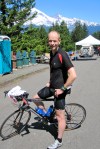
2011 RAMROP—Ride Around Mount Rainier In One Piece

After five hours of sleep, woke at 3:28a, drove about as far as I hit a driver down the hill to Danos at 4:00a, and arrived at Enumclaw High an hour later.

Cloudless and weirdly light given the sliver of a moon. High 40’s, maybe 50. End of life turtle neck base layer under the jersey, $5 full-fingered running gloves. Dano, who claims he’s from Minnesota, was sporting girly shoe covers.

Lathered my bits(1) with the poor man’s chamois creme, ten year old Noxzema, and was off at 5:47a.

Some context. Lance’s ex, showing no concern for my well-being, pulled a last minute legal stunt and so we were a man down. I knew Gordon was going to be way too fast for us mortals, so it was Dano, me, and the masses. Among other things, Dano is also know as Supplement. Dude had plastic bag after plastic bag of pills of every size, shape, and color.

Supplement is relatively new to cycling. Said he may “have gone a hundred once as a teenager”. Performed admirably on an 80 mile mountain training ride a few weeks back. Learned how to draft. Gained fitness. And confidence. Coupled with the pills, and my stellar coaching, piece of cake.

I knew he had the necessary mental make up. An experienced marathoner, he disappeared one weekend four years ago. Decided to celebrate his 50th with a 50 mile run. In serious heat.

The goal was to make like Malcolm X and help Dan around the mountain by any means necessary. The plan was to ride the flats together and regroup at the top of the three climbs.

I was a firm taskmaster. Let’s bridge up to that group. Pull for no more than half a mile. Don’t forget to drink. I insisted he holler if the pace got too quick. He never hollered. Long story short, he surprised me by riding very steadily all day long. My mountain top waits were shorter than expected. Didn’t even fade over the last 25 miles. Maybe there’s something to the pills.

We rode out of town with Gordon and enjoyed his company for about 5-6 miles until he launched. Beforehand, I predicted he’d finish a few hours before us. Climbed nearly 10,000′, over 152 miles, at 20mph. 7:58 total time, 7:35 ride time. He joked it was a “recovery ride” after last week’s stage race. Sick. Look for him to turn some heads in the Leadville 100 on August 14th.

For the first hour we gradually descend, through fog-strewn farmland, and it was flat out cold. At mile 16 I decided I needed to warm up, so I went to the front of the slowish pace-line we were in and settled in. Sixteen miles later we reached a T-intersection. I was aware of two shadows behind me, but cracked up when I realized my train was about 15 people long. I was not going fast, but still a personal record “pull” nonetheless. At the 33 mile food stop I did some press and signed some autographs.

Then Dan and I took turns gently working some rollers. The early morning cold coupled with my enlarged prostrate (2), made for a bad combo. Despite whizzing at mile 33, at 40 I told Dan I had to take a quick nature break. We were facing 15 miles of a 1-2% grade to the park’s entrance. We were being disciplined about spinning easily, but as I was relieving myself on the side of the road, a beautiful 20 person pace-line materialized out of thin air. “Go! Catch on! I’ll catch up!”

Doing his best Tony Martin impersonation, Dan bolted right by the peloton and then sat 100 meters in front in no man’s land. I had to go get him and drag him back. The people on the front were perplexed. “We’re drifting to the back.” In no time at all, we were nearly at the park. A few pills, peanut butter and honey bagels, cookies, and bananas later, and were ready to begin the ride in earnest.

We climbed together to Longmire, regrouped at the top of Paradise, and descended together. Well, until Dan got stuck behind a slow swerving, human impediment disguised as a rider. Road is pretty sketchy so my top speed was only 40.8 before the Garmin quit at mile 94. I felt great all day and climbed well leap frogging from rider to rider.

One wanker had the nerve to pass me near the top of Cayuse. But he was tatted up and so was obviously more of a bad ass.  Mountain was at its most beautiful, mid-50’s, to maybe lower 60’s in the p.m. Breeze coming off the snow, natural air-conditioning. Ditched the turtle neck base layer at mile 88.

The last 30 miles can be a slog. The key is to leave the last food stop with as many other people as possible. We failed, leaving nearly alone. Turkey sandwich charged, Dan caught onto one guy and the three of us settled in for 3-4 miles. I saw three people about three-fourths of a mile ahead and decided to bridge up. Yes a large gap to make up at that point in the day, but I did it over the next 4-5 miles.

After finally making contact, I signaled Dan forward, and sat in back and recovered. 3-4 miles later we were passed by about 15 guys. I didn’t think our lead rider would hook on, but fortunately she did. After sitting in the back for about 10 miles, I was getting annoyed that only about three guys were doing all the work. Feeling the best I’ve ever felt after 130 miles, I went to the front. They wouldn’t get on my wheel despite my slowing down and then passed me shortly afterwards.

Whatever. When the road turned up and the headwind picked up a bit, I went forward again. After realizing I was stronger than all of them, I said screw it, and rode away. That was serious fun. Riding away from about 16 guys after nearly eight hours in the saddle. I waited for Dan at the Mud Mountain turnoff and four of us rode in together. I pushed the pace over the last few miles to get us in under ten hours (9:57, ride time probably 8:50-9:00).

(1) Learned recently that the British sometimes use “bits” to describe male privates. I’d appreciate it if someone from the other side of the pond could explain if “bits” translates more as “balls” or “genitals”. If genitals, I should not have used it in that context.

(2) TMI?

My Lovely Wife

It’s time. I’m going public with my affection for my wife.

Twenty-five years ago today she walked down the aisle of a Lutheran eglesia in SoCal and committed to sticking with me through thick and thin.

She had no interest in marriage when we met in Venice, CA; went out for fish and chips at Marina del Rey; and and then flirted on a deserted Santa Monica lifeguard stand in the dark. After falling for her hard, she informed me she was going to Mexico for the summer to learn to speak Spanish. So enamored with me, she ran for the border.

Against all odds, while studying Spanish in Cuernavaca, she started to miss me. Following some steamy hand-written letters (remember those?), I flew to Mexico at the end of her language school studies and we backpacked throughout southern Mexico. Like Felix Hernandez in the latter innings, I wore her down. By the time we returned home we were halfway down the aisle.

She should have known she was dealing with a dimwit when, right before saying my vows with the videocamera rolling, I turned the small microphone clipped to my tux off instead of on. Even though there is no audio evidence of my vows, I’ve done my best to honor them.

She’s loved me as unconditionally as possible and for that I am incredibly grateful. Like anyone who has been married for the long haul, we’ve struggled at times, even more than outside observers would guess. There were moments when the Vegas oddsmakers weren’t sure we’d make it to 25. When our wires get crossed, I sometimes lose my temper and patience, and just want to stop talking and take the next space shuttle flight into outer-space. She can also lose it, but always needs to resolve conflicts immediately no matter how long it takes. I mean no matter how long.

She’s the spiritual leader of our household, a Godly woman with a profound social conscience. She also is a damn sexy dancer and the best, most caring, and loving mother on Mother Earth.

My only regret is that we can’t get back all the sporadic days we’ve lost to mindless miscommunication, self-centeredness, arguing, and hurt feelings. I don’t assume we have another 25 years to enjoy each other’s company. I’m not going anywhere, but our health isn’t guaranteed and some of the cars on Mount Rainier got awfully close on Saturday’s training ride.

My plan going forward is to take full advantage of each year not knowing which might be our last. My hope is for steadily improving communication, mutual selflessness, reduced conflict, and even more profound affection and intimacy.

I’d jet down the same church aisle today given the chance all over again.

Somethingotherverted

I’m neither introverted nor extroverted. I’m somethingotherverted. Someone on the outside looking in would probably label me introverted.

I prefer solitude to crowds. Give me a quiet dock on a still lake over a Disneyland pass any day of the week. On a Friday night, I’ll pass on the concert in the park for popcorn, the NewsHour, and something interesting to read. The apple doesn’t fall far from the tree. The stories motherdear could tell about my dad’s propensity for quiet nights at home.

Long story short, I lack social energy. But the ironic thing is, when cajoled to attend the concert in the park, I almost always enjoy myself. And often I see people I know and rally, asking questions, catching up, making people chuckle. If you were to eavesdrop on me at the concert in the park, you might even conclude I’m extroverted. That’s why the conventional sociability continuum doesn’t quite cut it.

Some of my close friends are surprised when I half-jokingly describe myself as anti-social because my socialness is most evident in small groups. I greatly prefer dinner parties with a few close friends to large fiestas where I don’t know many people. At fiesta gigante the GalPal, a conventional extrovert, will walk right up to you and introduce herself. Especially if you look like you might not know anyone else. In contrast, when I’m looking at you I’m thinking, “What a sadsack.” That’s okay though because once she ditches me, you’ll be thinking the same thing about me. Kharma.

My somethingothervertedness is evident in my professional life too. I’m guilty of keeping a very low profile in the office and on campus, but I’m alive in the classroom, enjoying my interactions with students very much.

I’m fortunate the GalPal sometimes nudges me out of my self-imposed solitude. She used to try to drag me to events which often caused me to be even more resistant. She’s become more understanding, meaning more sensitive and subtle.

Then again, our 25th anniversary is around the corner. A quarter-century should be long enough to figure out our extrovertedness and somethingothervertedness.

What are you?

We’re All Kareem Abdul-Jabbar

Lew

When I was a pipsqueak, switching sports with the seasons, my guys were Jack Nicklaus, Kareem Abdul-Jabbar, and later, Magic “Earvin” Johnson.

Now my favorite superstars are Dave Gordon, Lance Matheson, and Dan Mathis.

It’s kinda hard to believe Kareem is 64 now. It seems like yesterday I was in college, squatting in front of our fuzzy t.v. in a Palms apartment, as Mark Eaton watched helplessly as Kareem’s “most points in NBA history” setting baseline skyhook hit nothing but net.

Kareem has always been cerebral, aloof, and apparently, not too personable.

Last week, he said he felt slighted by the Lakers since they hadn’t built a statue for him yet out in front of LA’s Staples Center. That complaint could convince me to never erect a statue, but after digging a little bit into the context, I realized Kareem, just like all of us at times, feels unappreciated.

If Kareem felt appreciated by the Lakers, I doubt he’d sweat the statue. The Lakers in essence have said it’s tough to appreciate Kareem, given his aloof, prickly personality. He’s made his own bed.

Some of my co-workers don’t feel fully appreciated by others at work. Some of my friends don’t feel fully appreciated by their partners. Benjamin Netanyahu doesn’t feel fully appreciated by Barack Obama. Maria Shriver feels unappreciated. I don’t like that I feel unappreciated at times.

I wish I was more self sufficient when it comes to feeling appreciated.

But the truth of the matter is I’d like a statue too. A couple of ’em. One for three decades of conscientious teaching. Another for three months of extra cooking and cleaning while the galpal fights plantar fasciitis. And another for Friday’s lawn work.

Maturity is one’s ability to show appreciation for others without worrying about it being returned in equal measure. The challenge is to switch from “Woe am I, so unappreciated” to “I resolve to out-appreciate you.”

Ever deepening selflessness, characterized by ever increasing appreciation for others, is a key ingredient of a life well lived.

The Satisfaction Treadmill

I’m a third of the way into William B. Irvine’s excellent book, “A Guide to the Good Life: The Ancient Art of Stoic Joy”. Irvine “plumbs the wisdom of Stoic philosophy, one of the most popular and successful schools of thought in ancient Rome, and shows how its insight and advice are still remarkably applicable to modern lives.”

The first “Stoic psychological technique” is negative visualization or regularly contemplating the bad things that can happen to us. There are several reasons to practice negative visualization, but the main one is “We humans are unhappy in large part because we are insatiable; after working hard to get what we want, we routinely lose interest in the object of our desire. Rather than feeling satisfied, we feel a bit bored, and in response to this boredom, we go on to form new, even grander desires.”  Psychologists refer to this as hedonic adaptation. We experience hedonic adaptation when we make consumer purchases, in our careers, and in our relationships. Irvine writes, “As a result of the adaptation process, people find themselves on a satisfaction treadmill.

He adds: One key to happiness, then, is to forestall the adaptation process: We need to take steps to prevent ourselves from taking for granted, once we get them, the things we worked so hard to get. And because we have probably failed to take such steps in the past, there are doubtless many things in our life to which we have adapted, things that we once dreamed of having but that we now take for granted, including, perhaps, our spouse, our children, our house, our car, and our job. This means that besides finding a way to forestall the adaptation process, we need to find a way to reverse it. . . . The Stoics thought they had an answer to this question. They recommended that we spend time imagining that we have lost the things we value—that our wife has left us, our car was stolen, or we lost our job. Doing this, the Stoics thought, will make us value our wife, our car, and our job more than we otherwise would.

Irvine goes on to contrast two fathers–one who periodically reflects on his child’s mortality and the second who refuses to entertain such gloomy thoughts. The second father assumes his child will outlive him and that she will always be around for him to enjoy. The first father, he concludes, will almost certainly be more attentive and loving than the second.

So far, I’m down with modern Stoicism. Even though I’m probably more contemplative than the average bear, the notion of a satisfaction treadmill resonants with me. I take things for granted that I know I shouldn’t, especially my health; my family’s health; my material well-being; my work; and a promising future. I experience wake-up calls—the literal phone call of my father’s sudden death tops that list, the death of a neighbor’s child from leukemia, stories of cyclists getting hit and killed, and more subtle nudges like illness, and job loss and home foreclosure stories.

My take-away from the chapter on negative visualization is to be much more intentional about reflecting on the bad things that can, and in many cases ultimately will, happen to me. Stop depending on being surprised by late night emergency phone calls, and instead, make time every day or week to reflect on losing the things I most value—my family’s health, my marriage, my health, our friends, our home.

And, of course, my faithful Pressing Pause readers.

The Inevitability of Interpersonal Conflict

One of the most depressing insights in Lawrence Wright’s The Looming Tower is that 9/11 would in all likelihood been avoided if key figures in the upper reaches of the FBI and CIA had respected one another more, communicated better, and in the end, just plain got along. Instead, the people entrusted with our security despised one another, purposely withheld information from one another, and didn’t do as good a job as they could and should have.

Recently a friend told me his pastor and the church’s worship leader don’t get along at all, to the point that it’s become a distraction for others in the church.

While reading on the couch the other day, a teenager approached me and said, “Can you go downstairs and read so I can watch t.v.?” “In ten minutes.” “Why?! Why can’t you just read downstairs now?!” Mind swirls, pulse doubles, beads of sweat form on brow, firey mini-lecture bubbles over. Teenager angrily retreats to bedroom. Once my pulse returns to near normal, I pursue my prey. She’s maimed and I’m going in for the kill. If she thought my original response was tough-minded, she’s about to be served a super-sized version of the same.

While approaching the bedroom door I worry it’s not going to go well. This particular teen, who will remain anonymous, is a digger-inner. Whenever there’s a conflict, instead of taking some responsiblity for it, she almost always defends herself.  So when mid-lecture, she quietly said, “I’m sorry,” she stopped me dead in my tracks.

Her apology immediately defused everything. I thanked her and later praised her maturity in front of her mother. It was a teachable moment, the lesson being, conflict is inevitable. Nobody is ever immune from it. Maybe “normal” or “natural” are even better words. Our challenge is to get more comfortable with it. And to figure out how we sometimes escalate it and other times defuse it.

A Paradoxical, Pervasive Prejudice

Most people want to be far wealthier, but dislike the wealthy.

What do you know about the wealthy? Do you know many well-to-do people? Know enough, well enough, to generalize about them?

Like old age, the notion of “wealth” is of course relative. Since 1970, Boston College’s Center on Wealth and Philanthropy has conducted several studies of the wealthy. Mostly recently, they asked 165 households with at least $25 million in assets to write freely about how prosperity has shaped their lives and those of their children. Their average net worth was $78m, with two being billionaires.

The results of the study are not yet public, but The Atlantic was granted access to portions of the research which form the basis of Graeme Wood’s April essay titled, “Secret Fears of the Super-Rich“.

Fascinating read. The bottom line, to paraphrase Woods, the respondents turn out to be a generally dissatisfied lot, whose money has contributed to deep anxieties including a sense of isolation, worries about work and love, and fears for their children.

A few excerpts:

A vast body of psychological evidence shows that the pleasures of consumption wear off through time and depend heavily on one’s frame of evidence. Most of us, for instance occasionally spoil ourselves with outbursts of deliberate and perhaps excessive consumption: a fancy spa treatment, dinner at an expensive restaurant, a shopping spree. In the case of the very wealthy, such forms of consumption can become so commonplace as to lose all psychological benefit: constant luxury is, in a sense, no luxury at all.

Among other woes, the survey respondents report feeling that they have lost the right to complain about anything, for fear of sounding—or being—ungrateful.

The poor-little-rich-kid retort is so obvious—and seemingly so sensible—that the rich themselves often internalize it, and as a result become uncomfortable in their interactions with the non-wealthy. Once people cross a certain financial threshold, they have a tendency to hang out with one another, to enjoy the company of other people who know that money relieves some burdens but not others.

Interesting how clearly the poor-little-rich-kid retort shapes the comments at the end of Wood’s essay.

Our church has recently updated its “welcoming” statement which reads: We welcome all people—the poor and the rich; the young and the old; people who are single, married, blessed, divorced, separated, partnered, or widowed; people of all abilities; people of all sexual orientations and gender identities; and people of all nations and ethnic backgrounds.

Some probably assume the rich may not need as warm a welcome as the other referenced people and groups. But Boston College’s “The Joys and Dilemmas of Wealth” study suggests they do.

Understanding, care, and empathy shouldn’t be rationed out as zero-sum qualities.

It Gets Better Project

Timely, important, moving, potentially life saving website, book, videos and more based on a pledge—Everyone deserves to be respected for who they are. I pledge to spread this message to my friends, family and neighbors. I’ll speak up against hate and intolerance whenever I see it, at school and at work. I’ll provide hope for lesbian, gay, bi, trans and other bullied teens by letting them know that “It Gets Better.”

And although the week is only half-over, I’m going out on the limb and anointing this semi-related (connect the dots yourself) post by Alex Tabarrok, Do Cellphones Cause Brain Damage? POW-status (Post of the Week).

And this Jerry Seinfeld Royal Wedding gem the QOW (Quote of the Week).

“You know, it’s dress-up. It’s a classic English thing of let’s play dress-up. Let’s pretend that these are special people. OK, we’ll all pretend that—that’s what theater is. That’s why the British have the greatest theater in the world. They love to dress upand they love to play pretend. And that’s what the royal family is—it’s a huge game of pretend. These aren’t special people—it’s fake outfits, fake phony hats and gowns.”

And this Sudhir Venkatesh’s Slate magazine semi-related piece (again, connect the dots yourself), “What Is the Matter with Sociology?” the BESS award—Best Essay on the State of Sociology of the week.

And at the risk of starting a ROW, I anoint you Reader of the Week.

Teach Friendship

Most friendships just evolve. Our closest friends typically end up being people with whom we share a common activity or interest. In terms of living emotionally healthy, constructive, fulfilling lives, nothing matters much more than who we become friends with and whether they inspire us to be better or worse people than we would be without them.

Because we aren’t as intentional as we might be about our friendships, we assume the young people we have responsibility for will just “find their way”. Experience is a great teacher, but parents, teachers, coaches, youth pastors, and other adults that regularly work with young people should explicitly teach friendship. Choosing friends that inspire is a learned skill. Just hope that those types of friendships naturally evolve at your children’s and your own risk.

Those were my thoughts while reading a nice one-pager by KJ Fields titled “How to spot an unhealthy relationship” in Group Health’s Spring 2011 NWHealth magazine. Thanks to Fields for providing a tool for teaching friendship. These are signs that a relationship may be bad for you:

  • You don’t feel respected or listened to.
  • The other person’s opinion is always the one that matters most.
  • Your feelings are belittled.
  • You act differently around this person, fearing disapproval or anger.
  • You feel worried and tense about the relationship, rather than enjoying it.
  • You’re always the one to make the effort or compromise.
  • Your values and beliefs are far apart.
  • The other person is overly critical of you, and frequently insults you.
  • You find yourself lying to hide information from the other person.

That’s a nice conceptual framework for dinner table, school, or youth group conversations with adolescents especially about peer relations in general and dating relationships more specifically.