Paragraphs To Ponder

“And therein lies the reality of the entire Bronny James situation. He is a good basketball player … but right now, he is not a great one. He is a freshman still developing. So yes, he makes silly mistakes — like not finishing one second-half cut, which led to a USC turnover and Enfield barking across the court with his pointer finger extended. But he also has promising flashes. It’s a mixed bag. It’s no different than dozens of other talented but raw prospects across the country.

This one just happens to have a stupendous surname.

Take away that bloodline, and Bronny James is a multi-year college player, one who needs to continue honing his skills. Reminder: He is not even a starter now, on one of the most disappointing teams in the worst of all six power conferences, per KenPom. (USC was picked to finish second in the Pac-12 and was ranked No. 21 in the preseason AP poll. The Trojans are one game ahead of Oregon State for last place in the league). What about that suggests this guy is ready for the NBA next season? Absolutely nothing.”

The Athletic.

Take-away for those on their way up. If your parent is arguably the GOAT at their job, follow in their footsteps at your own peril. 

The Cult

That could’ve been the title of Rob Copeland’s gripping inside look at Ray Dalio’s hedge fund, Bridgewater Associates.

Cults seem to have a few things in common including leaders who combine delusions of grandeur with atypical charisma. In the Bridgewater Associates cult, Ray Dalio combined delusions of grandeur with unfathomable wealth which he used to maintain a loyal following. Many Bridgewater employees sacrificed their morals, mental health, and general well-being for the prospects of striking it rich.

The gap between Dalio’s public persona as an investing and human relations genius and Copeland’s portrait of an insecure, simple-minded, self-centered, and cruel bully, is a searing indictment of the financial press.

After reading The Fund, one can’t help but be skeptical, if not hopelessly cynical about anybody with a glowing public persona. With no end in sight, we continue to buy what the rich and famous are so desperately selling.

Almost like we’re in a cult.

Sentence To Ponder

“In 2022, according to the Federal Reserve, the average American household directly or indirectly owned almost $500,000 worth of stocks. But these holdings were concentrated in the highest-income 10 percent of the population; the median household owned only $52,000.” Paul Krugman

File this under “the New Aristocracy”. Relative to the “income gap”, the more pernicious “wealth gap” flies well under the radar.

I’m A Socialist

Weight loss drugs inventor Lotte Bjerre Knudsen says proudly adding, “I don’t care that much about money.”

One two-part myth people in the (dis)United States ignorantly perpetuate about socialism is that it fails everywhere because it zaps people’s motivation to work. That absent economic incentives, people won’t achieve much of anything.

Ethnocentric capitalists maintain their collective ignorance of socialists, and socialism, by not knowing the Lotte Bjerre Knudsens of the world. Cue a recent LBK interview.

DER SPIEGEL: You have made Novo Nordisk Europe’s most valuable company, with a greater market capitalization than Daimler, Bayer, Lufthansa and BMW combined. Do you benefit financially?

Knudsen: I don’t care that much about money, I’m a socialist! Here in Scandinavia, we teach our children teamwork from an early age. It’s not about the individual. And that’s how I am too. I have never asked for a raise in 34 years.

DER SPIEGEL: You never got more money? Not even now?

Knudsen: Yes, of course. But I didn’t push. I can’t see that capitalism and money make people happy. At Novo Nordisk, I have always preferred to use my credibility to demand more funding for science, not more salary for myself. I also have no intellectual property rights. They belong to the company because I gave them up when I was employed.

I don’t care about money? It’s not about the individual? I can’t see that capitalism and money make people happy?

Holy blasphemy.

Paragraphs To Ponder

The cost of living in New York City edition.

“As an environmental engineer, Michael Quinn is accustomed to making logical decisions. But two years ago, after getting divorced and selling the family house in White Plains, N.Y., he tried not to be so analytical.

‘I decided to listen to my heart and let that guide me,’ said Mr. Quinn, 56. Although he had never lived in the city, he took a chance on Manhattan and landed in a Murray Hill luxury building, paying $4,700 a month — which, after a year, rose to $4,850 — for a ‘flex’ one-bedroom with 850 square feet.”

The Final Four

The Semi-Pro football playoffs begin today with two semi-finals. In light of this article, “The Best Teams That Money Could Buy” here are the matchups.

Game one, 5p EST. Walk of Champions versus Hail Impact.

Game two, 8:45p EST. Texas One Fund versus Montlake Futures.

There’s no clear favorite like in recent years. All I know is, the local team with the best name of the four, Montlake Futures, will be a tough out.

On School Closures

The Olympia, Washington School District has a $13.9 million budget deficit. A big number for a smallish community.

The talk has turned to school closures. Parents, students, and other community members are upset and pushing back.

Here are two sample public statements, the first mindlessly conspiratorial; the second, thoughtful and cogent.

“The superintendent and the board members who voted yes to start the 90-day process do not care about the concerns our community has voiced. It is clear that there is a biased agenda happening behind closed doors since the only option they are willing to present is school closures.”

“Our students are not a classroom, they are not data points, they are not funding dollars—they are children. And behind each one of our children, there is a family, there is a story, and there are emotions.”

Lots of emotions.

Most of the protesters say they want to work with the district to find alternatives to closures. That spirit is nice, but I don’t see any counterproposals that result in a sustainable, balanced budget.

I suspect there’s only one alternative to increasing efficiencies through school closures. Increasing property taxes.

And no one is talking about that.

Corporate Skiing

Private equity strikes again. How a corporate duopoly is ruining skiing. By Gordon Laforge in Slate.

“. . . accessible for whom? For a recreational skier of means in Brooklyn who can front a thousand bucks well before the start of the season, a pass does indeed open up new possibilities. The story is different, though, for a working dad in Denver who wants to take his kid up to Breckenridge for a day in late December to try out skiing. He will find that everything that is not a season pass is criminally expensive. Parking is $20; his lift ticket $251 (online—at the window it’ll be $279); basic rental gear $78; burger, fries, and a Gatorade for lunch $35; end-of-day Coors Light $8; and $418 for the kid’s rental, ticket, and group lesson (at least the lesson includes lunch). All in, an $800-plus day.”

Two Economies

In the (dis)United States, despite a bevy of positive economic indicators, the President’s approval rating hovers around 38%. I thought it was all about the economy, but what do I know.

Inflation has moderated, but the cost of housing—whether buying a home or renting an apartment or home—is still too damn high. Positive economic data isn’t making people feel any better about their economic prospects.

In fact, there are two economies. One consisting of the “new aristocracy”, or top 10%, who have only grown more wealthy in recent years. And the other, the 90% doing everything they can to tread water. In actuality, a rising tide doesn’t lift all boats, just ten percent of them.

I can’t pontificate on economic matters in any more detail than that, because as a part of the new aristocracy, I’m out of touch with most people.

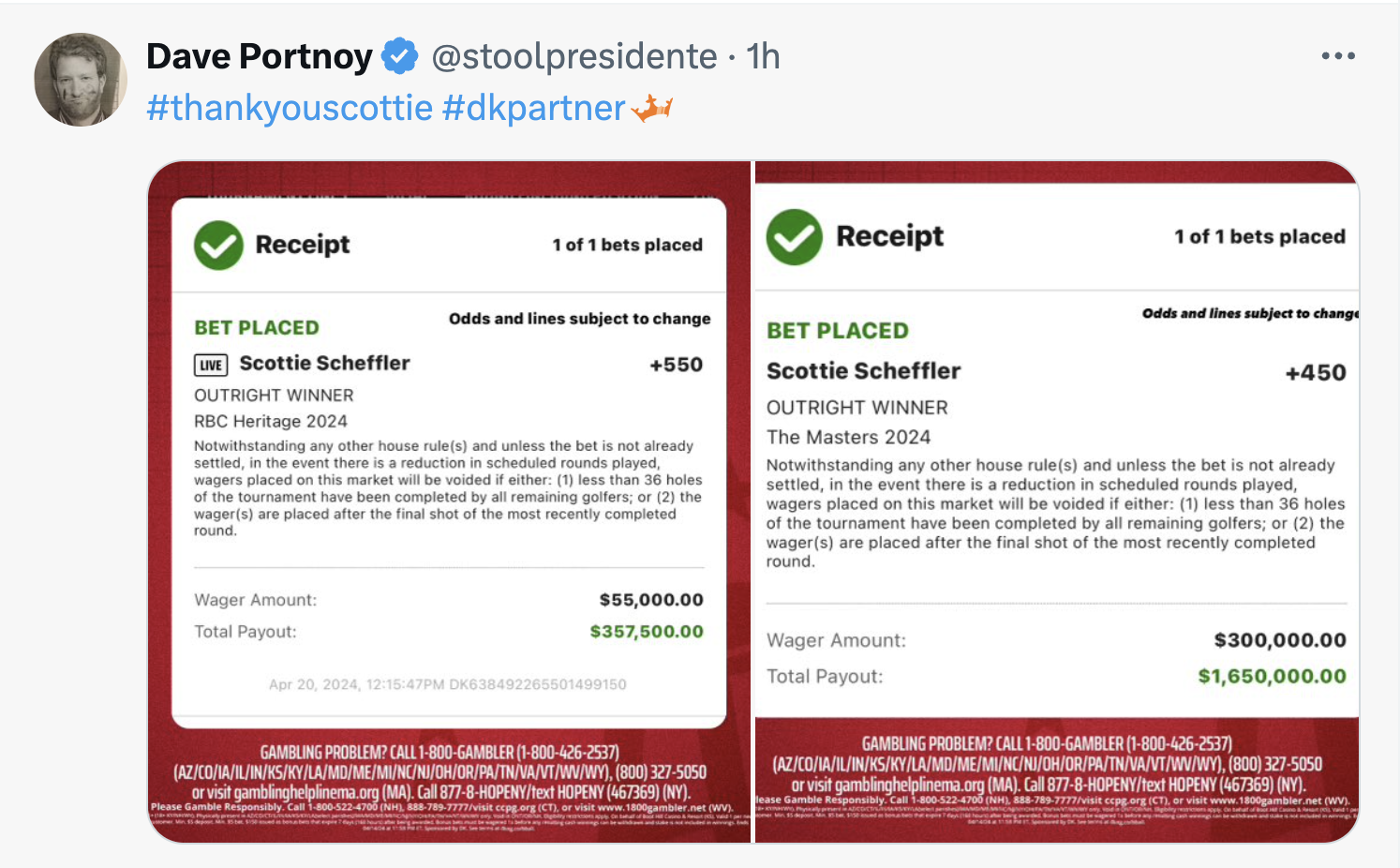
It would be unbecoming to be any more specific about my economic status, but suffice to say, as this picture illustrates so convincingly, the Biden economy has been very good to me.

Can George Santos Support Himself?

The George Santos reporting has been excruciatingly superficial. The continuous platforming of a congenital liar; the should he or shouldn’t he be expelled; the can the R’s afford to possibly lose the seat; the Botox, Hermès, Sephora and OnlyFans.

Among many others, here are two questions no one seems to be asking:

How did he get 145,824 New Yorkers to vote for him in 2022? That’s 20,420 more than his opponent. Why did everyone find out about his mental condition after the election? Also, the 2022 New York Third Congressional election results were not an anomaly. Why are we still, despite access to unprecedented information about people, so incredibly susceptible to conmen and women? Maybe the avalanche of information works to their advantage? Clearly, we’re increasingly susceptible to congenital liars in politics, business/finance, religious life, fill in the blank.

The second thing you won’t hear a reporter ask is can GS support himself? Does he have any specialized work experience, knowledge, or skills that an employer would value enough to pay him a livable wage? Even setting aside his mental health issues and nightmare character,I highly doubt it. In that respect, he’s emblematic of many young men and women who are finding it exceedingly difficult to approximate their parents’ economic security and lifestyles.

By far, the easiest thing to do is to make fun of Mary Magdalene. Much harder is figuring out how to avoid being taken by GS-like charlatans over and over. Also much harder is helping the GS’s of the world live independent lives. Unless GS figures out how to exploit our celebrity culture in the spirit of his political mentor, the Former Guy, I expect him to end up in and out of prison, with the public paying his room and board.

And that’s the news from the edge of the Salish.

Postscript. Shit.