A taxi driver saved an elderly woman from being scammed out of $25,000. Faith in humanity restored. For now.
Story of the Day
Reply

A taxi driver saved an elderly woman from being scammed out of $25,000. Faith in humanity restored. For now.
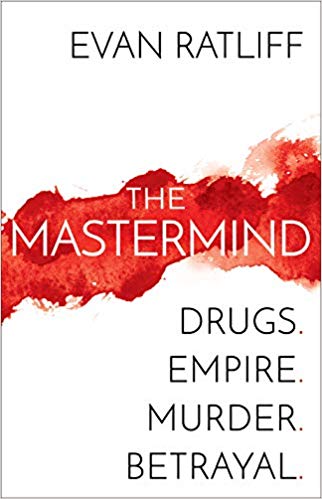
Evan Ratliff tells the story of “the decade-long quest to bring down Paul Le Roux—the creator of a powerful Internet-enabled cartel who merged the ruthlessness of a drug lord with the technological savvy of a Silicon Valley entrepreneur.”
Paragraph to ponder:
“Some people speculated that his drive was fueled by some submerged pain—his hurt over being adopted, or some other childhood affront for which he was forever exacting revenge on the world. Maybe so. I always suspected that at least a part of the answer dwelled in his life as a programmer. Le Roux had found his place inside code, a universe in which he could bend reality to his will. It seemed to me that he tried to apply the detached logic of software to real life. That’s why the DEA schemes must have appealed to him. ‘Nothing involves emotion for him,’ the former 960 agent put it to me. ‘Everything is a calculation.’ His approach was algorithmic, not moral: Set the program in motion and watch it run.”
Since I’ve watched Breaking Bad and am watching another season of Narcos, I’m kinda an expert on criminality :). Some take-aways.
The poorer the country, the more explicit the corruption tends to be. In my late 20’s, I was in a van in Kenya when our driver was pulled over by a local cop for no reason other than to “make a payment”. The casualness with which he paid the bribe blew my mind. When police and army salaries are super low, it’s relatively easy to co-opt them through regular “payments”. In countries like the Philippines, where most of The Mastermind takes place, when criminals like Le Roux strike it rich—at one point he was making $6m/week—they can bribe local, provincial, and federal police; military officers; lawyers and judges; and key politicians. Then they can really “scale their business up”.
The Mastermind reveals a seriously flawed United States judicial system. As illustrated so poignantly in post 9-11 analysis, inter-agency rivalries are endemic. Not just between the CIA and the FBI, but also between local, state, and federal policing agencies. People with state-wide authority routinely look down on local officials, federal officials look down on everyone. The greater one’s authority, the greater their sense of superiority. Yet, in the end, the Feds made the worst decisions and ensured justice would not be served.
Criminals benefit massively from interagency rivalries because information is treated as a valuable asset that shouldn’t be shared “down” the line with less competent, less trustworthy underlings. And because each agency wants credit for the biggest busts, competitiveness trumps cooperation. Consequently, all the agencies are much less effective than they could be. This persistence of this phenomenon strikes me as a serious failure of modern social science.
If your television viewing sometimes Breaks Bad, you’re down with Narcos, and/or you’re a student of social sciences, I recommend it.
1. Nearly all middle school teachers are highly stressed.
“The largest group, 66%, reported high stress and high coping. Nearly one-third of the participants, 28%, reported high stress and low coping. Only 6% of middle school teachers reported low levels of stress and high coping ability.”
2. Eleven minutes: A call from Kobe Bryant. Jayson Reynolds is an exceptional young adult author.
3. The killer(s) on the road: reducing your risk of automotive death.
“If I die in the next 10 years, the most probable ‘murder weapon’ is my vehicle or another vehicle on the road.”
4. All children are gifted—just in different ways.
“I’m sorry, but no school board, no group of parents has the right to label one homogeneous group of children ‘gifted’ based on the criteria established by the parents of those children and then consign the rest of the students to programs for the ‘not gifted’. That’s what happens.”
5. Can this one super-prospect revive the greatest dynasty in sports?
“She’s as good as anybody I’ve seen with the ball in her hands.”
I’m not Bernie Sanders’ target audience. I’ve benefitted way too much from capitalism; I’m okay with my health insurance; and our recent weather aside, I’m not nearly angry enough. AND LISTENING TO HIM IS LIKE READING MILLENNIALS!!!
But I’m even less fond of the James Carville’s* of the world and other liberals who are constantly ripping Sanders youthful supporters. Instead of whining about them, try these alternatives.
Stop castigating them for their idealism; instead, affirm their engagement in the political process. For every committed “Bernie bro” there are ten apolitical apathetic people their same age. And hell, if they don’t start out idealistic, what chance do they have?
Set your Boomer pragmatism aside long enough to consider their perspective by substituting questions for the incessant, negative diatribes. Write these on an index card and put it in your shirt pocket. Why Medicare For All? Why a wealth tax? What’s it like having so much student debt? Why such an intense concern with climate change? Why dismantle capitalism? Then move on to their stories. If you’re not careful, you might learn WHY they vote differently than you.
The more respect they receive from mainstream Demos, the more likely they will be to eventually support another candidate in the case another candidate wins the nomination. Right now, given the knee-jerk invective they’re constantly subject to, I wouldn’t blame them if they simple say “A pox on both of your houses.” Which, of course, is the worst possible outcome.
*Pains me to write that, because during his Bill Clinton administration heyday, I really liked Carville. I found his smart, funny, direct, Southern, Creole riffs on all things political super engaging.
I find social media birthday celebrations confusing. Is getting tons of “happy birthday today” messages from Facebook “friends” even a little gratifying? It strikes me as such a weird phenomenon of our modern age that I’m not telling anyone on-line that it’s my birthday today.
Another thing that has me confused. A national coffee chain sent me an email for a free drink or food item today for some reason and I can’t decide what to do because my home lattes are better than theirs and it’s not even close when it comes to my home oatmilk-based oatmeal topped with avocado, blueberries, salted pepitas, and cinnamon. Maybe I’ll flip a coin, sell whatever I get at a discount to someone else in line, and then send that two or three dollars to a moderate Democrat running for president. Give him or her a little boost to get over the top.
Besides confusion, I’m feeling gratitude today for my parents for providing such a loving base on which to build an amazing life. I miss them. And gratitude, as well, for the Good wife, daughters, friends, and people who regularly stop by the humble blog.
1. What to do when you’re fired.
“The owner came up to me and said, ‘I’ve been thinking, why should I pay you when I can do what you do?’ And he let me go,’ said Carroll, 51, of Macomb Township. ‘I was driving home, crying my eyes out, to tell you the truth. I thought, ‘What are you going to do? How are you going to make it?’”
One resilient dude with a bullet-proof business philosophy.
“I take care of things. If you take care of one person, it turns into 10. If you do one person bad, it turns into 100.”
2. The Disneyfication of a University. Not sure whether to laugh or cry.
“We were given ‘Service Priorities’ table-tent cards, conveniently sized for our pocketbooks and billfolds so we can whip them out whenever we needed to remind ourselves how we change the world. These cards offer a series of declarative statements—pabulum, some might say—about our “care” priorities. Here’s a sample: ‘I support a caring environment by greeting, welcoming, and thanking others.’ To help us care for others, the university has established a ‘positive vibes submission’ website, where we ‘can send a positive vibe to someone.’ It was hard to detect many positive vibes in the workshop itself.”
3. The latest recipient of the Presidential Medal of Freedom in his own words. Will the reward ever recover?
4A. Pay equity for skiers and snowboarders. 4B. The battle against crowded ski hills.
5. Is this what progress looks like? U, G, L, Y, you ain’t got no alibi, you ugly!
By Jenny Odell. Even though I just finished it, I suspect Odell’s “How to Do Nothing” will be the most influential book I read in 2020 because it’s the most thought provoking book I’ve read since America the Anxious and Palaces of the People, books that also emphasize the importance of community, public places, and the common good. It is so unique, insightful, and challenging, I processed two-thirds of it at most; meaning, I need to reread it, which is a bit problematic since it’s due back at the library. I should probably make Eldest’s day, a true bibliophiliac, and just purchase it. Especially since it will take me a long time to even partially apply her numerous insights.
The front jacket lead, which I’ve amended, is a decent overview:
“A galvanizing critique of the forces vying for our attention—and our personal information—that redefines what we think of productivity, reconnects us with the environment, and reveals
all that we’ve been(what we are) too distracted to see about ourselves and our world.”
If you are wary of individualism and seek more community, read Odell.
If you long for a more meaningful, less commercial existence, read Odell.
If you suspect your life might be enriched by less social media activity, read Odell.
If you want to think and care more deeply about your local ecology, climate change, economic privilege, and alternative ways of thinking about progress, read Odell.
If you want to see Odell explain her book while reflecting on the challenges posed by its unexpected success, watch this November 2019 talk.
“How to Do Nothing” is especially important for anyone thinking, “No way am I spending 23 minutes I don’t have to watch the video.”
A hypothesis. The 2020 Presidential election isn’t going to be decided on policy differences. As always, both candidates will make lots of promises, some partly fleshed out, others not. It isn’t even going to be decided on “kitchen table economics”, or tax proposals, or other manifestos for further weakening or strengthening our frayed social safety net.
It’s going to be decided on emotions, how the candidates make people feel about themselves, even more than how they feel about the country.
Remember Bruni’s description of how Trump makes his followers feel like victims:
“He has turned himself into a symbol of Americans’ victimization, telling frustrated voters who crave easy answers that they’re being pushed around by foreigners and duped by the condescending custodians of a dysfunctional system.”
The Demo candidate should rebut Trump victimization head on, repeatedly saying, “We are not victims. Your neighbors and you control your destiny. Together we can strengthen labor unions, create jobs that pay a livable wage, preserve our natural environment, and take care of the most vulnerable among us. Immigrants and foreigners are not our foes, our only foe is unfounded fear of the other.”
Trump also plays brilliantly on his followers sense that they’re being pushed around by the mainstream media, “coastal elites”, and anti-religious liberals whose common thread is a sense of superiority.
That’s why television segments like this (start at 2:33) are a serious problem for anyone who wants to defeat Trump in November. Like Hillary Clinton’s infamous “deplorable” slur, the single worst thing anyone who wants to defeat Trump can do is laugh at people susceptible to his victimization bullshit because it plays right into their belief that liberals are arrogant; that Democrats, whether they know it or not, whether they accept responsibility for it or not, can be counted on to convey a sense of superiority.
The larger context of this clip, Pompeo’s unconscionable treatment of a female reporter doesn’t matter. The fact that geography is not Trump’s strong suit doesn’t matter. The only thing that matters is how their laughing makes those susceptible to his victimization push feel because perception is reality.
For Democrats to win, they can’t let their animus for the Trump Administration spill over into disrespect for the dignity of moderates, independents, and “still undecideds” in Michigan, Wisconsin, Pennsylvania, Florida, Ohio, and elsewhere.
And not too proud to admit it. Well, so far, the first 35 minutes, which to my TSwift-loving daughters, secures my place in the pantheon of history’s most outstanding fathers.
For extra credit, I read Amanda Petrusich’s review in The New Yorker, “TAYLOR SWIFT’S SELF-SCRUTINY IN ‘MISS AMERICANA'”.
Petrusich notes:
“Swift is certainly not exceptional in her yearning for approval, but her life has unfolded on an unprecedented scale.”
Not exactly original insights. If The New Yorker had commissioned me to write the review, which in hindsight they should’ve, I would’ve framed the film as another in a long line of case studies on the corrosive effects of fame. As my saying goes, “Fame tends to corrupt and absolute fame corrupts absolutely.” Then I would’ve referenced “Amy” the documentary about Amy Winehouse which powerfully illustrates how sadly pop icons’ stories often turn out especially when surrounded by selfish, financially dependent employees, family, and “friends”.
And it’s odd that The New Yorker’s choice for reviewer is silent on our mindless tendency towards celebrity worship, which I’d argue makes us complicit in Swift’s struggles and Winehouse’s demise.
It’s also disappointing that their reviewer is silent on Swift’s passive acceptance of her fame. Swift did lay low for a year, but more as a pause in her incredibly ambitious career. What’s stopping her, someone has to ask, from a complete retreat from the public sphere for much, much longer.
Taylor, if you’re reading this, which I suspect you are, eat up and change your appearance, move to Canada, make friends with Harry and Megan, and dig into the ancient Stoics. You won’t be disappointed.
I can’t speak for my daughters, but the rest of us will be okay.
Monday morning post swim workout. YMCA locker room. The showers specifically, but you didn’t do anything to deserve that unsettling imagery. I’d say I was eavesdropping on the two men across from me, but the one man hating on the homeless was so worked up, so loud, I don’t think it really counted as eavesdropping.
LIVID at how many people were living under the 4th Street Bridge downtown.
ENRAGED at how many resources the state was dedicating to helping them.
FURIOUS at them for not having the decency to live indoors.
So indignant, I couldn’t organize my thoughts until immediately afterwards. Isn’t that how it always is? As soon as I escaped his orbit, I knew what I should’ve said to him.
“It’s so amazing how you’ve never lacked for anything, how you’ve never even needed any compassion from anyone. You are so perfectly together, your life is such a model of success, you owe it to everyone of those homeless men, women, and children to share your life lessons. You should go down to the 4th Street Bridge right now and start your “Live Life Just Like Me!” lecture series. I’m sure they will be appreciative and immediately start applying all of your amazing insights on how to live. And as a result of that wisdom, and your incredible personal example, they will no longer be homeless. And just like you, they will have disposable income, some of which they will use to also join the YMCA. Then they will join us in these exact same showers, and following your amazing lead, express their outrage at some other offending subset of people.”
 Pressing Pause