
Graphic To Ponder
Image
Reply
Oleg Kashin’s cogent, depressing answer. No one.
“At the popular level, things are no better. The initially promising protests against the war have been completely choked off by the threat of prison time. Critical public statements, let alone rallies or demonstrations, are now all but impossible. Wielding repression, the regime is in full control of the domestic situation.
Instead, the factor seriously threatening Mr. Putin’s strength today is the Ukrainian Army. Only losses at the front have a realistic chance of bringing change to the political situation in Russia — as Russian history well attests. After defeat in the Crimean War in the mid-19th century, Czar Alexander II was forced to introduce radical reforms. The same thing happened when Russia lost a war with Japan in 1905, and perestroika in the Soviet Union was driven in large part by the failure of the war in Afghanistan. If Ukraine manages to inflict heavy losses on Russian forces, a similar process could unfold.
Yet for all the damage wrought so far, such a turnaround feels a long way off. For now and the foreseeable future, it’s Mr. Putin — and the fear that without him, things would be worse — that rules Russia.”
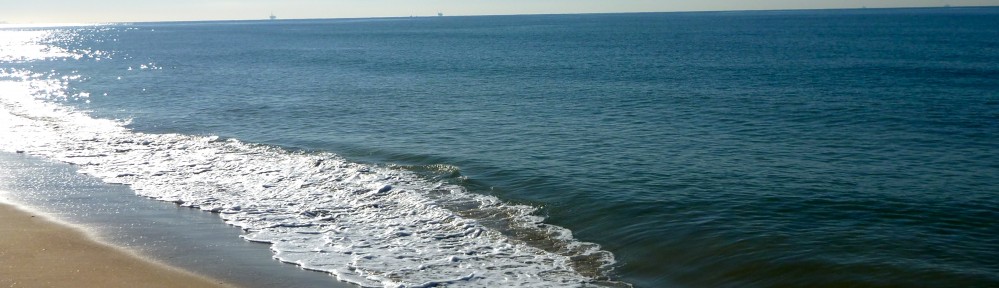
Unambiguously, steadily, predictably warm.
No cold or wet curveballs.
Clothing optional swimming.
Delicioso blackberries.
I’ll miss you when you’re gone.
And look forward to your return.
Kaitlyn Tiffany’s thoughtful reflection on the increasing tendency of people to cut one another out of their lives.
“The internet is wallpapered with advice, much of it delivered in a cut-and-dried, cut-’em-loose tone. Frankly worded listicles abound. For instance: ‘7 Tips for Eliminating Toxic People From Your Life,’ or ‘7 Ways to Cut a Toxic Friend Out of Your Life.’ On Instagram and Pinterest, the mantras are ruthless: ‘There is no better self-care than cutting off people who are toxic for you’; ‘If I cut you off, chances are, you handed me the scissors.’ The signature smugness and sass of Twitter are particularly well suited to dispensing these tidbits of advice. I don’t know who needs to hear this, a tweet will begin, suggesting that almost anyone might need to hear it, but if someone hurts your feelings, you are allowed to get rid of them. There is even a WebMD page about how to identify a ‘toxic person,’ defined aggressively unhelpfully as ‘anyone whose behavior adds negativity and upset to your life.’ Well, by that measure … !”
Early Christians believed that following Jesus Christ transforms a person into a well of compassion, humility, kindness, and generosity. They put the needs of others before their own.
Theocracy does not require such an inner transformation; the evangelical-right base and its prophets are quick to condemn cherry-picked sins. Jesus, by contrast, said that the important matters of God’s commands are “justice, mercy, and faith.” I don’t think Jesus himself would fit with today’s evangelical base.
Reverend Vanessa J. Falgoust
Natchitoches, La.
Opines Richard A. Friedman, a professor of clinical psychiatry at Weill Cornell Medical College.
“The truth is, when it comes to vacation, rest and relaxation aren’t just overrated. They might even work against the very things a trip is meant to cultivate: a mental reset, a sense of relaxation, happiness. A better vacation is one in which vigorous exercise features prominently. That way, you can take a break not just from work and routine life but also from the tyranny of self-absorption.”
Okay doc, what do you suggest then?
“Recently, a close friend and his wife invited my husband and me to join them on a cycling vacation. I was a bit nervous; I’m a serious swimmer but not an experienced cyclist. Riding 30 to 40 miles a day through Vancouver’s impressive hills for five days sounded like hard work, not pleasure. But by the end of our first day of riding, I was overtaken by euphoric calm.
The work of managing hills by bike has a special way of commanding your attention. I was so busy thinking about whether I could hold my pace for the next rise and how fast I could go downhill without wiping out that I had no time to think about myself. I started looking forward to getting up early and hitting the road. I took in the mountains and forests, dense with cedar and fir, but my focus was really on the bike and the road.”
But this entire Humble Blog is based on the need for more introspection. If everyone is just hammering up hills on two wheels, are we really better off?
“In fairness to the rest-and-relaxation lobby, some introspection is indeed good for you, and being able to tolerate idleness and boredom is a sign of psychological strength. I’m a clinical psychiatrist, and I know well that self-understanding is a cherished goal of therapy. But too much self-examination doesn’t make you happier or more enlightened. Besides, vacation is not the time to work on that skill. You can incorporate moments of idleness into your daily life if you want to get better at sitting with yourself, but vacation is a time for feeling good and escaping responsibilities, including the ones to yourself. Accordingly, you should do what makes you feel good, and that’s activity, not idleness.”
Got it.
As an endurance athlete, I’m keenly aware of how my brain waves fluctuate markedly during most workouts. If I’m going uphill and/or into the wind, my focus narrows a lot on the task at hand. If I’m descending and/or with the wind, my mind drifts to numerous other non-athletic things. I might even begin writing the next blog post.
All movement is good, but add some intensity in on occasion. Even on vacay.
Need some volunteers to come over and throw flour at me.
Fred Kaplan wonders in Slate. After some informative context setting, Kaplan cuts to the chase:
“And so we are left to ponder the final, most puzzling question: Why did Trump hang on to these documents? What could he gain from doing so? Some on Twitter speculate that he might want to sell the documents to foreign governments. I wouldn’t put much past Trump, but even I consider this theory extremely unlikely. (That said, storing these materials at a public place like Mar-a-Lago is stunningly irresponsible. It is proper that the FBI also sought surveillance video showing who was wandering into the storage area.)
My guess about Trump’s motives (and, at this point, it can only be a guess): pure, testosterone-driven ego.
The Washington Post reported back in February, when the National Archives retrieved 15 boxes of materials from Mar-a-Lago, that Trump retained much of his correspondence, including the ‘love letters’—as he once described them—with North Korean dictator Kim Jong-un. The Post attributed this information to ‘two people familiar with the’ documents. This suggests that Trump showed the letters to people. Who were these people? We don’t know. Was he showing the letters in order to show off? It seems likely.”
Put me firmly in the “might want to sell the documents to foreign governments” camp. That’s what I concluded when the story started to take shape. There’s a lot I don’t understand about The Former Guy, but there is one thing I believe to be irrefutable. Having more money has always been his primary motivation. Follow the obsessive drive for more money.
And if your righty friends try to ruin your weekend with talk of Hillary’s emails, lay this little bit of Kaplan on ’em:
“While we’re on the subject, what about Hillary’s email? Of the 30,000 emails that the FBI examined, eight were found to contain Top Secret information. Seven of them were about CIA drone strikes, which had been reported in the newspapers (but were still technically classified). The other one was an account of a telephone conversation with the president of Malawi. (All conversations with foreign leaders are, by definition, Top Secret.) In other words, she revealed nothing remotely about nuclear weapons, signals intelligence, or anything that might have enlightened a foreign spy.”
When it comes to cattle futures, Vince Foster, and Benghazi, you’re on your own.
Advises Arthur Brooks in the Atlantic.
“In one study from 2015, researchers assigned people to walk in either nature or an urban setting for 50 minutes. The nature walkers had lower anxiety, better mood, and better working memory. They were also much less likely to agree with statements such as ‘I often reflect on episodes of my life that I should no longer concern myself with.'”
This morning I went on a short run. I listened to Apple’s Barefoot Acoustic playlist and admired the light fog and dug the slightly cooler morning temp while realizing fall is coming. Still, by the end of the run, I worked up enough of a sweat to head down to the water, (mostly) disrobe, and slip into the Salish Sea. I sat perfectly still in the perfectly still water, up to my chin, admiring a couple birds. A few sculls materialized nearby. They no doubt were intimately familiar with the power of nature.
I felt lucky to be alive.
 Pressing Pause