
I’d Rather Be Red On The Head

My older sister, who lives in NW Indiana loves the Cubs largely because she says they’re the “cutest” team in baseball. She also loves politics; her husband and family; and if my brother-in-law is to be believed, most of all, buying new shoes. She’s the best, better than the rest.

So I texted her Tuesnight, “Team El-Sayed or Team Stevens?” Reply. “Stevens has better numbers now against the R.” Pause, bubbles, then, “Stevens is too pro-Israel for me.”

We know now Michigan voters agreed, but that’s not the real story. The real story is the continuing underrepresentation of redheads in Congress and a bubbling up of previous “Red Scare” rhetoric about communism which is obviously a cover for normalizing ginger-hate.

My reply to my sissy, “I never recovered from McMarrow’s exit. Redheads severely underrepresented in Congress.”

We cannot restore our democracy without having Congress grow a pair and we can’t expect that to happen without a Red Hair Wave in November. Bring the fire! Michigan swung and missed. Don’t let your state do the same.

My brothers, not as lovely as my sister. They taunted me throughout my childhood with, “I’d rather be dead than red on the head.” I think they speak for the vast majority of people with inferior colored hair, for example, blondes, brunettes, people with black hair.

To blunt the probable protests, “You don’t have any hair, how can you identify as a redhead?!” Put this picture in your pipe and smoke it.
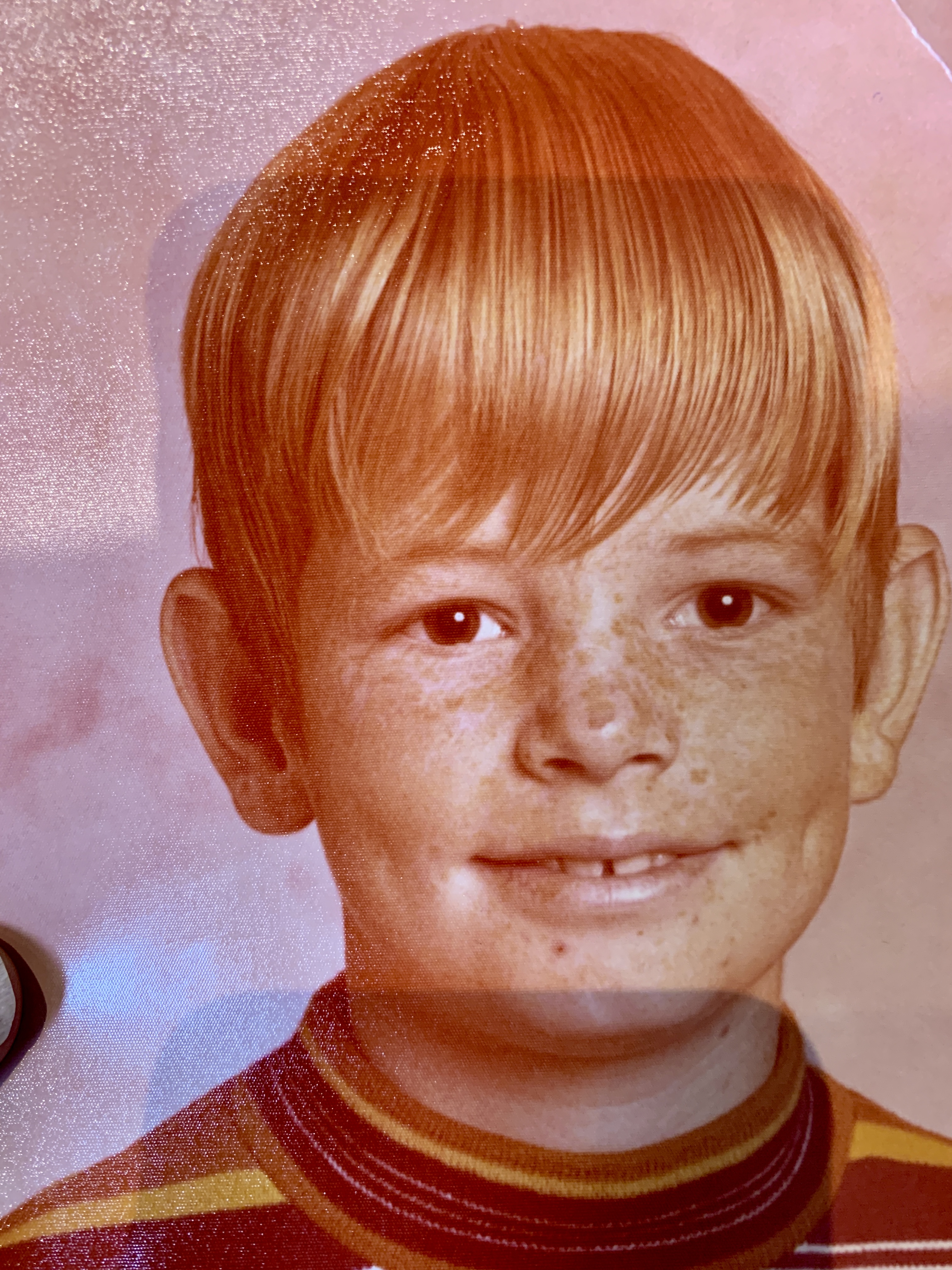
Yes, you’re absolutely right, whoever gave me that haircut is a bigger threat to the common good than any nefarious political administration or movement. Can a lawyer please weigh in on whether there is a statue of limitations for suing for Intentional Infliction of Emotional Distress? DM your contact info if you’re willing to take my case.

Scott Galloway Gets Schooled

Scott Galloway was two years behind me at UCLA. Never met him which is no surprise given the size of the student body and the fact that he was in a fraternity and I was in Powell Library.

I listen to most of his podcasts and would like to know him. He’s super funny, profane, whip smart, a dedicated father, and leans into his emotions in ways one rarely sees in the male species. Also, he describes his 18 year old self as “unremarkable” and still has tremendous gratitude for the Regents of the University of California taking a gamble on him. That sentiment always hits hard with your humble blogger. I see you and raise you SG. I was probably more “unremarkable” than you. I don’t know what prompted the Regents of the UC to gamble on me, but I too will be forever grateful. But unlike you, I doubt Gavin Newsom will ever appoint me to be a Regent.

Despite all the love I have for SG, he sporadically expresses some views, about gender especially, that make me shudder.

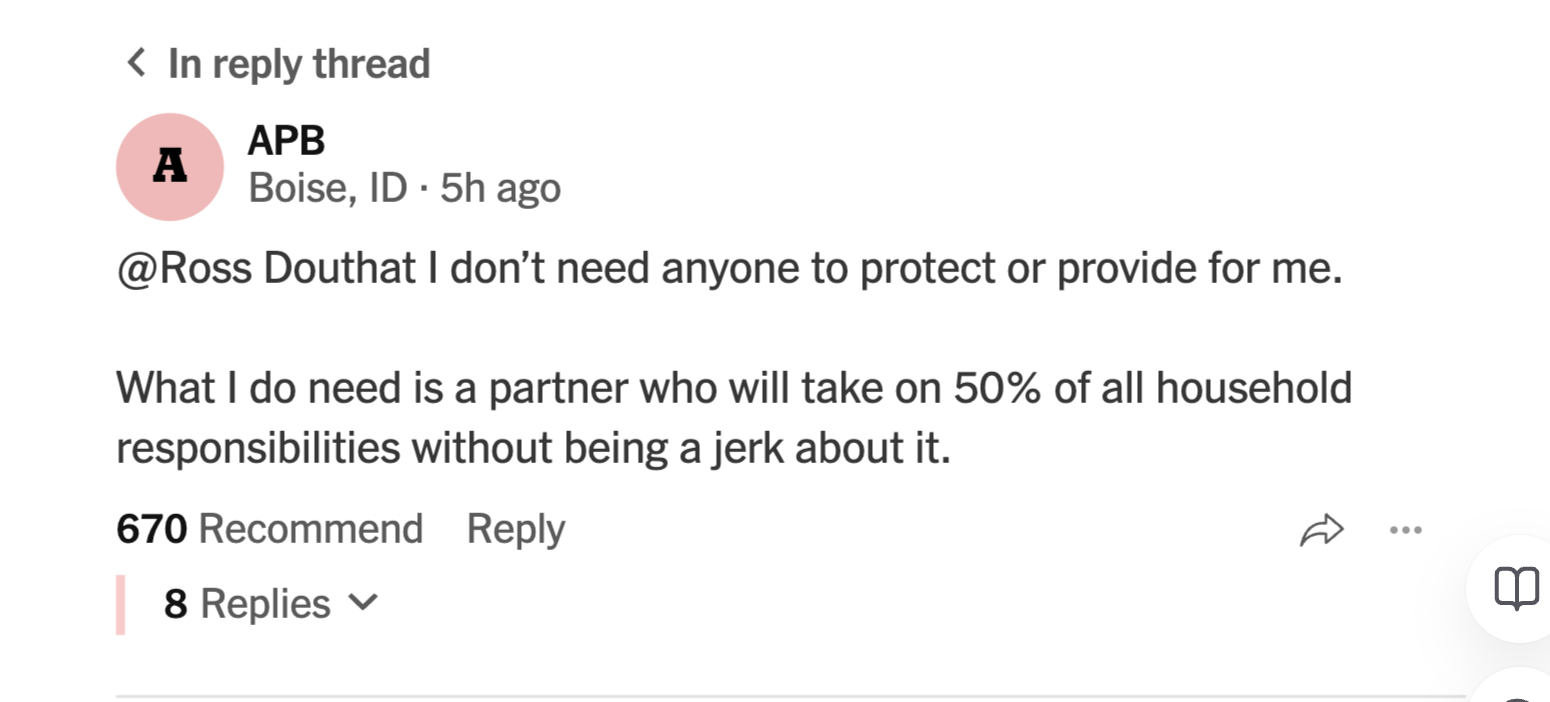
Turns out, I’m not alone. Today, he’s featured on the front page of the New York Times via Ross Douthat’s podcast. The title is, “Scott Galloway: America Abandoned It’s “Unremarkable’ Young Men.”

Dig the top two “Readers Comments”.

Double mic drops. To his credit, SG unplugs for August. Completely. When he resurfaces in September on his pods, I expect him to address these most thoughtful and recommended comments and others like them. Why? Because he’s a Bruin and that’s the way we roll.

It’s Okay, To Be Okay

Clay Routledge dropping wisdom in “Stop Pathologizing Ordinary Life”.

Routledge starts with one of the more vexing conundrums of our times—Americans are focused on mental health more than ever before, and yet, our mental health appears to be getting worse.

His thesis:

“This broadening of what we think counts as a disorder — known as concept creep — encourages us to pathologize ordinary life and see ourselves as mentally unhealthy.

Then there’s our perception of how widespread mental illness is. By broadening what counts as a disorder, we begin to see it everywhere, including in ourselves.” 

Of course our pocket computers don’t help:

“. . . research suggests that people who rely on social media for information about mental illnesses tend to have less accurate knowledge about them.

But the problem isn’t just that many people give themselves incorrect diagnoses. It’s also that these misperceptions can put people on the path to developing poor mental health — a kind of self-fulfilling prophecy.” 

An example:

“. . . consider anxiety. A certain amount is useful; it helps keep us alert and motivated to reach our goals. But start viewing anxiety as a disorder and you can become hypervigilant about avoiding anxiety-provoking situations — which, in turn, can increase the risk of developing an actual anxiety disorder.”

Routledge wraps by suggesting specific fixes and then summarizes more generally:

“. . . we should . . . try to spend less time stuck in our heads and more time out in the world, pursuing the kinds of activities that support mental health without making us so obsessed with it.”

During and after the ‘rona, I began addressing my students’ mental health directly, in an effort to support them given their obvious struggles. I’d begin with the maxim, “It’s okay, to not be okay.” But I’d always add, fairly quickly, that “It’s also okay, to be okay.” Routledge would heartily endorse that message.

Trump’s Greatest Accomplishment

It’s not redecorating the White House, demolishing the East Wing, turning the Washington Memorial pool American flag blue, or even building the Arch de Trump if that someday materializes. All of those deserve serious consideration though.

It’s shooting 70 in the Club Championship at Bedminister at age 80. For the uninitiated, very few golfers every shoot their age, maybe 1-2%. Let’s say you’re a 75 year old “stick” and catch fire on the greens at an easy and short local muni course and you shoot two over, 74. When I do that it will be free drinks for everyone.

To shoot 10 shots under your age is a staggering athletic accomplishment that in my book makes Trump the greatest President of all time, except for maybe Lincoln.

The most remarkable thing about his Championship winning performance is I’m sure he didn’t take any mulligans, never improved his lie, and putted everything out. How do I know? What has he ever lied about before?

The only logical move at this point is to resign the Presidency, join the Senior Tour, and whoop ass on the 50+ crowd. PLEASE.

How To Grieve?

Trick question, of course, because there’s no right answer. The most common one is that there’s as many ways to grieve as there are people grieving. Because it’s imminently idiosyncratic.

Some turn to “talk therapy”. Others to nature. Others to literature about the impermanence of things. Others to Buddhism or Christian scriptures and prayer or meditation. Still others to varied combinations of those and other forms. What do you do?

Sporadically, waves of sadness born of layered losses hit me. Instrumental music, especially the soundtrack I created for Lynn’s final months, routinely melts my heart. As does cycling by my daughter’s cottage.

This morning, a friend said maybe I should try grieving more deliberately. What, like set a regular day and time aside for it? That’s crazy talk. Kidding of course. I liked the idea, and thought to myself, why not start today.

My go to, beyond music, are photos and videos of Lynn, almost all pre-MSA. Almost all the short videos are of her taking her glasses off and entering mountain lakes or the Salish Sea. Celebrating. Smiling. Absolute peak happiness.

While deliberately leaning in today, an epiphany of sorts. I wonder how Lynn’s legion of friends are dealing with their loss? I’ve been so overwhelmed by mine, I haven’t thought about theirs nearly enough.