Why We’re So Susceptible to Decision-Making Paralysis

The short answer. Because we succumb to self-induced pressure as a result of thinking about big decisions in zero-sum, make or break, right and wrong terms. Is this the absolute best college to attend? The perfect person to commit to? The ideal number of children? The best job? The best possible residence? The right investment?

The longer explanation. Thanks Bill Pollian, former Indiana Colts General Manager, for a very helpful alternative perspective on big-time, life decision-making. Asked why Peyton Manning signed with the Denver Broncos and not the Tennessee Titans, San Francisco Forty-Niners, or any of the other NFL teams he recently talked to, he said, “The decision to play for Denver wasn’t the important decision. What’s most important is all the decisions he makes from this point forward.” Beautiful. My interpretation. If he continues to do the things that have made him so successful throughout his career, outworking everyone else, he’ll continue to win no matter what color uni he’s wearing.

Some high school grads think there’s one best college for them. Pollian would argue it doesn’t matter if you get into your preferred college. What matters more is whether you apply yourself at whatever college you attend. Do you take full advantage of the opportunities? Do you do the reading, take challenging courses, develop self understanding and practical skills, pursue internships, figure out what work might be meaningful, build social capital?

Some people think there’s one “soulmate” for them. Pollian would argue it’s less important that you feel a mystical “love at first sight” connection to your partner than how determined you are to make the relationship work. Based on Pollian-logic, there’s not one right person, just proven processes. Mutual physical attraction is a wonderful thing, but the physical elements of love lessen over time. Long-term committed relationships are less about flashy wedding ceremonies and more about day-to-day decision-making, mutual respect, shared values, interpersonal skills, kindness, and resilience.

A final example. Building wealth is less about picking the absolute best stock or creating the perfect asset allocation and more about distinguishing between “wants” and “needs”, day-to-day discipline, and regularly saving more than you make.

The next time you have an especially important decision to make take some pressure off by remembering that a positive outcome hinges mostly on the long-term, cumulative effect of the numerous daily decisions that follow.

Divorce as Default

Washington State citizens are about to decide whether homosexuals should have the right to marry. There will be awkward moments at dinner parties, some people will switch churches, and the media spotlight will burn bright.

Meanwhile, few people will talk in any depth about when we gave up on the idea that marriage is a lifetime commitment. When did we decide it’s merely a chapter in the book of life? A chapter that naturally runs its course over time?

Some context. First, I’ve written previously that like anyone who has been married for a long time, my Better Half and I have struggled at times, more than outside observers might guess. We drive each other batshit crazy at times, but we’ve never stopped caring for one another, and we’ve persevered. I’m sympathetic to anyone whose struggling in their marriage.

Second, about two years ago, a friend of mine confided in me that he and his wife had separated. He was committed to fixing it, she wasn’t. It quickly became apparent that she was troubled and he—and I suspect his children—are better off now that the marriage has been dissolved. I acknowledge some people are better off getting divorced. Third, I don’t want to return to the days when divorcees were discriminated against.

Despite those caveats, while reading a popular blog recently, I couldn’t help but wonder when we gave up on the idea that marriage is a lifetime commitment. The post that caught my attention was an announcement that after eighteen years the author had asked his wife for a divorce, moved into an apartment, and started his life over. Childless, he and she were still getting together regularly and were committed to “always being good friends”. He alluded to underlying issues, but understandably didn’t want to go into the details.

To summarize the hundreds of comments that I skimmed, the consensus reply was, “Sorry to hear it man, but hey stuff happens, you two are great people, good luck going forward.” Even allowing for the impersonal nature of the net, the laissez-faire responses made me wonder if our sense of community has completely frayed.

Marriage ceremonies are public celebrations where family and friends form a wedding community, witness the couple’s commitments to one another, and vouch to support them going forward particularly during difficult times. In practice though, given our work-a-day mobile society, newly married couples rarely live in close community with the family and friends who pledged to support them. No man may be an island, but a lot of married couples are.

People don’t see their friends’ divorces, whether they attended the weddings or not, as a collective failure. Instead, they take a “there but for the grace of God go I” approach. Guess I’m hopelessly old fashioned. I reject the notion that divorce is to be expected, that a life-time together is unrealistic.

Whether we can figure out how to do a better job supporting existing marriages through thick and thin is every bit as important as what the media spotlight is beginning to shine on in Washington State.

Happy “Half Century” Birthday to Me

By the time you read this, it will be too late to get me something for my 50th birthday. That’s okay though because I’m in permanent “declutter, give away things” mode. It’s never too late to drop by, wish me a happy b-day, and take something.

Recently Olympia’s semi-permanent winter blanket of low lying gray clouds parted so I headed out for a sun run with Regina Spektor pulsing through the iPod. Her “On the Radio” lyrics couldn’t have been more timely.

This is how it works
You’re young until you’re not
You love until you don’t
You try until you can’t
You laugh until you cry
You cry until you laugh
And everyone must breathe
Until their dying breath

I’ve always thought of myself as young. Younger than my sibs; younger than my betrothed; younger than Madonna; the 20-something high school teacher; the 30-something college professor. Like wooden barrels bobbing atop Niagara Falls, I’ve watched most of my friends disappear over the 50-year old ledge already. Now though older peeps aren’t enough to counterbalance Spektor’s undeniable truth—You’re young until you’re not.

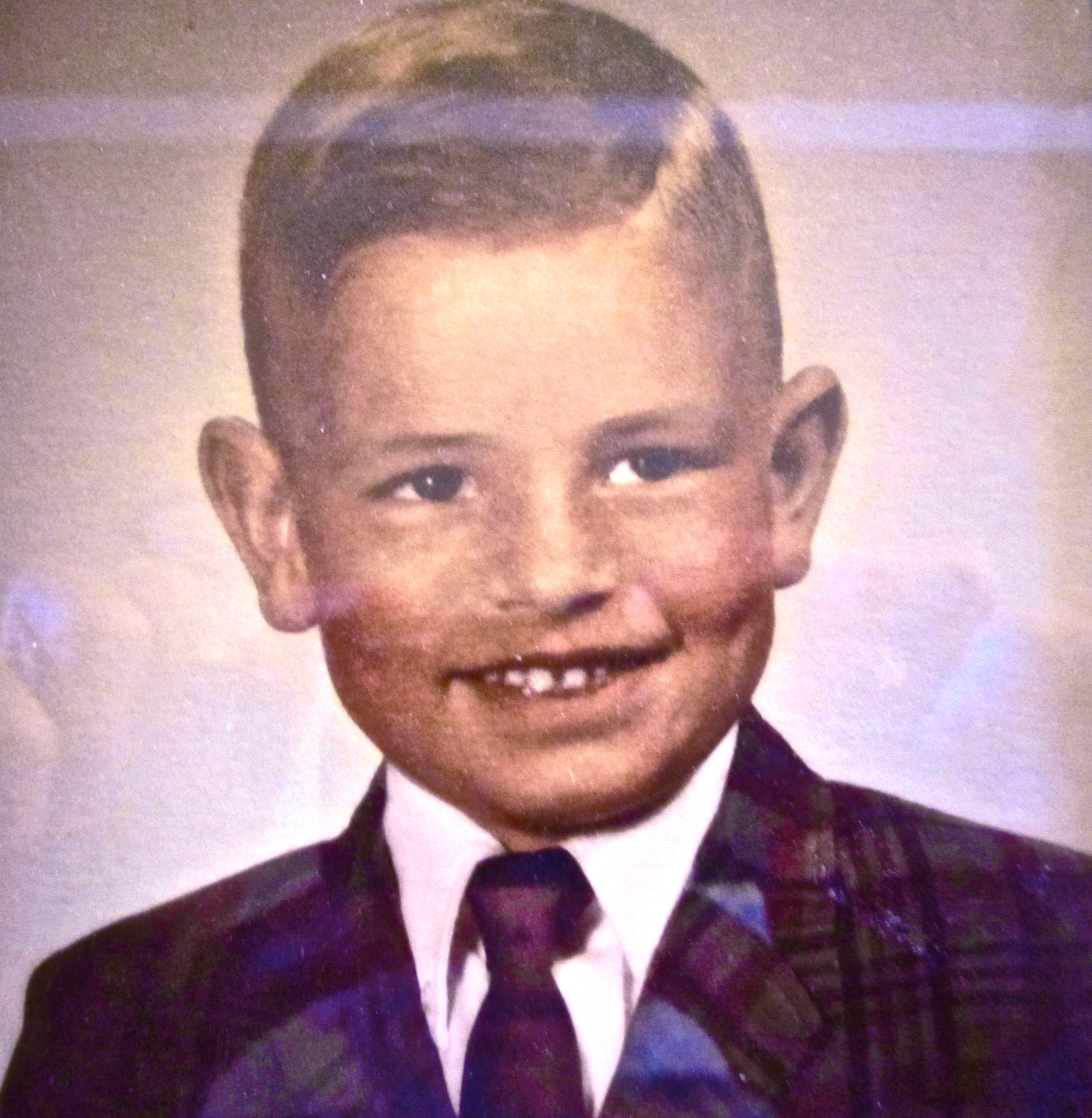
As an aspiring Stoic, I should embrace the new “old” reality, but that’s easier written than done. If I live as long as Steve Jobs, I have six years left; my dad, 19; Joe Paterno, 35; Jack LaLane, 46. The average of those four is 26.5. That’s kinda scary given how fast the last 50 have gone. Seems like just yesterday I was the most dapper dude in the first grade at Zachary Taylor elementary school in Louisville, KY. A dodgeball/kickball legend in my own mind. And yes, fortunately the rest of my gourd eventually caught up to my ears.

The key of course is making the most of however much time is left by listening a little more intently, by being a bit more observant, by putting my family’s needs before my own, by finding humor in things, by writing, by prioritizing friendship, by embracing nature.

At the risk of getting too sentimental, let me close by coming clean on that fact that I didn’t know how to spell “Niagra” Falls until using my dictionary app which offered up “Viagra” in it’s place. A few days ago at 49, funny, today at Fiddy, not so much.

Postscript—The Girls Club pooled their resources and got me the perfect gift.

Since I'm past the midpoint, it' can't be a mid-life crisis can it?

Beautiful, Powerful, Markedly Different End-of-Life Celebrations

The on-line description of Mount Rainier Ranger Margaret Anderson’s memorial service was moving. As was the on-line retelling of Southern California surf-tech pioneer Sean Collins‘s recent memorial service.

Pictures of Anderson’s memorial are here. And here are more from Collins’s service.

One regimented, formal, set in a university auditorium, steeped in tradition. The other, free-flowing, informal, set in the ocean.

Notably different, yet equally beautiful and powerful celebrations of life.

Understanding Teens

Turns out adolescent anger is contagious.

Mary Daily in the January 2012 issue of the UCLA Magazine summarizes Psychiatry Professor Andrew Fuligni’s and colleagues new research on adolescent development and family relationships.

A study that involved 578 ninth-graders from three ethnically diverse LA public high schools (redundant phrase) showed that adolescents had more arguments with parents or other family members on days when they also had conflicts with their peers, and vice versa. The participants completed a questionnaire at school and kept a diary for 14 days. The daily family-peer link was the same across ethnicities.

In Fuligni’s own words, “Adolescents interactions in the home and with peers shape each other on a daily basis, at least in part, through emotional distress.”

He adds, “Adolescents tend to respond with more extreme and negative emotions than do preadolescents or adults, probably because it’s the time in their lives when they are experiencing multiple transitions that might be stressful—puberty, dating, and changing schools as examples.”

Therefore, do everything possible to minimize family conflict in the interest of improved peer relations, and don’t take every argument personally, instead try to find out if things might have gone sideways with a friend or friends at school.

Why Close Friendship is Elusive

A friend of mine was irked because his partner didn’t want to send out Christmas cards this year. Nothing to do with the expense, the time, anything, turns out she just didn’t feel like it. “We didn’t deserve to receive any,” he reflected.

A year off is no big deal, but this understandable tension illustrates a foundational idea that explains why close friendships are elusive—they depend upon reciprocity.

Zuckerberg has zucked up our understanding of terms like “acquaintance,” “friend,” and “close friend”. If you’re like most people, you have many acquaintances, maybe a handful or two or three of friends, and very few close friends. This Daily Mail article says most people have two close friends, down from three 25 years ago. I’ve seen similar U.S.-based research numbers. What distinguishes friends from acquaintances and close friends from mere friends?

Friends spend more time together than acquaintances. Acquaintances are people we enjoy when we occasionally end up at the same place at the same time. A large proportion of Facebook “friends” are acquaintances. With an acquaintance, you can go weeks or months without any face-to-face contact. You don’t really know what makes them tick and they’re clueless as to your inner life. In contrast, friends do things together more frequently—whether writing back and forth, talking, helping one another, working out together, eating, traveling, etc. Time together gives friends a feel for each other’s daily activities, hopes, fears, and thoughts more generally.

What distinguishes especially close friendships is both people initiate a similar amount. Communication; invitations to do things; and the degree of honesty, transparency, and trust are balanced. There’s a natural, shared reciprocity. That sounds more simplistic than it is. In actuality, no friendship is ever perfectly balanced. Close friends can weather a slight imbalance (10-15%?) at any given time, but more than that and closeness is inevitably sacrificed.

How to apply these ideas? Most people would trade several acquaintances for a friend and a handful of friends for one especially close one. Quality trumps quantity. All of us have friends we wish we were closer to, but they don’t initiate as much as we’d like. This is why life for middle schoolers is so filled with drama, the social imbalances wreak havoc. When it comes to unrequited friendship, most middle schoolers are not self-confident or secure enough to say, “Your loss.” We never completely escape the complexities prompted by social imbalances.

Think about your social constellation. Who are your acquaintances, friends, and close friends? Odds are you have acquaintances or friends who you wish would initiate more. I shortchange my long-distance friends because I’m allergic to telephones. I shortchange local friends because I’m similarly allergic to cell phones which means, like a modern day Rudolph, I can’t join in all the texting fun. More important than telephone calls and texts is a willingness to be vulnerable enough to allow friendships to deepen.

Consider using the changing of the calendar to tell a friend or two through your words and/or actions that you’d like to spend more time with them. If they don’t initiate any more than normal for whatever reason, don’t push it or dwell on it, life’s too short, close friendship can’t be forced. If need be, accept the limits of that particular friendship and invest your time and energy in another friend who may be waiting for an invitation to spend more time together and to be more vulnerable.

Here’s hoping your 2012 is filled with meaningful friendships.

Of related interest, here’s a 2008 post on how the limits of time force friendship making trade-offs.

The Worst Retirement Advice

Divide oldsters in the U.S. into three parts—1) those who haven’t saved nearly enough money to stop working; 2) those with modest savings who with social security can retire if they live super simply; and 3) those with sufficient savings to stop working and move anywhere they’d like.

Some of the “sufficient savers”, once they stop working, follow “experts'” advice and head south where it’s warm and sunny. I grew up in SoCal and as these pictures from a recent visit to CentralCal attest, I dig nice weather as much as the next guy.

Here’s the problem with that advice—financial “experts” don’t factor social capital into their retirement equations. Given what we’re learning about happiness or “subjective well-being”, it makes no sense to sever longstanding friendships in the interest of better weather.

The counter argument—we’ll make new friends, especially with spare time—doesn’t factor two important things into consideration. Close friendship stems from personal history, a treasure trove of shared experiences over decades, memories and stories that are retold (and embellished) and thereby relived. It’s tough to build up meaningful deposits in those memory banks late in life. Another cost of moving to a Sun Belt retirement community is the loss of mix-aged life and friendships and the vitality that provides.

Some well-to-do “Snow Birds” split the difference and divide their time between two homes. The GalPal and I may someday try out snow birding lite, renting a Golden State condo for a few months in the dead of winter.

However, I can’t see myself relocating altogether. Today I ran around Capital Lake with a close friend who I’ve been running with for 13 years. We’ve logged over ten thousand miles fixing our wives’ and the worlds’ problems. Ran past Sue who cleans my teeth. I thought I might see her at Christmas eve service, but she must have attended a different one. A few minutes later we passed Denny, who always has a smile and Seattle Marathon entry for me. We can’t go to the Farmers Market without seeing someone we know. After moving around most of my life, it’s nice being rooted. To take the social capital we enjoy for granted would be a mistake.

Still Watching

A follow up to my brilliant “In Defense of Eavesdropping” post from yesteryear. Well, if not brilliant, clever?

I am still watching you.

In particular on airplanes. Think the proliferation of e-readers makes eavesdropping more difficult? Wrong. I’m spying your e-book between the gap between the seats. Steinbeck huh, nice choice.

Too much curiosity to stop.

Based on a quick glance at his iPhone, Skater Dude next to me on the plane was listening to NPR podcasts. Disappointed I couldn’t make out any titles. And come on dude, update your apps already. A fiftyish woman one row up and in the aisle seat is in almost full view. Classy dresser, designer glasses, reading the New York Times Magazine during take-off. A young Diane Keaton maybe? Not even close. Diane Keaton would be reading a script right? Fiftyish Woman played Angry Birds and other stupid games on her iPhone the entire flight. Same with Tatted Up Guy sitting next to Steinbeck Reader.

All this while watching Bridesmaids on Nineteen’s laptop from across the aisle. Add mad multitasking skills to my list of amazing attributes. Eldest was even nice enough to offer up an earpiece for the funniest scenes. And all this people and movie watching while finally finishing up True Wealth by Juilet Schor.

Reading about environmental degradation, economics, and sustainability is a great deterrent to eavesdropping, but our privacy is sacrificed the second we step outdoors (and of course, connect to the internet). Near the end of lunch at the San Luis Obispo California Pizza Kitchen (vegetarian with japanese eggplant) I asked about directions to Art’s Cyclery. On the way out a woman at the adjacent table said, “I heard you asking where Art’s Cyclery is located. They’ve moved. My daughter looked it up on her phone. Here you go.”

Once outside, Sixteen and I spontaneoulsy did a little jig titled “Completely Weirded Out.” Karma is real. What goes around, comes around.

The Most Difficult Three and a Half Words

A close friend has been experiencing extreme leg pain for over a year. She’s seen a medical conference worth of docs, had tons of tests, and is still lacking the thing she wants most—a diagnosis.

A month ago I went with her to an appointment with a rheumatologist who said the root problem was not rheumatological. Unable to string together the most difficult three and half words, he offered up a boilerplate myofascial something or other hypothesis.

Today we travelled long distance to see The Man at the Pain Center at the hospital in the Big City. I am always in awe of ace doctors. Dr. Ace studied her file for a long time, asked clarifying questions, and then continued with more questions during a physical exam.

In the end, he said, “I’m not clever enough to know what’s wrong.” I dig the way Brits use “clever” instead of “smart”. It’s clever. “There’s still a lot we don’t know about the brain,” he explained. Deeply disappointed, my long-suffering friend pleaded with him for a diagnosis. “I just want to know what’s wrong with me.” At which point he said the three and a half words, “I don’t know.”

Imagine if we lived in a world where one political candidate attacked another about flip-flopping and asked, “How can we be sure you’re not going to change your mind again?” And the candidate responded, “I don’t know.”

Or one in which every financial analyst asked to make predictions about the market in 2012 said, “I don’t know.”

Or one in which a Westpoint political science prof when asked about the lessons of the Iraq War said, “I don’t know.”

Or one in which Christopher Hitchens, when pressed to explain why he was so sure there’s no God had said, “I don’t know.”

Or one in which a man driving aimlessly in a car, when asked by a woman whether he’s going in the right direction said, “I don’t know.”

Or one in which Billy Graham, when asked to explain why he’s so sure there’s life after death said, “I don’t know.”

Or one in which Hilary Clinton, when asked what will be required to bring genuine Middle East peace said, “I don’t know.”

Or one in which Tom Friedman, when asked what the United States must do to reclaim it’s greatness said, “I don’t know.”

Or one in which Bill Gates, when asked why he thinks his teacher evaluation plan is going to improve schooling said, “I don’t know.”

Or one in which a blogger, when asked why he thinks everyone would be well served by greater humility and honesty said, “I don’t know.”

Steve Jobs—A Life Well Lived?

I enjoyed and recommend Walter Isaacson’s Steve Jobs bio. The overarching question it has left me with is what’s the best way to assess whether one’s living or lived a good life? And how best to define “good life”? Specifically, do professional successes trump the personal or vice versa? Do you most want to be remembered as an amazing chief executive, lawyer, teacher, trooper, counselor, sales manager, engineer, doc, pastor, carpenter, nurse, or as a caring and loving father, mother, husband, wife, brother, sister, aunt, uncle, neighbor, friend, citizen?

Everyone answers those questions somewhat differently in the way they live their lives. Jobs’s professional activities—he reinvented six separate industries—were clearly more important to him than his personal roles and identities—he was self absorbed, he was a distant father to his three daughters, and he rarely cared about anyone else’s feelings.

We seem to excuse people like Jobs—people at the very top of their field—for being what some readers of the book have described as a “self absorbed asshole”. Why is that? Is it because people at the very top of their fields tend to be extremely wealthy? Do we give the ultra rich a pass on being shitty parents or people?

Most of the time I’m proud of what I’ve accomplished throughout my thirty year teaching career, but in my own personal calculus of assessing whether I’m living a good life, I emphasize the personal. It’s most important to me that I be a good husband, father, friend. I can’t help but wonder though is that because I haven’t accomplished more professionally? Is my personal orientation an excuse for not being more ambitious and not working harder? Or do I emphasize the personal because I’m overcompensating for my dad’s explicit “professional accomplishment” orientation?

Jobs didn’t have the ideal balance, but I’m not sure I do either. More questions than answers.