Fraud Antennae

By comparison, we’re a very strange family. We almost never talk to and never text with Away At College Daught (AACD). We Skype on Sunday nights. Typically, six days without any contact. I understand if you want to tar and feather us.

So it was quite surprising when AACD called mid-morning, mid-week recently. Someone had just called her from her bank and said they needed her debit card number because they were having problems with their network. She gave it to the caller. And immediately realized she’d been duped. Her mom told her to immediately call the bank and everything would be okay. She did and it was, but her experience begs an important question. How do we form meaningful trusting relationships with others while simultaneously guarding against criminally inclined people looking to take advantage of us? More succinctly, how do we develop fraud antennae? The more desperate people’s economic lives become, the more critical it is we develop fraud-detection skills and sensibilities.

I told AACD’s younger sissy the debit card story as a precautionary tale and explained to her surprise that there are people in the world who wake up every morning trying to figure out better ways to steal elderly people’s life savings.

Bernie Madoff, besides offering regular 20% returns, was supposed to be pretty charming. Nicholas Cosmo probably was too. A minnow compared to Madoff, Cosmo only defrauded 4,000 investors out of $195m. Or consider David Dutcher’s experience. Here’s a teaser to get you to read the entire LA Times article:

David Dutcher met Sharon on Match.com in late 2008, a few months after separating from his wife. “We had a lot in common,” he recalled. Sharon loved four-wheel-drive trucks and sports. They met for coffee, then dinner. Sharon was tall, slender, blond and beautiful. She moaned that she had not had sex in a long time. She told him he had large, strong hands and wondered if that portended other things. She described his kisses as “yummy.” “It felt a lot like Christmas,” said Dutcher, 49, a tall, burly engineer with wavy red hair. The women fiddled with Dutcher’s tie and massaged his neck and shoulders. The brunet unbuttoned her blouse to reveal generous cleavage. “I am way over my head with these girls,” he remembered thinking. “I hadn’t been out dating in a while.”

Apparently Dutcher’s Christmases are different than mine, but I digress. “Sharon” had been hired by Dutcher’s ex-wife. The night ended much worse than Dutcher imagined—with his arrest for driving under the influence by a cop working with Sharon and Dutcher’s ex. The age-old honey trap* with some crooked soccer moms and cops thrown in for good measure.

The crooked uniformed cop, an admittedly extreme example of fraud, brings to mind the uniformed Norwegian killer who every adult on the island somewhat understandably, albeit tragically, assumed was legit.

Dutcher simply needed to stop staring at the cleavage long enough to ask himself if what he was experiencing was so far out of the ordinary that maybe he had been set up. This is what I’m going to call the “so far out of the ordinary/too good to be true test” and maybe that’s the answer to my question. Then again, a lot of very smart and successful people didn’t think that Madoff’s promised 20% investment returns in a wildly fluctuating, but mostly down market were too good to be true so how can I expect D-squared to have applied the test?

More importantly, how do we guard against more subtle attempts at fraud, like the stream of fake emails or phone calls seeking debit card numbers? And how do we teach young people to form meaningful trusting relationships with others while simultaneously guarding against criminally inclined people looking to take advantage of them?

Experience is the best teacher. AACD is less naive as a result of that phone call, panic, and quick trip to the bank. But what kind of curriculum, dinner conversations, and other resources might help young people be proactive in detecting and thwarting the fraudsters in our midst? More simply, how do we teach them things may not be as they appear?

* When I was a teacher at an international school in Addis Ababa, Ethiopia back when Al Gore was inventing the internet, the US embassy folks invited my male colleagues and me to the embassy for a meeting where they cautioned us about beautiful Ethiopian women known to seduce American men in the hope of weaseling their way out of the country. Even showed a film with case studies on how it was done. This had one effect on my friends and me. We were more excited than normal to go clubbing the next weekend. Alas, I regret I was never a victim of the honey trap. :)

Does Absence Actually Make the Heart Grow Fonder?

The title of Jessica Grose’s review of Iris Krasnow’s new book The Secret Lives of Wives: Women Share What it Really Takes to Stay Married.

Krasnow’s thesis—there can be positive aspects to time spent away from a spouse—at least for (non-military) wives.

Potential benefits include greater emotional and physical self reliance and more in-depth communication.

Quoting Grose: Krasnow says that the most important marital lesson she took from the hundreds of women she spoke to was the importance of maintaining a sense of evolving self, apart from one’s relationship. It’s not that geographic space is the only way of achieving a separate identity—for example, several of the wives said reconnecting with physical pastimes helped them develop their sense of self—but it is a surprisingly effective one.

Must be an autobiographical work given the focus on double X’s. Newsflash—men also stand to benefit from maintaing a sense of evolving self.

There’s more than one way to stay happily married for the long haul. Some of my friends seem to be doing the opposite of what Krasnow is suggesting. They spend as much of their non-work time at home together and they’re in near constant texting and calling contact with one another. It’s easy to understand their desire to spend as much non-work time together as possible when commuting long distances and/or working especially long hours, but I have to confess to not understanding the need to be in near constant contact. I wonder, when they eventually sit down to dinner after sending fifty texts and talking twenty times during the day, what do they talk about?

I can’t read Krasnow’s book because my brother said my recent poem crossed the fem vortex line. But I’m sympathetic to her thesis. I wonder how some of my “single-minded family” friends are going to fair when their last children fly the coop.

The wife and I definitely benefit from time apart. It makes negative visualization tons easier—what would my life be like without her/him? Upon reuniting, we always appreciate each other a little more.

In some alternative universe, it might be nice if we didn’t need to spend any time apart to maintain genuine, mutual appreciation for one another, but we’re fallible, so we do.

Developing In-depth, Intimate Friendships

Who knew there’s something really nice about driving to swim meets way out on the Kitsap Peninsula. Or more specifically, driving home from them.

Four years ago, following the South Kitsap meet, Nineteen and I started out listening to National Public Radio, and then as the sun set on Commencement Bay and the Narrows Bridge, talked about the world, her world, our worlds. Not a top-down father-daughter talk, a balanced adult one.

Last week, as Sixteen’s (S’s) passenger, I was in the right place at the right time for another thoughtful and memorable conversation. I mostly listened as she described a moving letter she had received earlier in the day from a close friend who struggled with anxiety last year. The friend wanted S to know how important her help had been and how much her understanding presence meant to her. Her other friends, she explained, ran a little hot and cold, which made her especially appreciative of S’s consistent care.

“What I like about A.F. is she’s vulnerable,” S reflected while hugging the right line of the two lane highway. “She’s not afraid to admit everything’s not all right. That gives me the opportunity to help.” She explained how good it felt to help her friends, to share insights from the serious difficulties she experienced as a middle schooler. It gives purpose to that especially challenging chapter of her life.

S’s story reminded me of two important steps in developing in-depth, intimate friendships—admitting one’s vulnerabilities and humbly asking for help.

Taken together, sometimes saying, “I’m afraid. I’m anxious. I’m lost. I’m stuck. Can you help me?”

Knowing that doesn’t mean I do it well. I don’t. At all. I probably inherited my stubborn, sometimes self-defeating self-sufficiency from my parents who grew up in barren eastern Montana on the heels of the Depression.

Paradoxically, I enjoy helping my friends whenever they ask for help, but I don’t like inconveniencing them. At all. A tip of the iceberg example. I spent twenty minutes in the garage last week unsuccessfully trying to tighten a bolt, while holding a washer, and screw in a very awkward position because I didn’t want to inconvenience the wife. Finally threw in the towel, asked for her help in applying pressure to the top of the screw, and had everything assembled in less than a minute.

More significantly, I’m almost always resistant to counseling, yet the few times I’ve committed to it, it’s proven helpful.

Obviously, everyone has to be somewhat self-sufficient, but there’s a point of diminishing returns, a point I cross fairly regularly. I’m not sure how to explain my stubborn, sometimes self-defeating self-sufficiency. It’s irrational. If I could throw a “start depending upon others more on occasion” switch, I would have already.

I’d ask you for help, but I don’t want to inconvenience you.

Maybe I’ll just groove some more to Bill Withers in the hope it’ll eventually sink it.

Thanks S for the inspiration.

How Well Do You Know Yourself?

The wife recently asked me to take the Jung/Myers Briggs personality test available here. Probably wanted to find out what’s wrong with me. It was relatively pain free and the results mostly jived with my sense of self. Take it and tell me what you think of the results.

I’m an INFJ or “Idealist Counselor”. Here are some excerpts from the “Idealist Counselor” description:

Counselors have an exceptionally strong desire to contribute to the welfare of others, and find great personal fulfillment interacting with people, nurturing their personal development, guiding them to realize their human potential. Although they are happy working at jobs (such as writing) that require solitude and close attention, Counselors do quite well with individuals or groups of people, provided that the personal interactions are not superficial, and that they find some quiet, private time every now and then to recharge their batteries. Counselors are both kind and positive in their handling of others; they are great listeners and seem naturally interested in helping people with their personal problems. Not usually visible leaders, Counselors prefer to work intensely with those close to them, especially on a one-to-one basis, quietly exerting their influence behind the scenes.

Except for the fact that I could be a much more patient listener, that’s accurate to the point of almost creepy. Helps explain why I prefer small dinner get-togethers to large cocktail parties and why I loathe self-promoters. There’s more.

Counselors are scarce, little more than three percent of the population, and can be hard to get to know, since they tend not to share their innermost thoughts or their powerful emotional reactions except with their loved ones. They are highly private people, with an unusually rich, complicated inner life. Friends or colleagues who have known them for years may find sides emerging which come as a surprise. Not that Counselors are flighty or scattered; they value their integrity a great deal, but they have mysterious, intricately woven personalities which sometimes puzzle even them.

Isn’t blogging going against the Counselor grain? Not necessarily. I share thoughts and emotions, but not my innermost thoughts or most powerful emotional reactions. I’ll probably peel more layers off over time, but never get to the core in this format at least.

Counselors tend to work effectively in organizations. They value staff harmony and make every effort to help an organization run smoothly and pleasantly. They understand and use human systems creatively, and are good at consulting and cooperating with others. As employees or employers, Counselors are concerned with people’s feelings and are able to act as a barometer of the feelings within the organization.

That explains in part why I’ve been in a professional funk. My workplace has lacked harmony for quite awhile. Outnumbered by those who think people’s feelings are unimportant, I’ve thrown in the towel on trying to help things run smoothly and pleasantly.

Blessed with vivid imaginations, Counselors are often seen as the most poetical of all the types, and in fact they use a lot of poetic imagery in their everyday language. Their great talent for language-both written and spoken-is usually directed toward communicating with people in a personalized way. Counselors are highly intuitive and can recognize another’s emotions or intentions – good or evil – even before that person is aware of them. Counselors themselves can seldom tell how they came to read others’ feelings so keenly. This extreme sensitivity to others could very well be the basis of the Counselor’s remarkable ability to experience a whole array of psychic phenomena.

Psychic phenomena strikes me as over the top. And do you think they purposely write all the descriptions as positively as possible so that everyone feels better about themselves? And you gotta love the examples of other Counselors—Gandhi, Eleanor Roosevelt, Jane Goodall. Nice company to keep. I’m a confident writer and speaker, but as clearly demonstrated in Wednesday’s “Fall” post, I’m anything but poetic. And when it comes to others’ feelings, my antenna do seem more finely tuned than most.

For example, I picking up on things right now. You think I’ve been a bit self-absorbed in this post and I’ve gone on too long. Points well taken.

What Does Olympia Bear Girls Swimming Foretell About the Future?

The hard working, talented, quirky goofballs suggest the future is brighter than all the doomsdayers would lead you to believe.

We just completed our first five extra-long practices. Everyone put in the necessary work and got along well. Coach is seemingly trying to disprove my thesis from awhile back–that people don’t change. He’s more flexible than before, letting his hair down and deferring to the captains and his assistant coaches. Relaxing.

Because they applied themselves, the girls improved their technique and began to get in shape. Lots of impressive new ninth graders. I ran stairs with the team in four groups, the ninth graders, the sophs, the juniors, and the seniors. I told the ninths that I didn’t know what to call them. They didn’t really appear to be freshmen. Freshwomen might be a tad racy. The politically correct term on college campuses is “first years”. Then a brilliant suggestion, “Fresh”. Some of the Fresh are going to make life miserable for their elder teammates. In total, three girls had the audacity to run the stairs faster than me. I told them they may have to switch to x-country.

I told the team that Coach just celebrated his 47th wedding anniversary and was planning on swimming 1.75 miles in Lake Washington over the weekend. I pointed out that’s the amazing thing about swimming, you can do it a heck of a lot longer than football, soccer, probably any other sport. During this preseason, the girls are unplugged for four hours every morning, running stairs, talking, stretching, talking, planking, talking, practicing, talking, racing, talking.

At one point, Sixteen yelled over during a kick set, “Hey dad, tell me to ‘Pick it up!'” “Okay, ‘Byrnes, pick it up!'” She then hoisted her posterior 8 inches higher above the water. All of her lanemates laughed uncontrollably. Fool me once.

I ask one senior where she wants to go to school and she says Stanford. Backup, USC. Unacceptable I tell her. A Chinese-American fresh jumps out to stretch a sore shoulder and says “It’s probably violin practice.” I’m guessing there’s a Tiger Mother behind that tiger.

My hope is the coaches and parents can focus broadly on the process this season instead of narrowly on district and state time cuts. In the broad scope of things, high school is over in a flash. The most important questions aren’t how fast did you swim or how many points did you score, but did you learn to work hard, did you swim to the best of your abilities, did you gain confidence in your physical strength, did you get along with others, did you enjoy it enough that you want to continue doing it well into the future?

19

Another birthday. And so two characters exit the stage, Fifteen and Eighteen, and two enter, Sixteen and Nineteen.

I’m at a stage in life, most likely late-middle, where I don’t take mine or other close friends’ or family members’ birthdays for granted. Increasingly I think of birthdays as celebrations of another year of life together.

After writing warm fuzzy posts about the GalPal and youngest daught, there’s real pressure to deliver more warm fuzzies this time around.

I know I should write about how Nineteen is also blossoming on her own at college. About how helpful she’s been at home this summer. About how she salvaged a summer of unemployment by hustling together odd jobs in the hood and a half-time internship. About how nice it was that she invited me to go to Portland with her for a Sara Bareilles concert (that fact that her mom didn’t want her driving home alone after midnight might have factored in too).

Can’t though because a part of Nineteen’s blossoming is continuing to get faster in the pool. When she got faster than me at the 500 freestyle, I consoled myself by thinking at least I own the shorter stuff. Since that’s no longer true, I figured well I can still sing “Look at Me Now” to myself as I pull away in open water. Then Mel, her, and I dove into Ward Lake last Saturday afternoon. I used to be able to pick her out when looking back while breathing. Now I have to lift the chin and tilt the ol’ noggin forward.

So since this is what it has come to, her showing no respect for her elders, I’m going to tap that middle schooler in me that does the opposite of whatever I’m supposed to. Stopping right here sans warm fuzzies.

And as Sara sings. . . Who cares if you disagree? You are not me. Who made you king of anything?

2011 RAMROP—Ride Around Mount Rainier In One Piece

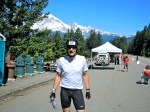
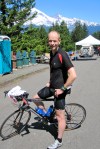
After five hours of sleep, woke at 3:28a, drove about as far as I hit a driver down the hill to Danos at 4:00a, and arrived at Enumclaw High an hour later.

Cloudless and weirdly light given the sliver of a moon. High 40’s, maybe 50. End of life turtle neck base layer under the jersey, $5 full-fingered running gloves. Dano, who claims he’s from Minnesota, was sporting girly shoe covers.

Lathered my bits(1) with the poor man’s chamois creme, ten year old Noxzema, and was off at 5:47a.

Some context. Lance’s ex, showing no concern for my well-being, pulled a last minute legal stunt and so we were a man down. I knew Gordon was going to be way too fast for us mortals, so it was Dano, me, and the masses. Among other things, Dano is also know as Supplement. Dude had plastic bag after plastic bag of pills of every size, shape, and color.

Supplement is relatively new to cycling. Said he may “have gone a hundred once as a teenager”. Performed admirably on an 80 mile mountain training ride a few weeks back. Learned how to draft. Gained fitness. And confidence. Coupled with the pills, and my stellar coaching, piece of cake.

I knew he had the necessary mental make up. An experienced marathoner, he disappeared one weekend four years ago. Decided to celebrate his 50th with a 50 mile run. In serious heat.

The goal was to make like Malcolm X and help Dan around the mountain by any means necessary. The plan was to ride the flats together and regroup at the top of the three climbs.

I was a firm taskmaster. Let’s bridge up to that group. Pull for no more than half a mile. Don’t forget to drink. I insisted he holler if the pace got too quick. He never hollered. Long story short, he surprised me by riding very steadily all day long. My mountain top waits were shorter than expected. Didn’t even fade over the last 25 miles. Maybe there’s something to the pills.

We rode out of town with Gordon and enjoyed his company for about 5-6 miles until he launched. Beforehand, I predicted he’d finish a few hours before us. Climbed nearly 10,000′, over 152 miles, at 20mph. 7:58 total time, 7:35 ride time. He joked it was a “recovery ride” after last week’s stage race. Sick. Look for him to turn some heads in the Leadville 100 on August 14th.

For the first hour we gradually descend, through fog-strewn farmland, and it was flat out cold. At mile 16 I decided I needed to warm up, so I went to the front of the slowish pace-line we were in and settled in. Sixteen miles later we reached a T-intersection. I was aware of two shadows behind me, but cracked up when I realized my train was about 15 people long. I was not going fast, but still a personal record “pull” nonetheless. At the 33 mile food stop I did some press and signed some autographs.

Then Dan and I took turns gently working some rollers. The early morning cold coupled with my enlarged prostrate (2), made for a bad combo. Despite whizzing at mile 33, at 40 I told Dan I had to take a quick nature break. We were facing 15 miles of a 1-2% grade to the park’s entrance. We were being disciplined about spinning easily, but as I was relieving myself on the side of the road, a beautiful 20 person pace-line materialized out of thin air. “Go! Catch on! I’ll catch up!”

Doing his best Tony Martin impersonation, Dan bolted right by the peloton and then sat 100 meters in front in no man’s land. I had to go get him and drag him back. The people on the front were perplexed. “We’re drifting to the back.” In no time at all, we were nearly at the park. A few pills, peanut butter and honey bagels, cookies, and bananas later, and were ready to begin the ride in earnest.

We climbed together to Longmire, regrouped at the top of Paradise, and descended together. Well, until Dan got stuck behind a slow swerving, human impediment disguised as a rider. Road is pretty sketchy so my top speed was only 40.8 before the Garmin quit at mile 94. I felt great all day and climbed well leap frogging from rider to rider.

One wanker had the nerve to pass me near the top of Cayuse. But he was tatted up and so was obviously more of a bad ass.  Mountain was at its most beautiful, mid-50’s, to maybe lower 60’s in the p.m. Breeze coming off the snow, natural air-conditioning. Ditched the turtle neck base layer at mile 88.

The last 30 miles can be a slog. The key is to leave the last food stop with as many other people as possible. We failed, leaving nearly alone. Turkey sandwich charged, Dan caught onto one guy and the three of us settled in for 3-4 miles. I saw three people about three-fourths of a mile ahead and decided to bridge up. Yes a large gap to make up at that point in the day, but I did it over the next 4-5 miles.

After finally making contact, I signaled Dan forward, and sat in back and recovered. 3-4 miles later we were passed by about 15 guys. I didn’t think our lead rider would hook on, but fortunately she did. After sitting in the back for about 10 miles, I was getting annoyed that only about three guys were doing all the work. Feeling the best I’ve ever felt after 130 miles, I went to the front. They wouldn’t get on my wheel despite my slowing down and then passed me shortly afterwards.

Whatever. When the road turned up and the headwind picked up a bit, I went forward again. After realizing I was stronger than all of them, I said screw it, and rode away. That was serious fun. Riding away from about 16 guys after nearly eight hours in the saddle. I waited for Dan at the Mud Mountain turnoff and four of us rode in together. I pushed the pace over the last few miles to get us in under ten hours (9:57, ride time probably 8:50-9:00).

(1) Learned recently that the British sometimes use “bits” to describe male privates. I’d appreciate it if someone from the other side of the pond could explain if “bits” translates more as “balls” or “genitals”. If genitals, I should not have used it in that context.

(2) TMI?

My Lovely Wife

It’s time. I’m going public with my affection for my wife.

Twenty-five years ago today she walked down the aisle of a Lutheran eglesia in SoCal and committed to sticking with me through thick and thin.

She had no interest in marriage when we met in Venice, CA; went out for fish and chips at Marina del Rey; and and then flirted on a deserted Santa Monica lifeguard stand in the dark. After falling for her hard, she informed me she was going to Mexico for the summer to learn to speak Spanish. So enamored with me, she ran for the border.

Against all odds, while studying Spanish in Cuernavaca, she started to miss me. Following some steamy hand-written letters (remember those?), I flew to Mexico at the end of her language school studies and we backpacked throughout southern Mexico. Like Felix Hernandez in the latter innings, I wore her down. By the time we returned home we were halfway down the aisle.

She should have known she was dealing with a dimwit when, right before saying my vows with the videocamera rolling, I turned the small microphone clipped to my tux off instead of on. Even though there is no audio evidence of my vows, I’ve done my best to honor them.

She’s loved me as unconditionally as possible and for that I am incredibly grateful. Like anyone who has been married for the long haul, we’ve struggled at times, even more than outside observers would guess. There were moments when the Vegas oddsmakers weren’t sure we’d make it to 25. When our wires get crossed, I sometimes lose my temper and patience, and just want to stop talking and take the next space shuttle flight into outer-space. She can also lose it, but always needs to resolve conflicts immediately no matter how long it takes. I mean no matter how long.

She’s the spiritual leader of our household, a Godly woman with a profound social conscience. She also is a damn sexy dancer and the best, most caring, and loving mother on Mother Earth.

My only regret is that we can’t get back all the sporadic days we’ve lost to mindless miscommunication, self-centeredness, arguing, and hurt feelings. I don’t assume we have another 25 years to enjoy each other’s company. I’m not going anywhere, but our health isn’t guaranteed and some of the cars on Mount Rainier got awfully close on Saturday’s training ride.

My plan going forward is to take full advantage of each year not knowing which might be our last. My hope is for steadily improving communication, mutual selflessness, reduced conflict, and even more profound affection and intimacy.

I’d jet down the same church aisle today given the chance all over again.

Somethingotherverted

I’m neither introverted nor extroverted. I’m somethingotherverted. Someone on the outside looking in would probably label me introverted.

I prefer solitude to crowds. Give me a quiet dock on a still lake over a Disneyland pass any day of the week. On a Friday night, I’ll pass on the concert in the park for popcorn, the NewsHour, and something interesting to read. The apple doesn’t fall far from the tree. The stories motherdear could tell about my dad’s propensity for quiet nights at home.

Long story short, I lack social energy. But the ironic thing is, when cajoled to attend the concert in the park, I almost always enjoy myself. And often I see people I know and rally, asking questions, catching up, making people chuckle. If you were to eavesdrop on me at the concert in the park, you might even conclude I’m extroverted. That’s why the conventional sociability continuum doesn’t quite cut it.

Some of my close friends are surprised when I half-jokingly describe myself as anti-social because my socialness is most evident in small groups. I greatly prefer dinner parties with a few close friends to large fiestas where I don’t know many people. At fiesta gigante the GalPal, a conventional extrovert, will walk right up to you and introduce herself. Especially if you look like you might not know anyone else. In contrast, when I’m looking at you I’m thinking, “What a sadsack.” That’s okay though because once she ditches me, you’ll be thinking the same thing about me. Kharma.

My somethingothervertedness is evident in my professional life too. I’m guilty of keeping a very low profile in the office and on campus, but I’m alive in the classroom, enjoying my interactions with students very much.

I’m fortunate the GalPal sometimes nudges me out of my self-imposed solitude. She used to try to drag me to events which often caused me to be even more resistant. She’s become more understanding, meaning more sensitive and subtle.

Then again, our 25th anniversary is around the corner. A quarter-century should be long enough to figure out our extrovertedness and somethingothervertedness.

What are you?

We’re All Kareem Abdul-Jabbar

Lew

When I was a pipsqueak, switching sports with the seasons, my guys were Jack Nicklaus, Kareem Abdul-Jabbar, and later, Magic “Earvin” Johnson.

Now my favorite superstars are Dave Gordon, Lance Matheson, and Dan Mathis.

It’s kinda hard to believe Kareem is 64 now. It seems like yesterday I was in college, squatting in front of our fuzzy t.v. in a Palms apartment, as Mark Eaton watched helplessly as Kareem’s “most points in NBA history” setting baseline skyhook hit nothing but net.

Kareem has always been cerebral, aloof, and apparently, not too personable.

Last week, he said he felt slighted by the Lakers since they hadn’t built a statue for him yet out in front of LA’s Staples Center. That complaint could convince me to never erect a statue, but after digging a little bit into the context, I realized Kareem, just like all of us at times, feels unappreciated.

If Kareem felt appreciated by the Lakers, I doubt he’d sweat the statue. The Lakers in essence have said it’s tough to appreciate Kareem, given his aloof, prickly personality. He’s made his own bed.

Some of my co-workers don’t feel fully appreciated by others at work. Some of my friends don’t feel fully appreciated by their partners. Benjamin Netanyahu doesn’t feel fully appreciated by Barack Obama. Maria Shriver feels unappreciated. I don’t like that I feel unappreciated at times.

I wish I was more self sufficient when it comes to feeling appreciated.

But the truth of the matter is I’d like a statue too. A couple of ’em. One for three decades of conscientious teaching. Another for three months of extra cooking and cleaning while the galpal fights plantar fasciitis. And another for Friday’s lawn work.

Maturity is one’s ability to show appreciation for others without worrying about it being returned in equal measure. The challenge is to switch from “Woe am I, so unappreciated” to “I resolve to out-appreciate you.”

Ever deepening selflessness, characterized by ever increasing appreciation for others, is a key ingredient of a life well lived.