Yes, of course I’m all caught up on the Taylor Swift-Travis Kelce engagement story. Here’s my fave part of the paper of record’s story of the impending nuptials.
“I’m just there to support Travis,” she said of her trips to the games in the interview with Time. “I have no awareness of if I’m being shown too much and pissing off a few dads, Brads and Chads.”
Great title, Ron. What’s the opposite of clickbait?
The rollercoaster that is living with and caring for someone with Multiple Systems Atrophy careened down to the bottom of the track Tuesday late afternoon/early evening. Lynn’s body shut down. And I couldn’t understand a word she was saying. This was late into a long two-day stretch without our normal a.m. help. So I wasn’t in a good place, and Lynn, of course, was in a much worser one.
Then the 5p meds and my amazing dinner kicked in and she bounced back enough to ask, “What would you do?” And so, I told her.
“I’d probably give up. It’s hard to know for sure, but yeah, I might throw in the towel and let nature run its course. You’re way tougher than me. Which is kinda ironic isn’t it, since I often said you were too damn delicate? Yeah, in the end, you turned out to be way tougher than me. Maybe I have some Erwin Byrnes in me.”
Then I told her that a not inconsequential subset of people on the MSA listserv choose death with dignity or they voluntarily stop eating and drinking. Because they want to assert some modicum of control over the downward spiral.
In the past, after reflecting on her mom’s decision to stop eating and drinking in her final two weeks, she’s said she’d do the same someday. That time is not now, but her will to live isn’t what it appears on the surface when she flashes her golden smile. Her will to live is gradually flagging. Hence her question, “What would you do?”
Last night J asked her if she enjoyed visiting with her college roommates online and she surprised J by saying, “Not really.” Having eavesdropped on the conversation, I intuitively knew why. Because she will not be giving a toast at either of her daughters’ weddings. And she will not be traveling anywhere. The roommate’s normal catching up was a painful reminder of things lost and how her world keeps getting smaller and smaller. Of course, they didn’t intend for that, and they didn’t realize it because of . . . the golden smile.
Lynn’s question, “What would you do?” prompted me to think even more deeply about her daily life. Yes, I am a complete mess right now, but I’m going to get better. And I’m going to renew my passport next year, and I’m going to catch up with you hopefully, and add lots of events to my calendar that I’ll look forward to. I am bullish on the future.
What does Lynn have to look forward to? Or maybe, more immediately, what brings her joy? Me, especially when I’m okay enough to joke around. The labradude appearing suddenly under the wheelchair. Picking dead leaves off the tomato plants. SchittsCreek with the hijas. Saturday lunch with the gfriends. Always, Saturday lunch.
For me, I don’t know if that would be enough. If I was her, I’d feel almost entirely like a spectator of others’ lives, not an active participant. I’m not sure I’d feel enough purpose to keep fighting through all of the adversity. To be so damn dependent upon everyone for everything. Again, she’s starting to wonder if it’s enough too.
Whether to passively live as long as possible or more actively speed up the dying process a little or a lot is a deeply personal question upon which reasonable people disagree.
One thing I know for sure however, is that everyone who is dying slowly, should get to decide for themselves what to do, if anything, without any outside pressure. That’s why I keep telling Lynn my probable throwing in of the towel doesn’t matter. That she gets to decide how to live out her ninth inning. Which is one important factor in the move to an adult family home. She will be cared for by pros, not a shattered, amateur, impostor of a caregiver.
In saying I’d prob let nature run its course, I also shared my way of thinking about death which took shape following my dad’s sudden death when I was 33. At first, I was mad at the world that I’d never get to find out where our newly evolving friendship was headed. That he didn’t get to hold Jeanette. That so much promise was cut unfairly short. Then, somehow, I consciously pivoted to celebrating our nascent friendship and all the positive memories I had of him growing up.
My intentional approach is “choose to celebrate” all the positive memories instead of being eternally upset that the movie cut off before the ideal end.
I told Lynn not everyone lives 64 years. And not many people have as fulfilling a 40 years (38 married) as we’ve enjoyed. I told her that, eventually, I will be okay, largely because of all the positive memories we made. She seemed receptive to my quirky thinking, but I can’t be entirely sure. Equally possible, she thought, “How did I get stuck with a bonafide whacko?”
I just don’t think we can do both simultaneously, we have to choose one or the other. I choose to celebrate. Is it a panacea for softening the blow of loss? Does it speed up the grieving process? No and probably not. Is it better than the alternative? Of being mad at the world? Of staying mad at it? Most definitely.
At the end of life, how does one know whether they’ve lived a good life or not? More personally, how will you know if you have? How will I?
Many of us live as if professional reputation, material wealth, and social status are the key ingredients, but watching The Good Wife get closer to the end provides an altogether different litmus test.
Which is this. Have you been a good enough friend, to enough people, long enough, that they’re there for you at the end? Or has a certain self-centeredness and peripatetic life left you mostly alone?
You’ll only know which of these is the case if you die slowly. Some of us will go quickly like a friend of mine who fell over dead on his bike in Italy last summer. Although he didn’t have time for the “close friend” litmus test, his memorial service provided positive clues to a life well lived.
Based on the “close friend” test, Lynn has lived an exceptional life. Unfortunately though, she’s unable to take solace in that knowledge. Because like many of us, she’s incredibly hard on herself. My unprovable hypothesis is that the built-in feeling of inadequacy began at birth with Lynn wondering, “Why didn’t my mom want me?” Almost certainly, it didn’t help when 45 years later she contacted her birth mom only to learn she still didn’t want any kind of relationship.
Consider the last 48 hours. Yesterday, Lynn participated in a zoom call with her four dear college roommates. “Participated” meaning listened intently and smiled throughout. Today, an hour before Pastor Carol was coming by with communion, Susan texted to see if she could pop in. I said she could join Lynn and Carol, Carol happens to be Susan’s pastor, and the three of them visited for over an hour. I could go on and on. Lynn’s support network has blown my mind. She is being loved and supported by so many people none of whom are the least bit phased by her worsening symptoms like her loss of voice.
Some bring art, some bring pictures, a lot bring food. In the end, they just want to be next to her. And to see her smile. When we’re without her smile there is going to be a painful void in a lot of people’s lives, not just A’s, J’s, and mine.
I intend on honoring Lynn’s eventual legacy by prioritizing friendships even more.
Maybe the answer is as simple as my wife, Lynn, is aging at warp speed due to her Multiple Systems Atrophy, a rare degenerative neurological disorder for which there’s no cure. But one thing gnaws at me. Compared to most caregivers, I have so many more resources. So, what’s my problem?
Physically, I am healthy. Not all caregivers are.
Most significantly, we can pay for her care without undue worry. That includes two health care aides who work weekdays. It’s not cheap. Together, they account for about 45% of Lynn’s total care. I am also fortunate to have two helpful daughters who I team with on weekends. Their help equates to about 10% of the total, meaning I fly solo the other 45% of the time.
Also, there are numerous friends and family who love Lynn and are supporting us in myriad ways. Especially my niece and sister, who, like clockwork, fly to Seattle from Salt Lake City and Northwest Indiana, drive down to Olympia where we live, and rent a place for five days every three months. My niece is an ace physical therapist, and when she visits, she works with Lynn almost non-stop mostly making accommodations to our house and improving Lynn’s routines.
Then, there’s Kris, Marybeth, and Joan, who show up every Saturday at noon with Lynn’s favorite lunch from the local deli. They talk, and talk, and talk. And giggle. And garden. And inject much needed levity and normality.
Also, there’s Susan, who brought dinner over this week despite her dad dying, in Seattle, at age 98, a few days ago.
Then, there’s Vince, who knocks at the door, hands over amazing Ziploc bags filled with wonderful produce from his garden and jets. Kevin sends UberEats gift certificates from SoCal. And similar to Susan, Michael, Dan, Mary, and Travis show up with food and good cheer. And Monica. And a few of my daughters’ friends who I have never even met. If I stop long enough to reflect on these random acts of kindness, they bring me to tears.
Altogether, Lynn’s CaringBridge website has 94 people from other neighborhoods, states, and countries who are reading my manic/dorky updates, praying for us, sending supportive messages, and ultimately, seeing us from afar.
And despite this all-world support, I’m completely broken. So again, I wonder, what’s wrong with me? Why am I shattered. Emotionally bereft. Socially toxic as a result of not a short fuse, but no fuse. Why have I not just hit an MSA wall, but been completely crushed by one?
How about an anecdote to give you a feel for my sadsackness. First though, let me summarize how my work colleagues talk about me. In short, they say they most appreciate my poise, thoughtfulness, and calm demeanor. LOL.
Lynn decides to make an ice cream cone. To get the cone, she has to get into a cupboard in the smallish laundry room. She ends up repeatedly moving her wheelchair forwards and backwards in the tight space. Fast forward a few minutes. Part of the door frame lies on the ground. There’s ice cream all over the floor. And counter. The ice cream container fared poorly in this ordeal too and is now too crumpled for the top.
Because you’re rational, you’re thinking, “Big shit. The door can be repaired. The floor and counter quickly and easily cleaned. The container and top? Come on bruh, get real. Altogether, minor trade-offs for Lynn feeling a wee bit independent.”
But what you’re not factoring in is the cumulative effect of this type of experience hundreds of times over. Combined with other, way more substantive challenges, that have completely chipped away at my reservoir of patience, kindness, and humor.
I lost it, yelling, “WHY DIDN’T YOU ASK ME TO MAKE YOU AN ICE CREAM CONE?!” And then stayed Mad. Yes, you’re absolutely right, a complete and total overreaction.
There are two ways I could pivot from here. The more obvious one is to ask the question on most people’s minds, what can/should I do to better manage my anger and heal more generally? Or more specifically, when the hell is Ron going to find a good therapist? Sorry sports fans, I’m choosing the second, less obvious one, where I ask, what exactly has been MSA’s toll on me? Buckle up.
The losses are overwhelming because the challenges are multilayered. Some hard, others harder, two especially hard.
Hard
• We can’t do the ordinary day-to-day things we always took for granted because they were so easy to do. Things you mostly like still take for granted because they’re still easy for you and yours to do. We can’t go out to dinner. We can’t go for a walk. Or for a lake swim. We can’t go to Victoria for the weekend. In the end, these small things are the lifeblood of intimate friendship. Gone.
• We can’t plan for the future. Before MSA hit, we never made the time to make a list of fun future activities, but it’s still hard to come to grips with the fact that there’s nothing to look forward to on our calendar. The four of us will not be going to Spain or hanging in an Alderbrook cabin anymore. Hope for fun in the future. Gone.
Harder
• It feels like my second global pandemic with all the lockdown rigamarole. Since returning from a cycling trip to Bend, Oregon on June 1, 2024, I have been completely housebound because Lynn’s so dependent upon her meds, her bathroom, and her hospice bed. I’ll spare you the details, but her digestive system is completely whacked, meaning even day trips are too difficult to tackle. Spending a few hours at Alison’s apartment in Seattle recently felt like an international trip.
For fourteen straight months my daily routine has been the same. I wake up and wait for Lynn to ring my intercom doodad which I can’t wait to chuck in the trash. Then, absent our healthcare aides, I help her with everything, pretty much non-stop. Because MSA is like a demented dimmer switch that someone’s slowly turning, she needs more help each month, meaning my breaks have grown increasingly short. And ultimately, insufficient. Lynn mistakenly thinks if I could just get away for a few days I’d be fine. I tell her I don’t need 4-5 days, I need 4-5 months where I don’t have to cook, clean, or care for anyone. At all. Any meaningful flexibility of movement. Gone.
• We’ve had a modern marriage meaning we’ve split the work pretty evenly. Now, I’m wilting from the pressure of having to do everything I’ve always done plus everything Lynn always did. Among other things, she used to help with groceries and she did the bulk of the cooking, and all of the laundry, and half of the housework. And she called the service peeps. Now, it’s all me, all the time. I cook every meal, clean the kitchen every night, do the dishes, the laundry, take care of the trash/recycling/compost, vacuum, take care of the yard, stay on top of our personal finances, and ended up having to partner with a CPA to close Lynn’s parents’ estate for which she was the executor. That old energy saving division of labor. Gone.
Hardest
• Overwhelmed by her symptoms, Lynn has lost the ability to perspective take. She’s always been uber-caring, but now, not so much. Here’s what I wish she’d say, “I’m really sorry for what this disease has taken from you.” I’ve tried to understand this change. All I can come up with is her life is so hard, there’s not any psychic energy left for anyone else, even me. Whenever I try to express my profound sadness, she tends to take it personally, gets defensive, and immediately starts talking about her own feelings. Instead of doing the only thing that creates connection, asking follow up questions, and genuinely probing for more insight. I want her to say, “Tell me more so I can understand even better.” But it’s not going to happen. Because of MSA. Curiosity and perspective. Gone.
• I am the loneliest I’ve ever been. There’s two parts to it. The first is I’m disconnected from my friends. Because, remember, I’m housebound. On top of everything else, I keep Lynn’s social calendar. I organize friend visits for her almost daily. But ironically, I almost never see my friends. Not to mention, meet anyone new. Zilch socializing.
On top of that, right now, my connection with Lynn is tenuous at best. We’ve always enjoyed an intense physical connection. Now, MSA has doused those flames. The mind is willing, but the body is not. Which saddens both of us greatly.
We don’t have in-depth conversations either. The other day I told her about an article I had read about “anchor offs” which you can see from our deck. These are destitute people living on boats anchored in Budd Inlet. I summarized the article, explained how they prefer the water to the streets, and . . . nothing. I’m sure she was thinking about what I was saying, she just couldn’t communicate her thoughts. She doesn’t really maintain eye contact either. So, it’s like playing tennis against a wall instead of with another person. Mark told me Lisa got a real kick out of his story about the 30 mopeders who passed us on 113th on a recent ride. I was a little jelly. Lynn isn’t able to ask about where I’ve cycled or how it’s gone. Post ride, I think to myself, she’ll never have any feel for those two hours of my life.
A few weeks ago, I told her I was thinking of buying a house in Bend. I wanted her to say, “You’re crazy” or “Cool, which ones are you considering? Show me.” Ultimately, like with the “anchor off” story, I was looking for connection. But there was none. If a convo happens in the forest and no one is around to hear it, does it make a sound? Deep-seated, profound connection, built over decades. Going.
“My son, Chauncey, died a few years ago of a fentanyl overdose. He was a brilliant, eccentric autodidact, an excellent farmer and chef, but he chose to work as a carpenter and plumber. He was not good at either job. Yet, when he offered to build my new bathroom, I said yes. Now every time I take a shower and see the dribbles of grout on the wall, stand on the still-unattached drain plate or get drenched using the hand nozzle with a mind of its own, I think of him. I will never get them fixed.”
Public and private. All of us behave a little or a lot differently whether we’re in public or not. In extreme cases, people live “double lives”.
The dichotomy between Lynn’s public life, by which I mean when friends and family visit, and private one, where I’m the only person around, is so glaring that it got me thinking.
Specifically, I’ve been pondering why she’s not just okay when friends and family are around, but especially smiley (and today, extremely giggly) and physically better than normal. There’s a wonderful lightness. I guess it makes sense learning what we’re learning about the importance of close interpersonal relationships to our overall health and well-being.
But man, the whiplash that comes when friends and family leave is intense. And disorienting.
When home alone she pops boosters between timed meds and her body is off and on, and when on, she’s bored, and she struggles with any sense of purpose. There’s a heaviness.
Why am I telling you this? Not sure. Maybe to help you mentally prep for this phenomenon if you’re ever a primary care giver. Or maybe I’m letting you in hoping for some sort of connection.
Last night, I had an epiphany. A tough one that I was hesitant to share with Lynn because I expected a negative/defensive reaction.
I told her I had an observation I wanted to share with her. “You have a restless spirit.” There, I said it. Fortunately, I was wrong, because she didn’t argue the point. She listened carefully as I told her I missed her, that it felt like all of her time and attention was taken fighting her Multiple Systems Atrophy. That there was no time or attention left for me.
That I felt more like an employee than best friend.
Most people confined to a wheelchair and unable to do hardly anything independently watch a lot of tv and read. Since Schitt’s Creek ended, Lynn doesn’t watch tv and her reading glasses, despite repeated trips to the optometrist, aren’t working well enough for her to read much.
Thus, when alone, if she’s feeling okay, she’s in constant motion searching for something to do. Anything to do. Or she’s laid out on the couch waiting for her meds to kick in. The only time she’s not on the move is when her body completely quits or she’s asleep.
Our convo, mostly about how dying is scary and spiritual malaise, deepened. She cried and said she didn’t know “I loved her that much”. I took in what I think was her deeper message, “I didn’t know I’m that lovable.” I told her lots and lots of people love her.
I told her I was having a hard time dealing with her restlessness and with her constant MSA fight. That caring for her took all my energy, that there was no leftover energy to just hang. And that it would be really sad to spend our final months or years together not really together.
Case in point. Saturday and Sunday nights I throw dinner together for the fam and then sit at the kitchen island with my own dinner while one or both daughters join their mom at the dining room table. Hell, during the week I do it too, leaving Lynn to eat by herself. Yeah, you’re right, I am a lowlife.
While I am a lowlife, I probably deserve a few points for being vulnerable and risking the convo. Sadly, in part, I risked it because soon we won’t be able to have back-and-forth conversations of that sort.
But not being especially centered myself these days, it’s really tough to take on her anxiety about dying, her exasperation at MSA’s relentless progression, and her general unease and utter restlessness. Especially given the cost that restlessness is taking on our friendship. For now.
Postscript: We ate dinner together. Afterwards, there was more slow dancing in the kitchen. The roller coaster keeps rolling.
“There is so much to tend to, hold, be with, feel. May you find so much gentleness for your own process. May you let your humanity unfurl, over and over again. May the grief and hurt wrapped up in facing the world be held by your own willingness to look. May love soften the hard edges. May light soothe the dark places. May you return to your own heart’s knowing and trust what it whispers to you. May you let yourself do all of this so imperfectly, that imperfection a reminder that you are a human being, figuring it all out for the first time. I’m with you.”
Early evenings, like a lot of the time that I care for Lynn, I’m on the move. Making dinner, getting her fed, eating myself, doing dishes, cleaning the counters, taking out the trash, vacuuming the hardwood floor.
Activity blunts the grief. But I pressed pause Monday evening and it rushed in.
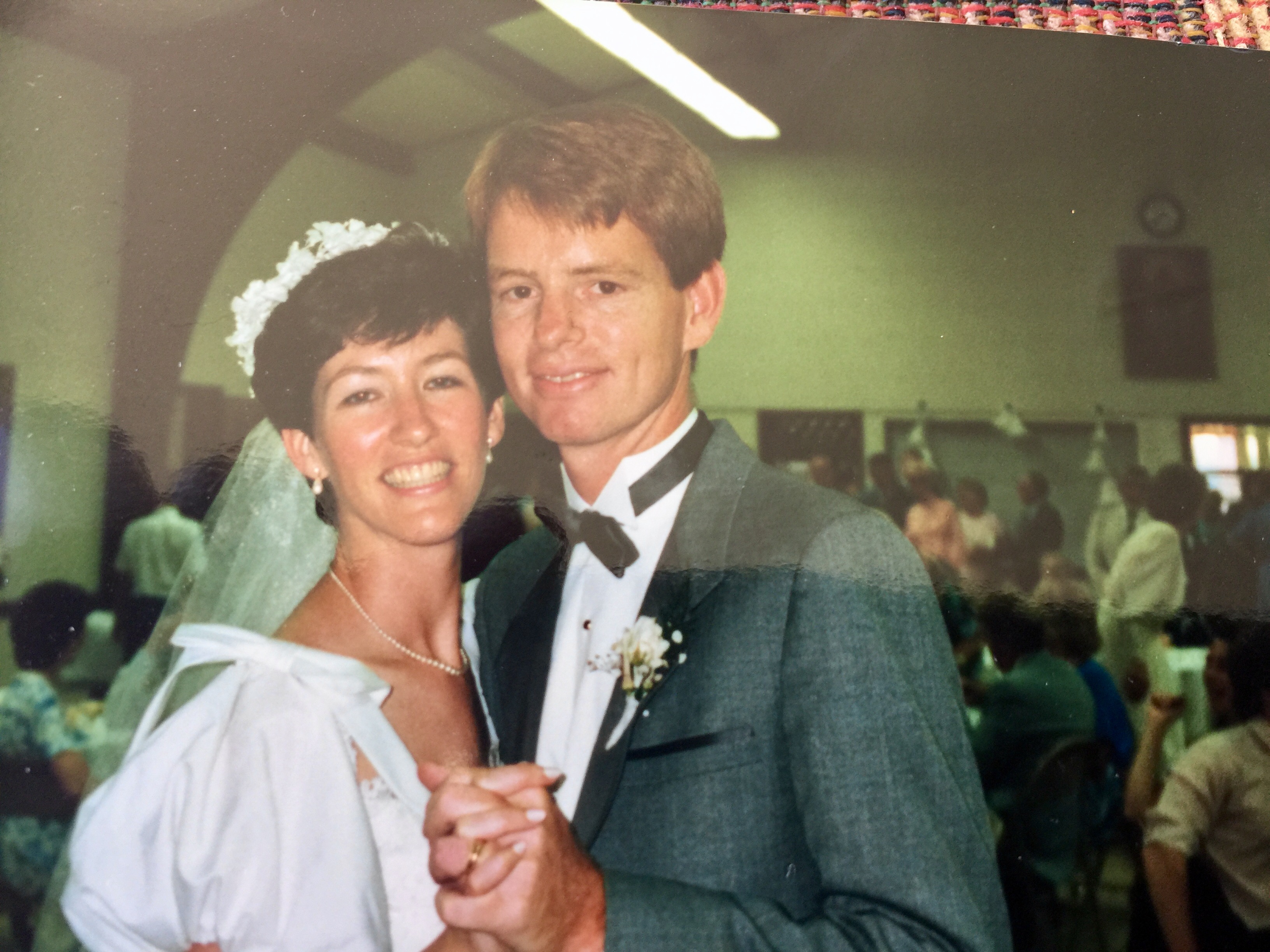
I stopped cleaning to dance. In the reflection of the oven, I saw the real dancer watching me. When I try dancing, she just smiles.
And now, the dancer pushes her wheelchair away from the table so that she can move toward the pretend dancer.
“You want to dance, don’t you?” Bigger smile. I expedite things by wheeling her into the kitchen. Where I help her up and embrace her. We slow dance like first-time junior highers slowly swaying back and forth.
But dammit, it’s The National singing “I Need My Girl”.
The refrain rips through. “I need my girl. I need my girl. I need my girl.”
My girl has no clue I’m crying.
May love soften the hard edges. May light soothe the dark places.
Picking up a Saturday night pizza and salad. A scrawny, pale Boomer with straight hair half way down his back and an earring materializes next to me. I have no doubt I could take him, but I’m getting ahead of myself.
He’s looking at individual slices. A 20 year-old Evergreen State College student making $15/hour asks him if he’s been helped.
I don’t know if I write well enough to capture the depth of his cruelty.
“Have I been helped? Would I like anything?! No, I’m just standing here looking at the pizza because I don’t know, maybe I want pizza.”
I’m dumbstruck, but she keeps it completely together and explains what the slices are. He says something about being vegan.
I wish my peabrain engaged more quickly. It wasn’t until I was in the car that I realized what I should have said/done.
Asked him, “Were you born a dickhead or is it a more recent development?”
There are two types of jobs. Those where you have to deal with the public and those where you don’t. A young woman at the Westside Vic’s deserves a “public dickhead” bonus.
Follow up to last post. Cohen argues that homophobia, and its cousin, homohysteria, or the fear of being thought homosexual because of behavior that is typically considered gender atypical, conspire against close male friendships in the (dis)United States.
At the same time, she writes:
Homophobia has declined over the last few decades, and with less stigma attached to being gay, researchers have found that homohysteria has eroded too.”
Given those complimentary trends, maybe younger men stand a better chance of developing more robust systems of support than in the past.
Or maybe Cohen and the researchers she cites are almost exclusively coastal elites who are slighting the cultural impediments that continue to rob men of emotional intimacy throughout large swaths of the fruited plains.
“Having fewer close friends is associated with loneliness, and loneliness is linked to a variety pack of negative health outcomes, from high blood pressure to depression to cognitive decline. Compared to women who lose their husbands, men who lose their spouses experience a much more pronounced and long-lasting spike in loneliness and depression; they’re more likely than women to die by suicide. Researchers attribute these differences to women having more diverse systems of social support.”


 Pressing Pause