Help Me

Help others.

When Mother Dear died two years ago, my brothers, sister, and I inherited what was left in her charitable foundation. Meaning every four years I get to give away some money. This year it’s my turn and I’m not sure whom I should give the money to. Leaning towards a few non-profits that work with the homeless in our fair city.

How do you decide whom to give to? My thinking is guided by two important things. First, the gifts have to be ones moms would’ve made. Second, the gifts should have a lasting impact.

The first principle is a breeze because Mother Dear was profoundly generous. Unlike me, she didn’t overthink things. Instead, she instinctively gave when made aware of obvious needs. No paralysis by analysis.

The second principle is where I need your help. Consider this philanthropic case study. Tom and Christy Lee deserve lots of credit for their selflessness and for helping me refine my philosophy of philanthropy. Consider the math, $5,495 donated to forgive the school lunch debts of 262 families. An average of $21 per family.

It’s possible that an unexpected $21, like tiny micro-loans that have received so much positive press, could make a meaningful difference in a low-income family’s struggle to turn an economic corner. But if the families who received the unexpected loan forgiveness don’t address any of the underlying causes that resulted in them falling behind on their children’s school meals, won’t they be in the exact same place in a year’s time? Does the $21 have a lasting impact? I’m skeptical.

And isn’t the same conundrum even more pronounced for the organizations I’m considering giving to? If the organizations I’m considering giving to feed, clothe, and shelter the most vulnerable members of our community, but don’t also provide substance abuse and mental health counseling or job training and low income housing, won’t the numbers of homeless continue to tick upwards?

So is the answer to give to “both/and” organizations, non-profits that both meet the immediate needs of the most vulnerable and work equally hard to remedy one or more of the underlying causes of institutional homelessness?

Also, how do I assess the relative efficiency of the local organizations I’m considering? The overhead of medium and large sized non-profits are carefully scrutinized by excellent websites, but not smaller, grass-roots ones. How can I know whether 50 or 90 cents of every dollar ends up directly benefitting those in need?

Ultimately, how might I maximize the long-term benefits of these gifts, honor my mom, and extend her legacy?


Rethinking Work

My favorite 21 year old is graduating college this May and “launching” shortly thereafter. A college friend, a 56 year old retired SoCal fire fighter, was just accepted to a Physician’s Assistant program. This is for them. And everyone in between.

Our work tends to be the result of our personal interests; compensation considerations; and though we may not want to admit it, the relative prestige or social status associated with our chosen occupations.

More specifically, we choose among possible jobs not just because they pay the bills, but also because of the particular activities associated with them-we become teachers instead of accountants because we enjoy interacting with young people in classrooms more than we like crunching numbers in cubicles. A person attends seminary rather than law school because they want to make a tangible difference in their community without any pressure to maximize their billable hours. A person becomes a landscape architect rather than a golf club professional because they like plants and the outdoors more than they do beginning golfers.

Additionally, my fire fighter friend, if he’s typical of other fire fighters, probably partly chose his first career because of the unique work-life balance it afforded with a positive mix of twenty-four hour shifts and more than normal days off each month. I’m sure the excellent salary and benefits, service-orientation, and built in station-based community probably factored in too. A pretty great job altogether, apart from the extreme occasional danger.

Here is what even my daughter’s very good, vocation-oriented career placement center probably won’t tell her when she inquires about different possible jobs. Think about more than pay and primary activities. Talk to people doing the work about the less visible and less obvious activities, and the culture of their workplace, meaning the nature of their relationships with all of the people they regularly interact with. For me, as a university professor/administrator, my relationships are with faculty colleagues in my department and across campus, students, and numerous staff and administrators. Don’t fixate on the relative appeal of any job’s primary activities, instead, carefully reflect on the personal qualities each particular work culture is likely to cultivate.

For example, people think of teaching almost exclusively as what goes on between a teacher and her students during the middle of the day within the four walls of an individual classroom. But that’s the tip of the iceberg. Ignored are the hours spent planning daily lessons; the hours spent alone reading and responding to student work; the hours spent teaming with colleagues to plan, problem solve, and respond to student work; the time spent continuing one’s teacher education; the time spent being a part of the school’s extracurricular activities. Conventional wisdom about teaching might account for about a third of a teacher’s weekly activities.

Every job comes with a distinct work culture, some work cultures cultivate more socially redeeming personal qualities than others. Working at Chicago’s Newberry Library is probably similar, but not the same as working at Northwestern University’s Main Library. So it’s a two-fold learning process, learning about library culture generally, and a particular library’s variation on “what’s typical” more specifically. How to do that? Talk to people at the library about the culture, what’s rewarding, what’s most exasperating, why. When, at the end of your interview, you’re asked if you have any questions, ask about the work culture, what do employees say when asked what’s the best part of working at x, what are some commonalities that prove most challenging.

Most people think about work in terms of how they’ll benefit/change the people they work with, giving little to no thought about how their work will change them. Every job you do for very long will change you, for better or worse, probably more than you’ll change anyone at work. Ask people doing the work you’re considering, “How has being a landscape architect, nanny, teacher, engineer, nurse, journalist, changed you as a person?” What personal qualities does the work cultivate? In what ways, if at all, are you a better human being as a result of doing this work?”

If they can’t answer that question positively, cross it off your list. Be bold. Don’t obsess about the obvious activities, the pay, the benefits, the perceived prestige; instead think about work as a context for self understanding and self improvement. Don’t think about work as an end in itself, meaning don’t fret about how your job or career compares to your peers; instead think about work as a means to becoming a better human being.

I’m fortunate that my work culture values good, open-ended questions, but my comfort with ambiguity can exasperate more concrete sequential, literal-minded people. And I’m fortunate to work with people, teachers-to-be, who are more altruistic and socially conscious than average. Their idealism and service orientation is a nice counterbalance to my cynicism and selfishness. I’m a better person because of their optimism and vitality. When it comes to the other two-thirds of my work, it’s mostly about conflict management, which provides daily opportunities to become a better human being. More specifically, I’m convinced my success resolving workplace conflicts depends almost entirely upon my ability to carefully, actively, and sensitively listen to others.

It’s cool that being a decent husband, father, friend, and citizen depends almost entirely upon the same thing. And for that reason, I’m fortunate to get to do the work I do.

Who Are You Drafting Off Of?

Like a lot of introverts, my need for solitude sometimes seems insatiable. Yet, I’m keenly aware we are social beings and that we need others to accomplish much of anything and to have any meaningful shot at genuine happiness.

Even though you won’t find me in the Nisqually Delta with binocs, DSLR camera, and ginormous lens dangling from my neck, or listening to bird calls on my iPad, I enjoy watching the birds we share our new spot with. Yesterday’s airshow was especially good. Two bald eagles took turns nipping each other (foreplay?) while a cormorant glided by obliviously . I also can’t get enough of watching geese and other migratory birds fly by in small, medium, and large “V’s”.

Migratory birds draft off of one other for the same reason cyclists do, to save about 25% of their energy. I wouldn’t be surprised if they also also benefit somehow from the social aspect of flying together.

Are you an investor, if so, are you “flying solo” or are you drafting off of someone more experienced, knowledgeable, and successful? Like this person. What about as a person, are you drafting off anyone to be a better human being? Or maybe, like me, as an educator, parent, and older person, you’re doing your best to, like Nairo Quintana in the picture below, “lead out” others in need of a positive example.

20175944-355979-800x531.jpgPhoto: Tim De Waele | TDWsport.com

Postscript: I love this pic because even though Quintana is working at least 25% harder than Contador and company, he’s totally in control, meanwhile, everyone else is struggling mightily to hold his wheel. If only I had grown up Boyacense.

L’eggo My Ego!

That pun will be lost on the youth.

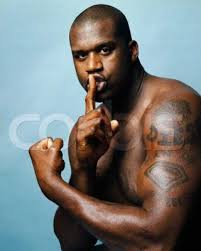
Recently, while training indoors for next summer’s Tour de France, the DVR offered slim pickings, so I ended up watching an ESPN documentary about the mid-90s Orlando Magic. As the story goes, one year the Magic got to the NBA finals thanks to the play of two young superstars, Shaquille O’Neal and Anfernee “Penny” Hardaway. Then they got swept by the Houston Rockets in the Finals. The next year they got swept by the Chicago Bulls in the Eastern Conference Finals.

Then Shaq left for Los Angeles largely because he couldn’t stand sharing the spotlight with his increasingly popular running mate. Twenty years older Shaq admits “it was ego” that got in the way of him staying, and realizing, the Magic’s obvious potential for championships.

Then after a couple of championships in LA, he left largely because he couldn’t stand sharing the spotlight with his equally, if not more popular, superstar teammate. Recently, he’s expressed regret that his “ego” got in the way then too. At the end of the film he says if he could do it all over again, he never would’ve left Orlando. He’s also expressed regret for leaving the Lakers when a few more rings were clearly within reach.

In the end, Shaq won half as many championships as he could’ve because he chose to be “the undisputed man” on lesser teams.

Daily it seems, I see examples of the downside of ego, both the more common male version, and the less familiar, female. Granted, more subtle and nuanced examples than the Big Aristotle’s, but still consequential. The challenge is for leaders to combine self confidence with a Buddhist-like selflessness. Whether star athletes, coaches, teachers, principals, pastors, politicians, or businesspeople. Leaders who don’t need credit for what their team’s accomplish. Leaders who let their legacies take care of itself.

Why did Shaq Daddy so desperately need the brightest spotlight? Why couldn’t he share the credit for his team’s success?

Why do we? Why can’t we?

imgres.jpg

Postscript. This just in. Adrian Wojnarowski on George Karl’s new book, Furious George. “Truth be told, Karl was everything he said he disdained about all his players, he was all about the next contract, all about the attention, and always about himself over the team.”


What Home Buyers Get Wrong

Six months on in the new crib, I’m ready to educate my brother who is allegedly studying design. This is for him, but I’ve been posting so infrequently of late, feel free to eavesdrop. Bro, just send a check for whatever you think my insights are worth.

Home buyers focus too narrowly on total square feet, too often thinking the bigger the better. We moved to a slightly smaller home, but it feels larger because we regularly use much more of the total area. In other words, there’s no wasted space. And even though there’s less total square footage, the kitchen is quite a bit larger. The beauty of the kitchen layout is you can open every drawer and the dishwasher and the refrigerator and still have two-three feet all around. No more sucking everything in when moving the silverware from the dishwasher to the drawer. In fact, now there’s nothing stopping me from packing on an extra 40-50 lbs this winter.

Our new master bathroom is about 60% the size of our former one. And it’s perfect. That other 40% was wasted space for the purpose of what, a slightly higher sales price? The new one has just enough room to do everything comfortably, and when it comes time to clean, it’s a breeze because damn near everything is in reach.

Homebuyers don’t realize small things make a big difference. Especially when combined together. Case in point, dimmable lights. Mercy me, how did I live in an on-off world all those years? There’s nothing like entering the bathroom at 5:30a, flipping the switch, and being met by a faint pre-dawn-like light. Same when preparing to retire at night. There’s nothing like brushing one’s teeth under a faint post-sunset-like glimmer. Every light should be dimmable.

Another lesson. You can’t put a value on genuine quiet, and on natural beauty, and on the edifying result of the two combined.

Another lesson. You can’t have genuine quiet and natural beauty without sacrificing some community. There are always trade-offs. Long time readers of the humble blog will know I value community. Is sacrificing some community worth the return in quiet, natural beauty, peace? Stay tuned, time will tell.

What else do home buyers get wrong?


What Endurance Athletics Has Taught Me

Most people want to get in shape in a fraction of the time it took them to get out of shape. A vast majority also want to win the lottery and fall in love over night.

The key to success in endurance athletics is building strength, stamina, and mental toughness over time. The key is taking the long view towards incremental improvement, week-to-week, month-to-month, year-to-year. Am I stronger, fitter, more confident this week, month, year? I’ll never be strong, fit, and confident enough. When most successful, there’s positive momentum, movement along the continuum. Positive momentum requires waking up and getting out the door, even when I don’t feel like it. Especially when I don’t feel like it.

How to create positive personal finance momentum? The key is incremental improvement which results from saving more than I spend month-to-month, year-to-year, and then investing in passive index funds month-to-month, year-to-year. Building the strength, stamina, and mental toughness to hold on for five, ten, fifteen years. Rebalancing on occasion.

How to be a better human being? By being a more active, patient listener this week, this month, this year. By being a little more friendly to others, more empathetic, more curious, more understanding.

It’s much easier to write about the long view and incremental improvement than it is to apply it consistently. In some important ways—including as an endurance athlete, as a blogger, and as a close friend—I’m lacking positive momentum right now. This is the point in the post where I wish I had an inspiring insight to close with.

Postscript: Alexi has momentum in her life.


A Life Built on Service and Saving

If my ticket gets punched sometime soon, I’ll have lived a life filled to the brim. Almost disorientingly so. I’ve crouched in the final passageway of a West African slave fort, been drenched by Victoria Fall’s mist, walked on the Great Wall of China, ran around the Imperial Palace in Tokyo, hiked in Chiapas, and cross country skied in Norway. I’ve lived in the Midwest, the West, the Southeast, and as one six year old here says, “the Specific Northwest”. I’ve interacted with thousands of young people, the vast majority who appreciated my efforts on their behalf. I’ve cycled up and down mountains in the Western United States. I’ve taught guest lessons in my daughters’ elementary classrooms. I’ve been blessed to know lots of people more selfless than me, some who will read this today. I’ve been loved by caring, generous parents, and been privileged to know my wife and daughters and their friends.

My life has been so full that I tend to think about whatever my future holds as extra credit. Everything from here on out is a bonus.

Maybe I don’t look forward to too much anymore because my cup has been overflowing for some time. Apart from a story well told and nature, not a lot moves me these days.

So getting choked up in church yesterday, during the announcements of all things, was totally unexpected. A guest was invited to the front to make a surprise announcement. A tall, dapper man in his late 30’s began describing his relationship with ChuckB, a member who had passed away a few months ago. He had been Chuck’s financial planner for eight years.

I didn’t know Chuck until I attended a celebration of his life that was planned nine months ago after the church community learned of his terminal illness. He worked as a forester for the Department of Ecology for a few decades and kept a low profile at church, driving the van, tutoring after school, doing whatever was needed behind the scenes. At his celebration I was struck by how everyone described him as one of the most humble, caring, and giving people they had ever known. He lived a simple life in a modest neighborhood that revolved around participating in church activities.

The financial planner announced that Chuck and his wife, who had passed away previously, were leaving the church $925,000, divided four ways, the largest portion for international aide, another for local charities, another for Lutheran World Relief specifically, and about $220,000 in the church’s unrestricted fund to use as the Council sees fit. A Council that has been seeking about $35,000 to fund a half-time position dedicated to strengthening our ties to local people in need.

There was an audible gasp. Two people stood and began applauding and soon everyone followed. My favorite part, and probably what moved me so much, was that Chuck wasn’t there for his standing ovation. Shortly before he died, he confided to one member that he was leaving “the bulk of his estate to the church,” but that person said she had “no idea it was anywhere near that much money.” No one did.

The most beautiful and moving part to me is that Chuck intentionally passed on his standing ovation. He didn’t need it. A life filled with service and saving was more than enough. Blessed be his memory.