Just Say No

From ESPN:

“LOS ANGELES — The widow of Kobe Bryant has sued the owner of the helicopter that crashed in fog and killed her husband and her 13-year-old daughter last month. The wrongful death lawsuit filed by Vanessa Bryant in Los Angeles says the pilot was careless and negligent by flying in cloudy conditions on Jan. 26 and should have aborted the flight. Pilot Ara Zobayan was among the nine people killed in the crash.”

Bryant is probably right, the pilot should’ve aborted the flight. And she may even win. But that doesn’t mean she’s right to sue. Her family does not need the money, so what’s the point? I have a dream that someday, really wealthy people who are wronged say, “I could sue, and I’d probably win, but I’m not going to.”

Book of the Week—Geezerball

I’m on a nice little reading roll, meaning a book a week. This week I cheated though when I subbed in a fun, short read, for a long, dryish, academic one that I was plodding through.

Geezerball: North Carolina Basketball at its Eldest (Sort of a Memoir) by Richie Zweigenhaft tells the story of the Guilford College noon pickup basketball game that I played in between 1993-1998 when I taught at the “small Quaker college”. The game is 44 years old and counting and some of the participants have been playing most or all of those years. One of the game’s mottos is “You don’t stop playing because you grow old; you grow old because you stop playing.”

Richie, also known as “The Commissioner” is an accomplished author of several books on diversity in the American power structure. Now 75 years young, he’s the glue that’s held the game together over the decades.

Geezerball prompted a lot of reminiscing about those years and reflection on what’s most important in life. I remember 11 of the 29 players on the current geezer email list which is pretty remarkable given how bad I am with names. It also speaks to the game’s stability and what demographers have been telling us for awhile—that Americans aren’t moving nearly as much as in the past.

The game combines two of the very few things upon which most medical doctors and social scientists respectively agree—the importance of exercise to our physical health and the importance of close interpersonal relationships to our mental health.

“My wife says she expects to get a call one day saying I’ve died on the basketball court,” one geezer writes in the book. “If that happens, she’ll know I died happy.” In actuality, the game is probably extending the life of the participants. Even more importantly, it’s adding tremendously to the quality of their lives. Their friendships, and the humor that marks their interactions, are testaments to the power of community.

Among other remarkable aspects of the game is the fact that nearly all the participants are men. As a runner, I can’t help but notice more women running together; like the geezers, strengthening their bodies, their hearts, and their minds simultaneously. Same with the Gal Pal and her girlfriends who go on long walks every Saturday morning while catching up on the week’s events. I don’t know if it’s true, but it seems like men are more prone than women to prioritize their work lives, often to their own detriment. Given that, I find it inspiring that a dozen men in Greensboro, NC have been defying that norm every Monday, Wednesday, and Friday for 44 years.

The sort of memoir reminded me of exactly how cool of an addendum the game is to the participants’ lives. But now, upon further thought, I can’t help but wonder if when those men near the end of their lives, they’ll think of the game as one of the most essential parts of their lives, and their work as more of an addendum. Meaning, what if we all have it backwards? What if the GalPal’s Saturday morning walks, my Saturday morning group runs, my Tuesday and Thursday night group rides are the core and everything else is the periphery?

This line of thinking may be just one more example of my economic privilege at work, but I can’t help but wonder what would happen if we organized our lives around Geezerball-like communities, where we prioritized movement and friendship over material wealth and status? Put another way, how much is enough? When it comes to work hours and money, there’s always a point of diminishing returns. At a certain point, more work means more impoverished relationships with family and friends.

In contrast, when it comes to walking, running, cycling, swimming, surfing, or playing basketball or golf with friends, there is no point of diminishing returns. Our physical and mental health just keep improving. Our entire well-being. That’s the lesson of Geezerball.

download.jpg

Grading the Demos

Biden. “C-“. Came across as desperate. Clearly “his people” told him it’s now or never. Kept saying, “I’m the only guy who. . . ” Once referred to the Obama Administration as “My administration”. The repeated references to the past, coupled with his age, makes one wonder why we should put our future in his hands. Peeved at the moderators for slighting him. Reminded me of a once great athlete unable to walk away from the game.

Bloomberg. “D”. What a waste of $419m, the amount he’s spent on on t.v. ads so far. Of course, to him, that’s parking ticket money. I would love to see him debate Trump because he’s so good at trolling him and he’s clearly not afraid of him, but after he was eviscerated by Warren, the odds of him winning the nomination are about the same as me. His not crying or disappearing during one of the commercial breaks saved him from an “F”.

Buttigieg. “C”. Seemed resigned to not winning the nomination, but continued trying to position himself as the sensible alternative. Did a good job of repeating the $29,000 line, the amount at which people who support Sanders “Medicare For All” will see their taxes increase. Smiled a fair amount. His line about “living in his one house” in Indiana was excellent. Obviously thinks his geography is a distinct advantage, but has not acknowledged how it might limit his appeal to people of color. Tried to be mean to Klobuchar on her Mexico faux pax, but he’s not a natural cabrón. Should’ve shaved beforehand. Reminded me of a young athlete who may be great some day.

Klobuchar. “C”. Seemed resigned to not winning the nomination, but continued trying to position herself as the only person who can beat Trump because of her winning record. Came across like a car in a Minnesota blizzard with its back wheels spinning, spinning, spinning. Displayed an impressive array of “Oh shit, you did NOT just say that” facial expressions when attacked by Buttigieg and Warren. Gets credit for a sense of humor (“Post-it notes were invented in my State”) and poise when under attack. Sadly, she is the one candidate who is consistently cut off by moderators.

Sanders. “B”. Didn’t do anything obvious to slow his momentum. Sticked to his now predictable talking points. Handled the Culinary Workers Union controversy adequately. Avoided front-runner attacks thanks to Bloomberg’s presence. Someone from his team should send Bloomberg a $25 Starbucks gift certificate. How many people, like me, googled his age mid-way through? He’ll be 79 on election day. His campaign is an interesting political science experiment. Can people handle the truth about our country’s decline? About how social mobility has grinded to a halt? About how the quality of life is better in some other countries? That we’re lagging behind Denmark? Sadly, I don’t think so.

Warren. “A”. Yeah, I’m biased since I’ve thought she would make the best President all along. I loved the FIREY comeback. Her evisceration of Bloomberg had to make Trump nervous. She was the most prepared, most intelligent, most detailed, most focused of the candidates. But she wasn’t just flame throwing. Her defense of Klobuchar for not knowing Mexico’s president’s name (Andrés Manuel López Obrador) was one of her strongest moments. Girl power and all that. Reminded me of a great athlete in her prime.


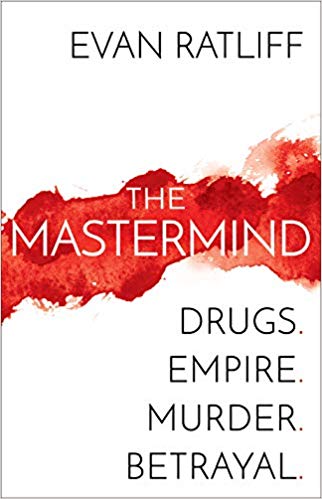
The Mastermind

Evan Ratliff tells the story of “the decade-long quest to bring down Paul Le Roux—the creator of a powerful Internet-enabled cartel who merged the ruthlessness of a drug lord with the technological savvy of a Silicon Valley entrepreneur.”

Paragraph to ponder:

“Some people speculated that his drive was fueled by some submerged pain—his hurt over being adopted, or some other childhood affront for which he was forever exacting revenge on the world. Maybe so. I always suspected that at least a part of the answer dwelled in his life as a programmer. Le Roux had found his place inside code, a universe in which he could bend reality to his will. It seemed to me that he tried to apply the detached logic of software to real life. That’s why the DEA schemes must have appealed to him. ‘Nothing involves emotion for him,’ the former 960 agent put it to me. ‘Everything is a calculation.’ His approach was algorithmic, not moral: Set the program in motion and watch it run.”

Since I’ve watched Breaking Bad and am watching another season of Narcos, I’m kinda an expert on criminality :). Some take-aways.

The poorer the country, the more explicit the corruption tends to be. In my late 20’s, I was in a van in Kenya when our driver was pulled over by a local cop for no reason other than to “make a payment”. The casualness with which he paid the bribe blew my mind. When police and army salaries are super low, it’s relatively easy to co-opt them through regular “payments”. In countries like the Philippines, where most of The Mastermind takes place, when criminals like Le Roux strike it rich—at one point he was making $6m/week—they can bribe local, provincial, and federal police; military officers; lawyers and judges; and key politicians. Then they can really “scale their business up”.

The Mastermind reveals a seriously flawed United States judicial system. As illustrated so poignantly in post 9-11 analysis, inter-agency rivalries are endemic. Not just between the CIA and the FBI, but also between local, state, and federal policing agencies. People with state-wide authority routinely look down on local officials, federal officials look down on everyone. The greater one’s authority, the greater their sense of superiority. Yet, in the end, the Feds made the worst decisions and ensured justice would not be served.

Criminals benefit massively from interagency rivalries because information is treated as a valuable asset that shouldn’t be shared “down” the line with less competent, less trustworthy underlings. And because each agency wants credit for the biggest busts, competitiveness trumps cooperation. Consequently, all the agencies are much less effective than they could be. This persistence of this phenomenon strikes me as a serious failure of modern social science.

If your television viewing sometimes Breaks Bad, you’re down with Narcos, and/or you’re a student of social sciences, I recommend it.

41Yn4cEd46L._SX320_BO1,204,203,200_.jpg


Weekend Assorted Links

1. Nearly all middle school teachers are highly stressed.

“The largest group, 66%, reported high stress and high coping. Nearly one-third of the participants, 28%, reported high stress and low coping. Only 6% of middle school teachers reported low levels of stress and high coping ability.”

2. Eleven minutes: A call from Kobe Bryant. Jayson Reynolds is an exceptional young adult author.

3. The killer(s) on the road: reducing your risk of automotive death.

“If I die in the next 10 years, the most probable ‘murder weapon’ is my vehicle or another vehicle on the road.”

4. All children are gifted—just in different ways.

“I’m sorry, but no school board, no group of parents has the right to label one homogeneous group of children ‘gifted’ based on the criteria established by the parents of those children and then consign the rest of the students to programs for the ‘not gifted’. That’s what happens.”

5. Can this one super-prospect revive the greatest dynasty in sports?

“She’s as good as anybody I’ve seen with the ball in her hands.”

Democracy Is Cool When You Vote Like Me

I’m not Bernie Sanders’ target audience. I’ve benefitted way too much from capitalism; I’m okay with my health insurance; and our recent weather aside, I’m not nearly angry enough. AND LISTENING TO HIM IS LIKE READING MILLENNIALS!!!

But I’m even less fond of the James Carville’s* of the world and other liberals who are constantly ripping Sanders youthful supporters. Instead of whining about them, try these alternatives.

Stop castigating them for their idealism; instead, affirm their engagement in the political process. For every committed “Bernie bro” there are ten apolitical apathetic people their same age. And hell, if they don’t start out idealistic, what chance do they have?

Set your Boomer pragmatism aside long enough to consider their perspective by substituting questions for the incessant, negative diatribes. Write these on an index card and put it in your shirt pocket. Why Medicare For All? Why a wealth tax? What’s it like having so much student debt? Why such an intense concern with climate change? Why dismantle capitalism? Then move on to their stories. If you’re not careful, you might learn WHY they vote differently than you.

The more respect they receive from mainstream Demos, the more likely they will be to eventually support another candidate in the case another candidate wins the nomination. Right now, given the knee-jerk invective they’re constantly subject to, I wouldn’t blame them if they simple say “A pox on both of your houses.” Which, of course, is the worst possible outcome.

*Pains me to write that, because during his Bill Clinton administration heyday, I really liked Carville. I found his smart, funny, direct, Southern, Creole riffs on all things political super engaging.

Confusion and Gratitude

I find social media birthday celebrations confusing. Is getting tons of “happy birthday today” messages from Facebook “friends” even a little gratifying? It strikes me as such a weird phenomenon of our modern age that I’m not telling anyone on-line that it’s my birthday today.

Another thing that has me confused. A national coffee chain sent me an email for a free drink or food item today for some reason and I can’t decide what to do because my home lattes are better than theirs and it’s not even close when it comes to my home oatmilk-based oatmeal topped with avocado, blueberries, salted pepitas, and cinnamon. Maybe I’ll flip a coin, sell whatever I get at a discount to someone else in line, and then send that two or three dollars to a moderate Democrat running for president. Give him or her a little boost to get over the top.

Besides confusion, I’m feeling gratitude today for my parents for providing such a loving base on which to build an amazing life. I miss them. And gratitude, as well, for the Good wife, daughters, friends, and people who regularly stop by the humble blog.

Monday Assorted Links

1. What to do when you’re fired.

“The owner came up to me and said, ‘I’ve been thinking, why should I pay you when I can do what you do?’ And he let me go,’ said Carroll, 51, of Macomb Township. ‘I was driving home, crying my eyes out, to tell you the truth. I thought, ‘What are you going to do? How are you going to make it?’”

One resilient dude with a bullet-proof business philosophy.

“I take care of things. If you take care of one person, it turns into 10. If you do one person bad, it turns into 100.”

2. The Disneyfication of a University. Not sure whether to laugh or cry.

“We were given ‘Service Priorities’ table-tent cards, conveniently sized for our pocketbooks and billfolds so we can whip them out whenever we needed to remind ourselves how we change the world. These cards offer a series of declarative statements—pabulum, some might say—about our “care” priorities. Here’s a sample: ‘I support a caring environment by greeting, welcoming, and thanking others.’ To help us care for others, the university has established a ‘positive vibes submission’ website, where we ‘can send a positive vibe to someone.’ It was hard to detect many positive vibes in the workshop itself.”

3. The latest recipient of the Presidential Medal of Freedom in his own words. Will the reward ever recover?

4A. Pay equity for skiers and snowboarders. 4B. The battle against crowded ski hills.

5. Is this what progress looks like? U, G, L, Y, you ain’t got no alibi, you ugly!

How to Do Nothing—Resisting the Attention Economy

By Jenny Odell. Even though I just finished it, I suspect Odell’s “How to Do Nothing” will be the most influential book I read in 2020 because it’s the most thought provoking book I’ve read since America the Anxious and Palaces of the People, books that also emphasize the importance of community, public places, and the common good. It is so unique, insightful, and challenging, I processed two-thirds of it at most; meaning, I need to reread it, which is a bit problematic since it’s due back at the library. I should probably make Eldest’s day, a true bibliophiliac, and just purchase it. Especially since it will take me a long time to even partially apply her numerous insights.

The front jacket lead, which I’ve amended, is a decent overview:

“A galvanizing critique of the forces vying for our attention—and our personal information—that redefines what we think of productivity, reconnects us with the environment, and reveals all that we’ve been (what we are) too distracted to see about ourselves and our world.”

If you are wary of individualism and seek more community, read Odell.

If you long for a more meaningful, less commercial existence, read Odell.

If you suspect your life might be enriched by less social media activity, read Odell.

If you want to think and care more deeply about your local ecology, climate change,  economic privilege, and alternative ways of thinking about progress, read Odell.

If you want to see Odell explain her book while reflecting on the challenges posed by its unexpected success, watch this November 2019 talk.

“How to Do Nothing” is especially important for anyone thinking, “No way am I spending 23 minutes I don’t have to watch the video.”