If you’re under 40, move along. Over 40, read on and on.
I have a rich fantasy life. Por exemplar, I sometimes imagine being married to a massage therapist who schedules her clients around me. We’re talkin’ morning and evening massages.
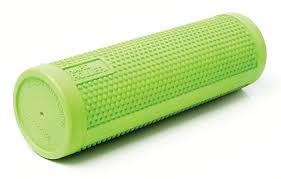
Since there are no signs of the Good Wife getting a massage therapist license anytime soon, I have to roll my own with this, which I first experienced in the bowels of the Hotel Grand Pacific in Victoria. $47.00, less than the price of one massage, I use it after runs to aid in recovery. When it comes to my 1,000 mile/year streak, it’s an integral piece of kit.*
*Pardon in advance if my syntax becomes more Euro as a result of the British series I’ve been watching—The End of the F***ing World and Broadchurch on Netflix.
Whether I’ve succeeded in converting you to my religion of green tea latte-ism or not, you need a receptacle for your morning hot drink of choice. There’s only one choice if you want one that keeps the heat on and on.
Yesterday, like most Tuesdays and Thursdays, I poured my matcha mix and milk into my Zoji at 5:45a.m. Then, after breakfast, a drive to the pool, a swim workout, and a shower, I finally cracked it open in the car at around 8:15a. The Zoji laughs at a two and a half hour test. Still piping hot. Zoji’s only flaw, you can’t put it in the dishwasher. A bargain at $27.99.
Postscript: The best reviewers pride themselves on their independence. Frequently, they pay for their own products in order to avoid outside influence. Forget that! The metric by which I’m measuring the success of Review Week is the amount of free swag sent this way. I’m sad to report that so far at least, I haven’t come home to any packaged matcha powder, pens, or mugs on the front porch. Even mediocre reviewers would disclose if they had been sent a product to review and then keep. But, as you’re well aware, I’m not even mediocre. Part of the fun of my reviews is your having to guess whether my objectivity has been compromised. As the price of the products steadily increases, I’m holding out hope that it will be.
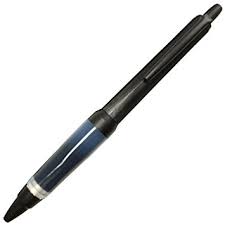
The price of poker is going up, all of 56 cents because this bad boy is $9.86 or $19.72 if you lose the first one shortly after receiving it like yours truly.
I usually drink my green tea latte while traveling north on the I-5 between milepost 107 and Pacific Lutheran University. You, on the other hand, linger in the kitchen and succumb to a matcha powder induced stupor characterized by supernatural serenity. Having self actualized, you spend the first few hours of the day writing down what you’re most thankful for. With this pen, which may be even silkier than my jump shot and putting stroke, you will want to write all day. The gel grip transfixes, so much so, you will chuck your laptop, or desktop, and forego word processing altogether in favor of papyrus.
I will not be surprised if your Uni-ball Jetstream Alph-Gel pen propels you into becoming a famous literary figure, in which case, it will come in handy at your book signings.
And don’t forget these, which you’ll need sooner than you think. Go forth and hand write.
How do you poor saps jump start your day? With orange juice, almond milk, cofvefe, wrong, wrong, wrong. There’s only one way to begin the day and that’s with a green tea latte and you can’t achieve green tea latte nirvana without excellent matcha powder like this. One bag lasts about two months and I always have a spare in the refrigerator. You never, ever want to get caught matcha-less.
Just as with mashed potatoes, the enemy of good matcha is clumps. This stuff, like my jump shot and putting stroke, is silky smooth.
There are lots of uses of this matcha magic, but here’s my suggestion on how to use it to revolutionize your life. Pour 16-17 ounces of the milk of your choice, I use non-fat, into a mason jar and one quarter cup of water in a small glass bowl. Heat the water, which takes 30 seconds in my smallish microwave oven. Next, heat the milk, which in my case means about 4 minutes in my micro, less time in medium-sized, more powerful ones. You now have 4 minutes to add 2 TSP of matcha powder to a bowl, 1/2 TSP of sugar (way less than Starbucks at about 10% of the price), and some vanilla extract*. To avoid any spraying, add half the water and mix it with a small metal whisk. Once it’s pasty, add the remaining water and whisk until there are no signs of clumps. Clump rhymes with Trump, to start your day well, avoid both.
Add those contents to your large cup or travel mug of choice. Then, unless you’re a slave to the dish washer, use the remaining time, usually about 2 minutes, to clean the bowl and whisk, leaving the soapy water in the bowl to add to the mason jar. Once the milk is supe-hot, add it to the matcha/sugar/vanilla extract concentrate residing in your cup or mug, and drink slowly, savoring the matcha goodness as long as possible.
* I’ve steadily reduced the amount of sugar I use, but simultaneously increased the vanilla extract. I never claimed to be the sharpest tool in the shed. Remember, fat is not the enemy, sugar is. And perfection.
Everyone is saying my consumer products reviews are brilliant, but infrequent, and you dear readers, deserve better. Thus, beginning in an hour, I’m going to review one consumer product a day for seven days. Plan your week accordingly.
This overview is intended to make Review Week even more life-changing than it otherwise would be. Before we get going, scrape together $1,042.64, the cost of all seven products combined. The cool-factor (and prices probably) of these products is about to sky-rocket and you don’t want to be left on the outside looking in.
Most product reviewers write in a way that suggests our quality of life hinges on their uber-detailed, super serious deconstruction of the product at hand. I will take a different tack. Since we are not our consumer purchases, my aim is to lighten up the genre with ample doses of sarcasm. So the not-so-hidden-agenda is to poke fun at the mindless materialism perpetuated by reviewers.
According to economists, we often buy consumer goods to “signal” things about ourselves to others, look I’m well-to-do, look I’m on top of the trends, look I’m smart, look I’m an environmentalist, etc.
The following reviews are informed by my fondness for the ancient Stoics who believed status, wealth, and hedonism are impediments to tranquility or “inner joy”. But even Stoic sympathizers like myself have to buy things on occasion.
The reviews are also informed by books like True Wealth by Juliet Shor. Shor argues we should be more materialistic, by which she means more thorough and thoughtful in our purchasing of products, so as not to waste money and contribute even more to our ever expanding landfills. Shor, and other progressive social scientists, argue that we should signal, if anything, environmentally conscious, pro-social values through our consumer purchases.
As one of the 7.6 billion people on the planet, my goal is to find products that “just work”, offer good value, and last a long time. I concede, that may come across as boring, but I’m also susceptible to beautiful materials and design, as my current love interest, the new Audi A7, illustrates. In the interest of keeping the week’s price total down, I decided not to purchase and review that. Yet.
Yesterday, before “Parkland”, I read this story. I can’t help but wonder how little the public probably knows about similar stories of averted shootings, meaning the problem is worse than we realize.
Dude makes music. Haven’t I aged out of hippity hop by now? Hell no. If I make it to 66, 76, 86, or 96, I will still be rocking the hippity when I’m bench pressing the 45lb. bar.
For the uninitiated, give these three tracks a whirl:
White Iverson
“When I started ballin’ I was young
You gon’ think about me when I’m gone
I need that money like the ring I never won, I won
Saucin’, saucin’, I’m saucin’ on you
I’m swaggin’, I’m swaggin’, I’m swaggin’ oh ooh
I’m ballin’, I’m ballin’, Iverson on you
Watch out, watch out, watch out, yeah
That’s my shot, that’s my shot, that’s my shot, yeah
Spendin’, I’m spendin’ all my fuckin’ pay”
And of course. . .
“Fuck practice, this shit just happens, know y’all can’t stand it
I have it, I’ll never pass it, I work my magic”
I’m working on a parallel track. White Bird.
Congratulations!
“My mama called, seen you on TV, son
Said shit done changed ever since we was on
I dreamed it all ever since I was young
They said I wouldn’t be nothing
Now they always say congratulations
Worked so hard, forgot how to vacation
They ain’t never had the dedication”
Forgot how to vacation. Reminds me of me.
Up There
“I wanna go up there and I don’t ever wanna come down
I wanna see what’s up there, actin’ like I got it all figured out
I wanna go up there and I don’t ever wanna come down
I wanna see what’s up there, must be better than the hell on the ground”
“William Jacobson, a law professor at Cornell and critic of the SPLC, says the group has wrapped itself in the mantle of the civil rights struggle to engage in partisan political crusading. “Time and again, I see the SPLC using the reputation it gained decades ago fighting the Klan as a tool to bludgeon mainstream politically conservative opponents,” he says. “For groups that do not threaten violence, the use of SPLC ‘hate group’ or ‘extremist’ designations frequently are exploited as an excuse to silence speech and speakers,” Jacobson adds. ‘It taints not only the group or person, but others who associate with them.'”




 Pressing Pause