I only eat at Chinese restaurants with 3.5 stars on Yelp pic.twitter.com/nwKjeI9bcd
— Freddie Wong (@fwong) September 13, 2022
Freddie Wong Only Eats At Chinese Restaurants With 3.5 Stars
Reply

Remember Ukraine?
From the New York Times, “Ukraine Routs Russian Forces in Northeast Forcing a Retreat“.
“For the moment, the Kremlin is sticking to breezy denials of defeats and business-as-usual insouciance by Mr. Putin, who, as Russian lines buckled on Saturday in the Kharkiv region, inaugurated a giant Ferris wheel in a Moscow park. Reports from social media said the wheel quickly broke down, leaving riders stranded in the air.”
Wednesday’s Apple event was just the most recent reminder that when it comes to marketing, everyone else is competing for the red ribbon or the silver medal or the consolation bracket title. They are the LA Dodgers. Best in class and it ain’t close.
They’re so good they are going to convince a huge cross-section of the population that they need something they’ve been fine without their whole lives–satellite coverage in case of a car crash or other emergency. Hell, when we crashed our cars and got lost in nature before we had cell phones we were almost always fine. There were pay phones, people assisting one another, smoke signals.
Now, Apple is amping up everyone’s anxiety with a bunch of WHAT IFs with infinitesimal odds. And I have no doubt it’s going to work. Sometime soon, people will question your sanity if you venture into your car or the woods without satellite coverage.
And because Apple is going to leverage your anxiety so expertly, my AAPL stock is going to keep increasing in value. Thank you in advance.
Charles could do us all a favor and secure his place in British, if not world history, by dissolving the monarchy.
Fall semester is off to an excellent, largely mask-free start. Of course it takes more than one or two class sessions to get a true feel for your students’ personalities, but all signs point towards a great semester. The most notable demographic shift of the last few years seems to be accelerating—a significant increase in Latina students. I have half of the football team in one writing seminar (slight exaggeration) and half of my students in my other one want to become writers which is exciting.
Some context. For those newish around here, earning a chili pepper, signifying hotness, on the website “Rate My Professor” is my primary career objective at this point. The one unchecked box. And with each passing year, the Las Vegas oddsmakers say my receiving one is less and less likely.
The highlight of the week happened Tuesday morning when I descended the stairs of our house. Since I’ve been slumming it for months unshaved in t-shirts that could double as bike rags, the Good Wife was impressed with how much I had cleaned up. As she moved in for a steamy back-to-school smooch, she said the nicest thing ever. “I would give you ten chili peppers.”

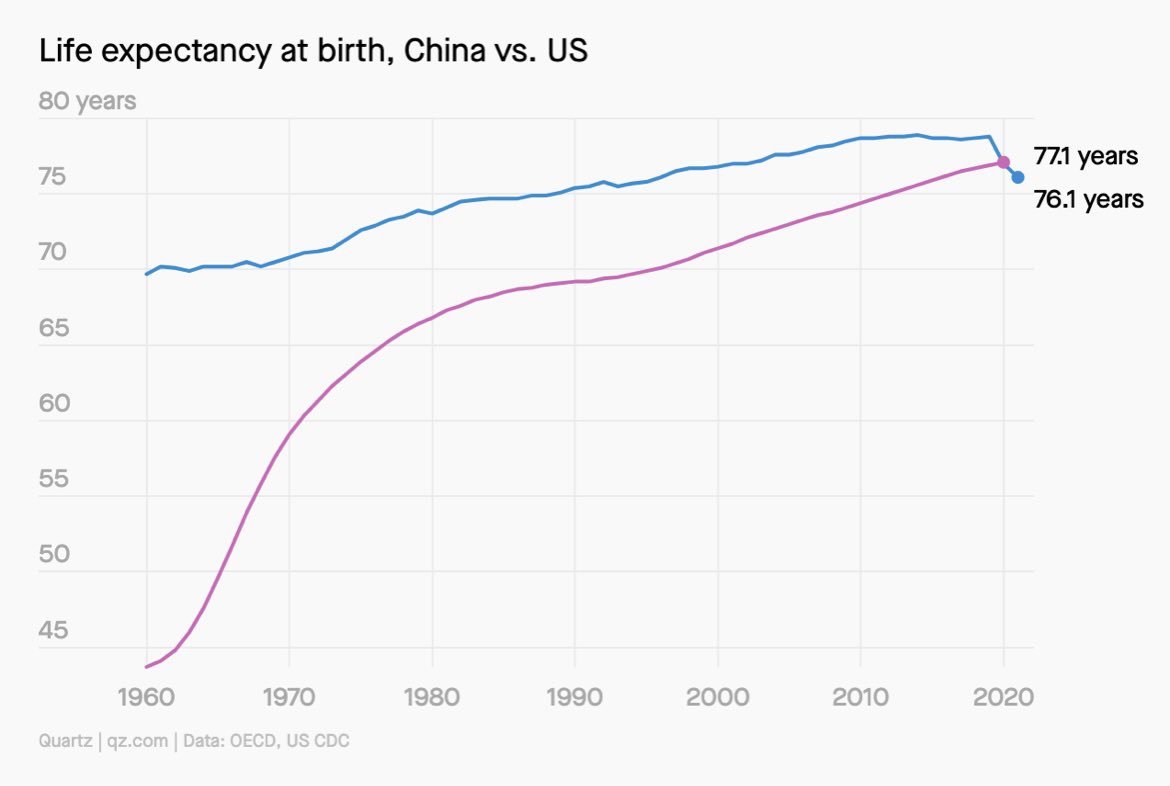
For the first time ever, people in China (red) live longer than people in the (dis)United States (blue).
From a profile of Johnny Mac.
“The tennis commentator Mary Carillo, a fellow New York native and his mixed doubles partner for their win at the French Open in 1977, recalled an 18-year-old McEnroe losing his temper with a waiter at a Paris cafe that spring. McEnroe spent several minutes yelling ‘omelet du fromage, which was the only French he spoke, at a waiter who ignored him. The waiter finally wandered over and quietly, but dismissively told McEnroe, ‘The omelet is closed.’
‘To this day when we’re arguing about something and I’m done with it, I just say, ‘the omelet is closed,’ said Carillo. . . .”
School starts tomorrow, so time to buckle down. Plus, Scottie loves assigned reading.
This was a slide from a “Student Mental Health” presentation yesterday.
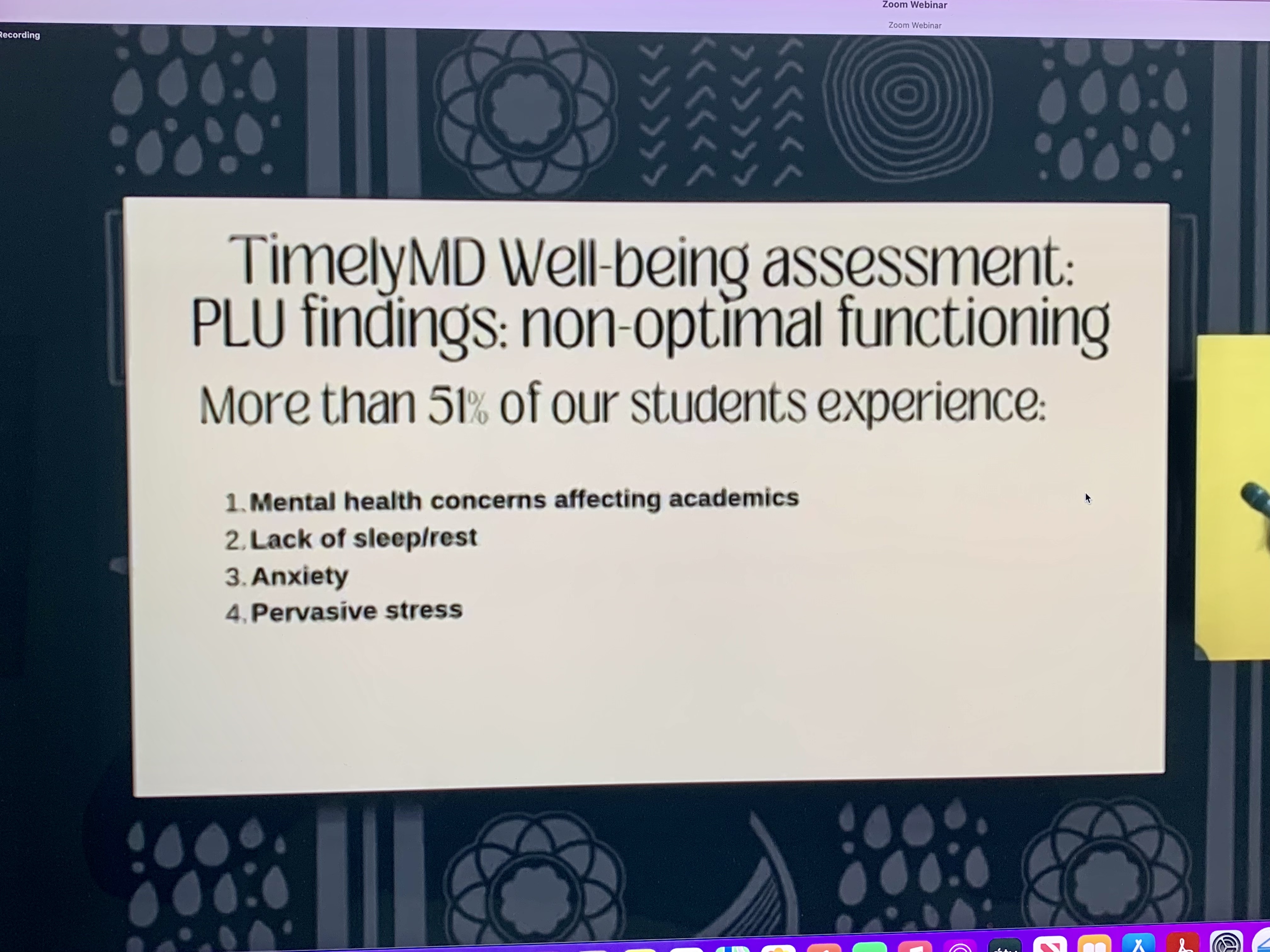
In light of these findings I’m thinking of reinstituting one of my fave parts of kindergarten—nap time. Sleep pads will not be provided, bring your own. Class is one hour and forty-five minutes long. How much time should I designate for napping?
Also, I am going to begin class by announcing that everyone is going to get an “A”.
Here’s hoping these adaptations and being my normal chill self promote improved student mental health.
 Pressing Pause