Whither The (dis)United States?

This morn I should’ve been staring at the black line on the bottom of the pool. Instead, I sampled the paper of record’s “Great Reads” series. In this case, “Depressing Read” would be far more accurate.

The headline will save you ten minutes. “They Argued About Trump at a Dog Park. Then They Pulled Their Guns.” Yes, for some unexplainable reason I read that headline, and then, like the swimmer I shoulda been, dove in.

Just one sampling:

“In the back of the police car and while being booked, he asked four times about the well-being of his dog, Frankie. He did not ask about the condition of the man he had shot.”

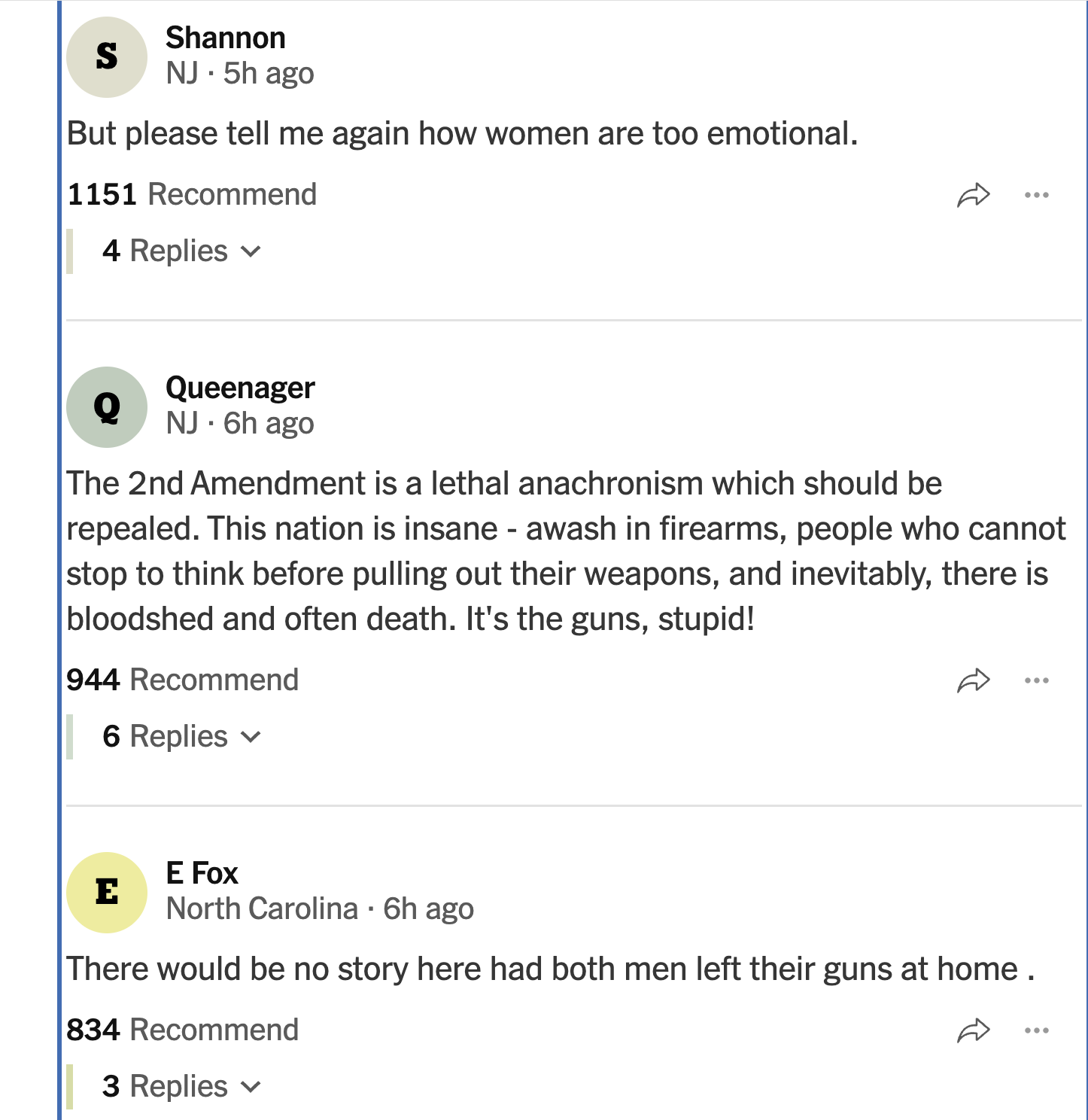
Top reader comments:
Depending upon who you are, your socio-economic status, where you live in the (dis)United States, and what content you selectively choose, life is either steadily getting better in the (dis)United States or worse.

Violent crime is way down, yet you can get shot at a dog park. Personal technology makes it far easier to keep in touch with many more people, yet loneliness is on the rise. Despite far less funding for medical research, and a greatly weakened CDC, impressive cutting-edge medical advances continue, extending lifespans.

I’m of two-minds. Due to my economic and related privilege I’m optimistic, but more generally, pessimistic. It’s obvious to me that most people’s lives are not improving anywhere near as much as mine.

Timothy Snyder sees my half-filled glass and empties it.

Two things can be true at the same time. In October, 2026, in the (dis)United States, life can be getting better for the New Aristocracy and future historians will convincingly argue that the world’s preeminent superpower had already begun it’s steady decline.

Postscript. Wonderful antidote to the dog park debacle.

Read This If. . .

You enjoy iconoclasts, craft beer, and independent businesses—Dick Cantwell’s Beer is Immortal (Allecia Vermillion).

You think we’ve ruined kindergarten. The Joyful, Illiterate Kindergartners of Finland (Tim Walker).

You wonder what makes dogs happy. Hint: The answer is in their tails. The secret lives of dogs: Emotional sensor helps owners understand their pup’s feelings (Michael Walsh).

A Better Way To Treat Anxiety

The title of a recent Wall Street Journal article about exposure therapy. 1.8 million young people, or nearly 10% in the U.S., experience anxiety disorders of some sort. Researchers at the Mayo Clinic, Virginia Tech and other institutions are finding that slowly exposing children to the things they are anxious about, at an early point in treatment, can be highly effective in helping them overcome anxiety.

Stephen Whiteside, a  Mayo pediatric psychologist, in the article:

When parents help children to escape from feared situations, anxiety symptoms may worsen and children frequently become more impaired.

Exposure therapy explained. Also verbatim from the article:

1) Children are gradually exposed early in treatment to things and situations they fear, and parents receive training as ‘exposure coaches’. Instead of avoiding things, the child begins to learn new ways to behave.

2) Don’t overreact. If your child is complaining or distressed about an upcoming situation—say a math test—tell him you understand how upsetting it is but you are going to be very proud of him for trying.

3) Save the praise. Praise the child only after she actually takes a step toward dealing with her fear, such as germs (‘You did a great job of riding the bus on the field trip.’)

4) One step at a time. Encourage your child to take small steps toward a goal, such as visiting an airport in advance of a scheduled flight.

5) Encourage decision making. Let your child make some choices on his own, such as whether to walk past a dog or visit a house where there is a dog.

6) Grin and bear it. Encourage your child in situations that might involve her fears, such as conversing with strangers—even if you think she might become upset or make a scene.

7) Positive reinforcement. Communicate that you are confident that your child can accomplish the goal, such as separating from the family for a camping trip. Tell her it will get easier every time she does something new.

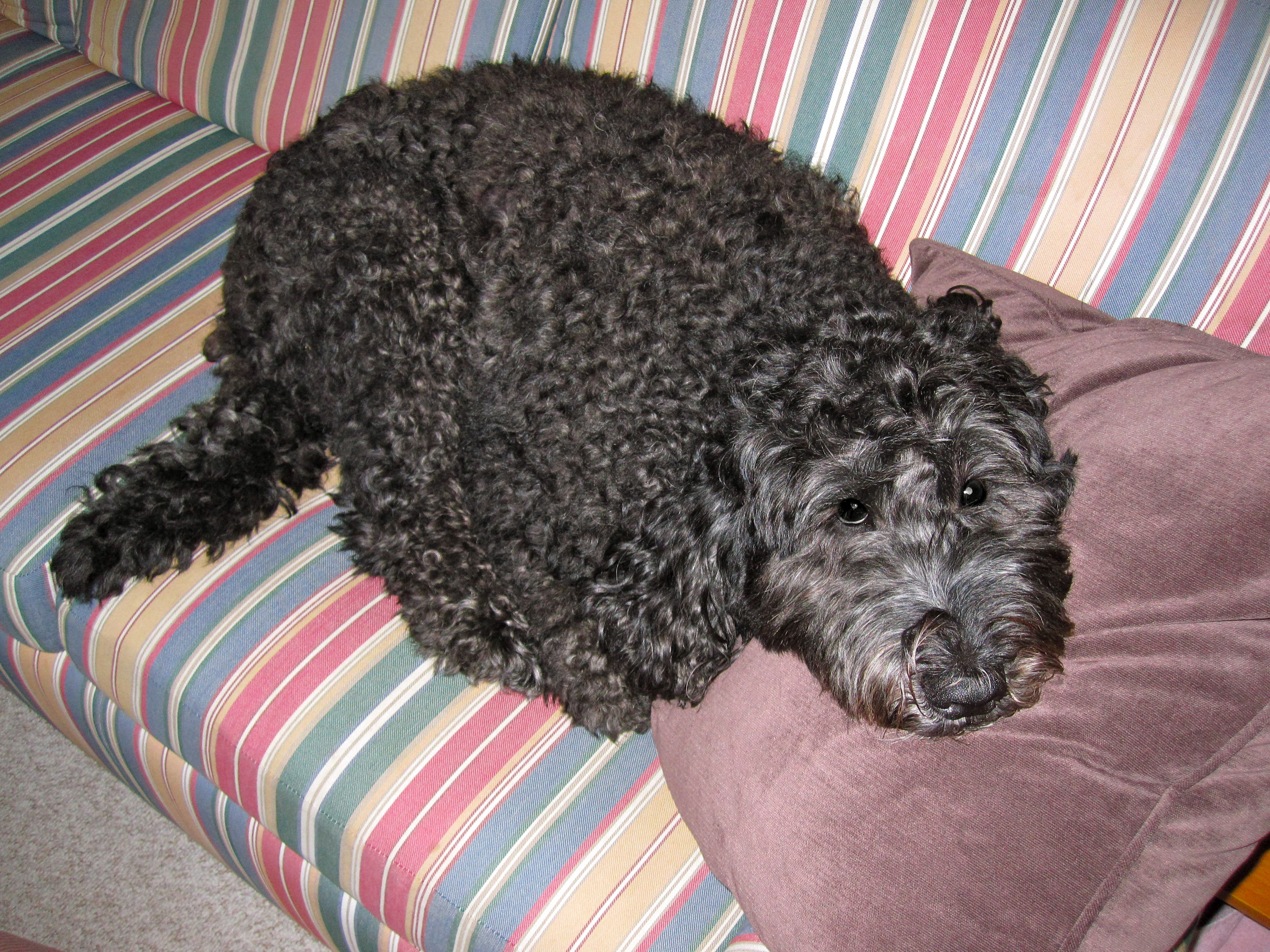
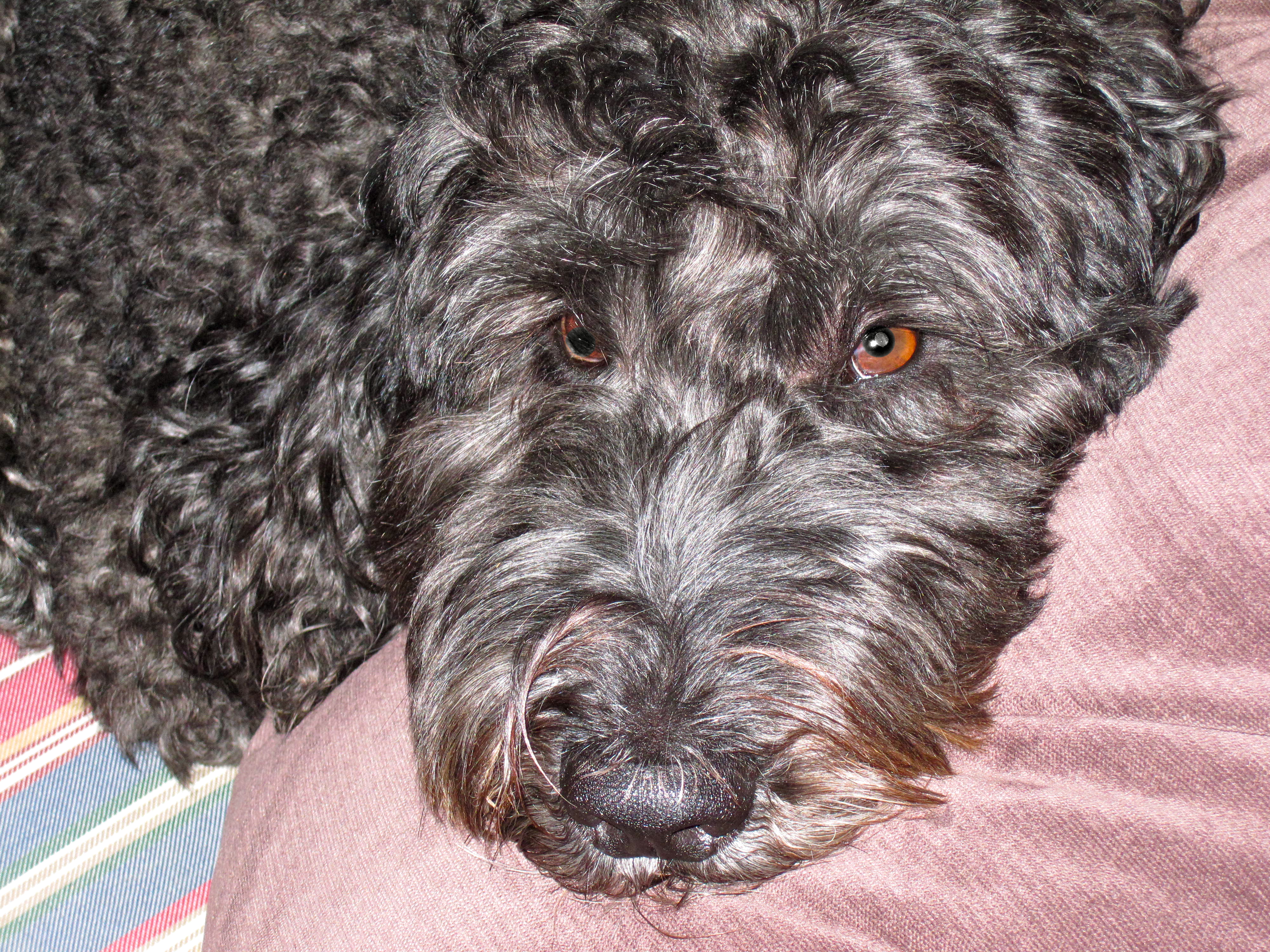
Number five reminds me that when I was young, I was deathly afraid of dogs. In the sixties, with three older sibs, I was left to my own to work it out. Less intelligent than the dogs that scared the sh*t out of me, I tried to outrun a few. Which of course only made things much, much worse. Now, I’m happy to report, the family sometimes worries I may be too close to one particular doggie.

IMG_0386

Spare me the “guess marijuana really is legal in Washington” jokes. It’s early.

photo

Pre-Post Doodle

Except for the occasional school carnival goldfish, a kitten that almost immediately bolted, and a lost dog that took awhile to be claimed, I didn’t grow up with pets; so as an adult, I was perplexed by the relationships some of my childless friends had with their pets. Watching them take pet care to levels I was unfamiliar with left me either scratching my head or somewhat sad given the devastating effects of poverty on human beings world-wide.

Then I stopped fighting the family push to get a dog, and now, after fours years of labradoodle goodness, I better understand animal crazies. I’m not ready to label myself one yet, but the guy brings me a lot more joy than I ever would have guessed possible. Part of the joy is vicarious, seeing how happy he makes the Girls’ Club. Another part is watching him fetch the morning paper, leap, leap, leap, contact, sliiiddde, shortcut back through the groundcover, victory lap through the kitchen, and finally when the adulation dies, the drop. When we get home from church on Sunday mornings, we sometimes play a game where we purposely stand at 12, 3, 6, and 9 o’clock. He runs to mom, then sis1, then dad, then sis2, over and over.

I could go on, but you might start scratching your head and wonder if I’ve lost it.

Au contraire, it’s been all gain.

Resting Up for March Madness

Or Tomorrow's Newspaper