A Panacea for Improved Health

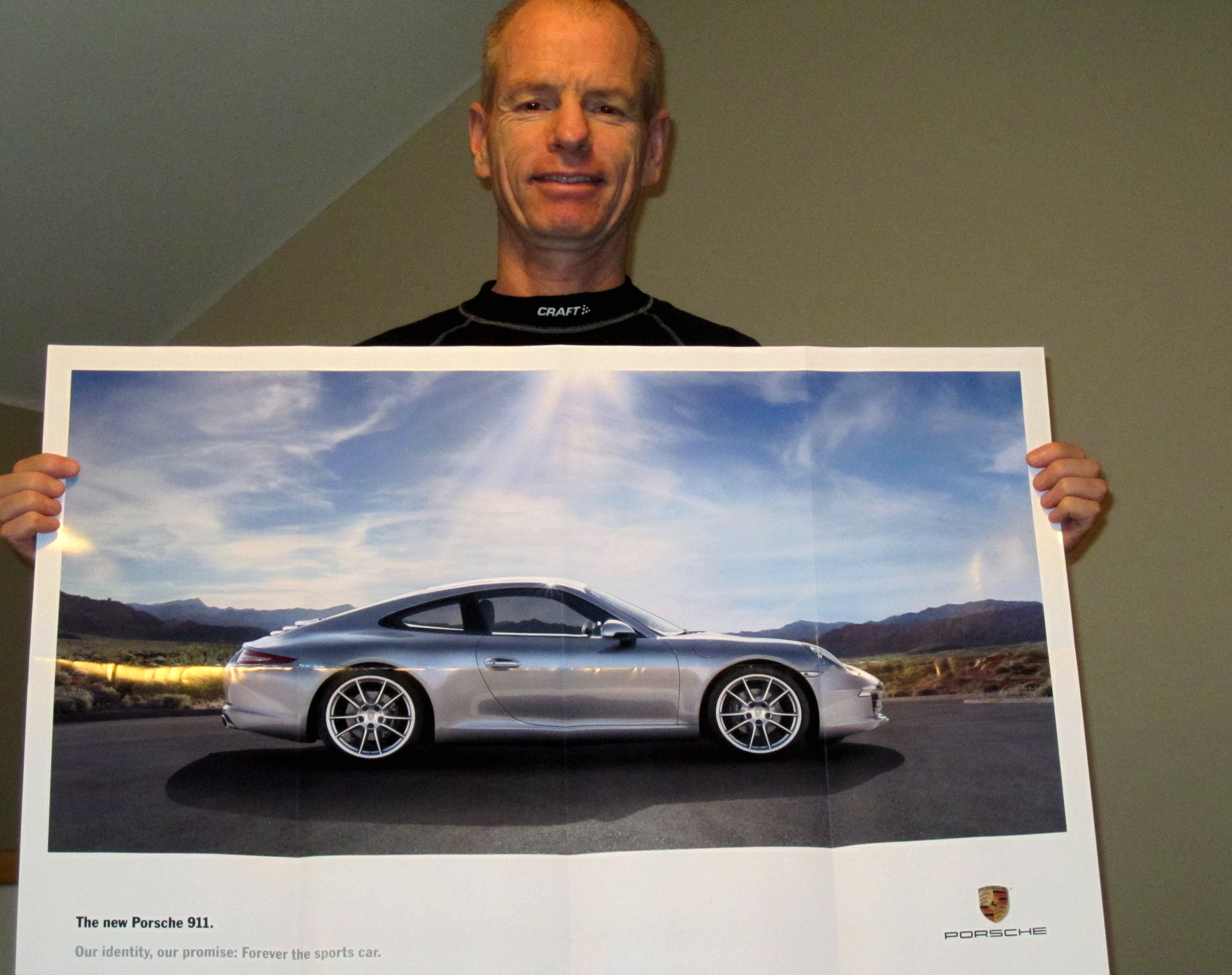
I have a neighbor who makes money off of his car. He carefully shops for an underpriced used one, then takes immaculate care of it, and then gets reimbursed by his employer at 50+ cents per mile.

I admire his fiscal discipline, but who wants to spend their weekend washing their car the way he does? One time he yelled at another neighbor who was washing the bottom 90% of her van. “You gotta start with the roof and work down!” Best comeback ever, “No one’s gonna see the top!” Blood pressure spike. And he routinely rips me for using the last bit of dirty water in the bucket to wash my wheels, but I tell him my goal is for my car to be 90% as clean as his in 10% of the time. And normally it is.

We’re all obsessive about something. One could argue I substitute exercise for car washing. Last week was pretty typical for April. Four runs for 28.7 total miles. Two swims for 6,000 meters and two bike rides for 90 miles. And an hour lifting weights. Total time, 11-12 hours. People like me tend to have a lot of fitness activity-based friendships and we often find the swimming, cycling, and running enjoyable in and of itself. We’d still go out and run, swim, and cycle even if there weren’t empirical health benefits tied to those activities. We’re lucky that our hobbies come with health benefits.

Some people no doubt think about my commitment to fitness the same way I think about people who obsess about the stock market’s every move and spend their days thinking, talking, and writing about money. There’s an opportunity cost to finance tunnel vision. Life passes by. Investing wisely is a means towards other more meaningful ends—like learning about other people’s interests and engaging with them.

Like extreme car washing, there’s a tipping point where a person’s fitness routine can detract from their physical, emotional, and spiritual health. That’s where “Doc Mike Evans” comes in. He asks a great question near the end of this high-speed informative whiteboard lecture—Can you limit your sleeping and sitting to just 23.5 hours a day? 

Like my quicker, more casual approach to car washing, Doc Evans explains how you can achieve most of my health benefits in much less time. Walk 20-30 minutes a day. Even better if you integrate walking as a means of transportation by living within a mile of your work, a grocery store, and other stores. And of course driving less is good for your pocketbook and the environment too.

Forget my approach of driving to the pool and overdoing it in the form of occasional marathons and triathlons*. Instead, as Doc Evans advises, walk 20-30 minutes a day and enjoy markedly improved mental and physical health.

Maybe you’re already a walker, but wish there were even more tangible health benefits. Evans explains how you can reap additional benefits by extending the time and distance of your daily walks. But since time is most people’s greatest obstacle, I suggest picking up the intensity by choosing more hilly routes. My running teammates probably get tired of me saying, “The hills are our friends.” When I don’t feel like exerting myself much, which is a lot of the time, I sometimes commit to a hilly route because hills force me to increase the intensity. As an added benefit, when I’m running up hill, my conservative Republican Nutter friends don’t have enough oxygen to complain about the current political scene. If you’re a Florida or Texas flatlander, move.

We expect complexity today, but this isn’t. If you want to enjoy an improved quality (and quantity) of life, take a ten minute walk sometime today. And then repeat tomorrow. And the next day. Extend it to twenty minutes next week. And repeat. Every day.

* This summer I’m going to be more family focused than last year. We’re looking forward to a fair number of visitors from afar, and at the end of the summer, launching Seventeen at a still-to-be-decided college. I’m #34 on the RAMROD waitlist which means I’ll definitely get in and Danny and I plan on running the Wonderland Trail in mid-August. I may throw in a few short/medium distance triathlons on unscheduled weekends. Or maybe I’ll just take a walk.
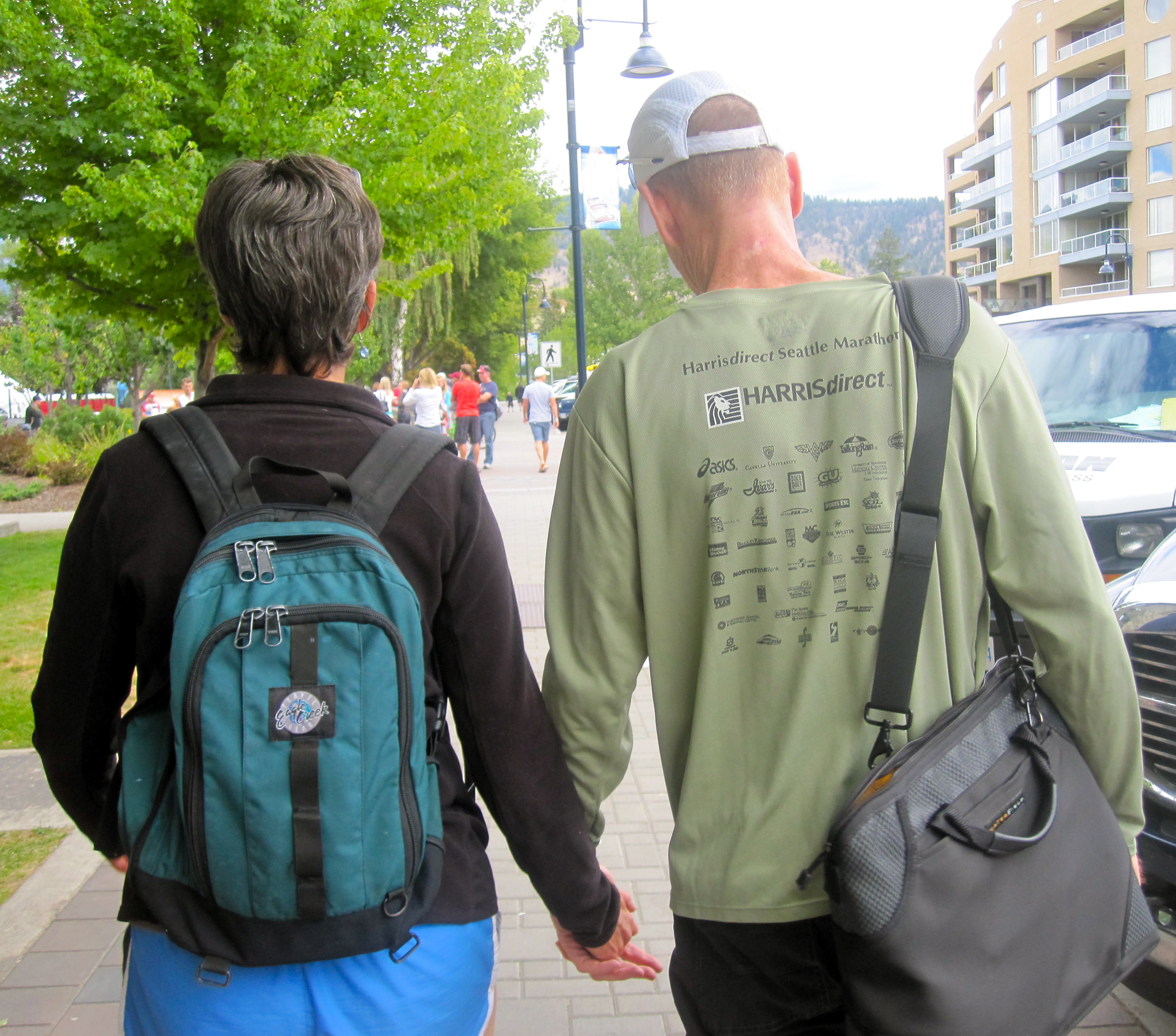
Betrothed and I walking

Amazing she’ll still hold hands with me after all these years
Exercise and Cancer

More reminders. Life is fragile. A three year old child at our church has a brain tumor. Same with the English Teacher/coach at our local high school.  Same with Iram Leon.

Unless you’re already perfectly appreciative of your health, see a picture of Iram and read his entire story here.

Short version. Iram is 32. Kiana, his daughter, is 6. Iram Leon has an untreatable and inoperable cancerous tumor lodged in his brain. Statistics suggest the tumor will kill him before he is 40. He recently lost his job as a juvenile probation officer because his thinking is clouded and he says, “I was making too many mistakes on the stand.”

Instead of retreating into sedentary hopelessness, he runs. To the surprise of the medical community, a few weeks ago he ran a 3:07:35 marathon. While pushing Kiana in a baby jogger. “She had a blast,” Leon said, “listening to Disney songs and getting food from volunteers.”

From the story. “Recent research clearly shows that exercise improves outcomes for cancer patients.” And “Few other leads have shown as much promise as physical activity in extending the lives of cancer survivors, ” said an editorial last year in the Journal of the National Cancer Institute.

The problem is oncologists often urge their patients to take it easy. But the American Cancer Society and other medical groups now encourage exercise among cancer survivors including encouraging breast cancer survivors to lift weights.

A doctor in the story says, “Mr. Leon gives us someone to point to when a person fighting cancer says, “I can’t do it.”

I say Mr. Leon gives us someone to point to whenever anyone is trying to be a good father and human being. He’s only racing in events that will allow him to bring along Kiana. “I want her to have as many memories of me as possible,” he says. “I want her to remember us having fun together, not me being sick.”

Thanks Iram for the inspiration.

Self Sabotage

It’s 9:30a.m. Here are some of the decisions I’ve made today, January 2, 2013:

  • I decided to wake up at 5:22 a.m.
  • I decided to put on running pants and two thin, long-sleeve running shirts since Weatherbug was reporting -1 degrees C at the nearby elementary school (0 C and higher=shorts). Plus medium gloves, hat, reflective vest, headlamp.
  • At 5:44 a.m. I decided to walk outside into the pitch black fog.
  • At 5:45 a.m. I decided to run 6+ miles with the Right Wing Nutter and Dan, Dan, the Transportation Man (inexplicably, the PrinciPAL is still in Hawaii). I decided to take the posse around Safeway via North and Eskridge.
  • After some curbside chitchat, at 6:42 a.m., I decided to remove my sweaty running clothes and walked almost naked (still had my socks on) the length of the house to my bedroom where I put on dry running shorts and a dry t-shirt.
  • Upon returning to the kitchen, I decided to eat a banana with peanut butter after which I filled up a water bottle—half orange juice, half water.
  • At 6:58 a.m. I decided to spin 26k (213 watts, 1:01:25) while watching a combination of the Dan Patrick Show, CNN, MSNBC, and ESPN.
  • At 8:05 a.m. I decided to do 60 push ups broken up with some foam roller goodness, planking, and stretching.
  • At 8:30 a.m. I decided to have a large bowl of oatmeal with raisons, brown sugar, butter, and molasses.
  • I decided to skim the Wall Street Journal while eating.
  • For desert, I decided to have one of those new-fangled smallish oranges that darn near unpeel themselves.
  • Shortly before 9 a.m., I decided to shower.
  • Shortly after 9 a.m., I decided to put on long underwear, thus outsmarting Old Man Winter; plus wool socks (important to do that before the long underwear), pants; a t-shirt; and my ace, moth eaten, expedition weight thermal top.
  • Around 9:10 a.m., I decided to go upstairs to my desk where I checked on the stock market rally and chuckled at the Lakers’ boxscore.
  • After aimlessly surfing the internet for fifteen minutes, I decided to reply to a few emails and start Thursday’s blog post, tentatively titled “Self Sabotage”.

A friend of mine has high blood pressure, but that doesn’t stop him from obsessing about things over which he has very little control. A conservative Republican who is sympathetic to the Tea Party, he went darn near silent after the election, depressed by what he sees as a “serious loss of freedom”.

Determining the most appropriate size of the government is an important and legitimate debate, and I understand that 48% or so of U.S. citizens wants to reduce it, but my friend, who has no international frame of reference, lets things like Obamacare, gun control proposals, Bloomberg’s proposed soda regulation, helmet laws, and the unemployment benefits extension get him seriously down. Oddly, he takes each of those proposals and policies personally.

As a result, he completely slights the freedom he does have to make hundreds of decisions every day—ones that directly influence his health and well being—like how much sleep to get, when and how to exercise, and what to eat and drink. That all important trifecta—sleep, exercise, and diet—probably account for at least half of a person’s health and happiness.

But I’m losing the argument. He seems determined to let distant politicians get him down. Ironically, in losing, I’m illustrating another daily freedom he routinely overlooks—the freedom to tune others out.

Happy “Half Century” Birthday to Me

By the time you read this, it will be too late to get me something for my 50th birthday. That’s okay though because I’m in permanent “declutter, give away things” mode. It’s never too late to drop by, wish me a happy b-day, and take something.

Recently Olympia’s semi-permanent winter blanket of low lying gray clouds parted so I headed out for a sun run with Regina Spektor pulsing through the iPod. Her “On the Radio” lyrics couldn’t have been more timely.

This is how it works
You’re young until you’re not
You love until you don’t
You try until you can’t
You laugh until you cry
You cry until you laugh
And everyone must breathe
Until their dying breath

I’ve always thought of myself as young. Younger than my sibs; younger than my betrothed; younger than Madonna; the 20-something high school teacher; the 30-something college professor. Like wooden barrels bobbing atop Niagara Falls, I’ve watched most of my friends disappear over the 50-year old ledge already. Now though older peeps aren’t enough to counterbalance Spektor’s undeniable truth—You’re young until you’re not.

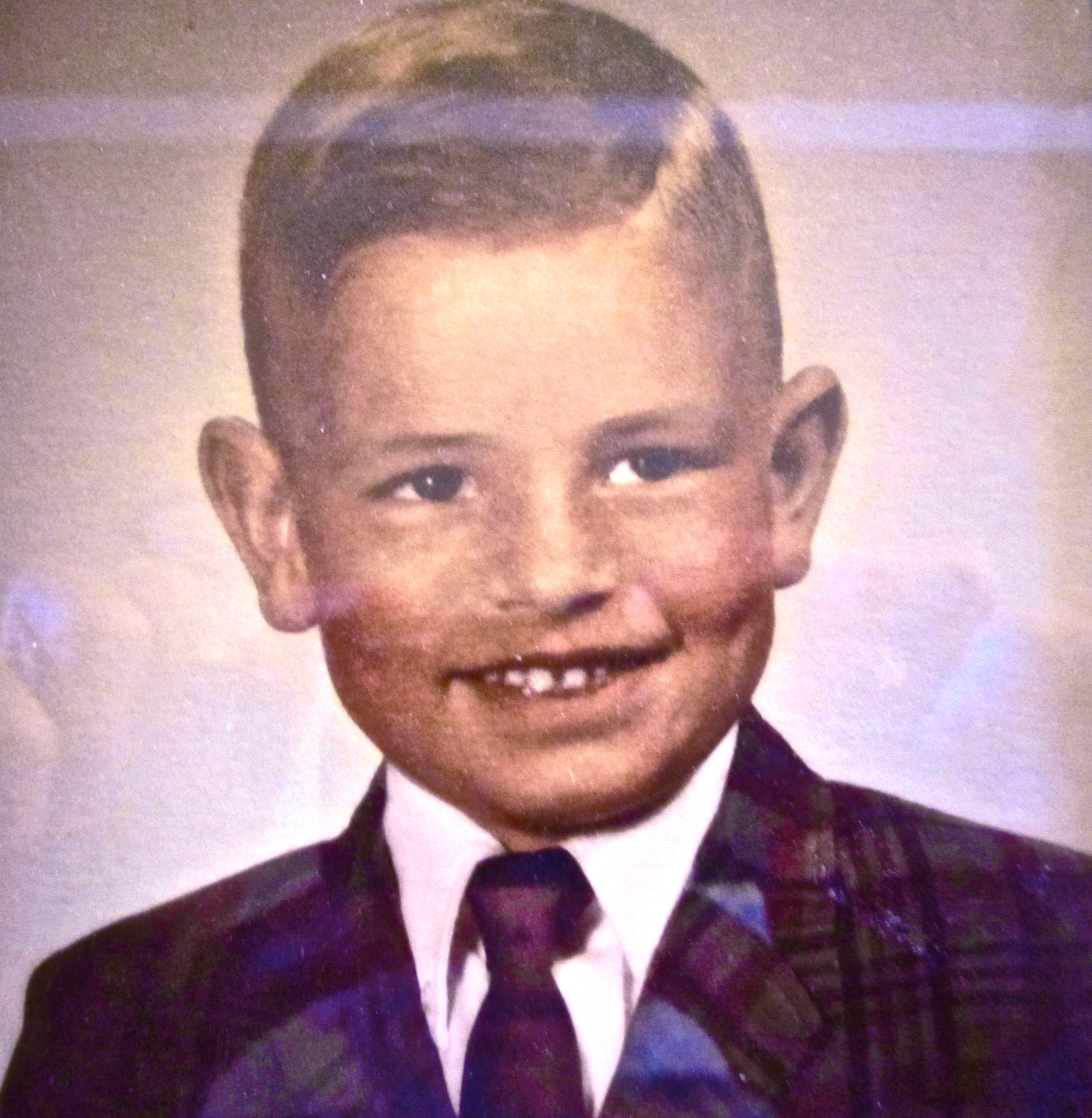
As an aspiring Stoic, I should embrace the new “old” reality, but that’s easier written than done. If I live as long as Steve Jobs, I have six years left; my dad, 19; Joe Paterno, 35; Jack LaLane, 46. The average of those four is 26.5. That’s kinda scary given how fast the last 50 have gone. Seems like just yesterday I was the most dapper dude in the first grade at Zachary Taylor elementary school in Louisville, KY. A dodgeball/kickball legend in my own mind. And yes, fortunately the rest of my gourd eventually caught up to my ears.

The key of course is making the most of however much time is left by listening a little more intently, by being a bit more observant, by putting my family’s needs before my own, by finding humor in things, by writing, by prioritizing friendship, by embracing nature.

At the risk of getting too sentimental, let me close by coming clean on that fact that I didn’t know how to spell “Niagra” Falls until using my dictionary app which offered up “Viagra” in it’s place. A few days ago at 49, funny, today at Fiddy, not so much.

Postscript—The Girls Club pooled their resources and got me the perfect gift.

Since I'm past the midpoint, it' can't be a mid-life crisis can it?

If I Was President

Put your hands in the air like you just don’t cair if you think I need some hair extensions, a guitar, single speed bike, and vid like this one. Why should Wyclef Jean be the only one to imagine being president?

My betrothed was thrilled to score a Thanksgiving dinner invite. Didn’t have to cook a turkey or interact too terribly much with the normal one. Early on one of the seven adults at the very nice dinner lamented that getting to the pool in the morning to swim was just “too complicated”. About every 45 minutes, no matter where we were in the conversation, we’d return to that theme usually in the form of my betrothed suggesting alternative activities to our unmotivated friend. For each suggested alternative she presented separate complexities. She was a reminder that it’s a lot easier not to exercise regularly.

It’s been almost four years since I shared ten suggestions on how to create an active lifestyle. Since you didn’t click on that link you won’t notice the overlap in what follows.

If I were president, I’d charm Congress into passing a law requiring every physically able adult to engage in an hour of cardiovascular activity before 8 a.m. Employers would have to push back early starts. Based on personal experience and a constant stream of research, one hour of exercise makes the remaining 15 lots better. Benefits include lower health costs, increased productivity, improved community, and increased well-being. Brisk uncomplicated walking, running, swimming, cycling, water aerobics, elliptical exercises, rowing, or any combination of those for sixty minutes.

I joked with our “too complicated” friend that Betrothed sleeps in her bathing suit to simplify her morning routine. The night before swim mornings I pack my backpack and toss my jammers where I get dressed in the morning. By wearing them under my pants, I save a good 45 seconds in the Y locker room. Too much info I know, but the larger point being . . .

1.) An efficient, successful morning exercise routine begins the night before. Organize your gear so you can almost sleep walk out the door in predawn darkness.

Other suggestions:

2) Gradually pull the plug earlier at night, turn off the tube, forget the foreplay, close the book, and go to bed early enough to compensate for the earlier start.

3) If going somewhere with lockers, consider renting one to simplify what you have to cart back and forth.

4) Start right outside your front door or make sure you can get to your gym within five minutes. I believe a lot of indoor exercisers would be surprised by how much more fun it is to be outside if they invested in some technical fitness duds and were forced to do it by say. . . El Presidente. Of course we’re spoiled in Olympia with excellent sidewalks, street lighting, and bike lanes.

5) Most important of all, find anyone similar in ability to exercise with. Mutual accountability + evolving friendships = much higher success rates.

This challenge is similar to decluttering—logical suggestions aren’t enough to tip the sedentary scale (pun intended). Unless our “too complicated” friend finds a training partner who she enjoys spending time with, suggestions 1-4 won’t make much difference. The conundrum is until a person is able to compare and contrast what it’s like to be out of shape and in shape, they’re unlikely to muster up the self-discipline to change their daily habits.

Try it. Pick something at least semi-enjoyable, invite a friend to enjoy you, and gradually build to one hour, six days a week, before the day starts in earnest. You won’t regret it.

For the serial sedentary among us, I’m going to hire the cast from a very good, but brutal movie Betrothed and I recently watched, Sin Nombre, to enforce the law. Better start now in case I’m elected on 11/6/12. Trust me, you don’t want those hombres knocking on your door asking what you’re still doing in your pajamas.

Fitness Flameout

Weekend edition.

If you’re like most people, by now your fitness-related New Year’s resolutions have fizzled out. Why? Because they were too ambitious.

There’s two types of fitness—general fitness for the masses and specialized fitness for the competitive athlete. Everything that follows pertains to the former. This post is for the lethargic person who is fed up with health problems, lower back pain, a compromised quality of life.

Ask someone how they got so out of shape and they’ll probably say, “It started years ago.” Despite that reality, most people want to get in shape in a few weeks or months. And so they set overly ambitious goals. Sedentary in December, they set themselves up for failure by resolving to “run five days a week” starting on January 1st. Or swim three days a week. Or ride a stationary bike four times a week.

They go from zero to sixty and back all before the month is over because they don’t see any benefits from their first few workouts. Even worse, they’re mentally turned off to exercise as a result of overexerting themselves on the track, in the pool, or in the weightroom. They go too hard, too often, too quickly. It’s counterintuitive, but the answer is to go slower, less often.

Here’s a personal example of how less is often more when it comes to developing positive fitness routines. Despite swimming, cycling, and running weekly, I sometimes suffer from lower back pain because I lack core strength. To improve my core strength, I’ve been doing pushups and planking. My baseline was 60 pushups interspersed with three sets of planking, each set consisting of  30 seconds in three separate positions, for a grand total of four and a half minutes of planking. Ten pushups, stretch lower back, ten more, plank, repeat two more times. I could do it quickly and easily after a run or bike workout. As a result, I’d typically do it five times a week for a grand total 300 pushups and 22.5 minutes of planking. A solid start to improved core strength and lower back health.

Eventually, that routine got fairly easy so I upped it to 90+ push ups interspersed with 35 seconds and then 40 of planking (times three positions and three sets). But an interesting thing happened on the way to core strength nirvana. The greater time commitment and degree of difficulty weighed on me just enough for me to skip the whole work out a few times to the point where I only got in two core sessions in a week. So that meant 180 pushups and 10:30-12:00 minutes of planking. More, in the end, resulted in less.

If this paradox resonates with you, have a Stuart Smalley-like talk with yourself, and start over. But this time think about how long it took to fall out of shape and give yourself all of 2011 to get in better shape. Create positive momentum by setting achievable goals that you can repeat week after week. After exercising easily and consistently for a month, you can turn the knob up ever so slightly if you so choose.

Here are related suggestions from a fitness post from an earlier incarnation of the blog.

Young, Anxious, Depressed

Today five to eight times as many high school and college students meet the criteria for diagnosis of major depression and/or an anxiety disorder as was true half a century or more ago. This increased psychopathology is not the result of changed diagnostic criteria; it holds even when the measures and criteria are constant.

That’s from Peter Gray, research psychologist and professor and Psychology Today blogger. The entire post is here.

Readers’ Digest version.

First, Gray explains:

The increased psychopathology seems to have nothing to do with realistic dangers and uncertainties in the larger world. The changes do not correlate with economic cycles, wars, or any of the other kinds of world events that people often talk about as affecting children’s mental states. Rates of anxiety and depression among children and adolescents were far lower during the Great Depression, during World War II, during the Cold War, and during the turbulent 1960s and early ‘70s than they are today. The changes seem to have much more to do with the way young people view the world than with the way the world actually is.

Next, he highlights two reasons. Still quoting:

1) A decline in young people’s sense of personal control over their fate. People who believe that they are in charge of their own fate are less likely to become anxious or depressed than are those who believe that they are victims of circumstances beyond their control. The data indicate that young people’s belief that they have control over their own destinies has declined sharply over the decades. When people believe that they have little or no control over their fate they become anxious. “Something terrible can happen to me at any time and I will be unable to do anything about it.” When the anxiety and sense of helplessness become too great people become depressed. “There is no use trying; I’m doomed.”

2) A shift toward extrinsic, rather than intrinsic goals. Intrinsic goals are those that have to do with one’s own development as a person–such as becoming competent in endeavors of one’s choosing and developing a meaningful philosophy of life. Extrinsic goals, on the other hand, are those that have to do with material rewards and other people’s judgments. They include goals of high income, status, and good looks. There’s evidence that young people today are, on average, more oriented toward extrinsic goals and less oriented toward intrinsic goals than they were in the past.

Gray sees the two primary reasons as interrelated:

The shift toward extrinsic goals could well be related causally to the shift toward an external locus of control. We have much less personal control over achievement of extrinsic goals than intrinsic goals. I can, through personal effort, quite definitely improve my competence, but that doesn’t guarantee that I’ll get rich. I can, through spiritual practices or philosophical delving, find my own sense of meaning in life, but that doesn’t guarantee that people will find me more attractive or lavish praise on me. To the extent that my emotional sense of satisfaction comes from progress toward intrinsic goals I can control my emotional wellbeing. To the extent that my satisfaction comes from others’ judgments and rewards, I have much less control over my emotional state.

Gray concludes by suggesting formal schooling is a large part of the problem. His solution? Less time in school, more time in unstructured outside of school activities. Over time, I’ve become more enamored with alternative education; consequently, I find his argument somewhat convincing. But I find his description of the problem more illuminating than his suggested remedy.

Here are three things, that in my opinion, could reduce anxiety and depression in young people.

1) More sleep.

2) More movement. With friends and minimal adult supervision (so that it’s more fun). Fifteen has been taking “Zumba” aerobic-like classes with a friend a few afternoons a week at the “Y”. Even better, thirty minutes of walking or running or swimming or cycling or weight lifting five or six mornings a week. I’d like to see clinical trials studying the effects of this proposal on adolescent anxiety and depression.

3) Compulsory service-learning as a school requirement. I could be talked into a year of National Service quite easily too. Recall the quote, “Something terrible can happen to me at any time and I will be unable to do anything about it.” I have no evidence, just a gut instinct that a substantive “other-regarding” experience would reduce anxiety and depression.

Stop Exercising

If you’re not saving for your seventies, eighties, and nineties.

Olga Kotelko is considered one of the world’s greatest athletes, holding 23 world records, 17 in her current age category, 90 to 95.

From the NYTimes Magazine:

At last fall’s Lahti championship, Kotelko threw a javelin more than 20 feet farther than her nearest age-group rival. At the World Masters Games in Sydney, Kotelko’s time in the 100 meters — 23.95 seconds — was faster than that of some finalists in the 80-to-84-year category, two brackets down. World Masters Athletics, the governing body of masters track, uses “age-graded” tables developed by statisticians to create a kind of standard score, expressed as a percentage, for any athletic feat. The world record for any given event would theoretically be assigned 100 percent. But a number of Kotelko’s marks — in shot put, high jump, 100-meter dash — top 100 percent. Because there are so few competitors over 90, age-graded scores are still guesswork.

Suspected of doping by some of her competitors, OK borrows from Lance’s playbook and repeatedly points out she’s never failed a test. Kidding of course.

Scientists researching the linkages between exercise, fitness, and longevity are busily studying OK and are finding the linkages are even stronger than suspected.

This type of fitness news is always heralded by the exercise community of which I’m a part, but is it really good news? I wonder because of another steady stream of stories about the elderly today—that they’re not saving nearly enough for their post-retirement lives. What if thirty, forty, and fifty-something spenders are also committed exercisers and then have to live through their sixties, seventies, eighties, and nineties on reduced Social Security benefits and their meager savings?

If you’re not saving for your distant future, maybe you should stop exercising.

Sometimes I wonder what a Saturday morning 10 miler with the team costs. Setting aside our time (it’s Saturday morning after all), let’s assume we’re wearing $100 shoes that last for 500 miles. That’s 2% of $100 or $2 in shoe wear and tear. Next, let’s assume we’re wearing a shirt, shorts, and socks that cost $70 new. They last at least 140 runs so another 50 cents. Then I eat and drink a lot more throughout the day than I otherwise would if I was sedentary, so approximately $2.50 for a total of $5. This is where if I had a contract with MasterCard I’d write, “And the raunchy, witty banter, priceless.”

But I’ve never factored in the hidden “Olga Kotelko” cost. Of course there are no guarantees, life is fragile, but the odds are the team and I are extending our lives each Saturday morning. I’m not sure how to quantify that.

That’s okay though because I’m choosing to think positively about my longevity and saving for the distant future. Which is why I’m going to continue training for the 2052 Senior Games.