Exactly 40 years ago, fresh from student teaching at Dorsey High School in South-Central Los Angeles, I drove wide-eyed in my VW Bug onto LA’s wealthiest high school campus, Pacific Palisades, to start my second required student teaching stint. Due to my youthful good looks, a ripped security guard stopped me and lit into me for parking in the faculty lot. This week, Palisades Charter High School, with over 3,000 students, burned down.
Seven years later, I temporarily moved into a friend’s palatial Pacific Palisades house to do my doctoral research at the Venice Foreign Language/International Studies Magnet School. We are no longer in touch, and I would be surprised if his family still owns the house all these years later, but based on the photos and video of the devastation, I’m guessing it’s gone too.
The average home in Pacific Palisades is valued at $3.4m. That knowledge will limit some people’s empathy, as if it’s a finite resource that should be parceled out judiciously on a sliding scale. Two things can be true. Many Palisades residents will be financially okay once the dust settles while never fully recovering from extensive personal loss.
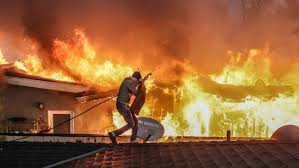
I am struck by the tremendous interconnectedness of homeowners. Sparks jumping from house to house like dominoes. Given the density of homes in Malibu and along the Pacific Coast Highway, and in the Palisades, as the locals say, it wouldn’t have mattered if a few homeowners cut back their vegetation and hosed off their roofs before evacuating. The one-two punch of the Santa Ana winds and their next door neighbors’ burning houses, sealed their fate.
Intense individualism is the defining feature of life in the (dis)United States. But not this week in Los Angeles County. To borrow from John Donne, “No house is an island.”
 Pressing Pause