A short video from the Chronicle of Higher Education, in which students share how they cope with anxiety and how campuses can help.

A short video from the Chronicle of Higher Education, in which students share how they cope with anxiety and how campuses can help.
1. Lasers Reveal a Maya Civilization So Dense It Blew Experts’ Minds.
“Not far from the sites tourists already know, like the towering temples of the ancient city of Tikal, laser technology has uncovered about 60,000 homes, palaces, tombs and even highways in the humid lowlands.
The findings suggested an ancient society of such density and interconnectedness that even the most experienced archaeologists were surprised.”
Decidedly not a shithole civilization.
“The total population at that time was once estimated to be a few million. . . . But in light of the new lidar data, she said it could now be closer to 10 million.
‘To have such a large number of people living at such a high level for such a long period of time, it really proves the fact that these people were highly developed, and also quite environmentally conscientious.'”
Absent the United Fruit Company and the CIA, the Mayans’ ancestors would be a lot better off today.
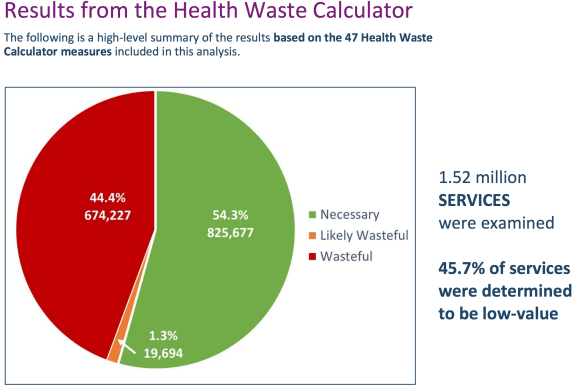
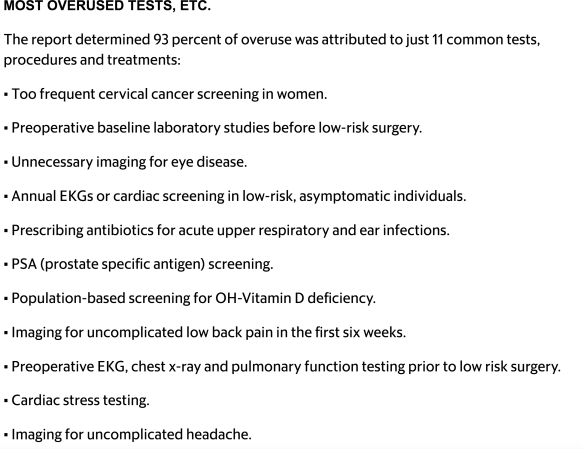
2. First Do No Harm, Health Care Waste in Washington State.
3. The shocking thing about D.C.’s schools scandal — and why it has national significance.
“. . . schools were essentially juicing the books to make it seem like they were graduating more students. Scams included phony “credit recovery” programs, failing to count all students, and, as the District just found out, letting kids graduate without the qualifications required for a diploma.”
And on Michelle Rhee, the darling of right wing business mad “reformers”:
“. . . the produce-or-else testing culture that she fostered — tying portions of some evaluations to growth in scores and securing commitments from principals to hit numerical targets — created a climate of fear, in the view of many school employees.
It also coincided with evidence of cheating on annual city tests.
A climate of fear in a school has never been known to produce much of anything useful.”
4. Ethiopia’s regime flirts with letting dissidents speak without locking them up. Incremental progress.
5. Letter of Recommendation: Rodney Dangerfield.
“Imagine having no talent. Imagine being no good at all at something and doing it anyway.”
6. How Building Codes & Taxes Shape Regional Architecture.
“Ever noticed how the bricks on newer British buildings are bigger, or stopped to appreciate hand-stenciled wallpaper, or enjoyed a sip from a fancy hollow-stemmed glass? If so, you may well be admiring a product of regulation and taxes as much aesthetic tastes. From basic materials to entire architectural styles, building codes and taxation strategies have had huge historical impacts on the built world as we know it.”
Add that to the ever burgeoning list of things I did not know. I’m sure DAByrnes did though.
“Dutch canal houses are another classic example of how rules and regulations can shape structures. Taxed on their canal frontage rather than height or depth, these buildings grew in tall and thin. In turn, this typology evolved narrower staircases, necessitating exterior hoist systems to move furniture and goods into and out of upper floors.”
During last year’s Super Bowl, the Good Wife and I had friends over for dinner. An enjoyable, television-free evening, one guest peaked at her phone late in the game. Despite learning a historic comeback/collapse was underway, we still weren’t motivated enough to turn on the game. I didn’t see a single play.
It helped that I didn’t care about either team, but like a lot of people apparently, I’m watching far, far less football than in years past. Of course, I’m still weaning myself from UCLA football. That’s been made easier by my team’s apparent decision to quit tackling, which looking at the data, makes sense.
Before you watch this year’s game, read “I’m the Wife of a Former NFL Player. Football Destroyed His Mind,” by Emily Kelly. About her husband, Rob.
“Over time, I had started to notice changes. But this was different. And things became increasingly frightening.
He lost weight. It seemed like one day, out of the blue, he stopped being hungry. And often he would forget to eat. I’d find full bowls of cereal forgotten around the house, on bookshelves or the fireplace mantel. The more friends and family commented on his gaunt frame, the more panicked I became. By 2016, he had shrunk to 157 pounds. That’s right, my 6-foot-2 football-player husband weighed 157 pounds (down from around 200 when he was in the N.F.L.). People were visibly shocked when we told them he had played the game professionally.
Besides damage resulting from football-related concussions, my husband has never had a diagnosed brain injury. He’s never been in a car accident or fallen off a roof. He never did steroids and, after struggling with alcohol abuse for about six years, off and on, after retirement, hasn’t had a drink in eight years. And he’s only 43.”
And:
“He went from being a devoted and loving father and husband to someone who felt like a ghost in our home. For a couple of months one winter he was so depressed and detached, he couldn’t muster up the energy to speak. My questions went unanswered until I simply stopped asking them. The silence was unnerving.”
Lastly:
“After years of little to no sleep, he alternated between sleeping either three hours a night or 20. I’d wake up to find every blind and curtain in the house closed and Rob sitting on the sofa with a blank expression on his face. He no longer felt comfortable driving, refused to leave the house and cut off contact with everyone.
Specific details about how he wanted his funeral to be, and his demand that he be cremated, were brought up with excruciating frequency. One particularly dark time, he went five days without eating anything; he drank only water and a few swigs of chocolate milk. He was suffering deeply and barely surviving. My love and affection seemed to offer no comfort or solace. I felt helpless.”
Winter has taken a toll. This Sunday evening, I think it’s high time to squeegee and sweep the garage floor.

A sense of purpose. Of being needed.
That’s what my mom struggled with the last several years of her life. Her family that had needed her for a long time, was grown and gone. Her husband, who had needed her and provided companionship for even longer, was gone too. Be especially kind to older, single people.
Teaching has always been fulfilling in large part because it has provided me with a clear sense of purpose. Administrative work I’ve learned, not as much. Having done more administrative work the last few years, I confess that I’m in a work funk, probably the result of a less tangible sense of purpose.
That’s why I did something I almost never do, saved a student’s end-of-class “thank you” from mid-December. Despite telling her in a follow up message, I don’t think she had any idea how moved I was by it.
Hello Dr. Byrnes,
Here is my final paper. I have thoroughly enjoyed your class and am very sad it is over. This class was one I could consistently look forward to every week. It was one where I could wake up on a Tuesday or Thursday morning and say, “I GET to go to Writing 101 today!’ This class greatly increased my knowledge, view and perspective of the world. It challenged my beliefs and opened my thinking to accept new ideas. Thank you for leading so diligently and kindly as you did. I count it an honor and blessing to have taken this class. Thank you.
The honor and blessing was all mine.
Like my student, take a few minutes today to tell someone how they enrich your life in small or large ways. Remind them they are needed and that their life has purpose.
 Pressing Pause