Monday Assorted Links

1. Recent study concludes “There’s No Safe Amount of Alcohol”. The New York Times reports that “the truth is much less newsy and much more measured”. I’ll have a drink to that.

“The population level average of daily drinks is 1.9 for women and 3.2 for men, according to the study.”

That’s worrisome.

2. Women, consider this line of work if you want to be paid the same as men. Great catch phrase, “Equal by nature.”

3A. Why Columbia keeps producing talented cyclists.

3B. Christopher Blevins. One of the U.S.’s most promising cyclists who despite being a student at Cal Poly San Luis Obispo, digs the humanities, and is down with slam poetry. The philosophy of his junior team. . . “Never forget the fun.”

3C. Kate Courtney. The U.S.’s and now world’s best mountain biker. A Stanford student. We can just call these two “brains on bikes”. Dig this vid of Courtney’s recent World Championship victory. Start at around 1 hour, 46 minutes.

4. Eliud Kipchoge. The GOAT. . . greatest of all time, threw down in Berlin yesterday. Despite those 78 seconds, I stand by my prediction that I will not live long enough to see anyone trim an additional 100 seconds.

5. How much should you spend remodeling a house for maximum profit?


What We Get Wrong About Honesty

That it’s mostly telling the truth to others. But being honest with one’s self is a more essential starting point, and because we lack any semblance of objectivity, far more difficult.

None of us are ever completely honest with ourselves. Meaning we are loathe to accept our differences which makes self acceptance a constant struggle.

Case in point. I loved, loved, loved this short essay titled “An Emotional Reunion Between Cello and Cellist”. Russell had me after her opening paragraph:

“On a recent Thursday, Matt Haimovitz, the forty-seven-year-old virtuoso cellist, packed an empty instrument case into the back of his car and drove from his home, in Montreal, to a friend’s apartment on the Upper West Side, where he’d be crashing. The case was for Haimovitz’s rare, multimillion-dollar cello, which he calls Matteo—after Matteo Goffriller, the seventeenth-century Venetian luthier who built it. He had played it for thirty years, until, fifteen months earlier, while giving a lesson to a promising Canadian student, he dropped it, and the cello’s neck snapped. Since then, the instrument had been undergoing extensive repairs by a team of five luthiers at Reed Yeboah Fine Violins, near Columbus Circle. Now the shop had called to say that Matteo was ready for release.”

If I’m honest with myself, I want something resembling what those six people have—Haimovitz and the five luthiers—a singleminded focus on one thing that animates their lives. One thing that gives them an overwhelming purpose for being. Even a little bit of flow.

Put differently, I want to love something the way Haimovitz loves his cello. I am fascinated by people with distinct passions, often wishing I was one of them. It doesn’t matter how esoteric or far removed the passions are from my life; interior design, locomotive trains, the Spanish language; I still look on with envy.

This year I’ll cycle somewhere between 4,500 and 5,000 miles. Friends ride 10,000-12,000. I like cycling, they love it. Some people read a book or more a week. I like reading, they love it. Some commit 60+ hours a week to their jobs because they like their work so much they often loose track of time. I prefer being on sabbatical. Some bloggers have huge readerships in part because they are laser focused on a particular topic. In contrast, the Humble Blog, a reflection of my continuously distracted pea brain, is all over the place.

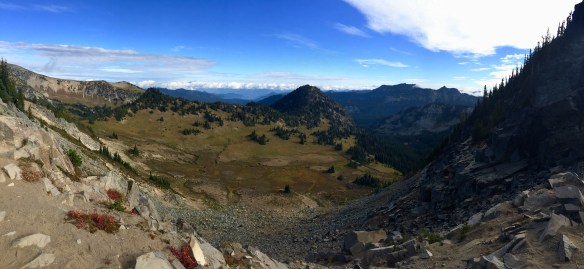
Hiking Burroughs Mountain Trail last weekend, I listened to my friends excitedly discuss plant nomenclature and geology and wondered, “What’s wrong with me?” By which I meant, “Why aren’t I equally curious? Why am I content not knowing the name of the beautiful flower or understanding how the awe-inspiring landscape was formed? Why aren’t I similarly passionate about labeling and understanding the natural world?”

But then I stop to think that my cycling obsessed friends don’t run and swim. And maybe it’s okay that my interests are more disparate, and therefore, less intensive. Wide-ranging interests enable me to ask more questions, connect with more people, create a relatively diverse and interesting social network.

How fortunate that everyone is wired differently. Maybe the singleminded people of the world, the Haimovitz’s, would tell me sometimes there are downsides to being obsessively focused on one thing.

Maybe I’m okay and you’re okay.
 

Apple Will Get You To Open Your Wallet

Despite the new Apple Watch Series 4’s central features—a built in EKG and “fall detection”—being designed for aging Baby Boomers who may not be able to use it without their grandchildren’s help, the marketing skews young, urban, global, and very creative and good. The bifurcated approach to design and selling is interesting. Go ahead and criticize the high prices for the incremental improvements in hardware, but give Apple’s advertising team credit for continued brilliance.

https://youtu.be/oigKwLa2yyA

Paragraph to Ponder

From “The Recovery Threw The Middle Class Under a Benz”.

“Data from the Federal Reserve show that over the last decade and a half, the proportion of family income from wages has dropped from nearly 70 percent to just under 61 percent. It’s an extraordinary shift, driven largely by the investment profits of the very wealthy. In short, the people who possess tradable assets, especially stocks, have enjoyed a recovery that Americans dependent on savings or income from their weekly paycheck have yet to see. Ten years after the financial crisis, getting ahead by going to work every day seems quaint, akin to using the phone book to find a number or renting a video at Blockbuster.”

“Of All The Paths You Take In Life, Make Sure Some Of Them Are Dirt.”

A few friends and I heeded John Muir’s advice this weekend.

Saturday we wondered for a wee bit on the Wonderland Trail where it intersects with the White River. Sunday we went long, looping the Burroughs Mountain Trail from Sunrise. If you’ve never done it, add it to your list. I felt very fortunate to live where we do. And to be alive.

Bonus picture from the niece’s July wedding in Colorado. Taken by Jeanette Byrnes of Jeanette Byrnes photography fame. If you’re looking for a photog, better hire her before she gets too expensive.

fullsizeoutput_c7

West facing valley

fullsizeoutput_c4

Peak-a-boo 1

fullsizeoutput_cf

Peak-a-boo 2

fullsizeoutput_ca

Peak-a-boo 3

fullsizeoutput_ce

Meandering meadow which may be snow covered by now

fullsizeoutput_c3

Purple haze


9K7A0527-2

Best Wife, Dutiful Blogger, Eldest

Is It Any Surprise?

Top officials in the Trump administration are clueless about how best to cope with their boss. Haven’t you been there? Several times likely?

That’s what I find so fascinating about this, nearly every adult working person can relate to some degree. We haven’t wanted to kill our worst bosses like in the 2011 comedy Horrible Bosses, but we’ve desperately wanted them replaced.

And in those situations, we haven’t known what to do either.

We realized quitting wouldn’t accomplish much. So we complained a lot to whomever would listen, but that didn’t accomplish anything either. We’ve tried talking to them about necessary changes to no avail. We’ve conveyed our dismay to their boss with mixed results. That’s the key difference in this workplace. Mattis, Kelly, and the other cabinet members don’t have that option. I feel for Mad Dog, JK, and the others deeply mired in Trump’s swamp of amoral ego.

When it comes to coping with truly dysfunctional bosses, what is the collective wisdom? What should individuals and work groups do first, second, third? What is the academic literature on this? Absent any profound insights, we just end up with anonymous editorials, resignations, and books that offer little guidance on what to do differently the next time.

We can and must do better. Somehow.

Thursday Assorted Links

1. The shadowy money behind the vitamin D industry.

2. Washington State teachers—how to quadruple your new and improved salaries.

3. Your chances of dying ranked by sport and activity. It will be dang hard, but I’m going to try cutting back on my hang gliding and Himalayan climbing. And toughest of all, attend fewer dance parties.

4. A negative critique of the anonymous editorial “everyone” is talking about.

“A cowardly coup from within the administration threatens to enflame the president’s paranoia and further endanger American security.”

Washington State Teachers Shout,”Show Me The Money!”

Finally, Washington State teachers are getting paid more fairly given the importance of their hard work. At least in 2018-2019.

Due to increased funding for teacher salaries as a result of a long awaited court decision, all 295 school districts have to negotiate individual agreements with their teachers. Despite school starting tomorrow, 6-7% of the districts still have not settled.

The result has been a serious money grab, meaning teachers are paying no attention to whether the serious raises they’re winning are sustainable beyond 2018-2019. And I completely understand that. “We’ve been underpaid for way too long,” teachers are saying. “This is the time to right that wrong. Let others determine the sustainability and put the pieces back together if it proves not to be.”

Starting teachers will now make 50-65k, veteran teachers, 100-115k. To which I say, right on! I celebrate my teacher friends’ improved salaries not just because of my fondness for them as individuals, but because I think it has the potential to strengthen the profession which would be a significant step toward thriving communities.

But it only has the potential if the markedly improved salaries are sustainable and they most likely are not unless the state legislature loosens limits on levy spending on salaries. Time will tell how sympathetic the state legislators are to hemorrhaging districts. My guess, not very. This is two steps forward, in a year’s time, anticipate one large one back.

Some of the unintended consequences of suddenly improved teacher salaries:

• Unless today’s gains are partially or largely clawed back in subsequent negotiations, college graduates will give teaching much more serious consideration. Teacher education programs will see more applicants, and therefore, be more selective. Teacher candidates will be more representative of their undergraduate graduating classes, meaning stronger academically. Hopefully, they’ll have similar heart.

• Recruiting future school administrators will be much more difficult. Washington State administrators are not included in the large salary improvements teachers are making. Consequently, now, in some cases, top teacher pay equals administrators’ pay. To which some principals in the state are asking, “Why am I working 60 more days a year, with added hours and stress, without any additional compensation?” Fewer applicants to administrator preparation programs means principal certification programs will be less selective, meaning a dilution in the quality of future school leaders.

• Teacher education and Principal Certification programs will have a much harder time recruiting quality faculty. At my university, Assistant Professor’s begin in the low 50’s, which is less than a 23 year-old graduate of any of our teacher education programs will now make. So imagine that 23 year old says to me, “I want your job in ten years, what would you advise.” I’d say, “Teach 6-7 years, then spend 3-4 years getting a PhD (consider not just the cost of tuition, but the lost salary) and then apply. If successful, you’ll make about 60% of what you would if you had continued your K-12 teaching career.” University life has many advantages, but how many people can afford that kind of economic hit?

I’m sure there are other ripple effects I’m not anticipating, but these are important ones. Stay tuned sports fans, should be interesting.


How to Retire in Your 30s With $1 Million in the Bank

The very good headline of this New York Times article on the FIRE—financial independence retire early—movement. 

As a minimalist and student of Stoicism, I’ve been intrigued by and read lots about this movement. I’ve even locked horns with the movement’s most popular spokesperson. Steven Kurutz does a nice job explaining the phenomenon. And he provides lots of good links for readers who want to dig deeper.

There’s lots to admire about FIRE folks, but too many of the movement’s advocates  wrongly assume anyone can save $1m and retire in their 30’s. They argue on their numerous blogs that people can do it if they only follow their steps which start with securing a high paying job usually in engineering or computer software. To which Kurutz writes:

“They are. . . benefiting from an lengthy bull run in the stock market and, in some cases, the privilege of class, race, gender and background. It’s difficult to retire at 40 if you work a minimum-wage job, say, or have crushing student-loan debt, or did not have the same opportunities as others because you grew up poor in a crime-ridden neighborhood.”

Those two sentences will not go unchallenged by the FIRE orthodoxy. Probably skimping on humanities and social science courses in college, FIRE zealots tend to overlook the fact that the US economy is not a level playing field. Their counter arguments will not be convincing. It’s their blindspot. 

It’s okay that they have a blindspot, because there’s a lot to admire about the movement, including the practitioners’ disciplined saving, their rejection of mindless consumerism, their emphasis on family, and their determined nonconformity especially in creating non-work identities.