Trenchant Research on How Birth Order Affects the Way You Spend Money

Thanks to Brown and Grable by way of Horkey for this description of how birth order affects the way we spend money.

Was blind, but now I see. By “trenchant” I mean amazingly facile.

First born. My oldest brother. The best editor I’ve ever had:

The oldest child in the family tends to be mature, confident and, more often than not, a perfectionist. As a result of the responsibilities and expectations placed on them by parents at an early age, older siblings are well organized and generally in control of their lives.

‘Firstborns handle money differently. I see a pattern in a lot of people that I know. They are viciously protective of making sure bills are paid on time and living within their means, which includes building savings and investments.’

Middle child(ren). My sissy and older brother. The best middle siblings I’ve ever had:

“While the oldest child is often given the lion’s share of attention from parents, and the youngest can typically do no wrong, the middle child might feel lost in the shuffle.

Middle children are resigned to the fact that someone is always both ahead of and behind them in terms of familial structure. As a result, they are often found to be naturally gifted problem solvers with excellent negotiation skills. And when it comes to financial habits, the middle child is a born saver, with nearly 65 percent of the group contributing money to their savings accounts each month.'”

The youngest. Myself. Such a perfect, little, Idaho potato that my parents immediately decided to procreate no more:

“More often than not, this person is. . . the life of the party.

While the youngest children might seem charming and fun to be around, they also tend to demonstrate bad spending habits and are typically the least financially responsible of their siblings. It doesn’t help that parents have often become more lenient about discipline by the time the second or third child is born.

Parents have a habit of overindulging and spoiling the youngest children in families. Ultimately, this desire to protect the baby of the family can backfire, causing the individual to spend rather than save for a rainy day.”

Thanks to these poignant insights, I’m going to start trying to save more money. All while remaining true to my life of the party, charming, fun to be around self.


The Beginning of the End

That’s how one pro football coach described the moment to his players right before game 9 of 16 this weekend. Hearing that, I thought it aptly described my present stage of life. Then again, life is fragile, so who knows, I could be a little or a lot closer to the End than I realize.

If it’s hard to figure out how to approach the End, it’s doubly hard when married because everyone thinks about the End a little, or a lot, differently. The Good Wife and I are thinking fairly differently about how to live at the beginning of the end. It would be a lot easier if she would start thinking more like me.

Operation Pacific Northwest

The wife, dog, and I went on a nice hike east of Seattle Saturday morn. Afterwards, fired off pictures to the daughters, both of whom are ensconced in the upper Midwest. The images created a firestorm of ohhhs and ahhhs. When they admitted to being jealous, I replied, “Move to Seattle.”

Then I thought what about a media campaign designed to accentuate the PNW’s natural beauty. Here is next weekend’s salvo.

Mount Rainier

Mount Rainier, iPhone 6+, RSB Photography

The Secret to a Kind and Gentle Spirit

Four months ago, in a temporary lapse of sanity, I became a college administrator. Since then some teacher friends have stopped talking to me (not really) and about half of my time has been spent in meetings (seemingly). Friday’s was in Renton. I assumed the same Renton address as the late August meeting, but I was wrong. Speed read email at your own risk.

A very nice librarian at Renton Technical College helped me determine I was supposed to be at City University in Renton. What kind of self-respecting writing teacher writes “very nice librarian”?! That’s ridiculously redundant.

Seems to me every librarian has an especially kind and gentle spirit.

In fact, I propose we replace every member of Congress with 535 random school and community librarians. And the State Department and the Pentagon. Imagine the cooperation, legislative wizardry, and policy genius that would follow. As a bonus, when interviewed on television, they’d whisper.

Ever wonder why librarians, like my friend in Renton, are a higher life form? It’s because they’re inveterate readers. Reading has a calming, salutary effect on people. The more one reads, the more kind and considerate they become.

Sadly though, librarians are seriously outnumbered by horses asses. What is it that creates a disproportionate share of non-librarian-like horses asses? There’s as many root causes as their are horses assess, somewhere in the millions, but reading is not one of them. Imagine these convos.

What the hell is wrong with him? He’s a real horses ass.

Comes from a nice family, but he spent too much of his childhood reading. It was really bad. Started out with picture books, then progressed to fiction, then he started to mix in non-fiction. Eventually, devoured whatever he could get his hands on. Sometimes would even read and drive. The end result was a literature induced downward spiral.

Or

What the hell is wrong with her? She’s a real horses ass.

A. Instead of watching The Bachelor and uploading pictures of herself to Facebook and Instagram, she READS. Sits under a lamp all night reading newspapers, Spanish language novels, and poetry that doesn’t even rhyme. Even plays soft classical music in the background. Her tragic life course was set by a debilitating love of imaginary stories.

Looking for Love—Introducing the Romantic Love Score

Maybe you know someone like my 29 year old friend who recently sent me a great email.

“My life is pretty darn good right now,” she wrote, “but I would still like to find a special friend with whom I could start a family.” Thinking who better to offer some inspiration, she told me she had a good job, some decent friends, but no real prospects when it came to romantic love.

And so I tried.

First, I celebrated her refreshing “If it happens great, if not, I’ll still lead a fulfilling life” attitude. People desperate to find someone to “complete them” stand little chance of forming a healthy, balanced, long-term relationship based upon mutual respect.

I also affirmed her desire to marry and start a family because my wife and daughters have definitely enriched my life. Mostly for the better, intimacy amplifies one’s joys and heartbreaks. For me, and most people in healthy committed relationships, that’s a trade-off worth making. Over and over, year after year.

I think about my friend’s prospects for romantic love almost exclusively in sociologically terms. Let me explain by way of what I’m labeling one’s Romantic Love score. Your RL score is similar to a house’s Walk Score. A walk score is a number between 0 and 100 that realtors assign to every house for sale. The higher the score, the easier it is to walk to stores, restaurants, parks, etc. Our current home has an abysmal walk score of “5” meaning you better pack some food if you’re walking to the grocery store.

A Romantic Love score is also a number between 0 and 100. The higher your score, the greater your likelihood of meeting someone special with whom marriage and children are possibilities.

Walk scores are determined by sophisticated computers, Romantic Love scores are determined by my amazingly brilliant analysis of a few things you send me. First and most importantly, a map of your typical week showing me exactly how you spend every hour of every day that you’re awake.

From that map, I determine the potential for casual friendships to evolve into something hotter and heavier. Work is obviously a big chunk of time and that could go either way depending upon how consistently you interact with colleagues around your age, but you’re outside of work time is most important. If you spend evenings reading alone, your RL score will be far less than if you participate in a book club or two. No one is ever going to come wave at you through your window while you’re wrapped in a blanket, after dinner, in your favorite reading spot.

Similarly, it’s one thing to run in the pitch black at 5a.m. alone and another to run after work or on the weekends with a group sponsored by a local running store, maybe even one that meets up afterwards to continue socializing. And it’s one thing to lap swim by one’s self and another to join a masters swim team and workout a few times a week with the same 20-30 people. Ditto with cycling. Better to attend the same spin class with the same 10-15 people than to just cycle alone all the time.

The second stage is doing things with your small group friend(s) outside of the regular activity—going out to dinner, weekend get-aways, etc. Traveling with small groups of friends for a weekend or week increases the potential for sparks of mutual interest and admiration, thus raising your RL score.

Don’t force participation in activities that you don’t naturally enjoy in the first place, just be more intentional about doing them with others. Small groups whom you interact with at least twice a week. And then be intentional about each group. After a few weeks or month, evaluate the potential for meeting someone special, and don’t hesitate to switch one small group activity for another.

My wife was a second year teacher in rural Southern California when she was 24. All she did was work, then exercise at a fitness center, and then watch the NewsHour while eating dinner. There were hardly any single people in her community so she decided to take her RL score into her own hands. She quit her job and moved to Santa Monica and looked for a teaching job there. Right away she started attending the same church I was attending. My roommates and I at the time hosted a bible study in our home.

She showed up one summer night with her roommate who she knew a little bit prior to her move. After the bible study I asked her if she wanted to go get some frozen yogurt (Rico Suave). About 6-8 of us ended up going. After that I was smitten and asked her if she wanted to go out to dinner and by then any resistance to my charm offensive was futile.

The take-away is small groups aren’t magical. At some point you have to be more intentional than might come naturally and take initiative to move from acquaintance to friend to more special friend. In the simplest terms, being more intentional might mean saying, “I like you.” And then assessing whether the feeling is mutual. Obviously, there has to be reciprocity. Romantic love can’t be forced, there has to be some chemistry.

Second, I need a list of all of your close friends who are aware of your desire for a special friend and consciously thinking about mutual friends who might be a decent match. This is the “social capital” subsection of your overall RL score.

Third, I need an honest self-assessment of how flexible you are. Not with regard to values, you should never settle for someone who isn’t kind and doesn’t inspire you to be an even better person, but in terms of age and level of education. The older you are, the more you need to consider someone younger or older than you, and if you’re a female, quite possibly someone with less formal education. Obviously, the more flexible, the higher your RL score.

Fourth, I need an honest assessment of your relative selflessness. Since selfish people typically lack self awareness, you’ll need to solicit the help of close friends and family who know you best. Ask them, on a scale of 0 to 10, zero representing a “no hope narcissist of Donald Trump like proportions” and ten representing “Mother Teresa like selflessness”, where would you rate me and why? Long term committed relationships depend upon mutual curiosity and consideration, active listening, and patience. The more selfless, the higher your RL score.

I am now accepting submissions. Every Pressing Pauser is interested in learning more from your particular situation so don’t be bashful. If I share what you submit I’ll do it so discreetly no one will ever trace any of the deets back to you.

My friend’s RL score? Currently hovering in the high teens, but she’s committed to changing that. Hope I get invited to the wedding.

Related read. [Note: The reader’s top ranked comments are every bit as good as the essay.]

Staying With The Questions

“It’s not that I’m so smart,” Albert Einstein wrote, “but I stay with the questions longer.” Here are some questions I’ve been staying with lately.

Why is banana bread a perpetual underachiever? Among all breads, it’s the most underrated. Always delicious, yet difficult to find. On the other end of the continuum, cornbread; wide availability, but almost always a dry, crumbly disappointment. Had some zucchini bread this week that was very good too. If and when banana bread gains popularity, zucchini will slide into its underachiever slot.

Why is Costco’s Kirkland ice-cream a perpetual underachiever? I’m the King of the Kirkland label, but have never switched over from Breyers or Dreyers or Whatever label to Kirkland ice-cream. Does anyone buy Kirkland ice-cream?

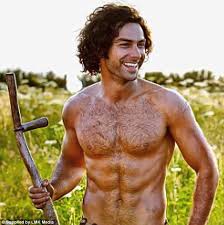
Why does my wife like Masterpiece Theatre’s Poldark so much? Hmm, could this have anything to do with it?

imgres

Why is my oldest daughter prone to meanness? Check out this advice she recently offered her younger, nicer sissy. “If you have a prof you love ask if they want to get coffee (and bring a friend in your class if you want another buffer because professors can be intimidating and frankly, weird) – it will be invaluable when it comes to references and advice for the post-college world.” Good heavens, what did I do to deserve that?

Don’t Ask Me How to Raise Teenagers

My daughters have early August birthdays, meaning more than turkey was cooking lo’ those many Thanksgivings ago. Four day weekend, frosty outside, fire burning inside, what do you expect?

J, now 20, is a fun and funny girl. The day before her birthday she proudly declared that she had now officially “avoided teen pregnancy”.

And a few days from now, a few blocks from Wrigley Field, A turns 23.

I’m proud of my daughters and love them dearly despite their making me feel old.

They’re a talented duo, especially skilled in reclamation projects. Through an interest in and feel for interior design, and lots of paint, A has transformed her utilitarian Chicago apartment into a nice home.

And through practice and steadily increasing technical know-how, J can wield her camera to transform almost any subject, no matter how ghastly into something nearly tolerable. For example.

_MG_0464

US Open Postscript

Sunday’s 6-11a shift was my favorite. Left the house at 4:52a and walked onto the grounds at 5:51a. The sunrise was spectacular and it was nice watching the course slowly come to life under overcast skies and cool temps in the mid 50’s.

A lot of disabled spectators had either tired and turned to their televisions or simply slept in so I ate my annual donut, shot the breeze with fellow volunteers, walked a bit of the course, and made occasional runs around the course.

The Cowboy will be pleased to know there was a brief Holly Saunders sighting. She sped by in the passenger seat of another cart. On a related note, her post round interviews were goofy. Sane people know Fox isn’t fair or balanced, but we have to acknowledge that they are consistent when it comes to their television “talent”. Their coverage more generally was flawed relative to the much more experienced network teams. Norman’s bromance for Day was over the top, the lack of yardage, Pavin awkwardly overreacting to a Faxon dig, “What do we want to go here, best career?”, etc. However, the microphone in the hole was genius and almost compensated for all the other shortcomings.

The highlight of the day was my penultimate trip, from Central Meadows to the top of the 18th hole grandstand. A man flagged me down and said, “I had a hip replacement, and it hurts, and I need to get up to the 18th grandstand for a picture, can you take me?” I looked at his tournament pass everyone wears around their neck and it said, “Robert Trent Jones, Jr.” The course architect and his wife hopped on and we we’re off.

“I heard you interviewed on the radio a few days ago. It was a nice interview.” Phone call with someone involved with the picture and then, “The pros are really savaging the greens aren’t they?” What do you say to that? “Yeah, but everyone has to putt the same greens.” Weak I know, but I was working with 5 hours sleep. Then I said, “You should be proud of the fact that this is a spectacular event.” He shook my hand appreciatively. And told me he had an article in the Sunday Seattle Times about his dad for whom “I wouldn’t be here personally or professionally.”

The locals are too damn defensive about all the criticism of the greens, Jones’s design, noisy trains, and the spectators’ many challenges. I don’t understand why people take it so personally. Given the leaderboard and dramatic ending*, the early word from Tim Rosaforte is that all the greens will be completely redone (much less undulation, much more consistent grass) and the “footprint” will be altered to be more fan-friendly and the USGA will return in 10+ years.

How many majors will Spieth have by then?

After finishing work at 11a, I picked up a Thai Chicken Wrap, banana, and water**, and headed to the practice range. It was strange that more people weren’t there because it was the best place to see the most players up close putting, chipping, hitting balls. I watched Rose, Kopeka, Poults, HMarayauma, Mcllroy, Na, Senden, the Duf who wins the “best shoes” and “most weight lost since divorcing” competitions. At 11:45a, Spieth walked onto the practice range a few feet in front of me and headed to the putting green, exactly three hours before teeing off.

Having gotten too much sun, I headed home at noon, tired from a long week. I’m lucky my vagabond daughters are both home. The Girls Club was wanting to hike Mount Rainier sometime this week before the Eldest returns to the shadows of Wrigley Field. I suggested we take advantage of the Summer Solstice and head to Rainier and the fam proved spontaneous enough.

A glorious hike on the Deadhorse Creek trail was cappped with a picnic dinner a mile above the Paradise Visitor’s Center. After returning home, I watched the tournament which I had recorded.

A full and fun day. I’m appreciative of my health and my daughters who gave me cards with touching messages. I’m also grateful for nature, in particular the Sound that frames Chambers Bay and Mount Rainier which frames large swaths of Western Washington.

Postscript: To the golf averse, I have one more golf post in me and then it will be on to new subjects.

* One take-away from tournament week. America is seriously overweight. One culprit has to be beer. Everyone began drinking beer at around 10a and didn’t stop.

** Would have been even more dramatic if the tournament had been decided by a made putt.

12th hole. Driveable par 4. For them, not us.

12th hole. Driveable par 4. For them, not us.

This is why they're better than me. They warmup with the same balls they play.

This is why they’re better than me. They warmup with the same balls they play.

The wildflowers are in full bloom a month earlier than normal.

The wildflowers are in full bloom a month earlier than normal.

What We Get Wrong About Work and Retirement

A fair number of my friends are in their late 50’s to mid-60’s meaning they’re heading towards the exits at work. Some who’ve recently retired are struggling to adapt to life without work routines. They werent enamored with their work all the time, but it provided a predictable structure for their lives.

Meanwhile, we continually read about how wonderfull everyone’s “Third Act” is, whether traveling the world, volunteering, consulting, or starting new careers which shouldn’t count as retiring at all. Retiring is like investing, we only talk about the most positive examples, thus painting a misleading picture. The truth of the post-work matter is, many people don’t know what to do when they don’t have to do anything.

Yes, you’re right, this is a nice “first world” problem to have. Too many people can never afford to retire, but solving that problem is well beyond the reach of my pea-brain, so here I focus on those fortunate enough to soon pull the work plug.

Maybe the best way to think about the challenge is to consider the experience of a friend of mine in his late 40’s because I think his experience is fairly typical.

“Tom” works 60 hours a week, 49-50 weeks a year. In the limited non-work time he has, he watches reality t.v. and his kids play sports. Despite being friendly, he has few friends because he spends almost all of his time working. He assauges his guilt for working so much by spending all of his non-work time with his family. Consequently, he doesn’t have any independent interests or hobbies. In a few years his kids will be gone and he’ll wonder what to do with that little bit of non-work time. I hope I’m wrong, but I predict that In fifteen years, when he stops working, he’ll be completely lost.

Our typical way of thinking about work and retirement, work too much for several decades and then throw a switch and completely stop working, is seriously flawed. It’s unrealistic to expect anyone to succeed at reshaping their personal identity overnight.

My working friends who make time for their friends right now and love things like cycling, gardening, and traveling, will fair better than my friend who has decided to sacrifice personal interests on the alter of exceedingly long work weeks.

Of course, the closely related challenge is creating a lifestyle that doesn’t require decades of overwork. If Tom’s children decide to live more simply, like many Millenials seem to be, maybe they’ll strike a better work-life balance. One other important “dot” to connect is one’s wages. Obviously, the more specialized and sought after one’s skills are, they better they are compensated, meaning the fewer hours they HAVE to work.

Instead of throwing a retirement switch, more Baby Boomers are gently turning a dimmer switch, choosing to work half time for example. Gradually transitioning from the world of work to the world of non-obligatory work makes real sense. If you can afford it.