I trust you, my esteemed readers, to know if you need to read this or not.
Tuesday’s Optional Read
Reply

I trust you, my esteemed readers, to know if you need to read this or not.
30-year-old crypto billionaire Sam Bankman-Fried drives a Corolla and sleeps on a beanbag.
In semi-related news, India’s Guatam Adani has moved into the world’s top ten richest people with a networth of over $100 billion.
Sentence to ponder, “Mr. Adani’s net worth topped $100 billion on Monday, up from $57 billion a year ago.”
You Can Learn to Love Being Alone.
“People who pursue solitude of their own volition ‘tend to report that it feels full — like they’re full of ideas or thoughts or things to do. . . . In this way, it’s distinct from loneliness, a negative state in which you’re disconnected from other people and it feels empty.”
Putin’s Bloody Folly in Ukraine.
“As Putin spills blood across Ukraine and threatens to destabilize Europe, Russians themselves stand to lose immeasurably. The ruble and the Russian stock market have cratered. But Putin does not care. His eyes are fixed on matters far grander than the well-being of his people. He is in full command of the largest army in Europe, and, as he has reminded the world, of an immense arsenal of nuclear weapons. In his mind, this is his moment, his triumphal historical drama, and damn the cost.”
The style and substance of South Carolina basketball’s Dawn Staley.
“‘She loves on them hard,’ associate head coach and longtime confidante Lisa Boyer says. ‘She’s playful with them, she’s hugging them, she’s there for them. I think they sense the fairness. I think they sense the genuineness of her. She speaks to them — it’s not some fairy tale. She’s telling them the deal.'”
“‘I owe basketball,’ Staley says. ‘I’m forever indebted to it. It engulfed my life for the positive. The game has gotten more of my time than my friends and my family. I feel like on a smaller or larger scale, it can impact my players’ lives in some kind of way.'”
A Renowned Community of Quilters is Taking on Copycats—and Winning.
“’We put a lot of work into it, and it’s about our life,’ Charley says of quilting. . . . We used these quilts for warmth. It was about our struggle, and our survival.'”
“Charley might feel differently, she offers, if these makers — who may have, say, studied textiles at art school — sent some of their profits back to the community that inspired them. But that doesn’t happen. “This work is ‘inspired’ in your mind, because you see the quilt pattern,” Charley says. “But you don’t know my story. And you’re going to try and duplicate it — and go to Joann Fabrics to do it?’”
Social scientists say we can’t multitask, but they haven’t met me. I’m doing pushups and watching a business news channel. A stock market expert/analyst just said there are several market “headwinds” including the invasion of KUWAIT. Then, a few sentences later, he said it a second time. That’s an amazing two-fer. . . an embarrassing history and geography fail.
So why would anyone listen to him bloviate on what the market is going to do?!
Instead, MSNBC should’ve invited me and my crystal ball. Here’s what I woulda said.
The most credible analysts expect VERY modest annual returns over the next decade. Meaning low single digit. Even less than anticipated annual inflation, meaning negative nominal returns, especially after taxes.
So what’s a person who has gotten used to hardly any inflation combined with double digit market and housing price returns to do? To not lose ground. To continue building wealth.
There’s only one answer. Save more. How to save more? Earn more and/or spend less. Now, you probably know why MSNBC didn’t call me.
“The white house with the red door sits on a quiet block near Gonzaga University. It has two bedrooms, one bathroom and 1,500 square feet of living space.”
“Mr. Silbar, the real estate agent, has sold it twice in the past three years. The first time, in November 2019, he represented a buyer who offered $168,000 and got it with zero drama. This year it went back on the market, and Mr. Silbar listed it for $250,000. Fourteen offers and a bidding war later, it closed at $300,000.”
From “The Next Affordable City Is Already Too Expensive”. The city that is Spokane, Washington.
Not so fast, Jeff.
Thousands Pledge To Egg Jeff Bezos’s Mega-Yacht As It Passes Through Rotterdam Bridge.
“’Rotterdam was built from the rubble by Rotterdammers and we don’t just take it apart for the phallus symbol of a megalomaniac billionaire,’ reads a statement on a Facebook group for the protest. ‘Not without a fight.'”
And dig this, a journo with a sense of humor:
“The group currently shows 4,000 people committed to attend, and another 14,000 interested. Due to the widespread public outcry, it appears that the bridge adjustment is no longer approved, and Y271 may need to find another way to sea. Knowing Jeff Bezos, he’ll probably arrange for thousands of underpaid Amazon workers to drag the yacht overland, with a 48-hour delivery guarantee.”
Bezos’s net worth is estimated at $181.1 billion. His yacht cost $485 million. If my math is right (it’s a lot of zeroes to keep track of) that represents .0268% of his net worth. So that’s like a millionaire buying a boat, make that a kayak, for $2,680.*
*someone please check my math
Thanks to my fam for hijacking the humble blog this weekend. . . the Good Wife’s idea, the daughters’ execution. After editing the beginning of the post, youngest said to eldest, “It’s kinda creepy how well you mimic dad’s writing voice.”
There are an overwhelming number of intractable problems in the world. You being stuck with me as primary author again. A slow walk to possible war in Ukraine. Environmental degradation. Global poverty. Pandemic induced loneliness and related mental health challenges. Endless Super Bowl crypto commercials.
But there’s at least one glimmer of hope that has not been reported widely enough.
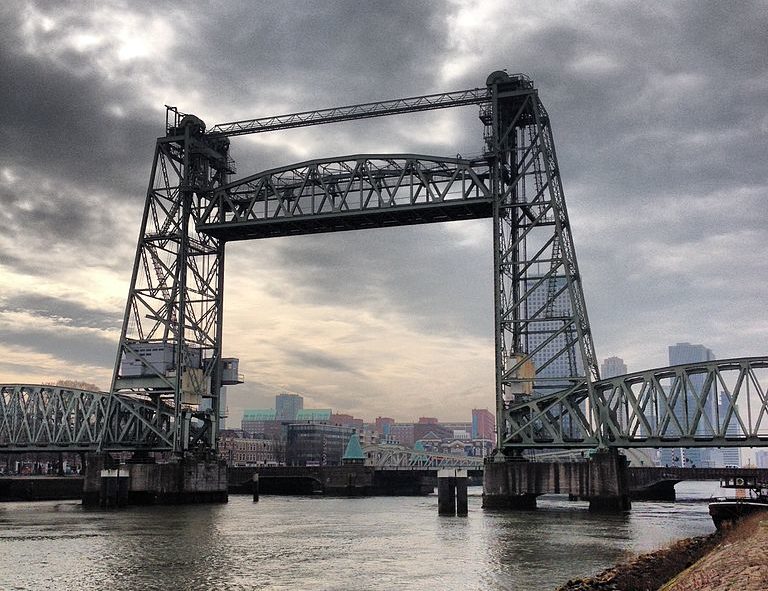
From DutchNews:
“Bezos’ three-masted yacht is being built by the Oceano shipyard in Alblasserdam but is too big to pass under the bridge when the central section is raised to its full height. Now Oceano and Bezos have approached the council about temporarily dismantling the bridge at their cost. According to Rijnmond, city officials are prepared to take that step, despite the opposition of local history experts and others.”
How wonderful that Bezos’ yacht will not be stuck in Alblasserdam. It makes you wonder what else is possible when city councils and others truly commit to the greater good.
Postscript: A reader just asked, “Is that sarcasm?” YES.
In college, in “The Sociology of Education” more specifically, I found “The Gospel According to the Harvard Business School” a fascinating read. As a result, this article caught my eye, “What is Harvard Business School’s Secret Sauce“?
The author asks whether or not sound judgement under pressure can be taught. The Harvard Business School definitely thinks so. How?
“Students study about 500 cases during their two years at the school. . .”
Case studies are one of my all-time fave teaching methods, but I have to believe students reach a point of diminishing returns well before Case #500. I suspect fewer, more in-depth cases would yield better results.
Has the HBS or anyone else studied their graduates’ judgement relative to other non-HBS grads? How would one create a baseline of HBS grads pre-HBS judgement under pressure from which to compare? More generally, how would one conduct such studies?
Messy at best.
The best thing you’ll read today. “I Am Not Proof of the American Dream”. As a general policy, if Tara Westover writes something, you should read it.
Upon receiving a $4,000 Pell Grant, Westover writes:
“In those desperate years a few thousand dollars was enough to alter the whole course of my life. It contained a universe. It allowed me to experience for the first time what I now know to be the most powerful advantage of money, which is the ability to think of things besides money. That’s what money does. It frees your mind for living.”
How on earth does the Right, with their knee-jerk complaints of Big Government waste and social program dependency make sense of the Tara Westovers of the world?

