Looking Into Our Electric Vehicle Future

On the roads of Norway.

“In March this year, 16,238 passenger cars were registered in Norway. Of those, 13,983 were battery-electric vehicles. That’s an amazing 86% of all cars registered that month. Meanwhile in the US, according to the Argonne National Laboratory, sales of light-duty vehicles with plugs (including hybrids) made up just 5.85% of the market in March. That was nearly a 40% increase over the previous year, but still floundering in the single digits.

Why the disparity? Is Norway just a utopia of forward-thinking EV zealots? Not exactly. Where state and federal governments in the US have engaged in a haphazard collection of half-assed, confusing incentives to spur EV adoption, scattering a middling collection of carrots here and there over the years, the Norwegian government has instead chosen the biggest of sticks: taxes. Want to buy a gas-powered machine? Be prepared for a painful whack.”

The “greatest country in the world” is getting its ass kicked. Again.

Hypocrisy On A Staggering Level

A reader writes, “Hey Ron, who should I read and follow to better understand the housing crisis?”

Jerusalem Demsas.

But why did Marc Andreessen, billionaire venture capitalist and vocal affordable housing advocate, just block Demsas on Twitter?

Because of her brilliant reporting and scathing takedown of Andreessen in this Atlantic essay, “The Billionaire’s Dilemma”. In thirteen paragraphs Demsas teaches a master class on contemporary American life and the wealth gap more specifically.

The money paragraph. . . pun intended:

“Unfortunately, when local officials charged with overseeing development are confronted with balancing exercises, they almost always default to blocking or delaying projects. This happens in part because the future beneficiaries of new development cannot advocate for themselves. No one knows who will eventually live in new housing, what kids will be born there and go to school in the neighborhood and grow up to make the community better. But the present-day neighbors who are worried about construction, who believe that their home values might “MASSIVELY decrease” if teachers live near them, who are prejudiced against renters and people who live in multifamily housing—those people can and do speak up. And often, local officials bow to the pressure or are elected because they themselves oppose new housing development.”

I listened to an in-depth interview of Andreessen recently and was blown away by his intelligence. Demsas’s piece is a powerful reminder that the heart trumps the mind.

Reality Catches Up

A reader writes, “Hey Ron, August is finally here and I’m going on vacation. I wanna get my financial life in order. What’s one book you’d recommend with that in mind?”

The Psychology of Money by Morgan Housel.

I read Housel’s blog too. Today’s post is titled “Reality Catches Up”. It’s about the precarity of fleeting success. This paragraph will resonate with anyone with much work experience.

“It happens at work, too. A manager who can’t earn employees’ respect by leading often tries to force it through fear. That can feel great: Your employees say “Yes sir, right away sir!” But it’s unearned respect. Employees who fear you will hide the truth from you to avoid repercussions. So the manager flies blind, oblivious to problems large and small that won’t be apparent until it’s too late. Every bit of respect over what you deserve is a liability, a hidden form of debt.”

Dr. Melissa Yuan-Innes

Understands privilege way better than most. Yuan-Innes is a part-time emergency room doc in Canada and one of six people The New York Times interviewed about this year’s stock market correction.

Yuan-Innes isn’t sweating the downturn. “If we need more money,” she explains, “we would just earn more money — I would rather not do that, so it’s sad, but it’s certainly not as hard as people who are getting paid minimum wage.”

She adds:

“I recognize my privilege in having parents and grandparents who worked extremely hard before me. Lots of financial independence types will tell you they’re entirely self-made, unaware of advantages they’ve gained from their white privilege, gender, middle-class status, education, government, or their relatives’ sacrifices.”

“We’re lucky we have enough money coming in to cover what’s going out.”

Being mindful of one’s privilege and one’s luck go hand-in-hand.

Retire (Really) Early

FIRE (financial independence retire early) profiles are so out-of-touch as to be pretty damn funny. They’re also ridiculously formulaic. The subjects, usually engineers, almost always work in tech, and always make six figures. The formula is “We (it’s almost always a pair of people) saved over half of our income for “x” number of years and retired at age “y”. In the profile I read today, “y” was 35 and 36 years old.

Slackers. I wanna read a FIRE profile where the subjects retire at 23 and 24 years old.

“We made $500,000 right out of college as coders, AirBNB hosts, and professional poker players. We saved 80% of what we earned for the eighteen months that we worked. Our $600,000 nest egg currently generates $30,000/year which is more than enough to support our #vanlife.”

The Ultra Wealthy Are Winning. . . For Now

Based on yesterday’s middling statistics, including how few times the LA Times link was opened, I did a poor job framing Mckenzie’s story. I described it as a long and difficult read hoping you’d rise to the occasion. If I were to suggest all of us go run a hilly and hot marathon, I probably shouldn’t be surprised if none of you show.

I should’ve lead with the importance of regularly mixing in challenging content with all of the light, entertaining stuff that tends to dominate the interwebs.

I can’t shake Mckenzie’s story, especially after reading Evan Osnos’s mind blowing New Yorker piece, “The Haves and The Have-Yachts”. Osnos tells the story of the ultra-rich buying ever larger, more expensive yachts.

If you’re even a little bit like me, and you don’t like the ultra-rich, Osnos’s piece will turn your dislike into a much, much deeper antipathy. If you have high blood pressure, be sure to take your pills first.

I can’t help but read the stories without wondering why in hell the world isn’t overcome by poor people’s revolutions. Osnos makes a few references to the “EatTheRich” movement, but the Wikipedia entry for it describes it as a political slogan associated with class conflict and anti-capitalism.

Sometimes in my hometown of Olympia, WA I see an “Eat the Rich” bumpersticker or graffiti tag. If I was a “Have-Yachter” I’d be thrilled that the primary pushback to the growing wealth gap is some flaccid combo of political slogans and bumperstickers.

This puts me in a tough position in that I don’t condone mindless property damage or really violence of any kind, and yet, I can’t help but wonder if much more radical responses to the growing wealth gap are warranted.

Another dilemma is how do we define “ultra-wealthy”? The tipping point seems to be $30 million, but compared to Mckenzie, I definitely qualify as ultra wealthy.

The legions of ultra wealthy people reading this post are saying to themselves, “We’ll be fine, we’ll just invest even more in security.” Right now they’re right, but whether I live to see it or not, someday poor people’s rage will ignite like the fires in France, Greece, Portugal, and Spain.

The ‘Etiquette of Poverty’

Joshua Hunt explains how he became a pathological liar.

“. . . By then I was familiar with the kinds of stories poor people must get used to telling. I’d heard my mom swear that the rent check was already in the mail while watching her slip it into an envelope; I knew when she’d passed bad checks because the owner of the corner store taped them to the back of the cash register until the debt was paid; and I’d read the notes outlining invented reasons I couldn’t attend school whenever there were field trips that cost money we didn’t have.

If I ever thought of these as lies, I soon came to see them as part of the etiquette of poverty — a means of getting by for the poor, and also a gift we give to the rich; a practice that lets us avoid talking about the uncomfortable differences between us. Over time it becomes second nature. Observing this etiquette doesn’t feel dishonest because its falsehoods recognize the deeper truth that many of society’s institutions are hostile to the poor. Lying to the landlord keeps a roof over our head. Lying to the social worker keeps our family together. Lying to ourselves allows us to believe it’s all going to be OK, somehow, someday.”

Maybe I’m Buddhist

I’m listening to a personal finance podcast series geared towards the retirement set. It’s about how to think about your legacy or how others will remember your brief time on this planet.

I appreciate the fact that the host emphasizes positive, non-material contributions to people and places.

But in starting to think about my potential legacy, I get stuck on this question. Isn’t any consideration of legacy the byproduct of ego? Put differently, I suspect the better we manage our ego, the less concerned we’ll be with our legacy.

Again, I turn to my sissy who occasionally reminds me, “It’s not all about you.” But what if she’s only partially right. What if NONE of it is about me?

Odds are a few people will remember me for a little while. And then I’ll be forgotten. Probably like you.

It’s at this point that Dan, Dan The Transportation Man loses it and calls me a real downer. And I tell him I prefer the term “realist”.

Deciding I don’t know or care much about my legacy, I quit the podcast series midstream.

Paragraph to Ponder

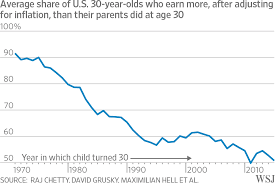
“Over time, wealth inequality became more pernicious to society than income inequality. The problem is not just that a chief executive at a big company makes 33 times what a surgeon makes, and a surgeon makes nine times what an elementary-school teacher makes, and an elementary-school teacher makes twice what a person working the checkout at a dollar store makes—though that is a problem. It is that the chief executive also owns all of the apartments the cashiers live in, and their suppressed wages and hefty student-loan payments mean they can barely afford to make rent. ‘The key element shaping inequality is no longer the employment relationship, but rather whether one is able to buy assets that appreciate at a faster rate than both inflation and wages,’ Adkins, Cooper, and Konings argue in their excellent treatise, The Asset Economy. ‘The millennial generation is the first to experience this reality in its full force.’”

Annie Lowery, “The End of the Asset Economy,” The Atlantic.

If You’re Under 50 Years Old

You should be a fanatical Bear fan. No, not the hapless football team in Chicago, the bear stock market. You should be rooting for further losses, more blood letting, a crash for the ages even. For several years, it’s been impossible to get the first half of the investing equation right—buying low. Stocks are still fairly pricey, but if you’re a youngster of say 29 or 39 or 49, and you have any savings, do what you can to maintain the downward momentum. Don’t just sit there. Use your “go to” personal curses on the Fed. Write JP and tell him to raise interest rates to 10%. Start a war in a distant land and wreak additional havoc on supply chains.

Similarly, mobilize with other youth to pop the housing bubble. Get JP to raise interest rates to 10% so no one can afford a mortgage. Then go full-Amish and build a bunch of homes together to increase supply.

Down, down, down go equity and home prices. You got this.