I Am Now An Expert On All Things Hawaiian

Clickbait title, because after teaching a lot of Hawaiian students over the last 5-7 years, I’m still scratching the surface of understanding our most distinctive state.

Mainlanders who think they “know Hawaii” after spending a week or two at a resort are deluded.

Somewhere around 2015, someone at PLU decided to recruit the islands hard. And it continues.

Some observations in the form of gross generalizations.

On average, academically, they’re behind their mainland peers. Why is that? I don’t know.

On average, because Hawaii is a mosaic of different cultures, they’ve attended much more diverse K-12 schools.

Often, when you talk to them about multicultural education, their eyes glaze over. They are more inclined to embrace “colorblindness”, and as a result, dislike talking about race, class, and gender. Like Norway, they think their islands are free of cross cultural conflict, and yet, I hear and read stories about haole surfers getting beat up by native Hawaiian ones. There has to be more to the story doesn’t there?

I feel for them at this exact time of the year when the sun takes leave and the Pacific Northwest weather turns much cooler and wetter. How do they avoid being SAD I wonder?

Last, but not least, why haven’t any of them invited me to visit? Is it because they’re afraid I might out surf them?

images

Teaching My Ass Off

Just because I’m oldy and moldy, some might think I should call it a career. But the passion for the classroom still burns bright. I woke up at 2:30a.m. with these thoughts rattling around. Don’t call it a lecture, that’s demeaning. It was more of a homily/sermon.

  • all we’re doing is practicing “thoughtful inquiry”and learning to have “true fun” with ideas— playfulness, connection, flow
  • the cutting and pasting of ideas/approaches to life from other especially thoughtful people
  • social infrastructure . . . we are products of our environments, you are the company you keep
  • how closely have you read the key content, how closely have you listened to your classmates’ ideas, how much time/energy have you invested in examining your inner life?
  • epiphany—a usually sudden manifestation or perception of the essential nature or meaning of something; an illuminating discovery, realization, or disclosure

How closely has the student-writer read the key content?

  • there are no references to any of the author’s key concepts . . . the paper could’ve been written completely independent of the reading—35%
  • the student-writer briefly touches upon the author’s key concepts—55%
  • there are repeated, thoughtful references to the author’s main idea(s), the student-writer’s thinking is changed— a little or a lot—as a result of their careful consideration of the author’s main ideas; the student-writer’s ideas are nuanced and demonstrate an appreciation for complexity—10%

My Students Evaluate Their Parent(s’) Parenting

In response to a chapter on the downsides of “hyper-intensive parenting” in Ruth Whippman’s America the Anxious.

I’ve just started chipping away at the behemoth pile of essays, so this may be coincidental, but a theme of tough-minded, strict disciplinarian parents is emerging. The 18 and 19 year old students are mostly appreciative of their hard ass parent(s).

Except for one little thing, as a student who moved to the Pacific Northwest from Mexico at age 8 explained. She wrote eloquently about being afraid of her mom and emotionally stunted because she never had anyone to discuss her feelings with. A lot of the time she’s not sure what she feels, and when she has some modicum sense of them, she doesn’t know what to do with them. And she concedes, she’s wholly incapable of asking for help.

I used “little” above facetiously because emotional intelligence is THE BIG THING. They think their future success hinges on picking the exact right academic major or getting good grades. But their relationship success, professionally, but especially personally, will hinge in large part on their ability to calmly and constructively discuss their’s and other people’s feelings.

What say you, should I tell them or just let them discover that on their own through inevitable trials and tribulations?

Washington State Students Can Now Take Excused Mental Health Days

Washington joins 11 other states that specifically allow students to take excused mental health days off. From Crosscut:

“Schools can now accept mental health symptoms in the definition of an excused absence, just as they do physical health symptoms. It formalizes allowing students to take days off to care for their mental health, including for counseling and behavioral health appointments.

The law does not allow students to excuse themselves, and each district will come up with its own requirements — for example, if a parent or doctor note will be needed to determine whether an absence is excused.”

One principal acknowledged,

“. . . it’s a change that’s been needed. ‘If a kid breaks their leg, we wouldn’t expect them to take part in PE. But I don’t think there’s an equivalent for a student with debilitating depression.'”

The new rule also enables schools to collect information on its overall mental health, which can inform how they might respond in other ways.

I’m not sure much more information is needed to conclude families, teachers, and administrators are woefully unprepared to adequately help students’ with their mental health challenges.

Week One’s Highlight

Fall semester is off to an excellent, largely mask-free start. Of course it takes more than one or two class sessions to get a true feel for your students’ personalities, but all signs point towards a great semester. The most notable demographic shift of the last few years seems to be accelerating—a significant increase in Latina students. I have half of the football team in one writing seminar (slight exaggeration) and half of my students in my other one want to become writers which is exciting.

Some context. For those newish around here, earning a chili pepper, signifying hotness, on the website “Rate My Professor” is my primary career objective at this point. The one unchecked box. And with each passing year, the Las Vegas oddsmakers say my receiving one is less and less likely.

The highlight of the week happened Tuesday morning when I descended the stairs of our house. Since I’ve been slumming it for months unshaved in t-shirts that could double as bike rags, the Good Wife was impressed with how much I had cleaned up. As she moved in for a steamy back-to-school smooch, she said the nicest thing ever. “I would give you ten chili peppers.”

download

Monday Required Reading

School starts tomorrow, so time to buckle down. Plus, Scottie loves assigned reading.

  1. I want one.
  2. Turns out, it’s really hard to scare a seal. Bonus trivia, the Byrnes clan is celebrating the fact that eldest daught lives 5 miles from the Ballard Locks as of today.
  3. Effective altruism has gone mainstream.
  4. The six forces that fuel friendship.
  5. How does it feel to be a teacher right now?
  6. Guilty as charged.

School Is Back In Session

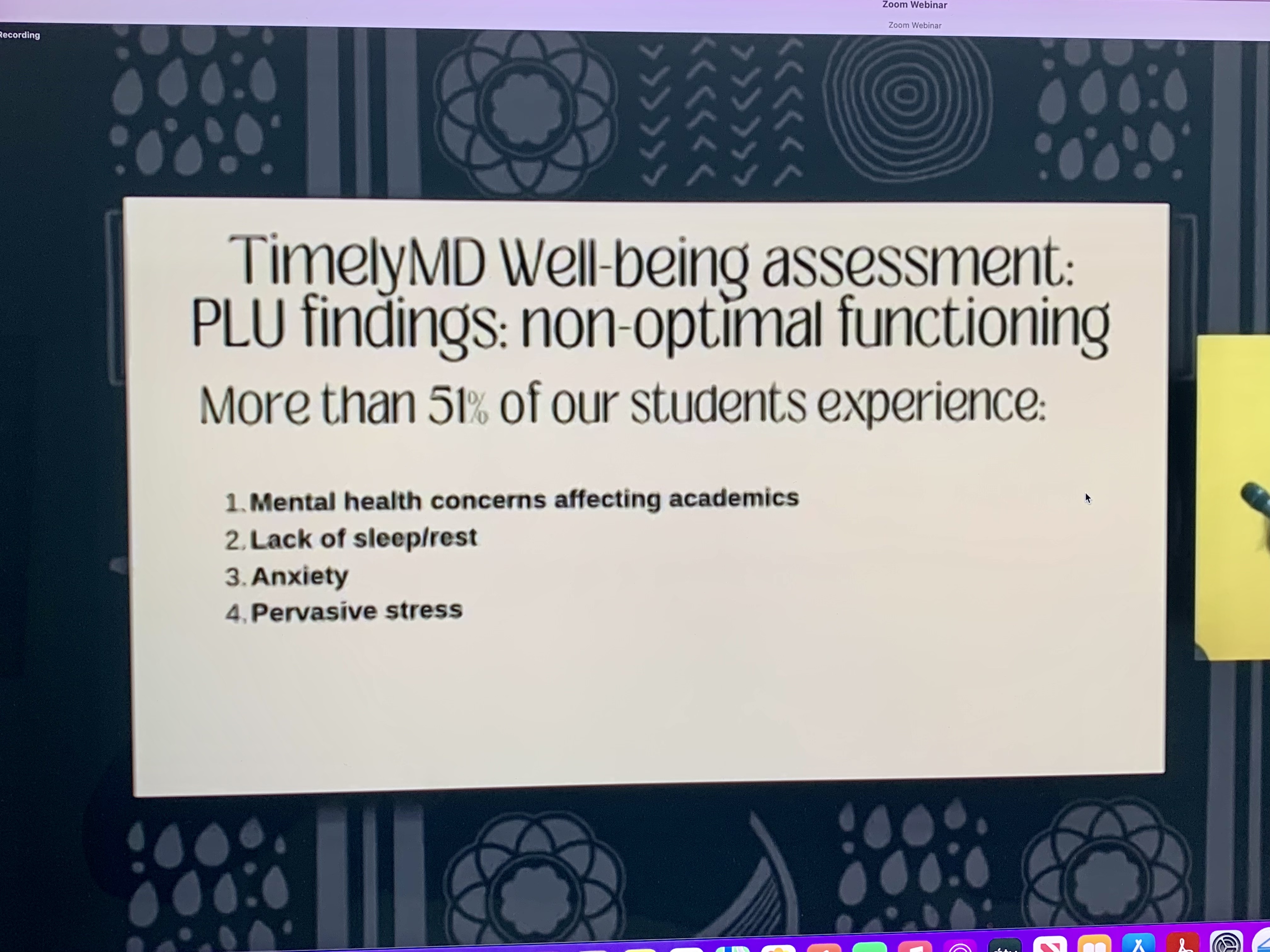
This was a slide from a “Student Mental Health” presentation yesterday. 

BE17C4C0-9153-4D20-8AB8-2A5588EC4C01_1_201_a

In light of these findings I’m thinking of reinstituting one of my fave parts of kindergarten—nap time. Sleep pads will not be provided, bring your own. Class is one hour and forty-five minutes long. How much time should I designate for napping? 

Also, I am going to begin class by announcing that everyone is going to get an “A”. 

Here’s hoping these adaptations and being my normal chill self promote improved student mental health.


Tuesday Required Reading

  1. Girls flag rugby. Beautiful lead picture. Of course the red-head is kicking ass.
  2. UCLA reverses course and will pay the adjunct professor after all. HR clown show.
  3. How much do the best pro cyclists make? “. . . pocket-money compared to some of the world’s wealthiest sports.”
  4. Right on. My Covid guy gets the top job. Everyone has a Covid person or team that affirms their preconceived notions about all things ‘rona. Ashish Jha is mine.

Schools Remain Sites Of Joy

Hey school principals, pay even closer attention to positive emotions and experiences.

Applies to leaders of all sorts. Scratch that, people of all sorts.

From Education Week, “Rx for Principals: Take in the Joy”.

“. . . almost 45 percent of principals said they had considered leaving their jobs or sped up their plans to exit the principalship because of COVID-related working conditions.

Yes, working conditions for principals have been tough. But that’s only part of the story. Even in the current circumstances, schools remain sites of joy. Principals regularly experience this joy, and it could make a big difference in how they perceive their working conditions.”

Let’s start asking principals. . . and others. . . about their most positive experiences.

“If you ask principals about their positive experiences, you will hear a steady stream of stories and see their faces light up with smiles. For example, an elementary school principal in an urban district described being moved to tears seeing an English-learner student, after a difficult year of transition, reading in two languages. Another principal talked about how meaningful she found coaching a novice teacher who was struggling but also improving by the day. Such experiences too often go unnoticed and unshared.”

What have been your most positive recent experiences?