Netflix’s The Crown Is A Marvel

Monarchies are whacked; and yet, I find The Crown, the story of Britain’s monarchy, imminently enjoyable. I start each episode; I’m currently through Season 3, episode 7; wondering if it’s the one where the quality will start ebbing ever so slightly. Although a dip seems inevitable, each successive one leaves me more and more wowed. I don’t even think of fast forwarding through any parts of it.

When it comes to viewing pleasure, I did not see many movies in 2019 that rival any random episode of The Crown. And interestingly, it’s an anomaly for the “Golden Age” of television in which the most popular content is dark and edgy*. In contrast, The Crown is the Tim Duncan or Big Fundamental of contemporary television.

The Crown soars because of its writing, it’s cinematography, its music, and its casting. Especially its casting. In particular, Olivia Coleman as the middle aged Queen Elizabeth and Tobias Menzies as Prince Philip are phenomenal.

Only three episodes in the queue. I plan to stretch them out as much as possible to shorten the wait for season four a wee bit.

*rest assured, the Netflix series on the Trump monarchy will be decidedly more dark and edgy

All The Books Donald Trump Recommended in 2019

28 in total. Take that Obama. AMAZING he got that many in on top of the tweeting, golfing, campaigning, draining the swamp, defending himself against the Do Nothing Democrats, and just generally making America Great Again. What further evidence do we need that he is truly a stable genius. Also impressive, the books are closely related one to another. People are saying no president in history has ever read with as much purpose.


La Ultima Guide To Increasing Visits Home

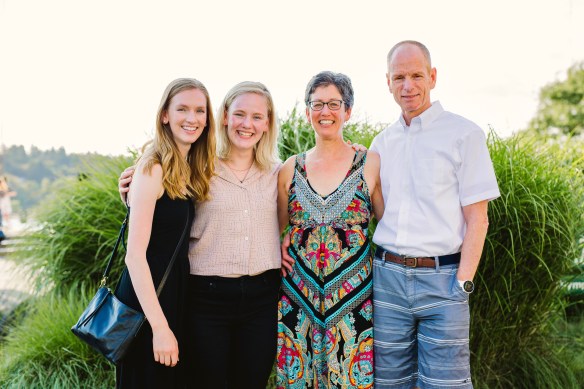
Once they fly the coop, most parents miss their adult children. And so they look forward to their occasional visits home. Often however, their visits aren’t as frequent as the parents would like. Thus, a fool-proof way to increase visits home.

Step 1. Have a charming personality.

Step 2. Keep it supe-light. Don’t ask about their love lives, job searches, or anything that might require them to reveal an inner thought. If at a loss of what to talk about, there’s always the weather and Lizzo.

Step 3. Pay for the plane tickets.

Step 4. For Christmas, get them generous gift certificates to their favorite hometown coffee shop (Ember) and/or book store (Browsers) that they love visiting almost as much as the homefront.

Step 5. If they get out of bed in time, make them morning lattes.

Step 6. Buy cinnamon bread and cinnamon rolls at Wagners and make french toast for breakfast.* Add in turkey bacon and eggs.

Step 7. Don’t sweat the small things. . . half the dishes disappearing from the kitchen, the other half dirty in and around the sink, the loud t.v. at night . . . you get the drift.

Step 8. Go to whatever movie they want, even Little Women.

Step 9. Have a charming personality.

Follow these nine steps and they’ll be home again before you know it.

IMG_0012.jpg

*thanks to Dan, Dan, The Transpo Man for the french toast “recipe”

Anti-Liberty University

My proposed new name for Jerry Falwell Jr. University more commonly known as Liberty University.

Maybe my shade is best explained by envy, ALU’s endowment is $1.4b, that’s “b” for a billion. And I’ve never been invited to speak there, which is sad because guest speakers get designer M&Ms among other swag.

There’s been some great reporting on ALU in 2019. For example, start here and then follow up with Ruth Graham’s The Buffer in Slate.

Graham is illustrative of one of our nation’s greatest treasures in this dystopian age, highly skilled, deeply committed journalists who continue to do great work despite their colleagues disappearing in an industry hemorrhaging jobs. I can’t fathom the self confidence it takes to commit to journalism today. Thank goodness the Ruth Grahams of the world have a lot more courage than me.

In her most recent piece, Graham tells the story of Falwell’s number two, David Nasser, ALU’s “Senior Vice President for Spiritual Development” who makes $349,000 a year to lead ALU’s mandatory convocation (church) services on campus and to provide spiritual counsel to students.

Nasser’s “spiritual counsel” is mostly about tampering down dissent when offered to students bold enough to question the administration.

Paragraph to ponder:

“When I asked Falwell about the idea of a ‘culture of fear’ at Liberty, he referred to an English professor who has been outspoken about her objections to Trump. ‘Ask Karen [Swallow] Prior about that,’ he said. ‘She’s never had any repercussions.’ Prior, Liberty’s highest-profile faculty member, announced the next morning that she was leaving the school after 21 years, citing reasons that included creeping administrative oversight over faculty work. (Falwell tweeted after the announcement that she would be “greatly missed.” Prior declined to comment for this piece.)”

Maybe Falwell will prepare a little bit more before Graham’s next visit. Scratch that, given her hard hitting critique of Liberty’s “academic” culture, I’m sure she’s persona non grata. No more designer M&Ms for her.

Two Very Good ‘Los Angeles’ Sentences

From Margaret Talbot’s “Dancing with HAIM” in The New Yorker.

Talbot doesn’t drive. Sentence one.

“In high school and afterward, I was often a passenger, and, though I’ve always enjoyed riding in cars as much as any golden retriever with its head hung out the window, I also walked and took buses a lot.”

Slowing down has it’s advantages, in particular, noticing the details of one’s surroundings. Sentence two.

“I got to know the particular topography of pedestrian L.A.: muffler shops and taquerias and strip-mall doughnut shops run by Cambodian immigrants; bougainvillea and birds-of-paradise that grow opportunistically in cracked sidewalks; abandoned shopping carts and outdoor newsstands and faded courtyard apartment buildings with grand names; the scintillation of sunshine on passing rivers of traffic, telephone-pole flyers advertising suspicious-sounding opportunities in the entertainment business, and freeway underpasses and their homeless encampments.”


Boxing Day Assorted Links

1. Why Self-Compassion Beats Self-Confidence. From two years ago, but well worth re-reading. Plus, it takes at least that long to make the switch.

2. The ‘Charlie Brown Christmas Special’ Dancers You Most Want To Party With. About time our data scientists turn their attention to weighty matters.

3. Rio de Janeiro is not for the timid.

“Despite tighter gun regulations than the U.S., in the poorer neighborhoods of many Brazilian cities, armed gangs and police trade fire with high-caliber assault rifles, machine guns, pistols, and sometimes even grenades and rocket launchers. Rio averages 24 shootouts per day. Large hours-long gun battles often don’t even make the headlines.”

As if that’s not bad enough:

“Perhaps it is no coincidence that a country with poor arms controls and transparency also happens to have an out of control homicide problem — 51,589 dead in 2018 — and a dismally low rate of solved homicide cases, about 20.7 percent nationwide and an abysmal 11.8 percent in Rio alone.”

4. Best and worst places to live in the U.S. by work commute times. Note: needs editing.

In short, Grand Rapids, Rochester, Buffalo, Oklahoma City and Salt Lake City yes. New York City, San Francisco, Washington D.C.+, Boston, Chicago, Seattle, no.

5. Desserts That Bring the Party. A picture is worth 1,000 calories.

6. On competitive running, exactness, and finding permission to be myself.

Opening paragraph:

“I’ll begin this essay the way I introduce myself to a fellow runner when meeting them for the first time: By telling you that I’ve run two 4:48 miles back-to-back. That I’ve run five miles in 26 minutes, 10 miles in 55. That I’ve qualified for the Boston Marathon five times and ran my fastest marathon — 2:41 — into a headwind there in 2015. I’ll begin the essay this way because I don’t love myself, because when I see another runner seeing me I assume they see me the way I see me: all baby fat and bone stock.”


Stalemate

-1x600.jpg

Just finished The Great Successor: The Divinely Perfect Destiny of Brilliant Comrade Kim Jong Un, Anna Fifield’s masterful biography of North Korea’s third dictator.

Long story short, the West has underestimated his dictatorial acumen ever since he assumed power. He’s much more like his grandfather than his father, meaning especially brutal, strategic, and politically shrewd. His position inside North Korea is extremely strong.

North Korea’s economy has improved under KJU whose loosening of rules, or looking the other way rather, has freed up market activity throughout the country. Far from an “invisible hand” though, entrepreneurs have to pay off local authorities to ignore repressive laws on the books. No one is starving anymore, but some people are malnourished due to a lack of variety in their diets.

On the other hand, and most importantly, concentration-like labor camps packed with alleged political dissidents continue to operate with the same brutality. I suspect the people in those camps face the most inhumane living conditions on the planet. No one has ever been known to escape one.

And yet, President Trump shows no concern for those victims. Instead he talks of condos at North Korea’s Wonson beach resort.

Despite cozying up with KJU, the New York Times reports, “U.S. Braces for Major North Korea Weapons Test as Trump’s Diplomacy Fizzles“.

The Problem With Our Church’s Music

I am not musical, but I dig music.

Maybe because I am so lacking in talent, I have an especially keen appreciation for it. Lots of different kinds—folk, rap, hip hop, electronic, pop, Eastern, indigenous.

In church Sunday we sang some sorry hymns in a manner that can only be described as uninspired. Which got me thinking.

Instead of singing, or whatever you call what I do, I went into participant observation mode. And I noticed other people not singing. Who knows, maybe our church is filled with closet sociologists.

More and more people are choosing not to attend church, especially young adults. There are many reasons, but I can’t help but think that church music being so mind numbingly predictable, so Western, and so traditional, has to play a part. It’s like we’ve decided to only use one or two letters of the alphabet.

The continuum of groovy, inspiring music stretches across many, many genres and traditions from every region of the world, and yet, our Lutheran church, like most I suspect, routinely draws from the same 1% of the world’s musical variety. We tiptoe on a musical balance beam Sunday after Sunday after Sunday. Which is exasperating for people with eclectic tastes.

So why the utter lack of creativity? Why is the Western traditional church music status quo so engrained when congregations are struggling to entice people to attend? Why isn’t there more risk-taking? More experimenting? Some risk-taking? Some experimenting? Some flavor flav?

A theory. Increasingly, in mainline Protestant denominations (and probably Catholic churches too) the vast majority of members are retirement age. Add to that the fact that the world is chaotic. Familiar music is integral to older member’s sense of church from days long past. To many of them, what I too flippantly call sorry hymns is a musical history that provides them with structure, and as a result, helps them create some semblance of order out of chaos.

But here’s the problem. The exact music older, long-standing church members find most helpful in making sense of the world, younger potential church members often find uninspiring. The incredible predictability and familiarity comforts older longstanding members who are in the last chapters of their lives while it simultaneously alienates younger more diverse people who do not share the same musical history and who have more eclectic musical tastes.

A decree. Every church leader should watch at least one NPR Tiny Desk concert as a part of their work week.

But maybe resistance is futile. Maybe churches will cling to the exact same church music as they spiral down without daring to ask whether the familiarity is playing a part in their decline?

All I know is if this post gets picked up by any of the traditional church music stalwarts at my church, I am likely to be tarred and feathered at a service early in the next calendar year. So if the humble blog goes dark, you’ll know why.


Rich Beyond Measure

That’s a wrap. The semester is over. Grades are (mostly) in. Back at it January 7th for one month-long course. Then my academic year will be a wrap since I’m a half-timer. Don’t hate me because you ain’t me.

It felt kinda weird returning to work in early September after such a long sabbatical. Pre-sabbatical, I handed off my administrative duties, so I was teaching full-time for the first time in a long time. And while I was gone, even more colleagues who I enjoyed had moved on. By “kinda weird” I guess I mean somewhat disconnected.

After all these years, I sometimes feel as if I should’ve assumed more administrative responsibilities somewhere along the line. I mean what kind of sad sack is back exactly where he started 22 years earlier?

And yet, as I read final papers, and email messages, and hand written notes of appreciation, I feel like finally, I might be getting this teaching thing down. Of course, putting that in writing means my “J-term” course will probably be a disaster, you know, pride coming before the fall and all.

Every educator is different, but for me at least, the “secret” to teaching well is the same as living well, the more selfless, the better. Maybe it was having no administrative responsibilities that enabled me to see and hear my students more clearly this fall. More specifically, maybe it was not being in a hurry, maybe it was taking the time to listen to them and to read their words even more closely. And then to respond to those words.

The more authentic and present I am in the classroom, the more my students appreciate my teaching. They also appreciate the thought put into our more accessible, shorter, more thought provoking than average reading list.

My students’ end-of-semester gestures of appreciation make me think I’m still doing the right thing, in the right place, at the right time. Consider one student among many, a physically imposing, politically conservative, first year footballer whose domineering dad tolerated no negative emotions.

“When I found out I had to be in a mandatory writing seminar as part of the ‘First Year Experience Program’ (FYEP) titled ‘The Art of Living’, I dreaded it. I despised writing, especially that of a personal nature. All of the essays and discussions I would have to participate in would be about my life, inner thoughts, and feelings. I figured it was just another stroke of bad luck. My goal for the semester was just to survive, and hopefully improve on my personal writing ability after a few failed attempts. However, I found out very quickly that this was just the class I needed. It turns out that my destiny was not to have an unfortunate event take advantage of me, but was to have an unbelievable stroke of luck being placed in the Art of Living writing seminar.”

Further in:

“This unexpected change of heart provided me with energy and enthusiasm. Writing my fourth essay became something I enjoyed, not something I dreaded. I wrote about my stance on modern love and the concept of soulmates, which was the strongest stance in any essay I had written. I wrote about my own experiences with love, and how in my eyes the person I want to marry will be able to fill my heart with love. I wrote about how that love would allow me to experience the six varieties described in Krznaric’s writing: eros, pragma, ludus, agape, philuatia, and philia. . . . I had ended up doing the exact opposite of what I had initially thought I would: I wrote about my definition of love, my love life, and I loved doing it. By writing from the heart and being vulnerable with my audience, I was able to capture their attention and provide details that I otherwise might have excluded. My paper connected better with my readers, and it was relatable. Over the course of this semester I had not only grown as a writer, but I opened my mind and grew as a person.”

Watching this young man blossom into a superb, sensitive discussant was a joy:

“One of the most influential changes to my (writing) process was in-class discussions. They allowed me to deepen my understanding of the prompts while listening to others’ thoughts and feelings. I could formulate my own stances in response. It allowed me to consider outside opinions and beliefs and flush out my ideas. They made my essays even more thorough because I gained not only different pieces of textual evidence but I learned about different experiences my peers could connect to the readings. Being able to have personal, open conversations in class also made the texts more applicable to daily life. The discussions helped shape not only my essays, but the way I looked at the world as a whole. I could consider expanding my varieties of love as Kznaric wrote, or I could consider the lifestyle of Stoicism written in William Irvine’s A Guide to the Good Life. These discussions opened my heart and mind to the different ideas we discussed in class, and allowed me to incorporate those into my essays. This class broadened my life views and expanded my horizons.”

Because I’m half-time and I get paid over 12 months, and I max my retirement contributions, and I add family dental insurance and a Health Saving Account in for good measure, my take home pay for November was $34.37. But I feel rich beyond measure.