Teams > Individuals

Who will win the 2020 Democratic Primary? Who will win the 2020 General Election? In the (dis)United States we seemingly think one person can make all the difference. That there’s one person with the exact right proposals for improving health care, establishing an environmental ethic, strengthening frayed ties with allies, reducing gun violence, and revitalizing our infrastructure.

Due to our intense individualism and the incontrovertible fact that uniquely talented individuals sometimes make disproportionate impacts on institutions and organizations, when it comes to getting things done, we almost always underestimate the importance of teams.

The Trump Administration’s list of accomplishments is short not because of mean “Do Nothing Dems”, but because Trump has settled for a constantly revolving door of increasingly acquiescent men and women of questionable qualifications. We’ve travelled a fair distance from Lincoln’s Team of Rivals.

If we were more savvy, we’d expect the Democratic Candidates for President to have already named their Vice-Presidents so that we would have longer to evaluate the relative quality of their teaming. We’d even go further and require them to name possible other members of their respective cabinets. Our questions would not be limited to what the Presidential Candidate hopes to accomplish, but how likely are their VP and them to team well together? How well do they complement one another? Instead of expecting them to come up with policy panaceas, we should expect them to convince us that they’ll team better with Congressional leaders to pass meaningful legislation than their opponents.

One might protest that Vice-Presidents sometimes come from the consolation bracket of the Presidential Primary. A much earlier expectation would simply require some with Presidential ambitions to decide whether to hitch their wagon to another more likely winner of the Primary.

Many of us resisting Trumpism are hopeful that the person who wins the 2020 Democratic Primary will right the ship, but she won’t. By herself. She’ll need a similarly skilled Vice-President and Cabinet. The sooner we can get a feel for that small group, the better our decision-making, and the greater the likelihood that we turn the chapter on this dystopian novel.

Kind Of A Waste

Sometimes I come across really talented writers who write about things of limited significance. I can’t help but imagine what they might accomplish if they traded up subject matter.

Case in point. Zach Lowe, ESPN Senior basketball writer. Dig his description of Denver Nugget Center Nikola Jokic‘s early season play.

“He is pouting more even by his mopey standards: waving his arms in frustration at inaccurate passes, and slapping opponents to stop play after what he considers bad calls.

We haven’t even addressed defense. Jokic has never exactly been agile, but he makes up for it to some degree with canny positioning, quick meat-hook hands, and voracious rebounding. Awkward appearances aside, the Nuggets have always been stingier with Jokic on the floor.

They still are, per NBA.com. But Jokic is barely moving. He paws at bodies as they fly around him, like a toddler reaching for bubbles.”

. . . even by his mopey standards–funny stuff

. . . like a toddler reaching for bubbles–even more funny

Imagine if Lowe wrote about national politics. He could probably do the seemingly impossible, find some humor in our downward spiral. And thereby earn the nation’s gratitude.

Okay Boomer

Tyler Cowen, ‘Ok Boomer’ Phrase Says More About The Kids Than Us’.

“My biggest worry about “OK Boomer” is the generational stereotyping it embodies. It wouldn’t be acceptable to baldly criticize older people simply for being old. So why is it OK to use a circumlocution that does the same thing? “You old fogeys don’t have a clue” is perhaps a more direct translation of the phrase, and I am not sure that the ostensibly greater politeness of “OK Boomer” is a virtue.”

From one 1962-er to another, cry me a river. I like Cowen, but can’t help but wonder if he even saw the original vid. The dude deserved everything he’s got. And if there’s some collateral damage, c’est la vie.

download.jpg


I Could Use a Sports Psychologist

It’s been a long time since I’ve written about my athletic self.

2019 has been all about good health and consistent training. Last Friday I ran my 1,000th mile of the calendar year, thus extending my 21 year streak of 1,000 miles+ running annually. As you age and it becomes impossible to set personal speed records, you have to find other ways to motivate yourself. My secret power is not having played contact sports growing up. My knees are golden thanks to golf and water polo. Being slender no doubt helps too.

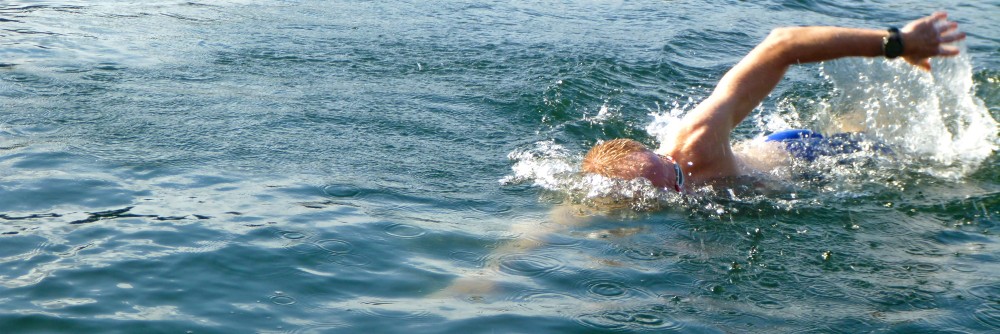
I’ve swam farther this year than any other because I joined a Masters Team and went from swimming twice a week to three times. Despite that increase in volume, my splits aren’t much better because swimming is an incredibly technical activity and I haven’t improved my technique.

I hope to hit 5,000 miles of cycling by 12/31/19, which thanks to the sabbatical, is about 10% more than normal. A lot of the peeps I cycle with double that.

I ran a very good marathon a few years ago in Seattle. For me. Even somehow won my age group. I’ve ran a few halves since, including one in July, which also went well despite skimping on long training runs.

But despite the good health and all the cross-training, I haven’t competed in a triathlon for 5+ years, which I guess means I’m retired from the sport. I’m even trying to sell my beater triathlon bike.

I often think about returning to competition and this is where I need a sports psychologist. Friends still enjoy it and I know I could be very competitive in large, difficult races, not because I’m a burner, but because I’m slowing down less than my peers because I was never supe-fast to begin with and I have a very deep cardiovascular base from years of consistent cross-training. Also, while I’m not a burner in any of the disciplines, I don’t suck at any of them either. In contrast, almost every triathlete has a weakness*.

For some reason though, I just can’t bring myself to purchase a new bike, register for races, and show up on starting lines. Here’s how I imagine a counseling session with a pricey sports psychologist going down.

SP: So you’re thinking of returning to triathlon. What’s keeping you from committing?

RB: Aren’t we gonna talk about my childhood?

SP: No, frankly that would bore me.

RB: Well, for one thing I’m usually shelled at the end of training rides and I really don’t want to run off the bike anymore.

SP: Have you always been a wuss or is that a recent development?

RB: I think it’s rooted in my childhood.

SP: Never mind then.

SP: What else is holding you back?

RB: To tell you the truth, when I imagine best case scenarios, winning races, it doesn’t do anything for me. I think what if I swim, cycle, and run faster than a declining number of other economically privileged old dudes. And I conclude, so what.

SP: Often, as in life, in athletic competition the joy is in the journey.

RB: Did you learn a lot of cliches during grad school?

SP: Yes, lots of others I’d happily share if we weren’t out of time. Thank you for coming.

* truth be told, my weakness was the fourth discipline, transitions

bike.jpg

President Twit

An incredibly exhaustive examination of the President’s 11,000 (and counting) tweets. What is there to add? Sometimes a chart is worth a 1,000 words.

No. of tweets …

that

5,889

attacked someone or something

4,876

praised someone or something

2,405

attacked Democrats

2,065

attacked investigations

2,026

praised President Trump

1,710

promoted conspiracy theories

1,308

attacked news organizations

851

attacked minority groups

758

praised or promoted Fox News and other conservative media

570

attacked immigrants

453

attacked previous presidential administrations

417

conducted presidential business on Twitter

256

attacked Hillary Clinton

233

attacked ally nations

183

bragged about crowd size and applause

132

praised dictators

95

referred to a Trump business

40

promoted voter fraud conspiracy theories

36

called the news media the “enemy of the people”

16

referred to himself as everyone’s “favorite” president

Tweets from Jan. 20, 2017 to Oct. 15, 2019.

“I Could Probably Go On”

The first year writing seminar is just past mid-semester. And somehow, despite the professor they were assigned, my first year writers have GOT IT. In place of the typical first year writer’s repeated use of the word “things” and other vague words and phrases, their third papers were peppered with specific details. That switch is almost universally positive. The exception? When they’re detailing their inner lives, like this student of mine, who gave me permission to share this with you.

“I can give a list of the things that are currently making me anxious in this moment: the anatomy test that I should be studying for (I got a 60% on it), if I’m going to pass my classes this semester, what classes I’m going to take next semester, if my friends really like me or just put up with me, the weight that I’m going to gain from the binge that I just had, if this essay is going to be any good, if I even want to go into nursing, what am I going to do with my life once I get out of college. I could probably go on but that was a long sentence as it is.”

My students seem fine on the surface, but as they get honest with themselves and me, I’m learning many are suffering in silence. Their willingness to share their stories with me is humbling.

All that I know to do is to assure them their feelings matter, a lot of their peers feel similarly, and I’m glad they’re in my seminar. Also, I encourage them to take advantage of the counseling available to them.

I don’t know if that’s enough.

Worser and Worser Gridlock

The Future of Transportation by Henry Grabar of Slate.

“Even here (the U.S.), in a nation of unprecedented personal wealth and plentiful land, the car-centric system has pushed up against the limitations of space, proving expensive to maintain and impossible to scale. In the fast-growing cities of the developing world, the situation is more extreme, as commutes consume a greater and greater portion of the world’s energy, time, and cash.”

Graber’s answer? Busses, bikes, and elevators. A bus, quite possibly if “. . . given its own lane, its own route, its own authority over signals.” A bike, hell yes. Elevators?

On bicycles:

“. . . no technology holds as much promise as the humble bicycle—especially when we include its newfangled, electrified cousins—to solve the geometry problem that is getting people short distances around a big city. Even in the United States, where everything is fairly far apart by global standards, 48 percent of automobile trips in the biggest U.S. cities travel less than 3 miles—a distance that, with the right infrastructure, could be easily covered by a smaller vehicle.”

One problem. Most Americans are too soft to cycle even 5 miles to/from the grocery store, work, dentist office. “It’s not safe, poor weather makes it impractical especially in my work clothes, and I don’t have the time!” Never mind that bicycles are often as fast as cars in dense urban environments.

The more pressing hurdle writers like Grabar never seem to address is the intense individualism that curses through the U.S. Individual car ownership does not make financial sense, but it is so deeply ingrained in American life because cars provide unrivaled privacy and freedom. We aren’t rational, so we each buy our own cars that quickly depreciate. And the costs to insure, maintain, register, and keep them gassed up require us to work longer hours than we’d otherwise have to. And nearly every car owner chooses their car over busses 100 times out of 100. Even if driving fewer than 3 miles 48% of the time.

Note to the transpo engineers, city planners, and pragmatic social scientists thinking most deeply about the future of transporation. It’s not primarily an infrastructure problem, it’s a psychological one deeply rooted in U.S. history. How do we get self-regarding U.S. car drivers to even consider more other-regarding approaches to travel? To care even a little bit about the common good, including our health and the state of our natural environment?

I don’t know, but this I do know, slight our history and irrational individualism and watch gridlock grow worser and worser.

Sierra Killer Climbs 5-2012 148

Internal dialogue, “Maybe I shoulda taken the car. Yeah, I def shoulda taken the car.”