‘Time’ 2019 Person Of The Year
Reply
I’m reading a biography of Kim Jong Un who Donald Trump seems to admire. One thing that fascinates me about North Korea is how an army of government apparatchiks use language (and song and art and media) to create as comprehensive a cult of personality as the world has ever seen.
What intrigues me seemingly inspires The Republican Congress and Donald Trump.
In an article titled “How the Kim cult of personality came to dominate North Korean life,” Fyodor Tertitskiy shares the most extensive title he has ever seen published in the Rodong Sinmun in December 1972, when Kim Jong Un’s grandfather was elected president for the first time. In one sentence, he was referred to as:
“Peerless patriot, National Hero, Ever-Victorious Iron-Willed Brilliant Commander, One of the Outstanding leaders of the International Communist and Workers’ Movement, the Great Leader of our Party and of our people respected comrade Kim Il Sung, who founded the Marxist-Leninist Party – the Workers’ Party of Korea and the true state of workers and farmers – the Democratic People’s Republic of Korea and steadily leads our Revolution on the way of victories.”
How long until Trump’s Republican backers “borrow” from the North Koreans minus the references to communism and begin addressing him along these lines:
“Dear Leader Trump Peerless patriot, National Hero, Ever-Victorious Iron-Willed Brilliant Commander, One of the Outstanding leaders of the World, the Great Leader of the United States and our people who resuscitated the Republican Party, made America Great Again, and leads our Revolution on the way of victories.”
Would that earn a retweet or is it insufficiently flattering?
Excellent jobs report. Stock market records. Homelessness seemingly on the rise. When it comes to the (dis)United States economy, there are distinct winners and losers.
Eleven months ago, I bought a couple shares of AAPL for $142. Today, they are worth $270.
A few days ago I went to our downtown depository of knowledge to pick up a book I had requested. A man, middle class looking, was doing the same. Looks can be deceptive.
He informed the librarian that he “had some money” and wanted to pay some of what he owed. “Oh,” the librarian said somewhat surprised, “you have some money.” He fiddled around in his velcro wallet and pulled out a small tangled wad of $1’s. “What’s my debt?” he asked. “$5.35,” the librarian said. “Okay, I’ll pay $2 of that.”
Shot on a pocket computer.
It will come as no surprise to people who know me that I’m often befuddled. I might even go so far as to say befuddlement is my default state-of-mind.
Why I wonder, do drivers do 35 mph when merging onto the damn freeway?
Why I wonder, in team sports, do analysts and fans talk incessantly about Most Valuable Player candidates?
Why I wonder, does the President’s base blame liberal Dems for being arrogant when Trump tweets “No President has ever achieved so much in so little time.”?
Why I wonder, are some people so susceptible to authoritarian, narcissistic cult figures? And why is Bikram still a free man? And why are people in Mexico and Spain still studying yoga with him when it’s been proven he’s a sexual predator/rapist?
Why I wonder, when no athlete has ever achieved so much in so little time, am I not taken seriously as a Most Valuable Player candidate?
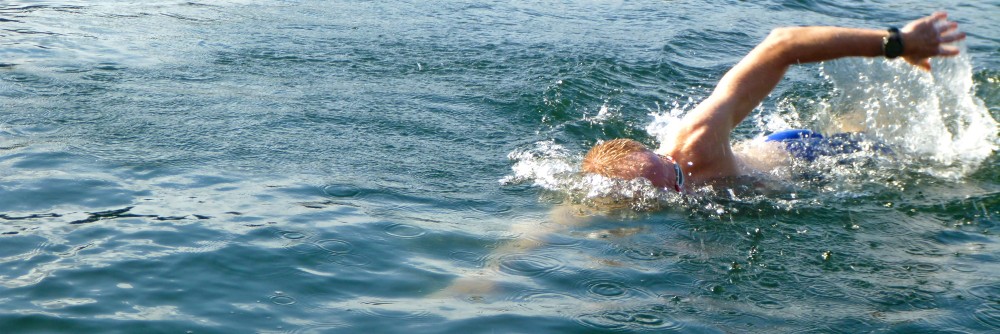
1. What swimming in my underwear taught me about Donald Trump and getting away with it. Funny, but rest assured Briggs YMCA patrons, I do not condone swimming in one’s underwear. That’s the reason the swimming backpack has a second just in case suit and pair of underwear. More spontaneous peeps should adhere to a strict “forget your suit, forget the workout” life philosophy. (Thanks DB.)
2. Why shade is a mark of privilege in Los Angeles. My conservative friends will say this is ridiculous. As someone far too experienced with skin cancer, I respectfully beg to differ.
“As the world warms, the issue of shade has drawn more attention from urban planners. The writer Sam Bloch, in an article in Places Journal this year that focused on Los Angeles, called shade ‘an index of inequality, a requirement for public health, and a mandate for urban planners and designers.'”
3. I learned to play the piano without a piano. Passion personified.
“I was 11 years old when I asked my mum for piano lessons, in 2010. We were in the fallout of the recession and she’d recently been made redundant. She said a polite ‘no’.
That didn’t deter me. I Googled the dimensions of a keyboard, drew the keys on to a piece of paper and stuck it on my desk. I would click notes on an online keyboard and “play” them back on my paper one – keeping the sound they made on the computer in my head. After a while I could hear the notes in my head while pressing the keys on the paper. I spent six months playing scales and chord sequences without touching a real piano. Once my mum saw it wasn’t a fad, she borrowed some money from family and friends, and bought me 10 lessons.”
4. On writing about divorce when you’re still married.
“There’s my husband in the corner, who’s married to someone always wondering just how solid the ground beneath her feet is, and who always reassures her that it’s good. There’s my ring on my finger. There are all my friends, rising up from the ashes of their old marriages and seeking out new bodies to bond to. What is more romantic—more optimistic and life-affirming—than the fact that we know how all of this might end and still we continue to try?”
5. It’s that time of the year when you start wondering what to get your favorite blogger for Christmas.
1. Japanese hotel room costs $1. But there’s a catch.
“Young people nowadays don’t care much about the privacy.”
2. Care about journalism? Maybe you should cancel your newspaper.
“As long as dead-ender subscribers continue to make Alden’s properties profitable, the company will have little incentive to improve its newspapers. The best that most Alden cities can hope for right now is the sale of their newspapers to local or better owners, as has happened to the Salt Lake Tribune, the Berkshire Eagle, and the New Haven Register.”
3. Best non-fiction books of 2019. I used this list to find my next book on North Korea. Ana Fifield, The Great Successor: The Divinely Perfect Destiny of Brilliant Comrade Kim Jong Un.
4. The lies of (Netflix’s) the Irishman. Long story short, Frank Sheeran (Robert DeNiro) made it all up. Apparently never killed anyone. This isn’t an important/contested chapter of US history, so I don’t care, a great film regardless.
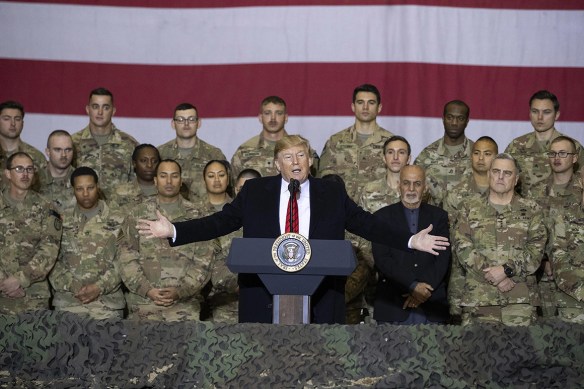
These facial expressions are a little different than those we see among the people positioned behind Trump at his campaign rallies.
They look like they just learned their tour of duties have been extended by an extra Thanksgiving or two.