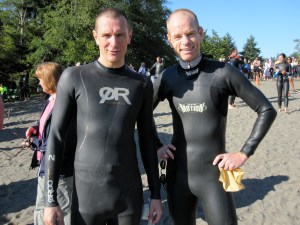
Dear Arne and Obama

Dear Arne and Obama,

Read you want to extend the traditional 180 day, 1,146 hour school year because “Young people in other countries are going to school, 25, 30 percent longer than our students here and the challenges of a new century demand more time in the classroom.”  That begs these questions:

• Why do kids in the Asian countries that outscore U.S. students on math and science tests—Singapore, Taiwan, Japan, and Hong Kong—spend fewer total hours in school than U.S. students?

• If you wanted to learn how to play golf, would you rather spend ten hours on the range with me or five with Tiger Woods? When it comes to your children, would you rather send them to a “traditional 180/1,146 school” with an especially strong faculty or a school with an ordinary faculty and an amped up calendar? Is extending the school year more important than improving instructional quality?

• What good would filling your car’s tank do every morning if it had a leak? The leak is wasted time in the form of teachers who are poor classroom managers and schools that allow endless interruptions to instructional time. Is extending the school year more important than figuring out how best to maximize the time currently available?

• You don’t expect teachers to work 25-30% more without an equivalent increase in salary do you? In a state like California, where’s the extra money for increasing instructional time going to come from?

• You have a vision of “schools as the heart of the community.” What about the argument that the family should be the heart of the community? Granted, many families are struggling and would benefit from excellent schools, but at what point does government programming in the form of more comprehensive public schools usurp what has traditionally been the primary responsibility of parents?

• Why would increased instructional time, independent of serious curriculum reform, better prepare students for the “challenges of a new century?”

Sincerely,

Ron

p.s. Would love to play pick up bball the next time I’m in town.
Week that Was—9/21-9/27

9/21 M T W R F SA SU Total
S 3,000

1k p/b 15:07

600k/d,

500 7:37

8x100im:55

100,2×50,4×25 100cd

2,000

1k p/b, 300k/d,

9×100

every3rdim

on 1:45

5,000
C 40

1,087’ 19.6

20 19.2 517′ 60
R 6.7

track 6:33, 4:46, 3:10

7.2 56:56 10.2 1:22 24

S—Sluggish start to R morn, salavage workout at PLU.

C—Didn’t capitalize on beautiful weekend even though the 10 day forecast is bad. Essay grading wasn’t the problem, procrastinating was. Flipped between golf and Mad Men when I should have been grading. Went hard for 1:02 on Su night to salavage day, weekend, week.

R—First “track” workout in a while. Lance once again shattered the field with just over a mile left on Sa. Should have saved it for Stanford.

Deep-seated Fear

We’re reading Unequal Childhoods by Annette Lareau in my Soc of Ed class. In the book, her grad students and her report on their findings from having carefully studied several middle, working class, and poor families. The vignettes are centered upon each family’s nine or ten year old child.

She contends that middle class parents practice “concerted cultivation” by which she means they consciously supplement their children’s schooling through numerous extracurricular activities. In contrast, working class and poor families aren’t nearly as “child-centered”. Instead, they let their kids informally play with peers and rely upon, what she terms, the “accomplishment of natural growth”.

Lareau argues there are advantages and disadvantages to both approaches. I agree with a few of my students who have suggested the best approach is probably something in between.

When reading Lareau I can’t help thinking about the parenting approach L and I have taken over the past 17 years. I think we’ve made a good team which is another way of saying I’m proud of the young women our daughters have become.

But Lareau’s analysis has also got me thinking about my childhood. My parents were middle class when I was 9 or 10, but they took more of an “accomplishment of natural growth” approach than a “concerted cultivation” one. Maybe in part because I was the fourth of four, but I don’t think birth order was as significant a variable as the larger ethos of the time.

Even though the Vietnam War was raging (I iced-skated at Kent State once a week and was surprised to see the downtown burned down on one trip to the rink) and the counter-cultural revolution was in full bloom, parents didn’t feel they had to keep an eye on their children all the time.

I spent my summers biking a mile and a half (clubs on handlebars) on fairly busy roads to the nearby nine hole par-3 golf course and Olympic-sized outdoor pool. One summer my friends and I set up a schedule where I taught golf on M-W-F and they taught swimming and tennis Tu-Th.

I played organized baseball, but everything else was “pick up” in the hood.

Flash forward to a swim-meet conversation I had with a friend last week. The more she talked the more obvious it was that she’s afraid for her daughter. Among other revealing statements, she confessed, “I’m just so glad it’s a closed campus.”

Contrast her with my sissy who let her then 17 year old drive across several states with friends one summer. Throw in a ski boat, cabin, and I think boys for good measure. I remember asking her, “Are you crazy?” To which she replied, “She’s never given me a reason not to trust her.” Trip went off without a hitch.

My guess is my friend is far more typical than my sis.

The question is, why? How much of it has to do with nonstop national media coverage of horrific abductions and/or murders? Unlike my sister, maybe my friend spends her evenings watching those handful of cable television channels that cover (and sensationalize) crime nonstop. Is Nancy Grace to blame?

Negligent parents deserve criticism, but why don’t we challenge the increasing number of overprotective , fearful parents, to consider the costs of their sometimes obvious overcompensating?

Week that Was—9/14-9/20

9/14 M T W R F SA SU Total
S 3,000

1k 15:38

2 500’s 7:24

600 kick/drill

6x100im

1:40’s on 2

100 c.d.

3,000

1k 15:32

2 500’s 7:24

300 kick/drill

8x100im

1:40’s on 2

200 c.d

6,000
C 41 team 63 nice 104 √
R 7.5 57:30 6.8 54 10.3 1:20:33 24.5 √

S: Basic week. Nothing spectacular unless you count the comment made by a woman I shared a lane with who said my butterfly looked great. Wait, was she hitting on me?

C: Feel good right now. Should have entered the Vuelta after all. Again nothing spectacular, but a respectable late summer/early fall week. Line of the week, from Lance as he went around me, “BYRNES, YOU”RE BLOCKING AGAIN!” And that was before the Huskies beat the Trojans. Now he’ll be completely insufferable.

R: Routine week. Detect a pattern? Beautiful morning running in mid-September in the Pacific Northwest. Mid-50’s, mostly clear, perfect.

David Brooks. . . It’s Not About Race

Somewhere along the line, over the last five or so years, David Brooks became our national political analyst. I read him this morning in the New York Times, I listened to him on National Public Radio while making dinner, and in short order I’ll watch him on PBS’s NewsHour. The DB trifecta.

Unlike most of his NYT readers, I like Brooks’ work, which doesn’t mean I always agree with him. Today’s commentary wasn’t his finest moment. Before ripping him, I acknowledge it’s impossible to be lucid, let alone insightful, perceptive, and provocative a few times a week in print and several times a week on air.

Maybe when it comes to our NPA, we’ve reached a point of diminishing returns. In today’s essay he reads way too much into his anecdote of white tea party protestors eating at an African American family reunion.

I’m supposed to find more meaning in Brook’s mid-jog Beltway anecdote than the analysis of numerous African-American and other analysts who cogently argue recent events convincingly illustrate race still clearly matters?

David, beware the “Tom Friedman effect”. Friedman, Brook’s colleague at the Times and a Pulitzer prize winning author suffers from what might be referred to as an “entrenched elite echo chamber”.

Friedman travels the world reporting on geo-politics and writing books about all things global. I’ve read him closely and concluded he’s almost completely clueless about ordinary people’s lives in the places he travels to and reports from because he almost never comes into contact with ordinary citizens in any substantive way. He almost exclusively references elites, favoring business and political heavyweights. Sometimes he’ll quote his cab driver in a strained stab at psuedo-populism.

Here’s how I suspect the entrenched elite echo chamber evolves: 1) grow up in a privileged family; 2A) attend elite K-12 schools; 2B) pick up a few degrees at highly selective colleges and universities with a majority of people from privileged families that attended elite schools and 2C) participate in extracurricular activities with other elites; 3A) enter a profession which pays well with 3B) a majority of people from similarly privileged backgrounds; 4A) move into a mostly white, well-to-do neighborhood; 4B) form friendships with neighbors whose kids attend elite schools and participate in the same extracurricular activities; 4C) attend the same kid’s activities and dinner parties with the parents of your children’s friends in the same economically homogenous neighborhood. 5) Do everything possible to get kids into highly selective colleges and universities. 6) Repeat.

I’m not immune from the echo chamber although it’s probably not quite as elite as DB’s and TF’s. My neighborhood has some cultural, but minimal, economic diversity. In all honesty, I’m not friends with many working class or poor people; consequently, I can’t pretend to understand them.

By acknowledging those two things I’m not quite as susceptible to the “Tom Friedman” effect.

When Race Matters

Thanks Ta-Nehisi Coates for what in my opinion was the most perceptive thing I read on last month’s Gates-Crowley-Obama brouhaha. I know many feel it was over-reported then and it feels like ancient history now, but his distinction between disproportionate and majority is an especially important insight. Finishes strong too in the last two paragraphs.

I’m Racist

In the mid 90’s I was enjoying teaching at a southern liberal arts college that’s a few miles from where the first Woolworths food counter was desegrated as a result of carefully planned, courageous sit-ins by North Carolina A&T students.

A few college leaders decided it was time for us to address underlying racial problems between people both on and off campus. As part of the process “diversity training” required everyone to begin by admitting they were racist. I vividly remember that being a non-starter for some of my southern white colleagues.

Fast forward to this week and former President Carter’s assertion that Congressman Wilson’s “You lie” midway through President Obama’s health care speech was racist in nature. The right immediately countered that Wilson’s outburst and related Republican anger is explained solely by policy differences.

I wonder what lead diversity training experts to require diversity training participants to begin by publicly confessing racism. I suspect the more racist a person is the less inclined they are to acknowledge it. So as the right’s protests against Carter’s allegations grow more vehement, the more correct I think he is. Put differently, thou protest too stridently.

So which way out of this very human, racism-denial dynamic? What if we agree to talk about race and class differences through more subtle, nuanced starting points like “I have preconceived notions of other groups many which are probably inaccurate.” Or “I overgeneralize too much based upon my own limited life experience.” Or “I assume negative things about some groups of people too quickly.”

In the end, I agree with Carter that a relatively small minority of whites don’t think an African-American is qualified to be President of the United States, and consequently, they question President Obama’s legitimacy.

More importantly, I’m deferring to thoughtful African-American citizens making the same argument based upon all numerous Hitler comparisons from a few weeks ago, the “How dare Obama give a ‘back-to-school’speech to my kids” hysteria, and the repeated condemnations of socialism and the related questioning of Obama’s birth certificate.

I suspect that for maybe ten percent of whites the fact that an African-American convincingly was elected to the highest political position in the land is disorienting and disturbing.

I don’t expect former President Carter’s statement or these words to convince anyone that racism is a contributing factor to these recent events. In fact, I expect Congressman Wilson, the gun-toting Hitler holding sign people, the conservative parents who threatened to pull their children from school, and more radical elements of the right wing to continue to insist that they don’t have any racist bones in their bodies.

Obama’s “Back to School” speech

Liked it, but found his repeated references to country somewhat perplexing.

His personal story is inspiring and it’s great he challenged students to take advantage of the educational opportunities provided them. Can’t argue with his thesis, that many students face obstacles and that becoming well educated requires discipline and hard work, there are no short cuts.

I suspect he persevered more because his mom demanded excellence than for love of country. In fact, some of his most formative years weren’t even spent in the U.S.

His repeated references to country make me wonder if there’s been a resurgence of nationalism among this generation’s K-12 students that I’m unaware of. I can’t imagine all of the “do it for your country” references resonated with many ninth graders just starting high school, let alone first graders starting elementary school, or sixth graders starting middle school. “I really don’t want to do my algebra homework tonight dawg, but let’s turn off the  t.v. and knock it out for the old red, white, and blue.”

I would have emphasized doing well in school because each of us has great potential to make a positive difference in our communities and the larger world. “Country” is more abstract than community. Also, the most pressing 21st century challenges are transnational in nature so developing global perspectives is critical.

Put differently, had I written the speech for him, I would have gone smaller and larger.

Closer to home, in my compulsory back-to-school speech at dinner tonight, I emphasized the importance of getting off to a good start in high school in order to have a choice of many different colleges, and ultimately, many different interesting, challenging, meaningful careers. My hope is my ninth grader is developing a strong social conscience, is cognizant of her privilege more specifically, and realizes that a “good” college education should help her make even greater contributions to whatever corner of her community or world she sinks her roots into.

Week that Was—9/7-9/13

9/7 Mnewshoes T W R F SA SU Total
S 3,000

500’s 7:07,

7:15

1kpb 14:48

1,600

400 w.u.

4,600

√+

C 40

1,700’

19.4

9 29 78 √+
R

9.2 1:11:30

6.7 52:45 1.2 5

.7 w.u.

23 √

S: Pushed on T which set me up for a good swim on SA. Had planned to go short and light on R, but opted to ride/run short and light. Short week but a √+ because of the solid race swim.

C: Also rode hard on T evening. Short week but a √+ because of the tri course p.r.

R: Took advantage of Labor Day to front-load before pseudo-taper. Decent race run.

Nearing the end of cycling season here in the PNW so those miles will plummet.

Race Report. . . Woot Woot!

The breakfast. Wonderful strawberry/banana smoothy, and a bit later, a chocolate Powerbar. A bit of Infinit mixed in.

The swim. Felt a little pressure. Less from the Cutter Battle Royale, more from my lady friend who said she wanted to see me exit the water first. Torched it. Smallish geezer wave of about 40 people and it’s never a strong swim crowd so I start in the front. Picked an absolutely perfect line and sighted best ever. First time in my life I didn’t swim an extra meter. Saw several people to my right on the inside where I’m usually stuck. I was stronger and had a better line so ended up in front from early on. Loved it, completely open water, like I was by myself in my “home” lake. Started to swim into the previous wave about third through, but that wasn’t a problem since they were fairly spread out and a bit off-line. Never really broke my cadence and hit the shore with a solid 30-40 second lead on the second geez. Tossed cap and goggles to my lady friend and began 200 yard run to bike transition. Last few years I’ve been putting shoes on for the semi-rough run up which meant watching a train of people pass me after pulling them through the swim. Decided to streamline things this year. Sensitive dogs held up just fine.

Swim to bike transition. Sucked as usual. Gave everyone about 45 seconds. Fought to get the wetsuit over my calves despite the Bodyglide, put socks on (sensitive dogs) which few do, couldn’t get helmet strap buckled. Comedy of errors. Still exited the park in the lead and held it for a few miles.

The bike. I rode well. Dropped over two minutes from last year’s personal best and averaged 21.2 mph. Got passed by about six-seven guys over the thirty miles, but two were working together, so I’m not counting them even though the race officials consciously chose not to enforce the drafting rules. All of them were on tri-specific bikes with serious race wheels. Not sure how much time I give up on my road bike. I don’t even use aero clip-ons. Got passed for the last time around mile 22 and the timing was perfect. I went with him, sitting about 50 meters back, working harder than I otherwise would have. I was a bit worried I was working too hard, but they shortened the run to 4.3 miles and I figured I could still run for 30+ minutes.

Bike to run transition. Sucked as usual. Gave everyone a gift of about 20-30 seconds. Don’t have speed laces so it takes a while to put the rabbit’s ears into the holes. Lower back was tight, as were my hammies, heart rate was way too high, so I wasn’t in a great frame of mind at the start of the run. Took the first downhill at about three-quarters of a mile to get the h.r. back down to a manageable level. Run was fairly uneventful until my right hammie flared at mile 4. Had to stop and stretch it out for about 15 seconds. I had been closing on a 27 year old (who I was ahead of by 9 minutes since he was in wave 1) but wasn’t able to overcome him after stopping to stretch. After getting the right hammie to work, left quad started to go. Managed to hold it together to the finish. A maximum effort.

Here’s the link to the results.

I have to decide whether to commit to racing more often and leveling the field by purchasing a triathlon bike and race wheels. Not terribly motivated to commit more time/energy to the sport. I’d actually like to talk to a sports psychologist about it if anyone has a recommendation.

In related news, Lance swam, rode, and ran hard, but didn’t have his best day. The old man made “the pass” in the middle of the run deep in the woods where his kids couldn’t see it. I felt for him because he was discouraged by his results. But it was fun hanging out with his family afterwards and watching his kids play with one another like a litter of puppies. From the talk on the way home, I know he’ll keep things in perspective. He knows his family’s well being is far more important than how fast he swims/bikes/runs. The best part of winning the CBR. . . he didn’t call me old once all afternoon.

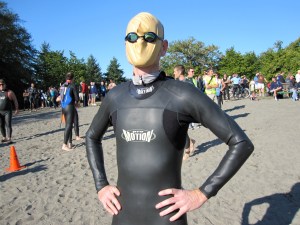
I had my game face on, but didn't want others to know it

I had my game face on, but didn't want others to know it

Washington on the left, UCLA on the right

Washington left, UCLA right