What To Make Of The Secret IRS Files

A week ago, ProPublica, an independent, non-profit newsroom that produces investigative journalism in the public interest showed how the wealthiest Americans pay little in income tax compared to their wealth in “The Secret IRS Files: Trove of Never-Before-Seen Records Reveal How the Wealthiest Avoid Income Tax”.

Pro big business libertarians were outraged at ProPublica’s decision to release private tax information of people who, in their view, have contributed disproportionately to the public good.

The extremely well written report left many others shocked by the findings and gleeful that the billionaire class was exposed.

Long story short, most Americans pay 14% of their income in taxes, billionaires pay 3+% on average. That’s because we tax income and not wealth and billionaire’s wealth grows much, much faster than their income.

Everyone concedes that the highlighted billionaires haven’t done anything illegal, which leaves many wanting to make our tax system much more progressive.

A few thoughts:

  1. As long as we tax income and let wealth slide, the Great Tax Divide will only widen. At some point, billionaires’ physical safety may very well be threatened. It is in their self-interest that we have a more egalitarian society. Therefore, it is in their interest to pay more in taxes.
  2. We need to invest a whole lot more in the Internal Revenue Service. Specifically, we need more, better trained agents who understand of how the ultra-wealthy avoid taxes sometimes illegally. Right now the ultra-wealthy are emboldened by the ridiculously low rate at which they are audited.
  3. Conservatives often defend things like video surveillance by asking, “Well, what do you have to hide?” In that same spirit, when it comes to personal income taxes, maybe we should go the way of Norway.
  4. Debates about the ethics of ProPublica’s decision-making will continue especially since they’ve said this is just the first of several related reports. As will debates about the implications of the data and related policy questions.

socialism-socialism-socialism

Portland A Year On

From “After a Year of Protests, Portland Is Ready to Move On. But Where?”

People will conclude very different things from this update because as the Torah says, “We see things not as they, but as we are.” Admittedly, it’s dangerous to selectively excerpt from it, but here goes.

“A hardened core of street activists, many of them professing opposition to authority in general, has dug in and shows no signs of going away. (Portland’s mayor, Ted Wheeler, has asked people to stop calling them protesters, but rather what they call themselves: anarchists.) Their numbers are now down to perhaps 25 to 75 on any given night, compared with hundreds in late 2020 and the many thousands who marched last summer in protests after Mr. Floyd’s murder.

But they have shown themselves at times to be violent — one was charged with attempted murder after a Molotov cocktail was thrown at the police — destructive of property and highly adaptable, using social media tools and other strategies to divert the police from the targets they select.

Direct actions are promoted on social media with the phrase ‘No gods, no masters,’ a 19th-century anarchist term that indicates a rejection of all forms of authority. More traditional protesters from Black Lives Matter and other movements who try to curtail violence are now ridiculed as ‘peace police’ by the anarchists, who mostly consist of young, white men.

Demetria Hester, a member of Moms United for Black Lives, continues to push for defunding the police but disagrees with the current call for dismantling the entire political system. “Breaking windows is performative,’ she said. ‘That satisfies them at night, but they don’t have a plan.’

Some prominent Black leaders have been formally distancing themselves, with some calling the anarchists’ rejection of gradual progress just another symbol of privilege that Black people do not have.

‘Being able to protest every night is a white privilege, being able to yell at a police’s face is a white privilege,’ said Gregory McKelvey, a prominent Black organizer who ran the mayoral campaign last year for Mr. Wheeler’s opponent, Sarah Iannarone. ‘Most Black people across the country do everything they can to avoid cops.'”

There is no reason why law abiding, pro-peaceful protest liberals should let 25-75 anarchists confirm Fox viewers’ and Right Wingers’ preconceived notions that all Progressives endorse violent anarchy. “Formal distance” is a start. Prosecute cases of violence and vandalism. Schmidt is striking the right balance.

Paragraph To Ponder—Vax Edition

John Gruber on Philadelphia’s Vax Sweepstakes:

“I really do love the idea of these lotteries and giveaway promotions. It’s innumeracy that leads some people to grossly miscalculate the risks vs. rewards of getting vaccinated, and it’s innumeracy that leads people to play lotteries. Sweepstakes for getting vaccinated put innumeracy to work.”

Be Adventurous, Tell Stories

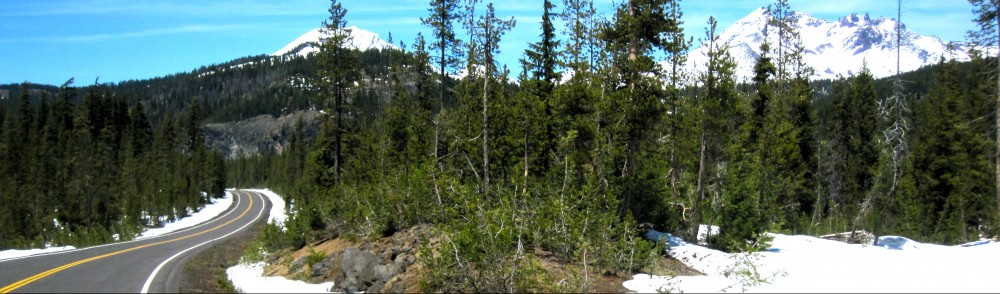
Apologies for going silent during the annual dose of cycling and running in Bend, Oregon last week. Pretty damn selfish, but at least I didn’t kill the Humble Blog like The Former Guy did. Grow a spine Former Guy, if I closed shop every time a “friend” made fun of the Humble Blog, the world would be bereft of all my insights. Cue “friends” making fun again.

Yesterday, I was driving north on Hwy 26 from Bend to Gresham at the same time as a badass woman in a convertible MiniCooper. Like me, she was OLD, but that didn’t stop her from embracing the elements. The air temp was 45F/7C, but we were doing 60mph, so adjust accordingly. She paired a hooded winter jacket with ski gloves.

I would never do that (how could I hear my podcasts; plus, my hair), but I loved that she was. Each time we leap frogged one another, I became more intrigued with her story. What kind of person drives with the top down when it’s hella cold? The answer of course is an adventurous one.

I wanted to meet her because anyone that adventurous has to have a lot of great stories from a life well lived. That’s one of the best things about adventures, besides the actual experience, you end up with a treasure trove of stories that enable others to experience your adventure vicariously, and therefore, for the experience to live on.

But then I ruminated on the fact that she was alone, which of course means she doesn’t get along with other people. I mean, if she did, even just a little, wouldn’t she have someone in the car with her? Someone she’s shared some adventures with?

So, maybe having a beer with her wouldn’t be so great an experience after all.

But then I thought about the fact that apart from Blanca and Rosa, I was alone in my car too. So who am I to judge, maybe I’m not God’s gift to interpersonal relations. So maybe I shouldn’t keep her solo-ness from proposing we stop for a beer in Sandy for some story telling.

But alas, I wasn’t adventurous enough to propose that, so I don’t have any stories to tell about the woman in the convertible MiniCooper.

Don’t be me. Get jabbed, be even more adventurous, meet people, and make stories.

o98m8o4fRsOVfRoDxpg

Osaka Says ‘Au Revoir’ To The French Open

The gist of the story

“Osaka, 23, . . . revealed that she has experienced depression and anxiety since winning her first major at the 2018 US Open and explained that speaking to the media often makes her nervous. She apologized to any media members she had impacted with her decision.

‘I am not a natural public speaker and get huge waves of anxiety before I speak to the world’s media. I get really nervous and find it stressful to always try and engage and give [the media] the best answers I can.'”

This is bigger than the French Open. Osaka is emblematic of a generation that struggles with anxiety disorders and mental health more generally. The question is how are employers going to adapt to their young, often anxious employees? The best course of action will hinge on the type of work. But it starts, in each case, with heightened sensitivity to the issue. 

In Osaka’s case, tennis needs her WAY more than she needs tennis. In 2020, she earned $50 million from tournaments and endorsements*. Osaka preferring Instagram to post-match pressers makes perfect sense because she can control the message and her social anxiety. It was painful watching her squirm under intense questioning about a poor performance in a previous tournament. Professional tennis “powers that be” should start thinking about how athletes can leverage their social media to increase their and their sport’s popularity. The post match presser is analog, social media is digital. Osaka isn’t saying she doesn’t want to interact with fans, she’s saying she just doesn’t want to do it live right after matches. 

When professional tennis comes to ask me what they should do, I will be brief. Always accommodate. 

*I suspect Osaka’s mental health challenges and transparency about them make her an even more popular endorser of products. I also suspect she’d forego many millions for peace of mind.

The Biebs Ditches His Dreads

Before and after pictures and the story here.

The Bieb’s experience highlights how the lines between cultural appreciation and cultural appropriation can be blurry.

Here’s a helpful start in distinguishing between the two.

“Appreciation is when someone seeks to understand and learn about another culture in an effort to broaden their perspective and connect with others cross-culturally. Appropriation on the other hand, is simply taking one aspect of a culture that is not your own and using it for your own personal interest.”

The social media mob immediately decided Bieber was not broadening his perspective or connecting with others cross-culturally, instead he was using his dreads for his own personal interest.

However, even if that assumption was correct, a few minutes of research into the history of dreads would’ve muddied the water considerably:

“One account claims that dreadlocks originated in India (unlike most who cite Egypt as their birth place) with the dreadlocked diety Shiva and his followers. It is likely that this is the spirituality origin of dreadlocks in Indian culture. However, the first archeological proof of people wearing dreadlocks came from Egypt where mummies have been recovered with their dreadlocks still in tact.

Regardless of their origin, dreadlocks have been worn by nearly every culture at some point in time or another. Roman accounts stated that the Celts wore their hair ‘like snakes’. The Germanic tribes and Vikings were also known to wear their hair in dreadlocks. Dreadlocks have been worn by the monks of the Ethiopian Orthodox Tewahedo Church, the Nazarites of Judiasm, Qalandri’s Sufi’s, the Sadhu’s of Hinduism, and the Dervishes of Islam, and many more! There are even strong suggestions that many early Christians wore dreadlocks; most notably Sampson who was said to have seven locks of hair which gave him his inhuman strength.”  Source.

Which makes me wonder, why didn’t JB try to enlighten the mob with a similarly brief history lesson? It’s too bad he opted for hair clippers instead of the teachable moment.

Maybe I should take the baton and grow some dreads. I’ll report on my progress same time next decade.