A new friend I’m enjoying spending time with asked me recently, “Do you go to church? Did you? How were you raised, religiously?”
I can quickly and easily answer those questions. No. Yes. Semi-religiously. But those cryptic responses beg follow up questions, especially, what happened that caused you to stop attending church? But instead of explaining that here, I’m guessing she was most curious about what I believe.
I appreciate the meaning many people find in being active church goers. The way the music, liturgical traditions, friendships, and community service enrich their lives. Organized religion is almost always a net positive.
For me though, the ancient hymns, and too often patriarchal liturgies and prayers, combined with a dearth of opportunities for intentional and democratic small group communication, made church participation less and less compelling post-Covid. I also believe anyone who thinks their own faith tradition is the one and only true one needs to see more of the world.
I am not explaining my thinking to persuade you to think similarly. I do not need you to think similarly to me for me to be secure in my beliefs. I am all for church participation for thee, just not for me. But, as the numbers clearly show, I am not alone in finding transcendence elsewhere.
And although I am dechurched, I believe in the supernatural, more specifically in a holy spirit if you will.
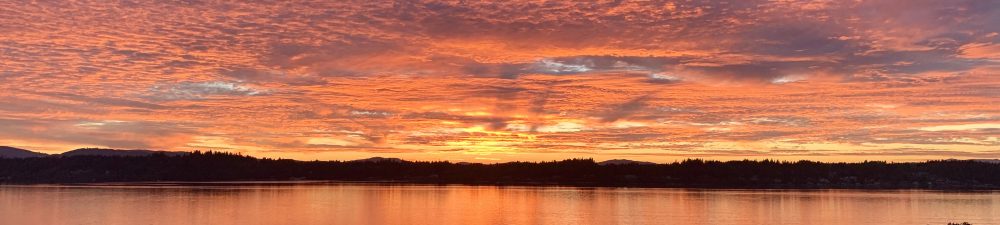
I seek transcendence in three places primarily: nature; the arts; and close interpersonal relationships.
I believe in the Salish Sea, Aspen trees, the Cascades, the Pacific coast, and all of Western Canada.
I believe in words and imagination, and emotions and stories, and how some people combine them in ways, that for me, are truly transcendent. I believe in Ian McEwan, Richard Russo, Joan Didion, and Jonathan Franzen. And I believe in modern dance, painting, and the power of film. Artists convince me, over and over, that things will be okay in the long run.
And I believe in family, the kind that’s based on birth and the kind people thoughtfully cut and paste together over the years. I especially believe in caregivers, like Olga, Abigail, and Fufu, who hold families together.
And I believe in the emerging social scientific consensus that says well-being mostly consists of making close friends and then spending time with them. I believe in the simplicity of that formula.
And I don’t just believe, but know in the depths of my soul that tomorrow is not guaranteed and I cannot afford to put off being in nature, reading ebullient stories, celebrating art, hanging with family and friends, and loving deeply.
 Pressing Pause