
Warren Exits—Patriarchy Remains Undefeated

In 1997 I traveled to China with Guilford College colleagues compliments of the Freeman Foundation. One female sociologist in our group, a firebrand feminist, had never traveled outside of the U.S.

One night we strolled through an open air market. Separately, she and I ended up purchasing some “peasant paintings”, inexpensive, beautiful folk paintings with farming themes done by rural artists. Afterwards, she wanted to know what I had paid for mine. When I told her, she lashed out, “Sexism!”

I couldn’t help but chuckle. I had cut my teeth negotiating with street vendors all over Mexico, Ethiopia, Kenya, and Zimbabwe. I know the song and dance, how to walk away, just slow and far enough for the vendor to come and get me and say my price is okay. She knew nothing of the sort.

Being wise to the ways of patriarchy and misogyny meant she saw sexism around every corner. She’s the exact opposite of my close male friends, whose intelligence I respect, because they discount ANY talk of patriarchy and misogyny when it comes to Elizabeth Warren’s aborted candidacy for the Democratic nomination for President. Never mind that this will the 46th time in a row that we’ve just happened to select male candidates. It’s just a coincidence.

Megan Garber cleverly and cogently explains how patriarchy and misogyny doomed Warren in this piece titled “America Punished Elizabeth Warren For Her Competence”. But when it comes to my close male friends, who tend to be college educated, treat women with respect, and are (mostly) anxious to turn the page on the Trump administration, Garber has a heap of problems getting them to acknowledge that their dislike for Warren had anything to do with patriarchy and misogyny.

Because they are me in China. They think the Garber’s of the world see patriarchy and misogyny where it doesn’t exist. Being blind to it, they are highly skilled at rationalizing their choices. Of course, mens’ worst rationalization is this, “We definitely would’ve elected a woman one of the forty six times if one was as qualified as the men.” Most men’s rationalizations are more subtle and nuanced than that, but almost as pernicious.

Here are Garber’s problems more specifically:

  1. My male friends will choose not to read her piece. It’s exactly twelve paragraphs too long. They will think they know what it alleges, that she’s seeing things that don’t exist, that they’re heard it all before.
  2. Even if they were to defy the odds and read it, they won’t take the time to consider whether it applies to them. They won’t ask, “Was my negative reaction to Warren even in part a result of what Garber argues, that the U.S. still doesn’t know what to make of a woman—in politics, and beyond—who refuses to qualify her success? If so, why am I prone to that line of thinking?”
  3. They won’t ask that because that would require them to consider changes not just in their thinking, but in their behavior. How do you undue thinking of especially competent female candidates negatively anyways?

Were they to truly grapple with how to not penalize women candidates for their competence and ambition, the patriarchy would begin to falter. As Warren’s candidacy illustrated, there’s no risk of that. Yet. Patriarchy remains undefeated.
The Bilingual Brain

A new book by Albert Costa. A paragraph to ponder from Adrian Woolfson’s review:

“Intriguingly, bilingualism appears to slow the rate of progression of Alzheimer’s and can delay the age of dementia onset by up to four years. Nevertheless the benefits of being bilingual may be offset in some individuals by a relative impairment in select areas of linguistic competence. Bilinguals appear to have less efficient access to their lexicon than monolinguals, resulting in more “tip-of-the-tongue” episodes. Bilinguals may also, on average, have smaller vocabularies in both languages. Most provocative, however, is the question of whether bilingualism may modify features of our mental fabric, including those that define our psychology and individuality. Might bilingualism influence our personality, or even our moral systems? Evidence presented by Costa suggests that bilinguals are less egocentric than monolinguals, show more empathy and develop a ‘theory of mind’—as witnessed by their ability to put themselves in the shoes of others—at an earlier age.”

My monolingualism is legion. Nearly two decades ago, our family lived in Chengdu, China for a semester. One day, my mean 5 and 8 year old daughters staged an intervention, forcing me to tell them “how many words I knew in Chinese”. Despite being a grown ass man and it being my third China experience, their vocabulary dwarfed mine. My mostly autobiographical companion book is tentatively titled “The Monolingual Pea Brain”.

A Different Way of Thinking About Older Candidates for President

As humans live longer, Stephen L. Carter argues, we need to redefine “elderly”.

“Reagan, when he won his second term, became the oldest president ever relative to life expectancy, at 88%. This year’s leading Democratic candidates would indeed be older, but not by that much. On Election Day 2020, Bernie Sanders would just have turned 79, and Joe Biden would be just short of 78. For a 78-year-old male in the U.S., life expectancy is about 87.43, according to the Social Security Administration. For a 79-year-old male, the figure is 87.88. This means that Biden, if elected, would be at around 89.2% of his age-adjusted life expectancy; Sanders would be at around 89.9%. Either of them would beat Ronald Reagan’s record of 88% — but just barely.”

Provocative, even compelling argument, but I do not agree with his conclusion in part because he fails to mention Sander’s heart attack. Furthermore, why eliminate the pool by half by eliminating a gender? And then again by half by eliminating middle aged candidates in their physical and mental prime?

Friday Assorted Links

1. The Queer Opposition to Pete Buttigieg, Explained. Masha Gessen explains the two divergent tracks in L.G.B.T. politics:

“One kind of queer politics is rooted in ideas of liberation, revolutionary change, and solidarity. The vision of this politics is a society that is radically changed by many kinds of people fighting many kinds of injustice, a society in which economic, social, political, and sexual relationships have been transformed. The roots of this politics are acknowledged in an open letter authored by a group called Queers Against Pete. (The letter was signed, according to the organizers, by more than two thousand people.) They wrote, ‘We are clear that LGBTQIA people are directly and disproportionately impacted by police violence, incarceration, unaffordable healthcare, homelessness, deportation, and economic inequality among other things.’ The strategy of this brand of politics is to work across differences to bring about change.

The other, more mainstream, and often more visible kind of L.G.B.T. politics aims to erase difference. Its message to straight people is “We are just like you, and all we want is the right to have what you have: marriage, children, a house with a picket fence, and the right to serve in the military.” The vision of this politics is a society in all respects indistinguishable from the one in which we live now, except queer people have successfully and permanently blended in. To be sure, all kinds of queer people have been involved in both kinds of queer politics. But the politics of being “just like you” leaves out the people who cannot or do not want to be just like conventional straight people, whether in appearance or in the way we construct our lives and families.”

I’ll give you one guess on which one is Pete’s track.

2. For more than a year, a violent tow truck war has been raging across the Greater Toronto Area. Damn, I don’t like it when my idealized view of one of my favorite countries is challenged. You’re better than that Canada. Aren’t you?

3. Why Exactly Does Putin Love Bernie? No, it’s not because he’s a socialist.

“. . . helping Sanders helps Trump.”

4. Compassion-based Strategies for Managing Classroom Behavior.

“If you’re assuming the best about the kid, that they want to learn appropriate behavior, they want to be positively connected to you, but they somehow can’t, there’s something in the way. What can you imagine the invisible subtitle is for ‘I don’t care?’

‘For me, the invisible subtitle for ‘I don’t care’ is, Mrs. Dearborn, I really, really care, but I can’t tell you that. Do you care?’

Reading the ‘subtitles,’ as she calls them, has helped Dearborn to stop perceiving misbehavior as disrespect. That doesn’t make her a pushover, she said. It makes her an advocate for the student.

So now when kids say, ‘I don’t care’ to me, I say, ‘That’s OK because I care, and I can care for the both of us right now, so let’s do this.’”

“I can care for the both of us right now.” Beautiful.

5. Mike Pence, who enabled an HIV outbreak in Indiana, will lead US coronavirus response. “Only the best people.”

6. Analyzing the “Big Five” Women at the 2020 US Olympic Marathon Trials. The race is Saturday at 9a PST on NBC. I’m going all in on Jordan Hasay.

Just Say No

From ESPN:

“LOS ANGELES — The widow of Kobe Bryant has sued the owner of the helicopter that crashed in fog and killed her husband and her 13-year-old daughter last month. The wrongful death lawsuit filed by Vanessa Bryant in Los Angeles says the pilot was careless and negligent by flying in cloudy conditions on Jan. 26 and should have aborted the flight. Pilot Ara Zobayan was among the nine people killed in the crash.”

Bryant is probably right, the pilot should’ve aborted the flight. And she may even win. But that doesn’t mean she’s right to sue. Her family does not need the money, so what’s the point? I have a dream that someday, really wealthy people who are wronged say, “I could sue, and I’d probably win, but I’m not going to.”

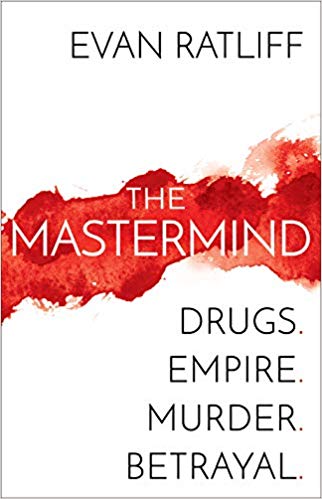
The Mastermind

Evan Ratliff tells the story of “the decade-long quest to bring down Paul Le Roux—the creator of a powerful Internet-enabled cartel who merged the ruthlessness of a drug lord with the technological savvy of a Silicon Valley entrepreneur.”

Paragraph to ponder:

“Some people speculated that his drive was fueled by some submerged pain—his hurt over being adopted, or some other childhood affront for which he was forever exacting revenge on the world. Maybe so. I always suspected that at least a part of the answer dwelled in his life as a programmer. Le Roux had found his place inside code, a universe in which he could bend reality to his will. It seemed to me that he tried to apply the detached logic of software to real life. That’s why the DEA schemes must have appealed to him. ‘Nothing involves emotion for him,’ the former 960 agent put it to me. ‘Everything is a calculation.’ His approach was algorithmic, not moral: Set the program in motion and watch it run.”

Since I’ve watched Breaking Bad and am watching another season of Narcos, I’m kinda an expert on criminality :). Some take-aways.

The poorer the country, the more explicit the corruption tends to be. In my late 20’s, I was in a van in Kenya when our driver was pulled over by a local cop for no reason other than to “make a payment”. The casualness with which he paid the bribe blew my mind. When police and army salaries are super low, it’s relatively easy to co-opt them through regular “payments”. In countries like the Philippines, where most of The Mastermind takes place, when criminals like Le Roux strike it rich—at one point he was making $6m/week—they can bribe local, provincial, and federal police; military officers; lawyers and judges; and key politicians. Then they can really “scale their business up”.

The Mastermind reveals a seriously flawed United States judicial system. As illustrated so poignantly in post 9-11 analysis, inter-agency rivalries are endemic. Not just between the CIA and the FBI, but also between local, state, and federal policing agencies. People with state-wide authority routinely look down on local officials, federal officials look down on everyone. The greater one’s authority, the greater their sense of superiority. Yet, in the end, the Feds made the worst decisions and ensured justice would not be served.

Criminals benefit massively from interagency rivalries because information is treated as a valuable asset that shouldn’t be shared “down” the line with less competent, less trustworthy underlings. And because each agency wants credit for the biggest busts, competitiveness trumps cooperation. Consequently, all the agencies are much less effective than they could be. This persistence of this phenomenon strikes me as a serious failure of modern social science.

If your television viewing sometimes Breaks Bad, you’re down with Narcos, and/or you’re a student of social sciences, I recommend it.

41Yn4cEd46L._SX320_BO1,204,203,200_.jpg


Weekend Assorted Links

1. Nearly all middle school teachers are highly stressed.

“The largest group, 66%, reported high stress and high coping. Nearly one-third of the participants, 28%, reported high stress and low coping. Only 6% of middle school teachers reported low levels of stress and high coping ability.”

2. Eleven minutes: A call from Kobe Bryant. Jayson Reynolds is an exceptional young adult author.

3. The killer(s) on the road: reducing your risk of automotive death.

“If I die in the next 10 years, the most probable ‘murder weapon’ is my vehicle or another vehicle on the road.”

4. All children are gifted—just in different ways.

“I’m sorry, but no school board, no group of parents has the right to label one homogeneous group of children ‘gifted’ based on the criteria established by the parents of those children and then consign the rest of the students to programs for the ‘not gifted’. That’s what happens.”

5. Can this one super-prospect revive the greatest dynasty in sports?

“She’s as good as anybody I’ve seen with the ball in her hands.”

Confusion and Gratitude

I find social media birthday celebrations confusing. Is getting tons of “happy birthday today” messages from Facebook “friends” even a little gratifying? It strikes me as such a weird phenomenon of our modern age that I’m not telling anyone on-line that it’s my birthday today.

Another thing that has me confused. A national coffee chain sent me an email for a free drink or food item today for some reason and I can’t decide what to do because my home lattes are better than theirs and it’s not even close when it comes to my home oatmilk-based oatmeal topped with avocado, blueberries, salted pepitas, and cinnamon. Maybe I’ll flip a coin, sell whatever I get at a discount to someone else in line, and then send that two or three dollars to a moderate Democrat running for president. Give him or her a little boost to get over the top.

Besides confusion, I’m feeling gratitude today for my parents for providing such a loving base on which to build an amazing life. I miss them. And gratitude, as well, for the Good wife, daughters, friends, and people who regularly stop by the humble blog.