
Two Roads Diverge—The Conclusion

The conclusion—Our children and the fork.

What should our children do to increase their odds of enjoying some semblance of economic security?

For the last several years I’ve been preaching a liberal arts education gospel. The message has been that the key to success in our increasingly competitive knowledge economy is a rigorous higher education that develops analytical, writing, critical thinking, and related intellectual skills. Then this mind-blowing article appeared in the New York Times—Armies of Expensive Lawyers, Replaced by Cheaper Software.

Fork anxiety alert.

E-discovery companies like Cataphora are forcing me to rethink many of my assumptions. In terms of employment success, a college education, even a law degree, guarantees less and less. Instead of starting over with a brand new gospel, I need to supplement my call for a rigorous college education with additional strategies.

One overlooked strategy, self-sufficiency, is beautifully described in the book Little Heathens. Each of our children have to decide whether to follow our model of pursuing competence or expertise in one particular area, and then trading that competence or expertise into money through long work hours, and then handing significant percentages of the money over to others for a litany of products and services including, but not limited to: growing and preparing food; making and cleaning clothes; entertainment; education, hair and related personal care; pet grooming and care; cleaning and repairing bicycles, cars, and homes; tax preparation; counseling and medical care; yard work; personal trainers and life coaches.

Rightly or wrongly, most modern peeps have convinced themselves that their time is worth more than it costs to pay for those types of products and services. But the fork will change that equation for some of our children. What if our children experience under or unemployment, what if their wages can’t keep pace with inflation? What if they have more time than money? Although no one is talking about it, self-sufficiency is a common sense insurance policy in an increasingly unpredictable woods.

In addition to greater self-sufficiency, young people who develop a specific craft or trade will enjoy more economic security because they’ll be able to use their craft or trade to supplement their income or weather periods of under or unemployment. If artificial intelligence or related technological breakthroughs make them redundant for six months or a year, every four or five years over the the course of their adult working lives, my daughters could teach violin to Tiger Mother offspring. Put all of your economic security eggs in the intellectual skills basket at your own risk. Teach your children to lifeguard or teach swimming, to cut hair, to repair bicycles, to landscape, to design web pages, to care for and tutor younger children.

Also, and we’re nearing the end of our journey, agitate and advocate for “life-skills” in your children’s school curricula. We have to push back against the President’s and high profile business leaders’ insistence that all we need to negotiate the fork is marked improvement in math and science education. Truth be told, I’m not very self-sufficient, more handsome than handy, so for my daughters to become meaningfully self-sufficient, I need the help of teachers and other adults in the community.

Where’s the room in the curriculum? Not sure, but independent, Waldorf, and other alternative schools often find room for life skills. The publics would be well advised to turn to their smaller, funkier brethren for guidance. And since I don’t expect that to happen, parents better put their heads together to figure out how to help their little heathens become more self-sufficient.

And to borrow from Sue Sylvester (I shudder if you have adolescent children and don’t get that reference), that’s how Ron sees it.

Two Roads Diverge 2

Part 2 of 3—The left, the President, and my evolving thoughts on the fork.

The left attributes stagnant wages, high unemployment, and heightened economic scarcity to conservative Republican ideology, unregulated Wall Street bankers, and all-powerful corporations. The U.S., the left contends, is not a meritocracy. Within our laissez-faire free-market capitalist economy the wealthy have many more opportunities to advance than the poor; consequently, the rich get richer and the poor poorer. Increasing the wealthy’s taxes will reduce inequality, help more people find jobs and pay for health insurance, and give the majority of people with ordinary means a fighting chance.

The right, because they insist our economic problems can be fixed by a kind of American exceptionalism positive thinking, is failing to provide any kind of realistic roadmap that might help us negotiate the fork and create genuine, lasting forward momentum.

The left, because they insist it’s impossible for individuals and families to create any kind of economic security because the gap between the “haves” and “have-nots” is so wide, is also failing to provide a hopeful, credible, compelling roadmap.

With an eye towards November 2012, the President tends to split the difference and articulates an American exceptionalism-lite that he couples with an unfailing belief that a renaissance in math and science education will help us reclaim our role as the world’s undisputed economic hegemon.

Neither political party’s platform offers any assurance that nearly enough decent paying jobs will be created, we’ll transition to alternative energy sources, health insurance and Medicaid will be affordable, and anyone but the already well-to-do will enjoy prosperity.

Despite the understandable fear and foreboding, I’m finding more inspiration from ordinary people living humble, simple, selfless lives, than from any political figure, party, or platform. People unmoved by materialism. People attuned to the limits of time. People who identify more as writers, artists, peacemakers, ecologists, and global citizens, than consumers. People relatively unperturbed by the fork because they’re on simpler pathways.

The wrap against minimalism or voluntary simplicity is that it’s boring. Sometimes minimalists deserve criticism for a one-size fits all mentality, but not for being boring. What’s boring is subjective. For me, inexpensive things like writing, preparing and enjoying a healthy meal with a few family members or friends, reading a good book, seeing an excellent film, working out, and watching basketball with the labradude are sufficiently exciting. I’m cool with other people thinking those things are uninteresting.

The natural reaction to our tough economic times and the fork in the woods is to be disappointed with having to live with less. On the other hand, it could be a catalyst for rethinking our taken for granted consumerist-materialist lifestyles.

Some will conclude, “An out-of-touch sentence that only a person who doesn’t have to live month-to-month or worry about basic needs could write.” I get that. I’m beyond fortunate. I’m not sharing my evolving thinking to convince anyone to give up anything, I just hope my musings about how much is enough and what’s most important resonates with some readers.

There’s a big difference between “voluntary simplicity” and “forced frugality”. A forced frugality mentality, “damn we can’t afford anything anymore,” breeds ever-increasing resignation and frustration. In contrast, a voluntary simplicity orientation that prioritizes health, interpersonal relationships, and service is liberating because not as much money is required, meaning not as many hours or years of work may be needed.

This reorientation is similar to my learning to eat more healthily. Initially, I didn’t particularly care for low sugar, non-fat, veggie and fruit based meals, but ten years later I prefer them. I don’t have to force myself to eat healthily, I prefer it. I don’t have to force myself to live relatively simply (by 2011 North American standards), I prefer it.

Wherever this non-work, simplicity journey takes me, I doubt I’ll ever reach a state of buddhist nirvana. I like to travel, I like cars, carbon fiber bicycles, nice hotels, and massage “therapy” too much. And not too proud to admit, I even like Million Dollar Listing on Bravo. Ample room for growth.

Next—The conclusion—Our children and the fork.

Two Roads Diverge

The first in a week-long, three-part series.

I’m doing some reorienting. Prioritizing my non-work identities and relationships. Mid-life crisis? Don’t think so, but time will tell. Check back in a year or two from now. Lao Tzu said, “The journey of a thousand miles begins with a single step.” I’m taking the first steps of a journey whose outcome is unknown.

So what follows, like my identity more generally, is a work in progress. I don’t expect anyone to agree with everything. Or anything.

U.S. citizens are at a fork in the woods. A fork formed by a decline in manufacturing, technology-based automation, slower economic growth, and heightened economic scarcity.

More details here, although you don’t need Tyler Cowen or me to tell you about what you’re experiencing day-to-day.

We talk at length about the trees in the woods—fast rising gas prices, exorbitant health insurance premiums and college costs, and declining home values —but hardly at all about what lifestyles are most sustainable and meaningful.

The fork has prompted a radical shift in thinking. In the U.S., throughout the 20th century, parents thought, “I expect my children to live a better, more comfortable life than me.” Today the default is “I worry and wonder whether my children will be able to live as well and comfortably as me.”

Two roads diverged in a wood and I—I worried and wondered.

Economic security seems outside of our control. The economy is in constant flux and no job is secure. We can’t get politicians to think beyond their re-election and balance our state or national budgets. We can’t get them to stop fighting distant wars. We can’t slow China’s and India’s growth. We can’t reduce our dependence on oil. We can’t get consumers to stop shopping at Wal-Mart and other big boxes. We can’t stop companies from outsourcing jobs. And there’s seemingly no way to improve parenting, fix schools, or reduce inequality.

The fork is doubly tough for adults responsible for young people. They worry, what does their future hold? “I’m worried for myself and I’m worried for you.”

If we stop or even slow down, we may be overcome with fear for the future and overwhelmed with anxiety; therefore, we fill our days with work, shopping, entertainment, new apps, Facebook.

I wouldn’t be able to write this sentence if I weren’t extremely privileged, but I wonder if these tough economic times are an opportunity to slow down and think through more carefully how we want to live, to find ways to live more sustainable, meaningful lives. Or maybe, since lifestyle choices are intensely personal, I should say, how I want to live, to find ways for me to live a more sustainable, meaningful life.

Before fleshing out those concepts, consider the perspectives of the political left and right who have distinct opinions about the causes and consequences of the fork. Competing voices in the woods if you will. And yes, I’m conscious I’m overgeneralizing. Sometimes when you’re painting, you just grab the broad brush.

The right interprets economic history and life more generally through the lens of American exceptionalism. They’re more anxious about accelerating ethnic diversity than they are global economic restructuring. They refuse to acknowledge our relative decline and are nostalgic for the second half of the 20th century when the U.S.’s economic, military, and political advantages were much more obvious. They’re in serious denial, but if you tell them that they’ll label you anti-American, because in their worldview, American exceptionalism is self-evident.

Stagnant wages and high unemployment aren’t a result of technology-based automation, economic globalization, or our consumer choices. They’re temporary anomalies. Small bumps in the road. If the Kenyan-born, Muslim president (okay, that was uncalled for) would just embrace American exceptionalism, reduce the government to a fourth of its current size and lower taxes by half, we’d quickly reclaim our rightful role as the world’s unquestioned economic superpower. Then we could pick up living large again.

Wednesday—Part 2 of 3—The left, the President, and my evolving thoughts on the fork.

College Tuition Inflation

“Dear Parents” started the letter that arrived today from Eighteen’s college president. “To assist you in your planning, I am writing to provide you with information about fees for the coming year.”

Thanks.

A few short paragraphs in the prez pats himself on the back. “The comprehensive fee increase for the coming year (3.97%) is the second-lowest in a decade.” That makes me feel a lot better, except inflation, in 2010 in the U.S., was 2.3%. Why not just write, “We’ve hosed families worse than this in eight of the previous ten years.”

“In the months ahead,” he added, “we will continue to explore routes to reduce operational expenses while preserving the academic excellence for which Exorbitantly Priced College is justly known.” A promising sentence that deserves another like this, “I will write again during the summer to update you on the outcome of those discussions and exactly how we are going to reduce operational expenses while preserving academic excellence.”

Continue to explore. Classic higher ed speak.

One wonders, when it comes to comprehensive fees at private liberal arts colleges, is there a tipping point?

Suburban Life(r) Postscript

Since waxing philosophic on the downsides of suburbia, I’ve been beating myself up for a lack of contentment. Guess I need to learn the art of self compassion.

Home shopping on the Northwest Multiple Listing Service helps me appreciate three things about our home including:

1) High ceilings. We’re a tall people and so it’s really nice to have extra headroom. And you never know when you’ll be overcome with the urge to work on your golf swing. Still not sure how I once managed to get smoothie remnants on the kitchen ceiling. Note to self, don’t stick the wooden spoon in too far when at full throttle.

2) Considerably more natural light than most homes. After the last five months, all I can say is, damn this weather. Sorry bro.

3) Best of all, the woods behind our house that were supposed to be developed before the 2008 economic meltdown. Everyday, and usually stark naked, I stare into the woods and think, what a beautiful, positive consequence of the terrible recession. Just the trees and me naturally. Somewhere the people who almost ended up living where our woods are located are thinking, “Not having to see Ron in the buff, what a beautiful, positive consequence.”

Looking ahead. Friday’s post—March Madness and the Miami Heat.

iPad 2

I’m an AAPL investor and admitted fanboy, but the most concise and sober review I heard Wednesday (didn’t catch the BBC tech reporter’s name) went as follows:

“Not that impressed. It’s faster, but no-one has complained about the speed. It’s thinner, but no one has complained it’s too thick. It takes pictures, but cell phones have been doing that for years. It comes in black and white.”

The most obvious sign it’s an incremental improvement—some of the most closely listened to reviewers are most impressed with the “Smart Cover”.

AAPL marketing is a sight to behold though. If they wanted to, they could get me elected president of the U.S. They make it sound as if we should measure time in pre and post-iPad terms. You think it’s 2011 A.D. when in actuality it’s 2 iPad.

I’m a little hurt they haven’t capitalized on my story yet. My iPad use varies depending upon whether I’m reading an e-book on it and or not. Normally, when I’m not, I use it between 5:30 and 5:35a.m. to check the weather, local news headlines, blog stats, and email before popping in the contacts and pounding the pavement.

Slick and convenient. Hardly life changing.


Forego College?

Consider the recent higher ed news. Absent remediation, most high school graduates are unlikely to succeed in college. Too many college students aren’t learning much. Tuition inflation continues at a faster pace than even healthcare insurance and total student debt now exceeds credit card debt.

At the risk of simplifying things, there are two types of eighteen year olds (and people more generally): risk-averse single hitters who plan on working for someone else and entrepreneurial power hitters not afraid of starting a biz and possibly whiffing.

Neither group is inherently better than the other, but a college degree makes more sense for the first group since most livable wage paying organizations and businesses require at least one. One hopes the single hitters understand a college degree doesn’t guarantee nearly as much as it did a few decades ago. Like a miler standing stationary at the firing of a starter’s gun, they’re paying considerable money up front to increase their odds of future employment success as illustrated by this dramatic graphic.

Of course there are many intangible benefits to a good college education—such as greater independence and self understanding—but those things aren’t necessarily exclusive to those populating leafy college campuses.

Given the escalating costs of higher education and the unprecedented internet-based accessibility to knowledge and people around the world, why aren’t more ambitious, talented, smart, hardworking, risk-oriented, entrepreneurial eighteen year olds using the time right after high school to refine their knowledge and skills on their own in order to create new niches within the economy? Why isn’t there more of an Abraham Lincoln or Mark Cuban-like autodidacticism at work today?

Is it because everyone is afraid to go college-less first, or because parents fear their childrens’ short-term business failures and long-term economic vulnerability, or is something else at work?

Two Worlds

One world is inhabited by 73-year-old Richard Stoker, his wife Jane, his dogs, and his new neighbors in their Miami, FL luxury condominium development.

Stoker was featured in a recent  WSJ article on an increasing number of investors purchasing homes with cash in the belief prices have bottomed out.

“The prices were just irresistible,” Stoker said. “Florida’s been hit pretty hard.”

The article continues:

To pay the $1.8 million, $1.2 million and $1 million prices on the condos, Mr. Stoker and his wife, Jane, cashed out of some financial investments and sold a Roy Lichtenstein painting and an Alexander Calder mobile. Since mid-October, Canyon Ranch in Miami Beach, the development Mr. Stoker bought into, has sold 35 units, with a third of the buyers from overseas and many others retiring from the Northeast. . . . The Stokers have a home in Potomac, Md., but spend most of the year in Florida. Mr. Stoker doesn’t plan to rent out any of his new properties, saying he and his wife will live in one with two dogs, his son might live in another and the third will house an older dog and guests.

What are we to make of Stoker and his world? We don’t have many details, but in 2011 America, here’s what I think I’m supposed to conclude. “Good on you. Probably worked hard your whole life and played by the rules. Enjoy the spoils of your labors.” Besides, who knows, maybe he’s an inspiring philanthropist who has given similar amounts of money to good causes.

But I’m tired of the status quo, so instead of giving him a pass and congratulating him, I have some questions.

What kind of person agrees to participate in an article like that under their own free will? What kind of person admits to the world that they bought a $1m condo for their dog? Why are there only two socially acceptable responses to conspicuous consumption in the U.S.—laissez faire nonchalance or awe? Why aren’t we embarrassed for the Stokers of the world when they publicly flaunt their wealth? Why don’t we freeze them out?

Costco’s Math Smoke and Mirrors

203435b.jpg (300×300)

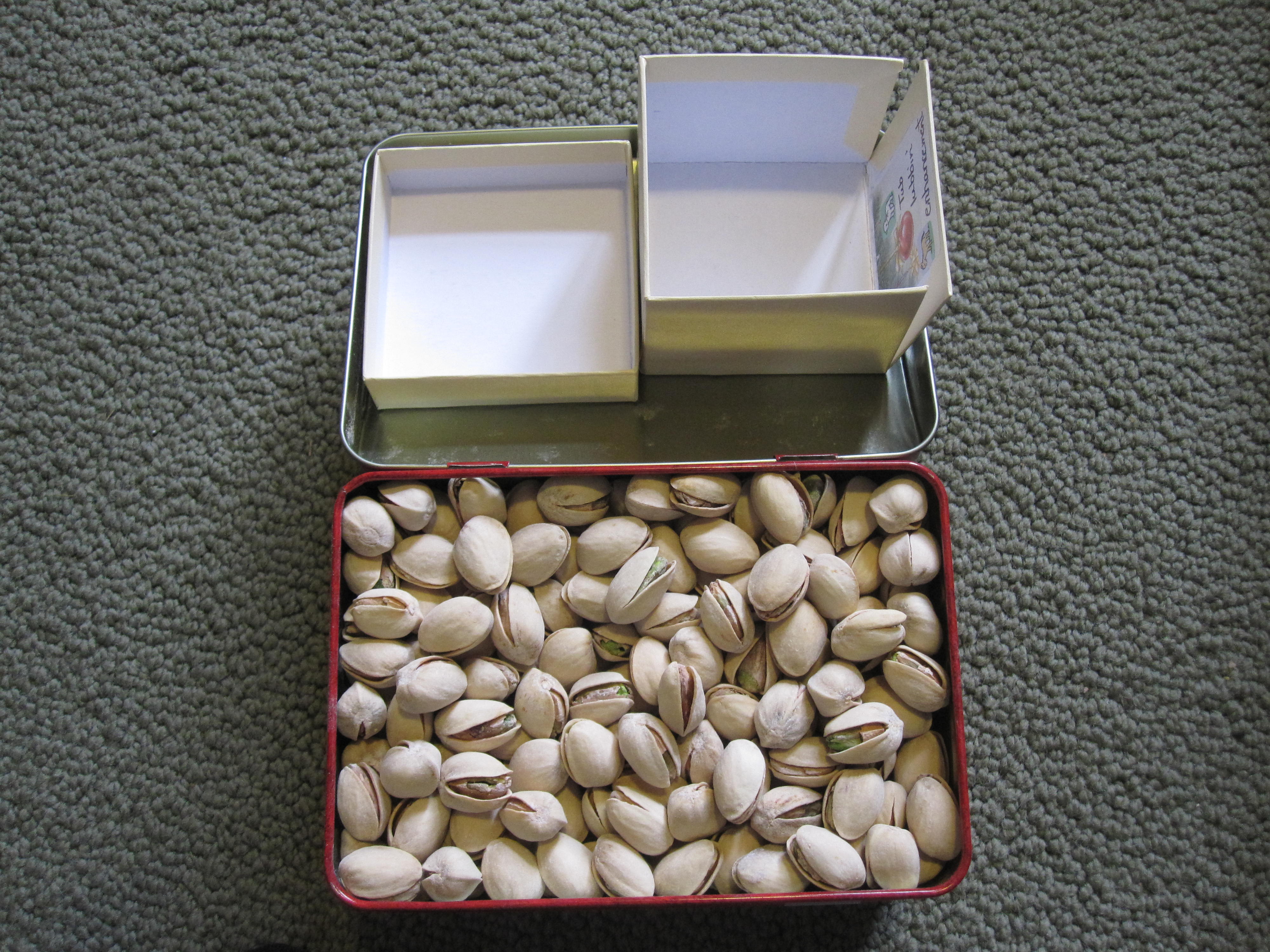
Time to come clean. I’m addicted to these.

It started innocently enough in Chengdu, China in 2003. Each week while grocery shopping I was intrigued with all the Chinese women who would gather around the giant pistachio bin and fill their plastic bags with the very best one or two hundred. After spectating for a few weeks, I joined in. This brought furtive glances and embarrassed smiles.

How was I supposed to know real men don’t pistachio shop? Upon returning Stateside (love using that term, makes me feel cosmopolitan), imagine my delight when I learned Costco had picked them out and packaged them for me.

I can be too frugal for my own good. Given that, it’s nice there are at least two products for which I’d spend almost anything—iPads and iPistachios.

This theory has been tested lately as Costco’s California pistachios have skyrocketed in price. $14.99 for 4lbs, who cares, toss em’ in. $15.99, $16.99, $19.99. Yikes, now they’re just taking advantage of a helpless addict. The price increases have probably had little to do with supply and demand. More likely, they’re a Schwarzenegger state budget screw up surtax.

When I glanced and grabbed last week, I did a double-take. What?! $14.99?! Sweet! The last time they were $14.99 the President had stolen the election. Then, a second later, “What the hell, that’s a 3 pounder!”

Here’s how I imagine it going down at Costco headquarters in Issaquah, WA. Executive Meeting. Agenda item: Pricing limits of California pistachios. A suit does a quick PowerPoint presentation showing a precipitous decline in sales of California pistachios at the $19.99 pricepoint. What to do? Discussion ensues. The consensus, instead of selling 4 pounds for $19.99, let’s sell 3 pounds for $14.99, and hope people don’t really notice the math smoke and mirrors. Brilliant. A collective sense of accomplishment descends and the meeting is adjourned.”

It might just work. No, it will work on whomever lacks numeracy. And on addicts like me.

Bonus picture. What a minimalist, who asked for nothing, received for Christmas.

Perfect Christmas

How to Refresh and Keep Going

In response to my “Causes of Burnout” post, an ace PressingPause reader wrote that the question is how to refresh and keep going.

Nine suggestions:

1) Resist deficit thinking by being intentional about students’ strengths. When I taught high school, I always made a conscious effort to attend student art exhibits, plays, sporting events. And I always left thinking, “What talent, dedication, effort, and academic potential if I tap into those things.”

2) Save notes of appreciation, thank you cards, whatever positive mementos you can. And journal about especially positive interactions and experiences. Sporadically revisit the notes, cards, and journal entries as a reminder of your effectiveness and the importance of your work.

3) Subvert zero-sum thinking about teaching excellence (e.g., your success takes away from mine) by consciously affirming your colleague’s efforts and acknowledging what they do particularly well. Help create positive faculty culture momentum.

4) If a colleague has traveled too far down the deficit thinking road, steer clear. If surrounded by goners, attend local teacher workshops and seminars in order to find and build relationships with more hopeful, supportive colleagues from other schools. Also join professional association’s list serves and blog discussions like this one.

5) Do whatever helps you create energy on a regular basis—spend time outdoors, walk, row, run, cycle, swim, practice yoga, pray or meditate, volunteer, cook healthy meals and prioritize family dinners, read something non-work related, pursue a non-work-related hobby.

6) Be vulnerable with whomever you’re closest to, share your successes/failures and hopes/dreams. Lean on them and let them support you.

7) Be intentional about scheduling events to look forward to, whether a Friday after school get together with with a few colleagues, a Saturday night dinner with a significant other, or a monthly weekend hike.

8) Unplug earlier in the evening, make like the Japanese and take a hot bath, and sleep as many hours as you know you need to be completely rested.

9) Create positive teacher-student professional momentum by continually improving your plans, your methods, and your assessment of student work.

Suggestions for number 10?