Can Sound Judgement Under Pressure Be Taught?

In college, in “The Sociology of Education” more specifically, I found “The Gospel According to the Harvard Business School” a fascinating read.  As a result, this article caught my eye, “What is Harvard Business School’s Secret Sauce“?

The author asks whether or not sound judgement under pressure can be taught. The Harvard Business School definitely thinks so. How?

“Students study about 500 cases during their two years at the school. . .”

Case studies are one of my all-time fave teaching methods, but I have to believe students reach a point of diminishing returns well before Case #500. I suspect fewer, more in-depth cases would yield better results.

Has the HBS or anyone else studied their graduates’ judgement relative to other non-HBS grads? How would one create a baseline of HBS grads pre-HBS judgement under pressure from which to compare? More generally, how would one conduct such studies?

Messy at best.

In other Harvard news.

Psychology Quiz

Name an emerging field of therapy.

Treating eco-anxiety.

“Her goal is not to be released from her fears about the warming planet, or paralyzed by them, but something in between: She compares it to someone with a fear of flying, who learns to manage their fear well enough to fly.

‘On a very personal level,’ she said, ‘the small victory is not thinking about this all the time.’”

Not Proof Of The American Dream

The best thing you’ll read today. “I Am Not Proof of the American Dream”. As a general policy, if Tara Westover writes something, you should read it.

Upon receiving a $4,000 Pell Grant, Westover writes:

“In those desperate years a few thousand dollars was enough to alter the whole course of my life. It contained a universe. It allowed me to experience for the first time what I now know to be the most powerful advantage of money, which is the ability to think of things besides money. That’s what money does. It frees your mind for living.”

How on earth does the Right, with their knee-jerk complaints of Big Government waste and social program dependency make sense of the Tara Westovers of the world?

Wednesday Required Reading

The Making of Cooper Kupp. More love stories like this please.

Woman’s diary goes viral as lockdown in China forces her to stay with blind date. Proof that your experience of ‘rona could be worse. A lot worse.

Inside Jerry Falwell Jr.’s Unlikely Rise and Precipitous Fall At Liberty University. Heaven forbid, if you understand Falwell’s family history, his public pathologies start to make a little sense.

Buy Things, Not Experiences. The exact opposite of positive psychology’s conventional wisdom.

Meet the auto repair professor pivoting to EVs. Imagine a (dis)United States with genuine vocational education options like EV Auto Repair and Battery Restoration in high schools.

We Know the Real Cause of the Crisis in Our Hospitals.

It’s greed. That’s the headline of this powerful six and a half minute long New York Times documentary. I concede, given the Gray Lady’s size and stature, it’s important to read and/or view her with a certain skepticism, but as this short video illustrates, the “paper of record” continues to produce a lot of outstanding journalism.  

When it comes to the New York Times, I am in the habit of reading the top “reader picks” comments. At present, this video has generated 1,562 comments. Here’s a portion of the top rated one, from someone living outside the (dis)United States:

“Hey, your politicians passed and signed federal law 9 years ago to allow private equity (wall street) to buy and own healthcare systems and physician groups. Prior to that it was illegal. Now private equity is the largest employer of emergency room physicians in America and as owners of healthcare system employees many many doctors and nurses of all specialties. Private equity is buy a company reduce costs increase profit and sell it in 5-7 years. That is who owns many of your doctors and hospitals. Federal law was changed to allow that to happen and where was the objection from the people. My guess probably almost no one knew. How funny to watch your media avoid these topics when they happen and fill it with the latest on the celebrity politicians over there.”  

The nurses in the video confirm that our fetishization of corporations is the root cause of their untenable work conditions. And the reason people admitted to U.S. hospitals often receive poor care. 

It reminds me of how powerfully later seasons of “Orange Is The New Black” depicts the negative consequences of private prisons.

Because we’re complexity adverse, we don’t connect dots, like our “avoid taxes at all costs” myopia and our near religious beliefs in “free” markets. Those neoliberal pillars are as solid as they’ve ever been. To question them is to be labelled a “socialist”. 

In the end, we have the public health system we deserve. A public health system that an increasing percentage of nurses don’t want anything to do with. 

Paragraph To Ponder

“When men encounter problems at work or elsewhere in their lives, they are much less likely than women to talk about it, in either public or private. Written accounts of male burnout are hard to find. Men are about 40 percent less likely than women to seek counseling for any reason. And the well-documented crisis in male friendship means that many men have no one aside from their spouse or partner they feel they can open up with emotionally. Single men often have no one at all; when they burn out, they may do so alone.”

From “How Men Burnout” by Jonathan Malesic.

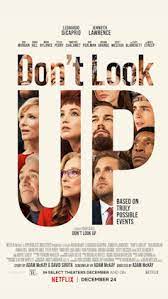
The Single Best Line In “Don’t Look Up”

Among many contenders. Leonardo, I mean Dr. Mindy, at the Last Supper, when he reflected, “We really did have it all, didn’t we?” “It” wasn’t the materialistic, resume building, status-driven hedonic treadmill that entraps so many. “It” was family life. “It” was being in nature. “It” was preparing meals together, telling stories, and enjoying food and wine. “It” was knowing a few people well. And “it” was being known.

download-2

Thinking In My Sleep

When his friends rip him for what they perceive to be an unusually lax job, an egghead professor friend of mine likes to joke that “The life of the mind is 24/7.”

A very successful writing friend of mine once told me that “if you don’t think about your current writing project when you first wake up, something’s wrong.” I’m fascinated by the subconscious which I think of as the nearly continuous internal dialogue I have with myself. 

Sometimes I can write a medium-long, (hopefully) substantive blog post in 20 minutes only because subconsciously, I’ve been sporadically working on it for days in my mind. Sometimes even, while asleep. 

In one first year writing conference a student of mine described her pre-writing process on one paper this way, “I talked about the prompt a lot while driving around with my friends and then my dad and I really got into it.” For which she received historic levels of extra credit. 

Of what does your internal dialogue consist? Are there patterns or themes? What shapes your subconscious? For me, it’s a combination of things I read, watch, and listen to; reflections on interactions with people past and present; and then staring at the Cooper Point coastline of the Salish Sea while nursing my morning latte. 

If your subconscious has atrophied as a result of not exercising it enough, maybe you should give this a go.   

Source: @AwesomeLibrarians

Empire of Pain

Good grief it took me a long time to finish this book. Had to renew it at the local library three times. My students are to blame for that. Yesterday, finally, I eschewed football and dusted off the last 90 pages. 

Truly excellent. Radden Keefe pulls off an amazing feat. He takes complicated topics including pharmacology, corporate maleficence, the law, and philanthropy among others and makes all of them imminently understandable for someone of my intellect. Deserves a Pulitzer.

As a writer, he reminds me of a savvy, veteran quarterback who “takes what the defense gives him”. When it comes to word choice, he always checks down, always choosing the simpler word and phrase in the interest of clarity. I found myself rereading some sentences twice not to better understand them, but to marvel at the cogent prose. 

In terms of the content, I find the “Sackler family-Mexican drug cartel” analogy convincing. Spoiler alert that you already know if you read the news, the Sacklers largely get away with their crimes against humanity. Well worth the read anyways. Just don’t dawdle like me. 

Next in the queue.