To integrate as many British words, phrases, and sayings as possible into my daily speech. The list so far: chuffed, knackered, uni, loo, faff around, gobsmacked, oi, and bespoke.
My New Year’s Resolution
Reply

To integrate as many British words, phrases, and sayings as possible into my daily speech. The list so far: chuffed, knackered, uni, loo, faff around, gobsmacked, oi, and bespoke.
In the 2022 film, Banshees of Inisherin, Colm Doherty’s motivation may not have been fully appreciated amidst the story’s intensity. Doherty wanted to avoid smalltalk at any cost because he realized he had become old and the end was near, so if he was going to leave any meaningful legacy, he had to focus exclusively on his musicianship.
I wonder if we avoid questions of legacy out of a fear of being forgotten. Will anyone remember? If so, who? And what will they remember? And for how long?
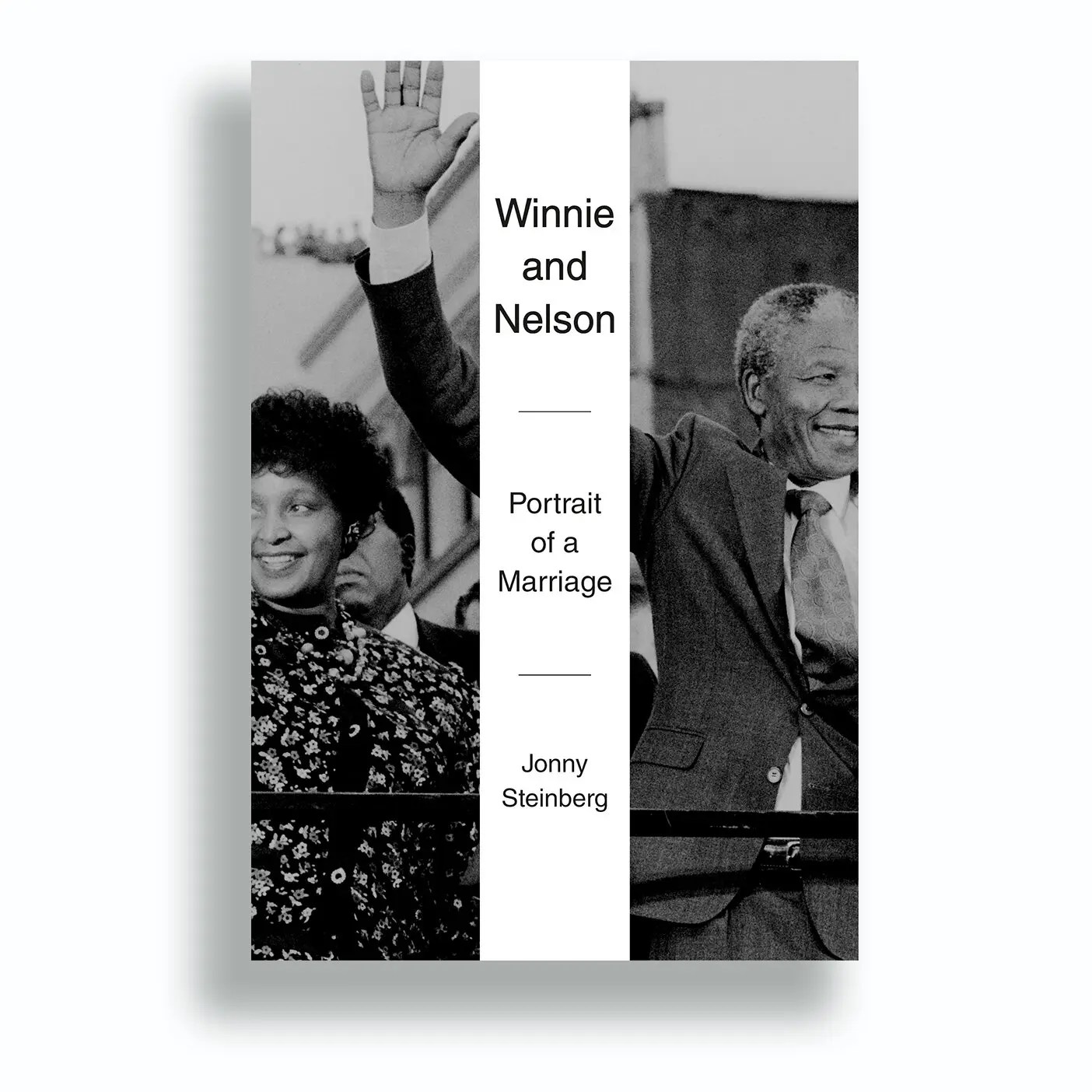
Enter Jonny feckin’ Steinberg, author of Winnie and Nelson: Portrait of a Marriage. I predict Steinberg’s book will be the go-to source for understanding the end of apartheid for hundreds of years. I read it because I followed the anti-apartheid struggle closely in my twenties and I wanted to learn more about two of the central characters. And not knowing much about their marriage, I suspected there would be some salacious details.
Almost immediately though, I got distracted by Steinberg’s brilliance, constantly wondering how he managed telling such a complex and intimate story in the most intelligent way imaginable. Surgical is the word that springs to mind. Steinberg, working mostly from a 15,000 page file illegally held on to by one of the government’s top security officials, repeatedly takes readers inside the Mandela’s relationship, into Nelson’s Robben Island prison cell, inside the African National Congress’s machinations, and onto the streets of the Soweto uprising.
The descriptive writing is good, but what’s most exceptional about the book is Steinberg’s masterful interpretation of documents and events. It’s an ingenious example of historiography or how history should be written. Sometimes Steinberg opts for humility and uses tentative language such as “Although we can never know for certain, . . .” At others, he fearlessly calls into question both central characters’ veracity, especially Nelson’s. Most of the time though, he’s helpfully splitting the difference, thoughtfully offering a particular interpretation based upon the precise historical context and the preponderance of evidence. Very early on, Steinberg’s brilliant interpreting and reasoned judgement caused me to conclude that he was the most credible of narrators.
Steinberg’s acknowledgements reveal that he had eight editors across three publishing houses. And he’s generous in crediting his research assistant, several archivists, and numerous readers of his drafts. Writing may be a solitary endeavor, but publishing a seminal work of this nature, clearly is not.
In terms of the story itself, first and foremost, one can’t help but be overwhelmed by the scale of the government’s persistent human rights abuses and violence, but also the black-on-black violence it engendered.
Another lasting lesson is that the media places individuals on pedestals, whether Barack Obama, Angela Merkel, or Volodymyr Zelenskyy by limiting coverage of their failings, both personal and political. For if we get too close, we will always find, just like with Nelson and Winnie, the famous aren’t just fallible, they’re extremely flawed.
There are many other take-aways. While an imperfect analogy, I came to think of Nelson as a Martin Luther King like thinker and activist and Winnie as a female Malcom X. This tension begs important questions including how does social change happen, nonviolently or violently, slowly or quickly? And if changing a violent regime requires its own violence, how do the survivors turn off that spigot?
The final paper. A self-assessment of one’s writing progress. Which admittedly, is a bit presumptuous.
A fave excerpt from one student’s paper.
“But this prewriting is different than what I thought it would be; my prewriting involves putting my professor into a (metaphorical) box, and I put that box into another box. Then, I put that box in the garage and forget about it. Only at this point do I return to my brainstorming and drafts. I have learned that if I do not do this I expend too much energy trying to inject the professor into my creation. Once I realized that my writing is for myself, not the professor, I found that writing is an engaging process of self discovery and growth. This is most evident in my penultimate paper on the concept of soulmates.”
Typically, academic writing is an impersonal jumping through hoops, with students preoccupied by grades. Students inevitably develop a teacher-centric orientation when writing in school, asking themselves, “To get the best grade possible, what and how am I expected to think and write?”
If I could only get all of my students to put me in a box, inside a box, in a garage. Yes, I would prob suffocate to death, but I would die happy.
“To speak on my experience with JS in the 5 years I have known her would fill a New York Times best seller, to know her is like having a piece of the solar system that luminates joy and unapologetic truth.”
That was the first sentence. Where do you go from there?
A sign that you may be slipping. You can’t find where you wrote about our need for more fist fights in the humble blog’s archive.
Everyone’s lamenting the decline of the (dis)United States this week all because one Congressman allegedly elbowed another in the kidney and one Senator proposed fighting the Teamsters President during a formal hearing after the Teamsters President called the Senator a “clown” and “fraud” on social media before adding, “You know where to find me. Anyplace, anytime cowboy.”
That is good stuff. But it got even better.
The Senator replied, “Sir, this is a time. This is a place. You want to run your mouth? We can be two consenting adults — we can finish it here.”
I like the emphasis on both parties consenting. There has to be some sort of code. Fisticuffs should never be forced.
“OK, that’s fine. Perfect,” the Teamster President responded.
“Well, stand your butt up then,” Senator taunted, with Teamster President telling Senator to do the same.
Then, it was all RUINED by a Vermont Socialist who went all schoolmarm on his colleague.
Here’s what Senator Byrnes would’ve said if he was chairing the hearing.
“Thank you for not shooting at each other and risking not just your lives, but innocent bystanders lives. We should all take pride in the fact that no one died here today. Thank you to the gentleman from Oklahoma and the gentleman from the International Brotherhood for illustrating that some forms of violence are better than others. Similarly, we should all show some gratitude to the Former Speaker for opting to elbow his colleague in the kidney instead of shooting him. Clearly, we are evolving, maybe not as fast as some would like, but evolving all the same.”
Sometimes you get an amazing student from Ethiopia by way of Turkey. Who says he’s never been asked to be introspective or write personal essays about existential questions. A student who explains that where he comes from people are preoccupied with food, shelter, and clothing. That there’s no context or momentum for what I’m asking.
Maslow and all.
He’s quiet in class. As in silent.
But, as it turns out, he’s listening closely and reading with an open mind. And oh, what a mind. As a result, he takes to being introspective like a duck to water.
And so he writes personally and beautifully about his family’s struggles and his own in a way that belies his youth. And starts to think that maybe he can help Ethiopians, and others in developing countries, start thinking about existential questions in ways that will benefit them.
A computer science major with serious math chops, he asks to talk after class.
“How can I improve?” I tell him, “Keep doing exactly what you’re doing—reading our texts closely, being introspective, and writing honestly about what you’ve overcome.” And “don’t deprive us of your insights during class discussions.”
He doesn’t think other students will relate to or understand his experiences since they’re so different. I suggest he might be surprised by the exact opposite, that they’ll be especially interested in his life experience because it’s so different.
He smiles at the thought and commits to contributing more. Meaning some.
I tell him he’s talented, that he could be a writer, that he has unique and compelling stories to tell.
And then, he says it. “I want to be a writer.”
My guess, he’ll travel the world; knock the technology ball out of the park; and become a popular, widely read writer.
To have played a small part in his journey is pretty damn cool.
I enjoy reading a lot of periodicals, but quite a few not enough to pay for regular, unlimited access. Given the limits of time, even if they cost less, in many cases I’d still pass.
The Guardian takes an interesting, Wikipedia-like approach of saying, “Hey, we notice you’ve read this many articles lately, how ’bout ponying up a little you cheap son-of-a-bitch, and you know, enable our journos to feed their families.” Well, something like that.
There’s one pub, Slate.com, that I’m uncharacteristically quite conflicted about not having access to. All because of Slate’s ‘Dear Prudence’ advice column. And it’s all because of their steady diet of seriously clickbaity headlines.
I am weak, so I wanna click, click, click these.
Help! My Sister Insists I Invite Her Disastrous Husband to My Bachelor Party. Oh No.
Help! My Husband Interprets Every Little Thing as “Evidence” of an Affair.
Help! My Wife Thinks She’s Great at Socializing. Yikes.
Help! My Priest Told Me He’s Leaving His Priesthood for Me.
You are right! My life would be enriched by a steady diet of ‘Dear Prudence’ exchanges of this nature.* So I should just pay up.
Thank you for listening.
*unless the Good Wife is responsible for the first
This Canadian Broadcast Corporation’s Buffy Sainte-Marie documentary convinced me that she’s the most famous of the growing legion of Pretendians, the clever name given to people who falsely claim to be indigenous.
A lot of people are mad at the CBC, but their argument is not angry or mean-spirited, it’s relentlessly thorough and thoughtful, a model of investigative reporting.
This preemptive salvo Sainte-Marie penned wreaks of desperation to keep her house of cards from completely crumbling.

Alternatively, Sainte-Marie’s title, “My Truth As I Know It” may have been “My Truth As I Psychologically Need It To Be”. “My Truth As I Know It” is the quintessential phrase of our time. Just like Sainte-Marie and the many other Pretendians, Trump acolytes still talk about the 2020 election results as “the truth as they know it”. And that of course, is the tip of the conspiratorial iceburg.
Trump and his acolytes went 0-60 on legal challenges to the 2020 election results. Judge after judge said this is “the actual truth” of the matter. Objectively. All those judges, so old fashioned.
For over sixty years, Sainte-Marie has woven such an elaborate web of lies that she was unable to title her defense, “The Truth”.
Even at 82 years old, Sainte-Marie is a woman for our times where masses of people spew the truth as only they, and their gullible fellow travelers, know it.
Alternating this afternoon between reading student papers and watching college football.
And reading this email from a Somali-American student of mine. “I just saw my grade and your feedback on it. I appreciate the well thought out and thorough feedback! I’ll be sure to apply it to my next paper! It feels nice to have educators in higher Ed that actually read my work with thoughts opposed to my high school.”
The most important roles I play are all related—listener, reader, assessor. “Professing” is overrated.
I have 53 students this semester. A lot of high school teachers have 153. I teach 12 hours a week. Most high school teachers teach 25. High school students aren’t truly listened to or read closely because there’s too many of them and too little time.
The distinguishing feature of the factory model of education, where secondary students come at you in waves of thirty every hour, is that it’s impersonal.
A focus on equity is laudable, but this is riddled with jargon and lacking in specificity. Given this muddled, vague language, my money is on the K-12 status quo continuing unabated.
 Pressing Pause