What Lance Armstrong Can Say to Oprah to Make Things Right

Nothing.

Apart from a simple “sorry for the long-standing deception,” Lance doesn’t owe me, or any professional cycling fan, anything.

Why do we continually delude ourselves to think we know the entertainers, athletes, and politicians we follow? That we’re in some sort of relationship with them? That when their moral failings become painfully evident, that they let us down?

Remember Tiger Woods awkward, post-rehab, public confessional in some Florida hotel conference room? The one with his mom in the front row. The one where he said he “kinda got away from his Buddhism (one of my favorite understatements of all-time)?” What was that all about? Tiger didn’t pledge to be faithful to me or you or even his corporate sponsors.

The bright light public confessional is all about limiting the damage to one’s personal brand, and by extension, earning potential. To reset as a human being, Tiger would have been far better off listing all the people he had hurt and then seeking each person’s forgiveness outside the media spotlight.

At 41, Lance is in trouble if he needs advice on how to reset as a human being. I’m offering it anyways. He won’t follow it because he doesn’t read this blog regularly enough, and like all of us, he’s highly skilled at rationalizing his behavior. He tells himself, “If it wasn’t for my success, Hamilton, Landis, Andreu’s wife, and even my masseuse and others involved with the sport wouldn’t have made nearly as much money.” In his mind, his accusers are indebted to him.

Forget Oprah Lance. And forget your athletic career (triathlon has a long ways to go before it reaches “fringe sport” consideration). Resolve to be a more kind, empathetic, and truthful person. Take time to make a detailed list of everyone that you’ve directly hurt as a result of your words, actions, and privilege. People who you repeatedly lied to. People you bullied on and off the bike. People whose reputations you trashed. People whose businesses you ruined. Then come clean in a written mea culpa, a no holds barred confession. In it, take complete responsibility for hurting those people as a result of their truthfulness.

Send it to the New York Times. Then buy however many plane tickets necessary and travel to see everyone on the list. No matter how much it cuts into your triathlon training. Seek their forgiveness as personally and privately as possible.

Do that and the tide of public opinion will begin to turn. But don’t do it for that reason. Don’t even do it for your children or your legacy. Do it to reset as a human being, for the sake of human decency, to live the second half of your life in a more kind, empathetic, and truthful manner.
imgres

Rooting for the Millennials

Car makers are worried.

Today’s teens and twenty-somethings don’t seem all that interested in car ownership. Or driving more generally. Less than half of potential drivers age 19 or younger had a license in 2008, down from nearly two-thirds in 1998. The fraction of 20-to-24-year-olds with a license has also dropped. And adults between the ages of 21 and 34 buy just 27 percent of all new vehicles sold in America, a far cry from the peak of 38 percent in 1985.

Jordan Weissmann in the Atlantic writes, “The billion-dollar question for automakers is whether this shift is truly permanent, the result of a baked-in attitude shift among Millennials that will last well into adulthood, or the product of an economy that’s been particularly brutal on the young.”

I’m guessing both and.

Wiessmann asks why purchase a new car given the five figure cost, insurance, repairs, and $4/gallon gas, especially if there are reasonable, nearby alternatives like a Zip Car membership, bicycle sharing program, or subway?

Also Millennials are more likely than past generations to live in cities, about 32 percent, somewhat higher than the proportion of Generation X’ers or Baby Boomers who did when they were the same age. But as the Wall Street Journal reports, surveys have found that 88 percent want to live in cities. When they’re forced to settle down in a suburb, they prefer communities which feature plenty of walking distance restaurants, retail, and public transportation.

“If the Millennials truly become the peripatetic generation,” Weissmann warns (emphasis added), “walking to the office, the bus stop, or the corner store, it could mean a longterm dent in car sales. It’s doubly problematic (emphasis added) if they choose to raise children in the city. Growing up in the ‘burbs was part of the reason driving was so central to Baby Boomers’ lives. Car keys meant freedom. To city dwellers, they mean struggling to find an empty parking spot.”

Josh Allan Dykstra in Fast Company asks, “What if it’s not an ‘age thing’ at all? What’s really causing this strange new behavior (or rather, lack of behavior)? He likes the thinking of a USA Today writer who blames (emphasis added) the change on the cloud, the heavenly home our entertainment goes to when current media models die. Dykstra writes, “As all forms of media make their journey into a digital, de-corporeal space, research shows that people are beginning to actually prefer this disconnected reality to owning a physical product.”

“Humanity,” he contends, “is experiencing an evolution in consciousness. We are starting to think differently about what it means to ‘own’ something. This is why a similar ambivalence towards ownership is emerging in all sorts of areas, from car-buying to music listening to entertainment consumption. Though technology facilitates this evolution and new generations champion it, the big push behind it all is that our thinking is changing.”

I like Wiessmann’s and Dykstra’s analyses and insights, but not their conclusions. They’re singleminded focus is on twentysomethings’ impact on economic growth as if everything valuable in life hinges on sales receipts. Ultimately, they’re coaching car makers on how to entice Millennials back into the market.

I’m more interested in cheering them on. For resolving to live differently than their parents, meaning within their means. For caring about the quality of the environment for future generations. For contributing to our country’s energy independence and making it less likely we’ll fight foreign wars. And for challenging the status quo of conspicuous consumption.

At the risk of overgeneralizing, an inspiring generation.

young-people-325x294

Erring on the Side of Student Smarts

When asked what was most memorable about high school, my first year university students talk about play performances; athletic competitions; service club activites; and jazz band, choir, or orchestra concerts and trips. Their coursework is forgettable, too often even mind numbing. Why?

In part, because they’re rarely asked difficult open-ended questions upon which reasonable people in the “real world” disagree. Too few adults respect students’ intelligence. Also, we lazily and artificially carve up the subject matter into smaller pieces called math, science, language arts, social studies, foreign language, and art—and thereby fail to frame lessons, units, and courses around especially challenging questions.

I’m in the earliest stages of a new project—curriculum writing for a team of explorers who hope to engage large numbers of students in different parts of the world through their expedition to the South Pole in eleven months.

My plan is to err on the side of student smarts and engage middle and high school students through a series of challenging case studies that rest on open-ended questions upon which reasonable people disagree. If successful, the cases will help teachers help students not just learn factual information about fresh water flashpoints around the world, but also to listen, read, and write with greater purpose; think conceptually; and develop perspective taking, teamwork, and conflict resolution skills.

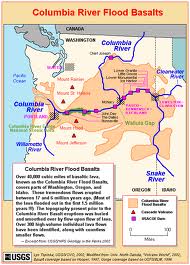
I’m just getting started. Last week I finished an excellent book about the Columbia River that I highly recommend, A River Lost: The Life and Death of the Columbia (second edition). The author, Blaine Harden, is an excellent story teller. It’s required reading if you live in the Pacific Northwest. The primary question raised by Harden is what’s the best way to operate the world’s largest hydroelectric system? Harden’s story centers on a confounding mix of economic interests, biological imperatives, and environmental values.

imgres

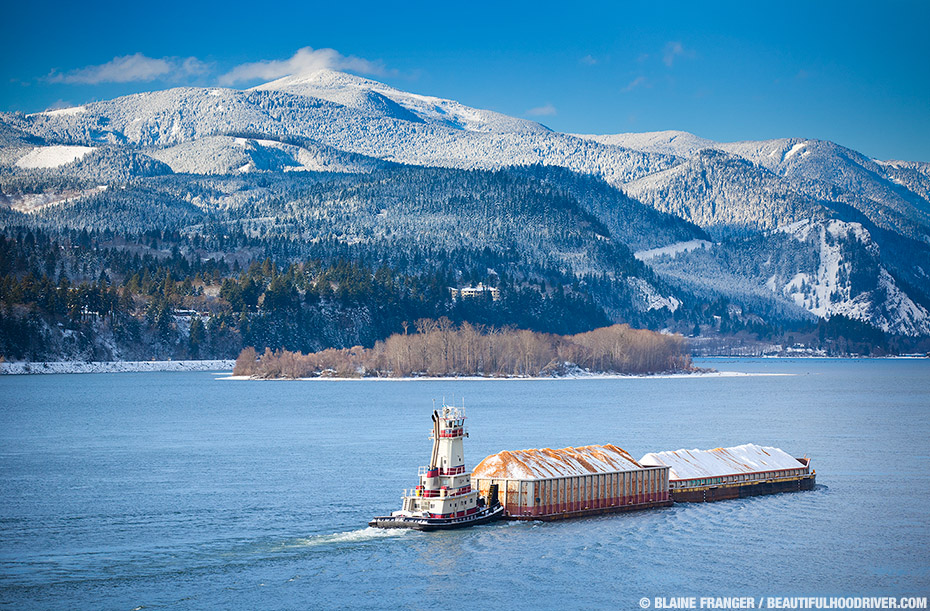
Most of the players in the drama defend the numerous dams that have turned the Columbia into a “machine river”—electric utility providers; irrigators and farmers; tow barge operators; boaters, windsurfers, and waterskiers; Google, Amazon, and Microsoft with their newish server farms; and elected officials and lobbyists who look out for the interests of utilities, irrigators, the internet goliaths, and other river users. The “other side” consists of Indians whose economic, nutritional, and spiritual lives were built around salmon, and fish biologists and Western Washington environmentalists who advocate for environmental restitution.

Students will research, debate, and decide among three possible outcomes:

  1. In the interest of maximum economic growth and inexpensive electricity, maintain the status quo of the “machine river”.
  2. In the interest of compromise and moderate economic growth, allow more water to flow over the dams thereby slightly reducing the total electricity available while simultaneously increasing the number of salmon in the river.
  3. In the interest of environmental restitution, the return of historic salmon runs, and revitalized Indian life, remove the dams and allow the river to return to it’s natural state.

Teachers will assess the relative thoroughness and thoughtfulness of each team’s proposed outcome. More specifically, they’ll be deciding which is most persuasive and why. Interestingly, this “Machine River” case study has real urgency because a federal court in Portland has given the National Oceanic & Atmospheric Administration until January 1, 2014 to submit a plan on how best to proceed. Many people whose livelihood’s will be dramatically effected by the outcome are anxiously awaiting the Court’s plan.

columbia_river_gorge_barge_snow_mg_8363_3

Even more challenging than evaluating the costs and benefits of the different possible outcomes, is extrapolating “lessons learned” from the Columbia to other river systems in other parts of the world. For example, Vietnam is upset that Laos is planning to dam the Mekong River. Here’s a question upon which I’ll base an “extension” or “enrichment” activity: Based on Columbia River “lessons learned”, how would you advise Laotians and Vietnamese officials to proceed on the Mekong River? Why?

Even more challenging than applying Columbia lessons to the Mekong is developing a set of principles for 21st Century development more generally. How can local communities, sovereign nations, and international groups maintain healthy economies without compromising natural environments? Or more simply, how do we build vibrant, sustainable communities?

I have more questions than answers. Which is the single best formula for revitalizing schooling.

580px-Grand_Coulee_Dam_Panorama_Smaller

Self Sabotage

It’s 9:30a.m. Here are some of the decisions I’ve made today, January 2, 2013:

  • I decided to wake up at 5:22 a.m.
  • I decided to put on running pants and two thin, long-sleeve running shirts since Weatherbug was reporting -1 degrees C at the nearby elementary school (0 C and higher=shorts). Plus medium gloves, hat, reflective vest, headlamp.
  • At 5:44 a.m. I decided to walk outside into the pitch black fog.
  • At 5:45 a.m. I decided to run 6+ miles with the Right Wing Nutter and Dan, Dan, the Transportation Man (inexplicably, the PrinciPAL is still in Hawaii). I decided to take the posse around Safeway via North and Eskridge.
  • After some curbside chitchat, at 6:42 a.m., I decided to remove my sweaty running clothes and walked almost naked (still had my socks on) the length of the house to my bedroom where I put on dry running shorts and a dry t-shirt.
  • Upon returning to the kitchen, I decided to eat a banana with peanut butter after which I filled up a water bottle—half orange juice, half water.
  • At 6:58 a.m. I decided to spin 26k (213 watts, 1:01:25) while watching a combination of the Dan Patrick Show, CNN, MSNBC, and ESPN.
  • At 8:05 a.m. I decided to do 60 push ups broken up with some foam roller goodness, planking, and stretching.
  • At 8:30 a.m. I decided to have a large bowl of oatmeal with raisons, brown sugar, butter, and molasses.
  • I decided to skim the Wall Street Journal while eating.
  • For desert, I decided to have one of those new-fangled smallish oranges that darn near unpeel themselves.
  • Shortly before 9 a.m., I decided to shower.
  • Shortly after 9 a.m., I decided to put on long underwear, thus outsmarting Old Man Winter; plus wool socks (important to do that before the long underwear), pants; a t-shirt; and my ace, moth eaten, expedition weight thermal top.
  • Around 9:10 a.m., I decided to go upstairs to my desk where I checked on the stock market rally and chuckled at the Lakers’ boxscore.
  • After aimlessly surfing the internet for fifteen minutes, I decided to reply to a few emails and start Thursday’s blog post, tentatively titled “Self Sabotage”.

A friend of mine has high blood pressure, but that doesn’t stop him from obsessing about things over which he has very little control. A conservative Republican who is sympathetic to the Tea Party, he went darn near silent after the election, depressed by what he sees as a “serious loss of freedom”.

Determining the most appropriate size of the government is an important and legitimate debate, and I understand that 48% or so of U.S. citizens wants to reduce it, but my friend, who has no international frame of reference, lets things like Obamacare, gun control proposals, Bloomberg’s proposed soda regulation, helmet laws, and the unemployment benefits extension get him seriously down. Oddly, he takes each of those proposals and policies personally.

As a result, he completely slights the freedom he does have to make hundreds of decisions every day—ones that directly influence his health and well being—like how much sleep to get, when and how to exercise, and what to eat and drink. That all important trifecta—sleep, exercise, and diet—probably account for at least half of a person’s health and happiness.

But I’m losing the argument. He seems determined to let distant politicians get him down. Ironically, in losing, I’m illustrating another daily freedom he routinely overlooks—the freedom to tune others out.

The Great Equalizer

As this recent New York Times article poignantly illustrates, Horace Mann was wrong, education is not the great equalizer of men. Or women.

As always at the end of the year, most major newspapers list the most newsworthy deaths of the calendar year. Some provide a few paragraphs about each person. The “newsworthy deaths” compilations are a nice reminder that death is the great equalizer. Of men and women. The rich and poor. Hawk and dove. Religious and secular. Well known and anonymous. Prepared and unprepared.

I imagine most people who read those “famous deaths” compilations think to themselves, “Wow, a lot of famous people died this year.” That’s the thing about death, it’s kind of consistent. A lot of famous people die every year. In the United States, in 2013, someone will be born every 8 seconds and die every 12 seconds.

Poor form I know, but I can’t help but wonder if the comrades—Hugo Chavez and Fidel Castro—will feature prominently in next year’s “famous deaths” lists. And what about Mugabe, Bush Sr, and Mandela, all quite skilled at postponing the great equalizer. Will they make it to 2014?

More importantly, will you and I make it to 2014? Psychologist Russ Harris suggests a simple exercise for being more conscious of The Great Equalizer (as described in The Antidote: Happiness for those Who Can’t Stand Positive Thinking). Imagine you are eighty years old—assuming you’re not eighty already, that is; if you are, you’ll have to pick an older age—and then complete the sentences “I wish I’d spent more time on. . . ” and “I wish I’d spent less time on. . .”

Whatever your age, that wonderfully simple exercise will improve your chances of reaching death having lived life as fully and as deeply as possible.

I hope this isn’t your year or my year, but just in case, let’s live it like it could be.

Thank you for making time to read my writing this year. Peace to you and yours.

A New Approach to a New Year

I’m a monogamous reader. When I commit to a book, I commit. No late night flirting with other authors that I might regret in the morning. Another idiosyncrasy, I can be slow to ditch flawed books. I was on a nice reading roll during the first half of 2012, but got totally stalled in a cook book somewhere during the summer. Yes, you read correctly, a cook book! You’re forgiven for wondering what kind of imbecile sets out to read a cookbook cover to cover. The same kind that set out to read the bible from cover to cover in the sixth grade. Wasn’t able to check that one off either. Damn Leviticus.

But, I’m happy to report, my reading self is back. In fact, I may read more in January and February than all of 2012 combined, but more on why in a future post. At present, I’m wedded to Oliver Burkeman’s The Antidote: Happiness for People Who Can’t Stand Positive Thinking. Although it’s clearly written, Burkeman’s ideas are so provocative and contrary to conventional wisdom, The Antidote will probably require a re-reading, making it my last book of 2012 and first of 2013.

If like me, you enjoy holding up common assumptions to the light of day, I especially recommend Chapter Four, “Goal Crazy: When Trying to Control the Future Doesn’t Work”. In short, Burkeman convincingly argues that most everything you and I have been taught about goal setting is flawed. In part, his argument rests on what went wrong on Mount Everest in 1996 when many climbers died because they didn’t turn around in time to survive the descent. In his view, Krakauer’s Into Thin Air analysis is “ultimately dissatisfying” as an explanation.

He finds Chris Kayes’ interpretation more persuasive. Kayes, a former stockbroker turned business professor and expert on organizational behavior, suspects the climbers were “lured into destruction by their passion for goals”. Burkeman writes of Hayes, “His hypothesis was that the more they fixated on the endpoint—a successful summiting of the mountain—the more that goal became not just an external target but a part of their own identities, of their senses of themselves as accomplished guides or high-achieving amateurs.”

“If his hunch about the climbers was right,” Burkeman adds, “it would have become progressively more difficult for them to sacrifice their goal, despite accumulating evidence that it was becoming a suicidal one. Indeed, that accumulating evidence. . . would have hardened the climbers’ determination not to turn back. The climb would have become a struggle not merely to reach the summit, but to preserve their sense of identity.”

One take-away from the chapter is that there are often unintended consequences when people focus intensely on especially lofty goals. Kayes points out that the mountaineers who died climbing Everest in 1996 did successfully reach their goal: they ascended to the summit. The tragic unintended consequence was that they didn’t make it back down.

Burkeman also offers up a  challenge—to become more comfortable with uncertainty, to turn towards it, to exploit the potential hidden within it, both to feel better in the present and to achieve more success in the future. Burkeman sites a person who says the key to this approach is to think more like a frog. “You should sun yourself on a lily-pad until you get bored; then, when the time is right, you should jump to a new lily-pad and hang out there for awhile. Continue this over and over, moving in whatever direction feels right.” The imagery of sunbathing on lily-pads isn’t mean to imply laziness, the emphasis is on enjoying one’s work in the present rather than postponing happiness based upon endless five year plans.

Burkeman’s thinking challenges my default tendencies to plan and set goals. My goal for 2013? Have fewer goals and turn towards uncertainty.

imgres

The Essential Dilemma of Human Intimacy

Oliver Burkeman’s The Antidote: Happiness for People Who Can’t Stand Positive Thinking, with its discussion of Stoicism, has me thinking about the Newtown parents. Burkeman and the heartbreaking portraits of the dead first graders. With their beautiful, innocent smiles, and future promise.

It’s difficult to imagine anything more difficult to overcome than a parent having to bury their six or seven year old child. Friends of ours watched helplessly for a year as their eight year old son died from leukemia. I tried to empathize, but probably failed to scratch the surface of their heartbreak.

The Newtown parents didn’t have any reason to take a little extra time the fateful morning of the shooting to be especially present and loving. One wonders, how will they survive the shooting? Right now, their sadness is bound to overwhelm ancient Greek wisdom and everyone’s best intentions. The best way to support them is to respect their privacy and make sure our representatives enact meaningful gun control.

But what if we shift things a bit to think about Stoicism and our lives, and the people we’re closest too, and their eventual deaths. And the essential dilemma of human intimacy—the closer and more meaningful the friendship, the greater one’s vulnerability, the greater one’s vulnerability, the more intense the pain upon death.

There is a way to minimize the probability of intense grief, keep friendships superficial. But who wants to compromise the quality of their life that way? So what are we to do? Being intimate and dependent upon others doesn’t mean we’re doomed to debilitating sadness upon each of our close friends’ or family members’ deaths.

The ancient Greeks wrote about the impermanence of everything and encouraged people to reflect on the worst things that could happen to them. The result being greater appreciation for their material well-being, their health, their work, and their family and friends. Taking time to think about worse case scenarios, or negative visualization, also mentally prepares one for inevitable changes in life, including especially sad ones such as the death of a loved one.

The ancient Greeks also emphasized living in the present, an “easier said than done” cliche if not developed more fully. Think about how different birthday celebrations might be if everyone committed to living more in the present. Instead of giving the birthday person gifts (kind of an odd practice if you think about it, “Hey congrats on being born!”), and asking him or her to make a wish for the upcoming year, the party would be a celebration of the previous year. The message being that life is fragile and isn’t it wonderful that we had another year to enjoy the birthday boy’s or girl’s friendship. Each person could reflect on the birthday person’s previous year and share what has been most memorable and what they most appreciate about them. And yes, of course we can keep the cake and ice cream.

My dad died suddenly at age 69. I was 33. I was devastated in part because it wasn’t until my mid 20’s that we started to understand and appreciate one another. I thought we had the luxury of time for our friendship to flourish. But shortly afterwards, I started to think like a Stoic before knowing anything about Stoicism. I realized I could be upset that our friendship didn’t get to mature or I could be thankful that we enjoyed a positive and more personal 5-10 years. I’ve chosen the later. And that decision informs the way I try to live. I want to love boldly, fully appreciate my friends and family, and celebrate each passing year as an undeserved gift.

My hope is that with the passing of time the Newtown parents can make a similar switch from understandable anger at the time they won’t get to spend with their sons and daughters to appreciating the six or seven years they did get with them.

That math and psychology will be tough. Godspeed Newtown parents.

imgres

Columbine, Blacksburg, Tucson, Seal Beach, Aurora, Newtown

The National Rifle Association has gone silent, hoping that we conclude there’s an inevitability to gun violence, call it an unfortunate cost of Second Amendment rights to gun ownership. That’s the exact reason we can’t become desensitized to the steady stream of incomprehensible violence.

We have to spend the next few months insisting that our Congressional representatives take the actions that Michael Bloomberg and Diane Feinstein described on Sunday’s Meet the Press.

We have to learn to think about mental illnesses like physical illnesses and advocate for more accessible and affordable care for the mentally ill.

We have to insist on people’s rights. To go to school, to go shopping, and to go to a movie without fear.

We have to resist the urge to arm more people. On the same Meet the Press, Bill Bennett (pundits should be like yogurt and have expiration dates) said we should probably have an armed security guard in every school. I thought of that when I walked into my YMCA Sunday afternoon to workout. The doors open for anyone and the membership check-in is about 30 to 40 feet inside the building. I passed 20+ people before having to show my membership card. Sometimes when the line is long, I just slide in behind it and head to the locker or weightroom. So unless we’re going to install TSA-like security at every YMCA, mall, and theater, I don’t see armed school guards as a solution. I recommend Jim Fallows position on this and his most recent Atlantic piece on the shootings (and Goldberg’s which he references).

We have to ask why, according to Mother Jones, since 1982, males are responsible for 61 out of 62 mass murders with firearms across the country. What does the fact that some young men more than young women want to physically injure and/or kill others say about our parenting of boys, our schools, and our culture? What changes in our parenting, schools, and culture are needed?

Lastly, an impassioned debate among two female writers—I am Adam Lanza’s Mother and Don’t Compare Your Son to Adam Lanza.

imgres


Compared to Teaching, Charles Barkley’s Job is Easy

In a round about way, this provocative Selena Robert’s piece about Tiger Woods highlights what’s unique and especially challenging about teaching well. Robert’s quotes Brandel Chamblee, a former PGA Tour player who isn’t afraid to speak his mind and ruffle feathers. Most damning, Chamblee says Tiger extracts from the game but doesn’t give back to it.

Usually, the most popular analysts and critics—whether in sports, the arts, or politics—are extremely opinionated. People like analysts and critics who aren’t afraid to rip a failing player, actor, or elected official. In sports, Brandel Chamblee is simply following in the footsteps of Howard Cosell and Charles Barkley.

What the best teachers do 180 days a year is infinitely harder than what Chamblee and Barkley and other popular analysts and critics do. Teachers have to thoughtfully provide constructive criticism to young people with whom they work closely day-after-day. Young people whose self esteem is a work-in-progress.

Chamblee knows he’s never getting invited to Tiger’s pad to have dinner so what does he have to lose? When Sports Illustrated wrote about Michael Jordan’s gambling problem he never spoke to any of their writers again. Which of course made it even easier for them to be critical. It’s easy for analysts and critics to rip failing public figures from the safety of their websites, studios, and media stages.

Teachers, on the other hand, often have to tell students up close and personal that their work doesn’t measure up. And most challenging of all, students are sensitive in different ways and to differing degrees meaning teachers have to continuously tweak their message. The best ones challenge students to do better without crippling their confidence or harming their relationship. It requires a mix of respect, tact, diplomacy, and care that the public doesn’t understand or appreciate. I’m most successful at it when I lead with students’ strengths. Encouragement makes everyone more receptive to how they can improve.

Parents face similar challenges on a daily basis. They often have to tell their children, “Sorry, that wasn’t thorough, thoughtful, or responsible enough.” The most successful ones do it in loving and supportive ways that are educative. Their actions communicate, “I want you to become more competent and independent”  rather than “Don’t forget I’m in charge.”

Compared to the teachers at the school down the street from you, Brandel Chamblee’s and Charles Barkley’s television jobs are a piece of cake.

imgres

Living Healthily By Feel

As I wrote recently, modern life requires some dependence upon expert recommendations, but when it comes to our health, we’re too dependent upon scientists; when it comes to our money, we’re too dependent upon financial planners; and when it comes to our spirituality, we’re too dependent upon religious professionals.

A recent Wall Street Journal story described a study of older recreational athletes. The conclusion, past age 50, running more than 15-20 miles a week at faster than 7:30 per mile is associated with higher mortality rates. That makes sense since fast long distance running is a form of stress. So far, I’ve ran about 1,470 miles this year or almost exactly 30 a week. Most of those miles were in the 7:30 neighborhood (well, not the last 8 in Canada). In addition, I’ve swam about 185 miles and rode 5,272—all personal highs thanks to my Ironperson Canada prep.

According to some scientific experts, I’m killing myself in the predawn perpetual light rain, in the sense that I’m shortening my life. If you listen carefully, you can hear couch potatoes everywhere cheering lustily.

So do I dial things back? I accept the studies’ peer-reviewed conclusions, but I’m too skeptical to change my overly active lifestyle as a result of the study. When determining how far and fast to run, swim, and cycle; instead of living purely by science; I choose to live mostly by intuition or feel.

I know myself better than the scientists who conducted the study. Consequently, I’m just arrogant enough to think their study doesn’t apply to me. I’ve slowly built my endurance base over the last twenty years, I eat well, I prioritize sleep, and I’m pretty good about minimizing everyday stress. Regularly going semi-long contributes to the excellent quality of my life. I’m convinced I’m physically, mentally, and even spiritually healthier than I otherwise would be if I cut back based on this study’s recommendations.

I would like to live a long life, but I’m even more interested in maintaining a good quality of life. Late in life I want to remember my past; read The New Yorker; write regularly; and walk without falling down.

I could be wrong. About one of the most important decisions imaginable. The horrors, I may not be special. If some of you are at my funeral in two or twenty years, I give you permission to laugh one last time at me.

Saturday morning, I extended myself for only the second time since Ironperson Canada (the other was the Seattle Half Marathon two weeks ago). I ran 10 miles with my favorite right wing burners, inhaled a large bowl of oatmeal, and then celebrated Hob’s 52nd birthday by swimming 52 100’s. Dear longevity researchers, stick that in your pipe and smoke it.

IMG_1628