Week that Was—12/7-12/13

Swimming, 2x. 4,000m. Cycling, 2x. 35 miles. Running, 3x. Took Su-W off, ran R, F, Sa. 20.7 miles.

14 degrees on F’s pre-dawn run. Not bad after the first mile. Like the Norwegians say, “There’s no such thing as bad weather, just bad clothing.”

Time to start thinking about 2010 s/c/r goals. What races, if any, should I do? What goals should I have besides the three main ones, beat Lance on one Saturday morning run, stay healthy, and have fun?

Shifting gears, look, it appears as if I do have a Facebook page after all. Is it just me, or do you too get weirded out when someone has your exact same, uniquely spelled name?

I should change mine to ALtotheDizzle Byrnes.

Dear Steve Jobs

Dear Jobster,

Took a look at Time magazines top ten iPhone apps the other day. Given there’s 300,000 apps, I assumed there had to be some in the top ten that I couldn’t live without. I thought these “gotta have” apps would be just the excuse I need to buy myself an iPhone for Christmas.

1—Tweetie 2. Surprisingly, too few Positive Momentum readers have begged me to begin tweeting and I don’t read others’ tweets, so the number one app creates zero “gotta have” juice.

2—Yelp. Finds restaurants, bars, and other businesses and provides reviews. I like the potential, but the problem with most review services is the anonymity and mismatched subjectivity. Anonymity means it’s impossible to tell whether company shills are praising products in an attempt to increase sales. And subjectivity is fine if you know the reviewer and he/she has similar interests/tastes, but that’s hardly ever the case. Of more value than Tweetie 2, but hardly a “gotta have”.

3—Slacker. Sounds like a more robust version of Pandora, which I like. Custom playlists, no commercials, nice. I’d use it on occasion, but out of 300,000, the bronze medal?

4—Flight track pro. Don’t fly nearly enough for this to create any excitement.

5—Mint. Money and budgeting program. I’m not a budgeter. I can see why some people would like this app, but of little value to me.

6—Sling player mobile. Remote t.v. Cool, and I’d use it on occasion, but watching t.v. on the iPhone screen doesn’t seem too appealing. As you know, I’m waiting for the tablet. Tablet in hand, I’ll purchase this one.

7—The small chair. Stories, short films, readings, interviews, art. Exclusive content. Hard to say not knowing what the quality of the content is. Again, the screen size is a limiter and maybe I’d give it a go with tablet in hand. At the same time, I try to keep up with too many periodicals already, so this one doesn’t get generate much juice either.

8—Runkeeper. Basically a Garmin with one important advantage, much easier to read. Obviously, most personal technologies are made for people far younger than me with much better vision. Love the screen shot of this app. No more huddling in the laundry room trying to see if that was a 4:55 or 5:05 mile I just ran. :) First “gotta have” deserving of top ten status. But wait, my  iPod nano and Garmin easily slip into my back running short pockets, but the iPhone is too big (and heavier too). I’m not an arm strap guy so this complicates things.

9—Photoshop.com. Mobile photo editing. I don’t take a lot of pics and prefer working with those I do take on a much larger screen. Detecting a pattern? Tangent. I just got my first pair of bifocal contacts. Utterly amazing. I can read tiny footnotes, I can see Oregon and Canada clearly, and I’ve retained my boyish good looks. The optometry trifecta.

10—Locavore. Find locally grown, in-season foods. That’s the galpal’s job and she knows exactly where the food-coop is. Another one that doesn’t move the needle.

So SJ, that’s all you got?  Makes me wonder how most consumers adapt personal technology. Instead of consciously concluding this device is going to improve the quality of their lives, I suspect they feel a need to conform. There’s a tipping point (that would make a good book) where holding out translates to a loss of social standing. Since I’m not much of a social standing guy, I want to know the new device is going to make a positive difference in the quality of my life.

My final verdict? Not nearly enough juice to get me to iTouch or IPhone up.

Peace Out,

Ron

Story of the Week—Close to Home

By John Brant. November’s Runner’s World. Exuberant elite runner gets hit by a car near the end of a training run. Fortunate to live, but quality of life radically altered.

An excerpt:

Jenny’s need for therapy far exceeds the funds available for it. Her recovery, moreover, has been slow and undramatic, and the family understands that the public’s interest will dwindle as time passes. “Jenny hasn’t made the big jump,” Peter acknowledges. “There is no feel-good hook to her story. Brain injuries need time. Long-term, it would be great to see her speaking for herself and telling her story in public. I think she would make an ideal spokesperson for understanding brain injuries.”

In the meantime, which might stretch indefinitely, Jenny’s family and friends make a point of living in the present. They rarely give way to exhaustion, or indulge in self-pity. “People assume that I must be angry,” Peter says. “They tell me, ‘You must be furious that one moment two years ago has led to all this misery, and messed up your sister’s life—and your life—forever.’ But I can honestly say that I don’t feel that way. I can’t afford to get angry because I’m too busy trying to figure my way through each day.”

Thanks to John Brant I regained some perspective as I read this story while cycling indoors M morning. Most writers would have tried to turn Jenny’s story into another feel-good redemption story. Brant’s approach works so well because it’s purposefully not beautifully written. He does not draw attention to himself, but keeps the focus on Jenny and her hardships, where it belongs.

Sunday/Monday I was beginning to feel sorry for myself for being behind on tasks, having too much to do, and not feeling much support. Brant, through his telling of Crain’s story, shook me out of my self-centeredness and helped me appreciate the tasks I’m behind on, the opportunities my work affords me, and the solid support I enjoy.

A month ago, a trooper friend and training partner got on some of us for running too cavalierly on the road. He was right, we have to be more careful. Any cyclist enthusiast knows someone who has been hit by a car. Some bounce back, but many are never the same, and too many die. Runners are at less risk, but as Jenny’s tragic story illustrates, no one can control for careless or reckless drivers.

As this year of cycling and running next to cars comes to end, I’m thankful to have remained upright. I appreciate my health, my family, my friends, my work, and I look forward to riding and running similar distances in 2010.

God willing that is.

The Week that Was—11/30-12/6

More hectic than normal/recovery week. Monday-Tuesday, felt like I had run a full marathon. Giant blister, deep muscle soreness, walking funny. Note to self, free stretching/massage then the chocolate milk.

Swimming. Once. 2,000 meters. Buh bye fitness.

Cycling. Twice. Steady. 31 miles.

Running. Thrice. 19 easy miles. W, F, Sa, 4.5, 6.25, and 8.25. DToW (Dumb Thing of Week), learned on F, that I had been applying Nuetrogena conditioner, instead of lotion to my dry, sore blister on the bottom of my foot. Hey the bottles and coloring are nearly identical.

The Potential Conundrum

As employees, parents, athletes, friends, artists, investors, people, how do we know if we’re performing to our potential? More specifically, how do you know what your potential is as a runner or how do I know what my potential is as a writer? How do we know if we’re seriously underachieving or maximizing our potential?

Self-understanding is obviously a big help. The introspective person who knows herself well definitely has a headstart on the non-introspective person. But we can’t objectively assess our potential without other’s thoughtful input. Given that, we should be providing more feedback to one another. Me to you, “You’re really good at ‘x’. Maybe if you did ‘y’, you could accomplish ‘z’.” You to me, “You have a talent for y, if you applied yourself even more you could probably do x.”

The problem though is no one likes to receive unsolicited advice. So where does that leave us? Waiting for one another to ask for input. To a co-worker, “What do I do particularly well? What are some specific things I could improve upon?” To a fellow athlete, “What do you perceive to be my strengths? Where could I improve the most?” To a spouse, Tiger to Elin for example, “What do I do especially well? What are some specific things I could improve upon?”

The problem with that though is we’re insecure, afraid that our weaknesses outweigh our strengths. Consequently, we don’t seek outside opinions. Our own are negative enough.

In the end, I’m too insecure to seek objective feedback from those who know me well; as a result, I’m unsure of my potential in any given context, so it’s anyone’s guess whether I’m underachieving, maximizing my potential, or something in between.

Tiger in Hiding

I know it’s absolutely none of my business, and I hate to admit it, but I can’t help but follow the Tiger Woods story. Maybe it’s because we’re from the same town and our games are so similar. Or maybe I’m just shallow. Rather than explain what I find most interesting about it, I feel compelled to point out one inexplicably underreported part of the story. Just think what the $164 traffic ticket and 4 points on his FL license are going to do to his auto insurance. If he think his life is stressful now, just wait until the new statement arrives in the mail.

Week that Was—11/23-11/29

Tapered for Sunday’s half marathon.

One swim, 3,000m.

First zero for cycling since I can remember in a long, long time.

Ran M, W, Th, 6.7, 6.4, 4.8. A few faster than normal miles thrown in.

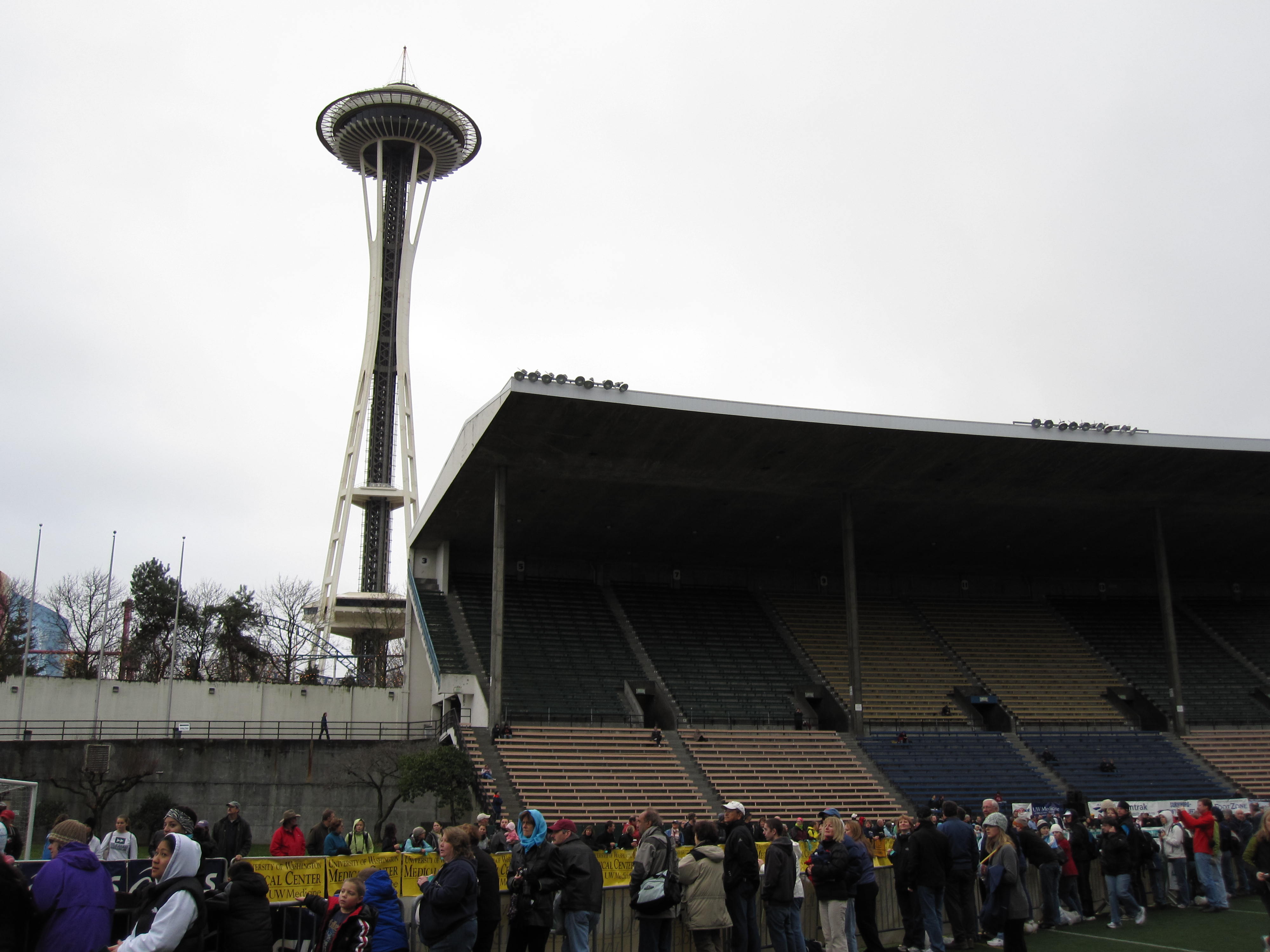
Seattle Half Marathon. Perfect conditions, overcast (duh), high 40’s, breezy. New personal record by nine whole seconds. 1:31:14. Very honest effort. Unfortunately, forgot the Garmin. I remember the following splits. 1, 6:52; 2, 6:54; 4, 27:29; 8, 55:34; 10, 1:09:34 (new p.r. too). Went out faster than normal and hung on decently. Despite the hills, I think I ran every mile between 6:52 and probably about 7:05. Not bad considering I probably can’t break 6:15-6:20 for one mile. Lost the 1:30 pace setter on the down hills. I’ve asked Lance to teach me how to run downhill but he just yammers something about “proprietary knowledge” and “competitive advantage”.

GalPal said she can’t get over some of the people who finish in front of me. “What 300 pound women?!” “No, not quite, but not people who I would guess are faster than you.”

Positive morning completely overshadowed by incredibly tragic shooting of the Lakewood Police Officers. I drive by that coffee shop several times a week.

Start and Finish

Recovery nectar

Recovery Nectar

Cultivating Passion

From The Global Achievement Gap by Tony Wagner.

“Michael Jung. . . believes that ‘there are only three reasons why people work or learn. There’s push, which is a need, threat or risk, but this is now a less plausible or credible motivating force [in the industrialized countries] than it has been, even for the disadvantaged. There’s transfer of habits—habits shaped by social norms and traditional routines. But this, too, is becoming weaker now, because of the erosion of traditional authority and social values. That leaves only pull—interest, desire, passion.’ I understand Jung to be talking about three kinds of human motivation. Physiological need is one—the need for food and shelter and so on. But he suggests that with high rates of employment and government safety nets, this is less of a motivational force in many young people’s lives than it once was. The desire to adhere to social norms is another human motivation that is weaker than it used to be, because traditional sources of authority, religion and family, have less influence on young people today. Jung believes that it is the third motivational force—interest, desire, and passion—that increasing numbers of young people are seeking and responding to in school and at the workplace.”

We tend to be products of our environments so I wouldn’t describe the transfer of habits/adherence to social norms argument quite like Jung and Wagner. The influence of significant others, for better or worse, is still there. My clearest childhood memories of my dad are of him pacing the house as he memorized his sales presentations.  Five or six at the time, the impact was indelible. Every family has momentum, whether positive or negative. Because of my parents, ours was positive which is not synonymous with perfect. If a critical mass of adults in a young person’s life aren’t working and planning for a better future, we can’t expect that young person to care much about school work, continuing their education, or making a positive difference in the world.

If we agree that young people are mostly motivated by interest, desire, and passion, as I’m inclinded to do, we need to rethink teaching, coaching, and parenting. In his book, Wagner tells Kate’s story, a senior in high school. “Kate suffered from too much of the wrong kind of adult authority,” Wagner writes. “She was overmanaged for success—success being narrowly defined as getting into a college her parents and teachers considered to be top-notch and having a high paying job.”

What good are high standardized test scores and good grades if a student lacks specific interests, desires, and passion? What if they learn to “do school” but fail to become passionate about anything?

The seventeen and eighteen year-olds that I know are striving to get into the best colleges possible. But what makes one college better than another? US News and Report offers pseudo-empirical answers based upon numbers colleges get good at manipulating, but there’s more art to educational excellence than science. Maybe the best college is the one where faculty and staff help students discover their interests and desires. They advise and teach passionately; consequently, students become more passionate about writing, or a language, a culture, an environmental challenge, a historical period, a social movement, global politics, law, or medicine. I’d like to see USN&R measure staff and faculty passion for advising and teaching.

If I did a focus group with my daughter and her twelfth grade friends, I suspect all of them could identify things they like, but only a few could explain in any detail what they are most passionate about and why. And surely those few that are ahead of the curve need guidance on how to turn their passions into purposeful vocations. My wish for my daughter and her friends is that over the next four or five years they become more passionate and begin translating their passions into meaningful, rewarding work.

Image of the Week—11/25/09

Timeless

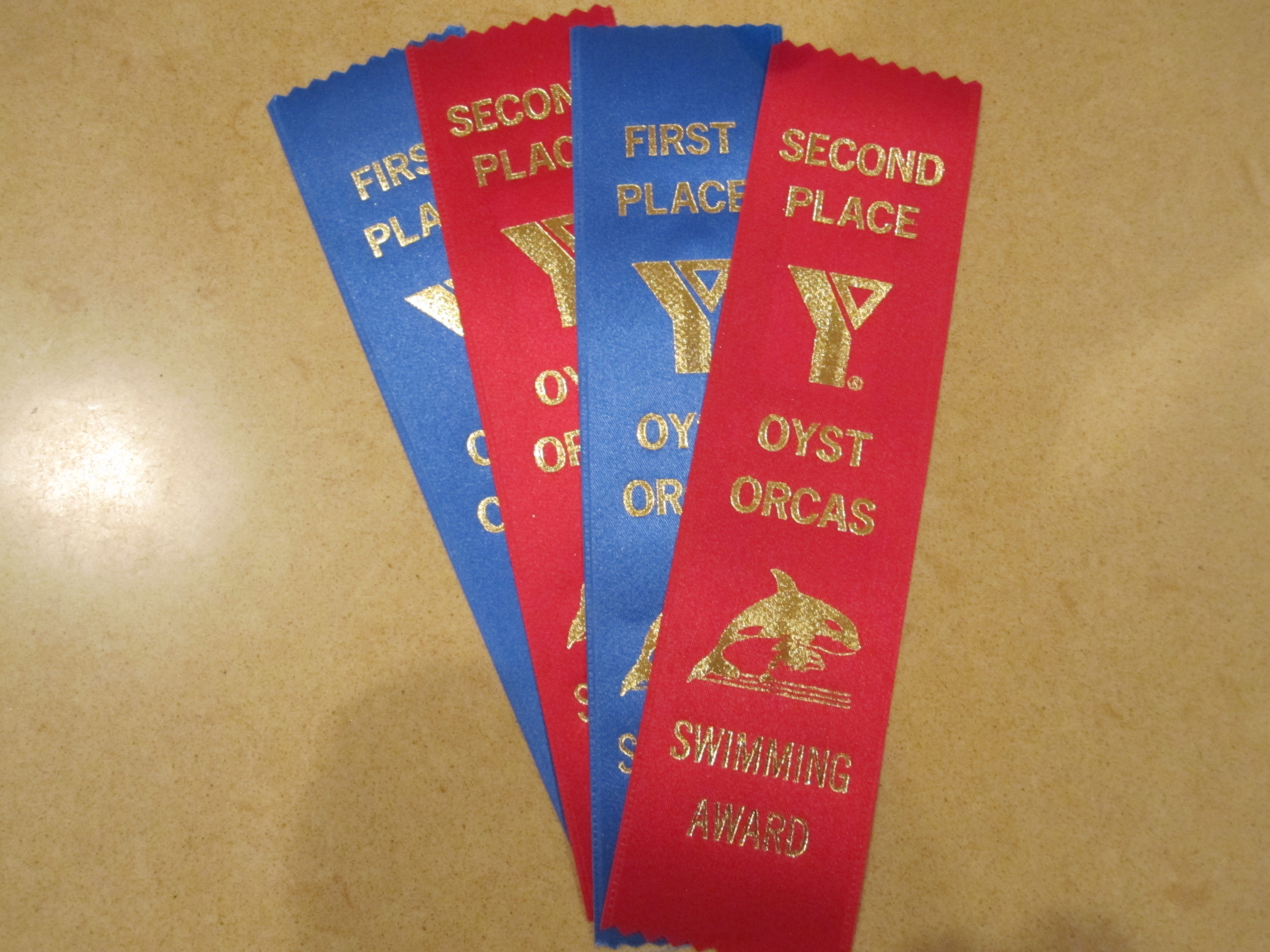
Name something that’s utterly unchanged over the last four decades. Answer: swim meet ribbons. More design genius. If it’s not broken. So simple, yet so motivating.

Yes, rest assured, these babies still have the little white tab on the back with all the pertinent race info for sports historians.

Fourteen brought them home from a recent meet. I used to store mine in a cigar box with my baseball cards. Not all of mine were blue and red though! The beauty of swimming for the Y is they’re never very strong teams, so here’s the formula: 1) pretend there are no uber-fast club swimmers; 2) load up on blue and red nylon goodness; and 3) bask in heightened self-esteem.

Heightened self-esteem, hum. Maybe I should start handing these out in my college writing seminar after reading each batch of papers. Maybe the Villanova women got ribbons like this Monday at the NCAA cross country meet. Maybe I should have given a blue one to Lance for his winning finishing kick at the end of Saturday’s 10 miler. Maybe I should have given the wife a blue one this morning for sleeping more hours than me. Maybe I should send each of the Seahawks a red one for finishing second to the Vikings on Sunday. Maybe if I had sent Sarah Palin a red one last November she wouldn’t have felt the need to write a book and travel the country promoting it. Maybe I should give Marley a blue one each time he fetches the morning paper.

Clearly, these timeless treasures deserve a wider audience.

Happy Thanksgiving.

The Week that Was—11/16-11/22

11/16 M T W R F SA SU Total
S 4,000


1,500 p/b 22:05

300kick

300drills

18×100

3rdIMon45

25’s/35’s

500 c.d.

4,000
C 17 1:05


55/10

17 1:05


50/15

34
R 7.7 1:01:30


5hillrepeats

6.3

5k 21:20


6:57,52,42

6.3 10.5


1:20:51

7:43

31

S—22:05 for 1,500 (scy) isn’t fast by any stretch of the imagination, but it’s faster than I would go without the paddles and buoy. I have no kick normally and the buoy I use could double as an ottoman. It lifts my hips almost like a wetsuit and so I don’t sink quite as much on my awful flipturns. So adjust accordingly. The 18×100 set was a lot easier than normal. Oh yeah, doh, I’ve always done them on 1:40. Five seconds makes a big diff. Not all of us can hammer out 10k weeks in the water like Lance.

C—The bad news, looks like I’m going to come up about 50 miles short of my 2009 goal. The good news, new p.r. for miles in a year.

R—Solid pre-race week. Not sure yet whether to “take what my body gives me” on Sunday in the Seattle half or force myself into a more challenging than normal pace per mile or some combination of the two. Please advise.