Palm Desert To Hemet

There are better ways to start your day. I was maybe a mile in to today’s stage when this flashed across the bottom half of the Hammerhead Karoo head unit, “Climb 1, 24 miles, 5,000′.” Mother sucker. Or something of that sort.

Beautiful desert/mountain scenery that I was working way too hard to fully enjoy. Working hard doesn’t mean going fast. I was more conservative than your MAGA uncle who ruined last Thanksgiving. At one point, Matt, one of the Bay Area Boys, passed me like I was standing still.

No real shoulder to speak of. Cars flying by. Death grip on the bars. And you may not know this because you’re way faster than me, but it’s hard to hold a line when you’re doing 7-8 mph.

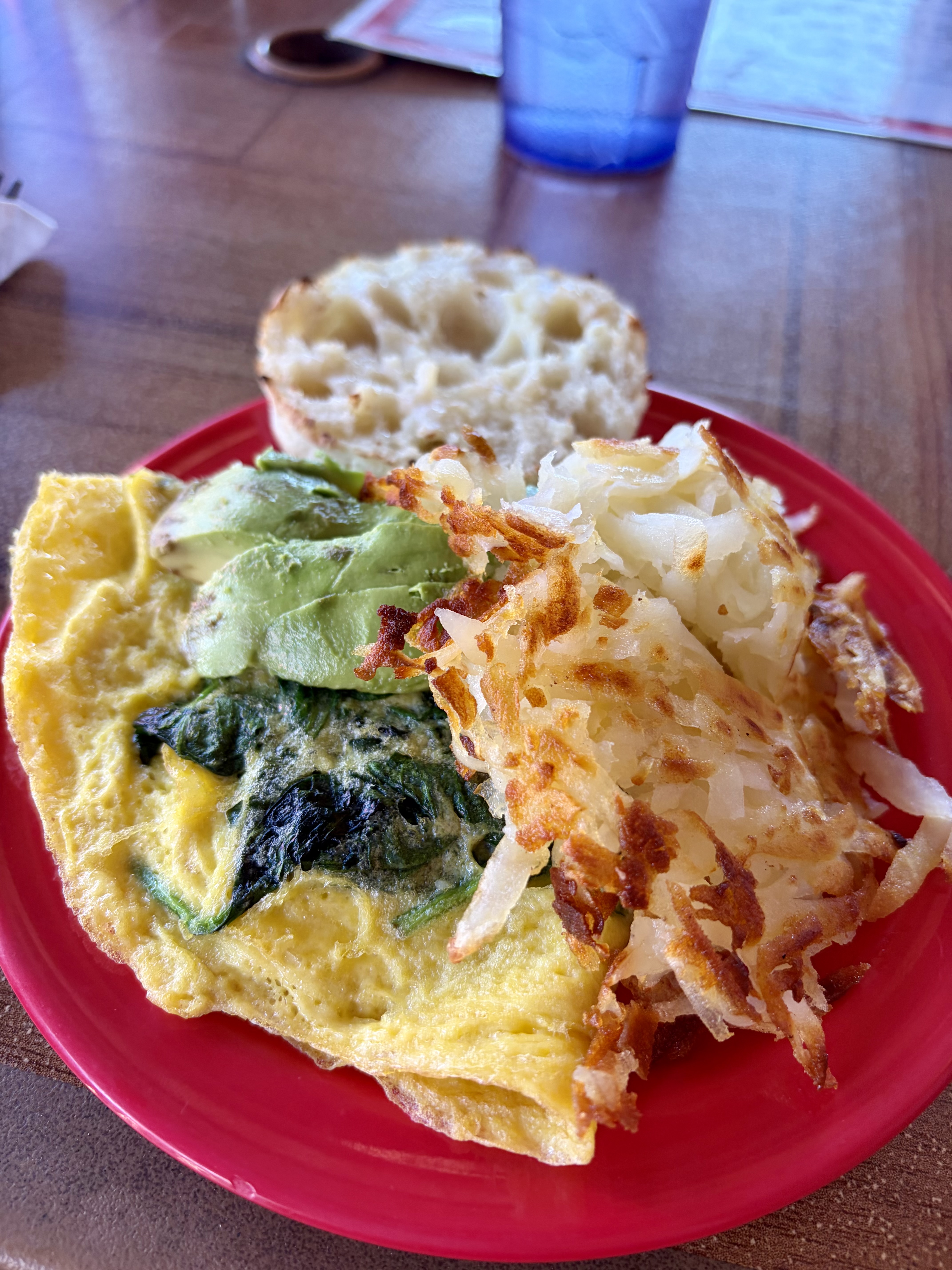
Three hours to get to the top where several guardian angels appeared in succession. First, Skip, today’s van driver, materialized out of thin air about 4 miles from the top with water right as I emptied my second bottle. Then, he drove ahead to the small/rural restaurant that doubles as a mail station for Pacific Coast Trail through hikers. There, Linda split her amazing breakfast with me. Then Skip split his with me too. Then some bikepacker who couldn’t finish his breakfast burrito at a nearby table, offered it up. Then Chucky Chuck gave me one-fourth of his tuna melt. I just sat there and vacuumed everyone’s sloppy seconds for an hour! It cost me the stage victory, but was SO worth it.

Griffin loved the descent. My bod is too broken down for me to have fully enjoyed it. Wrists hurt from all the braking, bony ass screaming for relief, lower back uber tight. Plus, I was thinking of Jeanette who told me, before I left, it’s “different having one parent”.

Following the 12 mile descent, the flat, hot run in to town was pretty uneventful except for Linda’s flat which was difficult to fix. No doubt Griffin’s fault. Once he flatted yesterday, others thought they’d join in. Since I smelled the barn, or in this case a gritty hotel, I did all the work. And no, to answer your question, neither Marky Mark or Chucky Chuck thanked me.
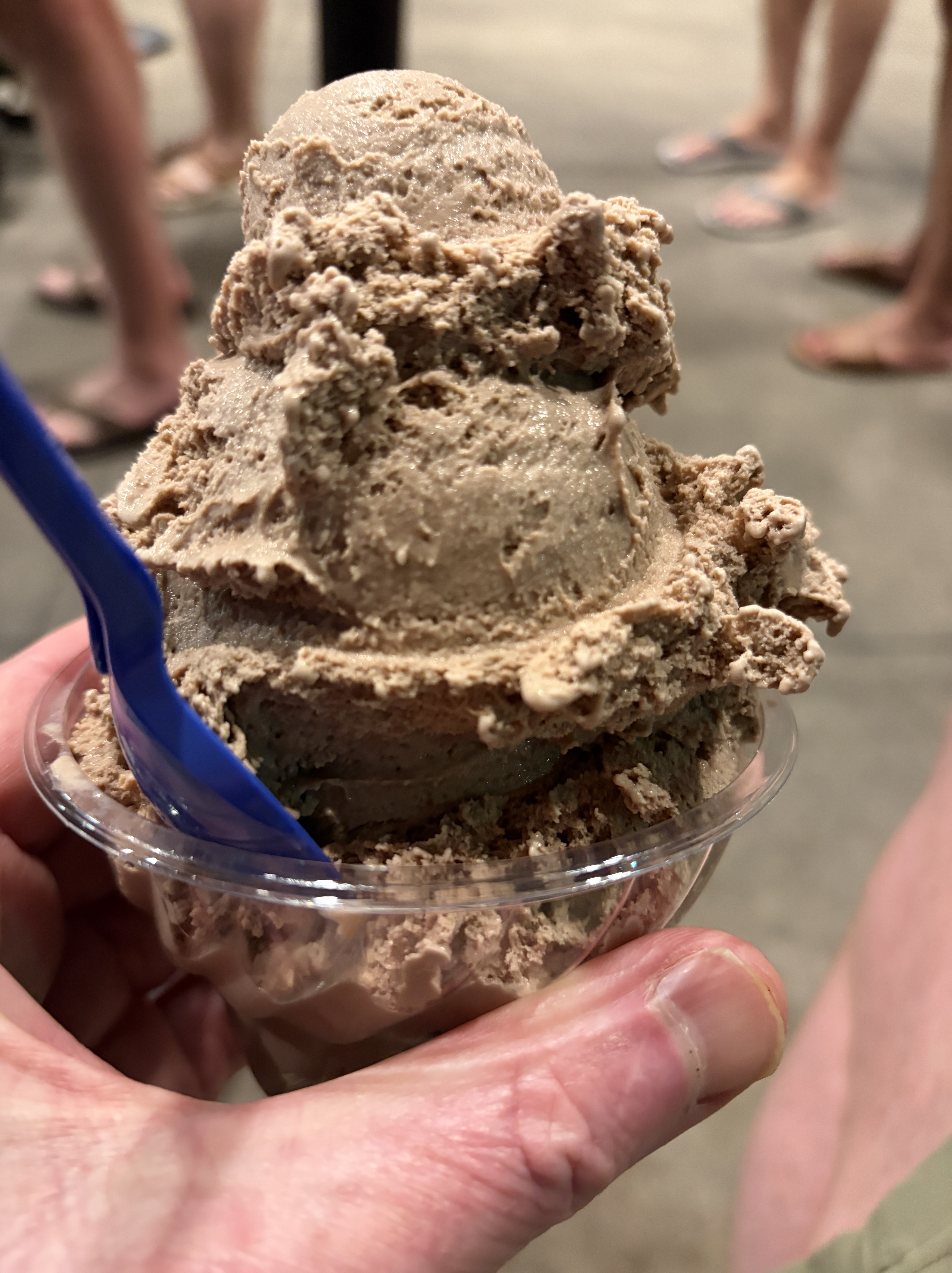
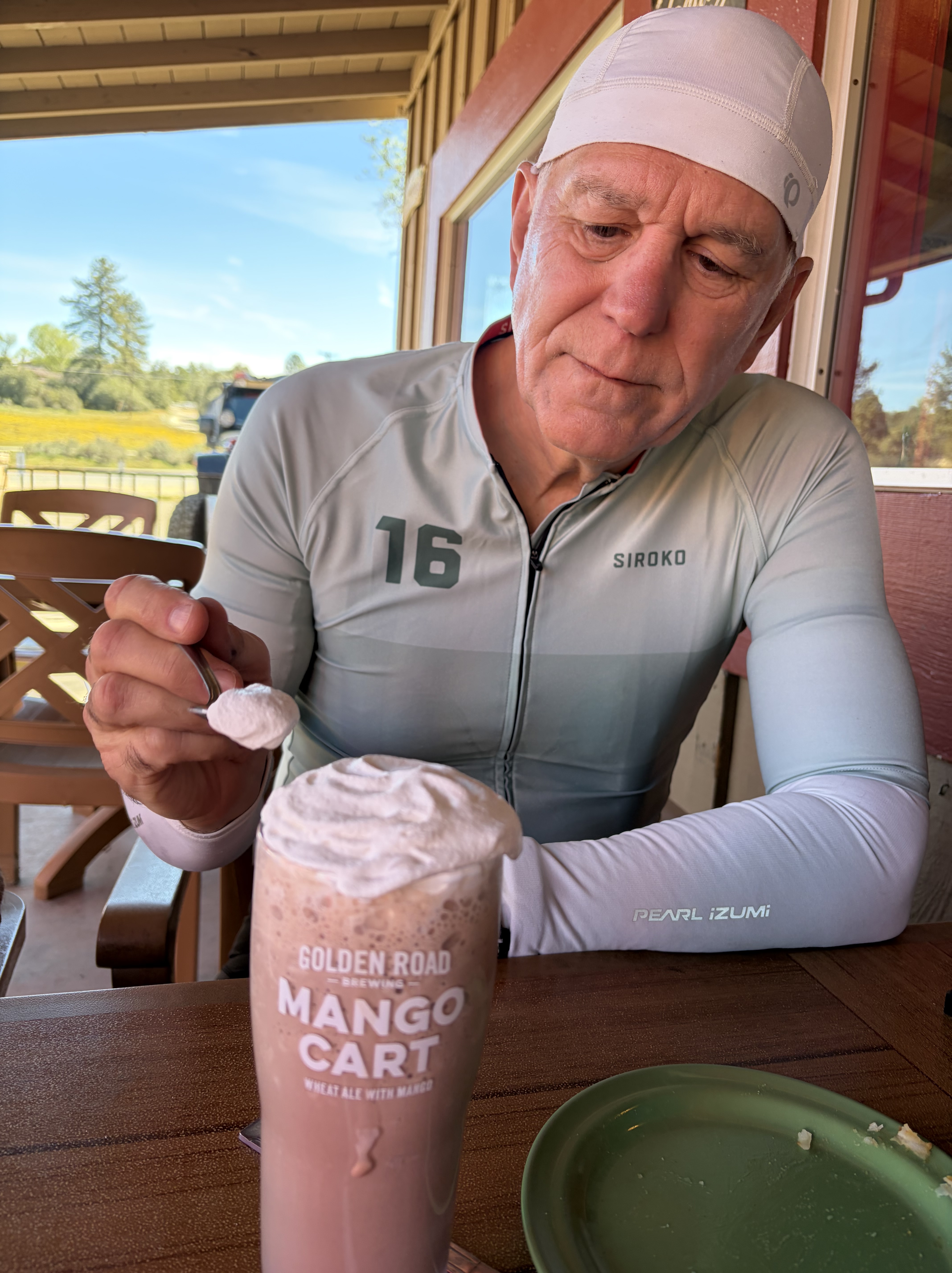
Couldn’t have completed today’s stage without last night’s desert. Hayden’s for the win.
Griffin’s desert game similarly strong.

From whence I came. Halfway to the top.
How do you spell guardian angel? L-i-n-d-a.
Packages awaiting PCT-ers
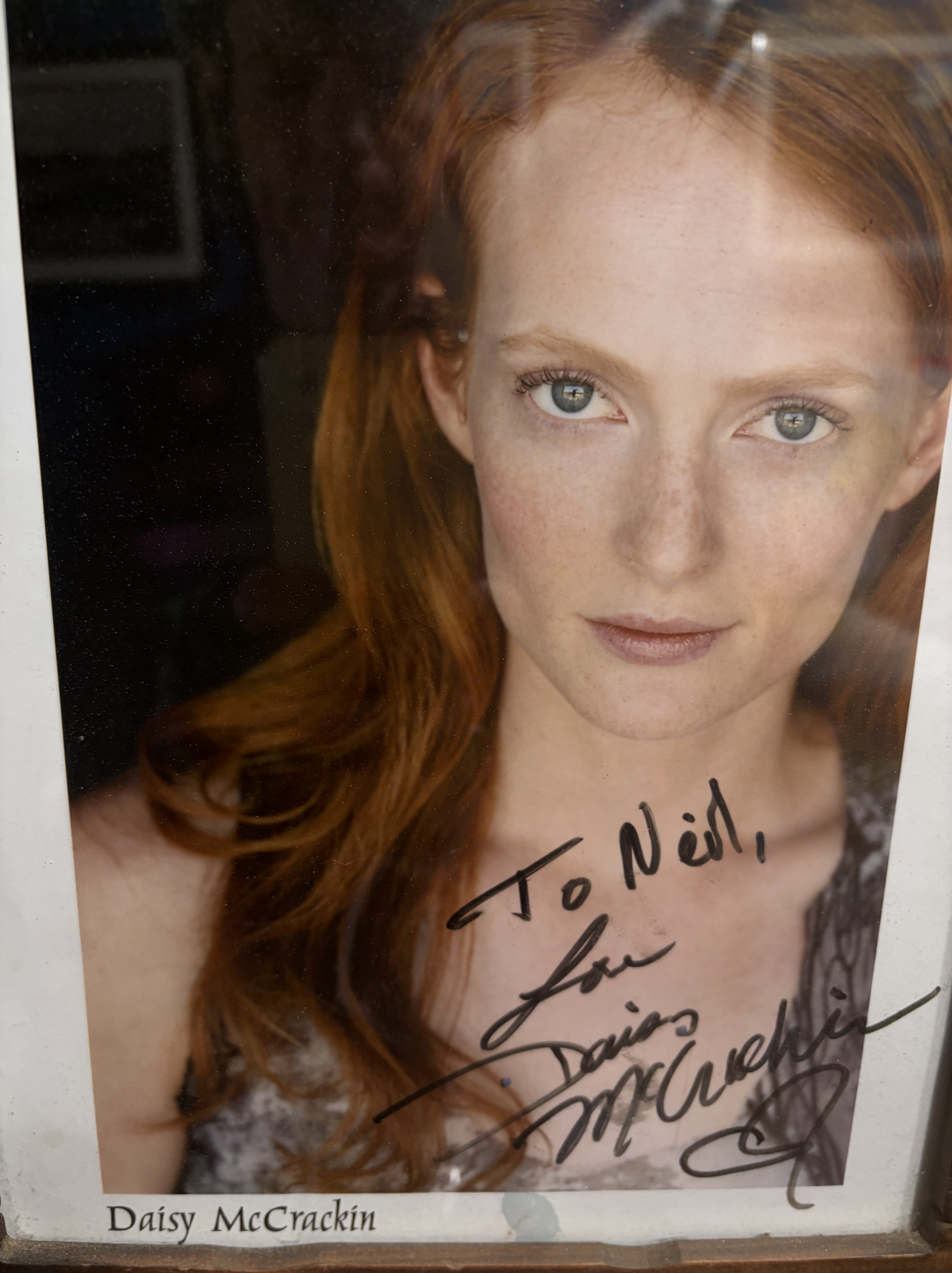
Pic across from the packages. WHO is this woman? I only ask because of the red hair.

Postscript. So disappointed in all of you. Walter and Jesse weren’t making cocaine in the desert in their RV, they were making meth. Let’s all commit to reading a little closer.

The Maximum Marriage

Man did I hit a wall a third of the way through David Brooks’s Second Mountain. Despite it weighing two pounds, I could not pick it up. Instead I watched The Handmaid’s Tale, Stranger Things, Billions, and went full New Yorker.

But since I keep thinking I may use a chapter of it in my writing seminar this fall, I have begun reading it again, Part III in particular, titled Marriage. The first of the five marriage chapters is “The Maximum Marriage”. At the risk of creating cliche-i-cide, this is the idea that you should never settle in marriage, instead you should go ALL IN with a soul mate who completes you.

I have several problems with Brook’s marriage advice. The first is that he failed at his. Of course this doesn’t disqualify him, assuming a greater degree of reflection and vulnerability than he shows. He alludes to being the problem and explains that his ex-wife and him have an agreement not to talk about the dissolution of their marriage, perfectly understandable, but then it’s probably best not to present oneself as an authority.

Brooks is newly married to his former research assistant, a much younger woman for what it’s worth. When reading him wax poetic about maximum marriage, I can’t help but wonder what went wrong, why, and what about the references to the “art of recommitment”?

I also have questions if not concerns about the concept of “maximum marriage”. Recently, an acquaintance gave up her will to live a few weeks after her lifelong husband unexpectedly died. That’s an extreme example, but surviving partners of long-term maximum relationships or marriages often struggle with how to live without their “soulmates”. Brooks makes passing references to “autonomy” when that concept, in my opinion, deserves more attention.

Brooks also breaks down the “stages of intimacy” in the manner of someone who gives too much credence to every social science article he reads. He slights the mystery of intimacy and the organic nature of how two people create intimacy and sometimes decide to team up for life. In addition to describing intimacy in too linear a fashion, he doesn’t offer young people any practical advice on how best to answer the innumerable questions he suggests people considering marriage ask themselves.

Sometimes I suggest, based upon my experience backpacking in Southern Mexico in 1986 with who would become the Good Wife on 7/11/87*, that the newly in love backpack together in a developing country. I promise you’ll learn more about one another in a month than you probably would in a year. How do they make decisions? How do they spend money? How do they deal with sketchy hostels? How respectful are they of others? Are they quick to laugh or humor impaired? And most importantly, are they kind and are you a better person as a result of their friendship?

It’s funny isn’t it, the Humble Blogger giving the New York Times writer a hard time about his book. But why quit now. Brooks quotes other people way too much. Half the time the quotes do not have the intended effect, I’m often left thinking “huh” even after a second reading, and the incessant quoting compromises his voice. Of course I’ve already argued he’s not the most credible person on the topic, but his consistent leaning on others doesn’t solve that dilemma, for me, it only adds to it.

Also, despite Brook’s fealty to all things social scientific, a glaring oddity is that he never mentions the role money often plays in failed marriages. I can only speculate that’s because his ex-wife and him never lacked for it and most of his friends and acquaintances are similarly well-to-do. How does he spend fifty pages giving marriage advice without even touching upon financial compatibility?

So why, given my criticisms, is Second Mountain a best seller? In fairness, there’s good mixed in, but I suspect a large part of it is professional reputation. Given his previous writing, and his very high profile, he gets the benefit of the doubt from most readers. Oh, Brooks is often insightful, so this must be too.

Not necessarily.

*don’t feel bad if your “Happy Anniversary” card arrives late