
What Well-To-Do Retirees Get Wrong

Look at me with the click-baity title. Somehow forgot the word “Some”. Some wealthy “seasoned-citizens” sacrifice their present well-being for their heirs’ future well-being. I normally applaud selflessness, but in this case, wealthy retirees are missing the forest for the trees.

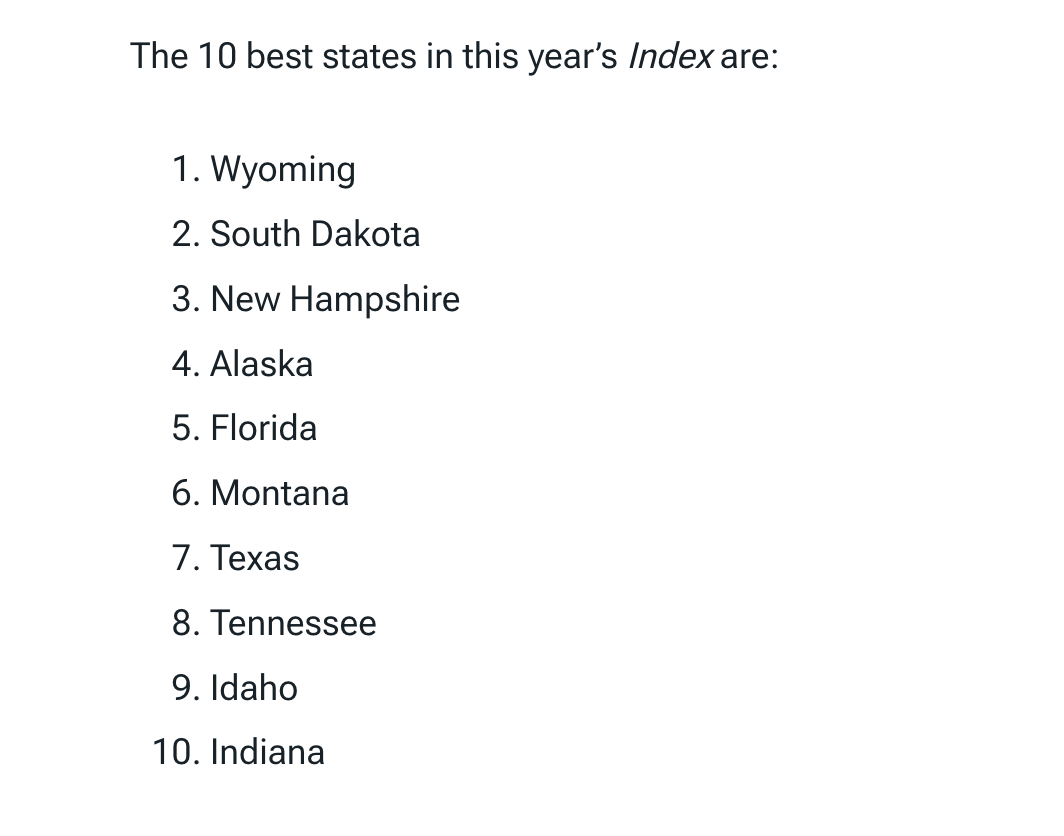
Increasingly, as some states, like these ten jack up their estate taxes to make up for budget shortfalls, the monied class in the (dis)United States talk of moving . . .

. . . to these ten states in order to save their heirs lots of money on future taxes.
Relocating, of course, means abandoning established friendships, the exact thing social scientists point to as most important to one’s well-being and longevity. That friend-group coffee, bike ride, dog walk, dinner party, book club, it’s the closest thing there is to a panacea for improved health and happiness.

You protest, “Ron, knucklehead, I can make new friends while saving big bucks at the same time.” Tru dat, but you can’t rush the building of truly close interpersonal relationships. There’s no short cut to true familarity and intimacy. They take serious time.

Also, a common thread of especially close interpersonal relationships is a shared history. My friends and I routinely tell the same stories over and over, stories from our collective past that we no doubt embellish as we do. Those exaggerated stories are the scaffolding of our friendships. There’s no fast-forwarding to a shared history. And spoiler alert, the older one is, the less time there is.

So go ahead, pack up, sell your crib, move out-of-state, hug your spreadsheet, and stick it to your state government. That is, if you haven’t built meaningful friendships and like being penny wise and pound foolish.

Source.

Give Poor Students Computers and Watch Nothing Happen

What happened when researchers gave computers to randomly selected California schoolkids whose families had no computer at home? In short, nothing.

Matthew Yglesias reports:

. . . kids reported an almost 50 percent increase in time spent using a computer, with the time divided between doing homework, playing games, and social network. But there was no improvement in academic achievement or attendance or anything else. There wasn’t even an improvement in computer skills. At the same time, there was no negative impact either. The access to extra computer games didn’t reduce total time spent on homework or lead to any declines in anything. They broke it down by a few demographic subgroups and didn’t find anything there either. It’s just a huge nada. Nothing happening.

More Yglesias:

We know that kids from higher-income households do much better in school than poor kids. But that of course raises the question of why that is exactly or what one might do about it. . . If access to home computers was associated with improved school performance, that would be strong evidence that simply fighting poverty with money could be highly effective education policy. The null finding tends to suggest otherwise, that the ways in which high-income families help their kids in school don’t relate to durable goods purchases and may be things like social capital or direct parental involvement in the instructional process that—unlike computers—can’t be purchased on the open market.

Forget the “may be”. That is how high-income families help their kids in school. We also know kindergartners begin school with serious differences in vocabulary based upon their parents’ socio-economic status. Some kids luck out with two parents, one who might stay at home with them. When they’re not napping, they’re talking. Less television, more talking, much more extensive vocabulary. Think of that above-average age 5 vocabulary as kindling in the fireplace of formal schooling.

“Direct parental involvement in the instructional process” takes many forms. When I went to my youngest daughter’s first field trip when she was five, at a local farm, there were 24 pipsqueaks and 36 parents. We had the kindergartners and animals outnumbered. High-income parents volunteer in their children’s primary schools, they regularly meet with their teachers, they read to their children at night, they (especially grandparents) buy them books by the bushel, they organize school fundraisers, they make sure their school is well supplied, they monitor homework, and they hire tutors, counselors, and related specialists when something is amiss. Most recipients of that type of care think, “I don’t want to let them down.” Think of that resolve as the matches in the fireplace of formal schooling.

Social capital is the network of already well educated people—both within and outside one’s family—who collectively create positive momentum in well-to-do families. Often, it’s subtle, nuanced, and indirect. College-related stories are told at dinner, a new job or promotion is discussed, older siblings succeed. Achievement is assumed. At other times, it’s anything but subtle and nuanced as when a family member or influential family friend asks acquaintances in high places to grant an interview, internship, or job.

Given this dilemma, conservatives argue that spending more money on low-income students is pointless. Progressives draw a different conclusion. We gladly accept the Right’s premise that equal opportunity is essential, but we point out what they conveniently ignore. We can’t have equal opportunity writ large if young people don’t enjoy equal educational opportunity.

And since schools don’t have the wherewithal to level the pre-natal to before school playing field, or balance parent school involvement, or equalize social capital, it’s imperative that school’s compensate for societal inequalities that are not the fault of low-income students. If free computers aren’t that answer, what is? Some possibilities: smaller classes, the best teachers (who usually teach the best students); summer remediation programs; community-based internships and mentors; and longer school days/years.

All of those together won’t close the academic achievement gap. At best, they’ll partially reduce it.