Tired

I used to be more like Bill Gates, my sister, Jon Kitna, and my wife. I wanted to help people improve their lives. Volunteer time in my community. Change the world for the better.

Now, Stoic sensibilities make it unlikely you’ll see me in a street protest near you. When I read essays like Gates’ recent one titled “My Plan to Fix the World’s Biggest Problems,” I marvel at his ambition. Twenty years ago I could have written a decent essay with that same title, but not now.

Saving any subset of the world requires endless teaming with others. Which makes me wonder. Or makes me worry. Being an introvert, and having taught for three decades, am I bumping up against my optimal number of lifetime interpersonal interactions?

Just because my gray-bearded self is less activist than my younger self, it doesn’t necessarily mean I’m more selfish. I still care about teaching well. And I’ve enjoyed helping other teachers refine their craft this academic year. And I hope this blog occasionally entertains, informs, or enlightens. And I vote (in most elections), try to encourage my family and friends, help old ladies across the street, and never litter.

I don’t begrudge the World Changers anything, I just don’t feel as much camaraderie with them as in the past. This isn’t flattering to write at all, but compared to the past, I’m more accepting of many of my community’s, country’s, or world’s long-standing problems. More content to study and try to understand the root causes of problems. When I try to tap some sense of righteous indignation, all I get is Buddhist detachment. More honest and authentic. Less a role model.

No, I was not the male lead in Silver Lining Playbook, but I can understand your confusion.

No, I was not the male lead in Silver Lining Playbook, but I can understand your confusion.

The Essential Dilemma of Human Intimacy

Oliver Burkeman’s The Antidote: Happiness for People Who Can’t Stand Positive Thinking, with its discussion of Stoicism, has me thinking about the Newtown parents. Burkeman and the heartbreaking portraits of the dead first graders. With their beautiful, innocent smiles, and future promise.

It’s difficult to imagine anything more difficult to overcome than a parent having to bury their six or seven year old child. Friends of ours watched helplessly for a year as their eight year old son died from leukemia. I tried to empathize, but probably failed to scratch the surface of their heartbreak.

The Newtown parents didn’t have any reason to take a little extra time the fateful morning of the shooting to be especially present and loving. One wonders, how will they survive the shooting? Right now, their sadness is bound to overwhelm ancient Greek wisdom and everyone’s best intentions. The best way to support them is to respect their privacy and make sure our representatives enact meaningful gun control.

But what if we shift things a bit to think about Stoicism and our lives, and the people we’re closest too, and their eventual deaths. And the essential dilemma of human intimacy—the closer and more meaningful the friendship, the greater one’s vulnerability, the greater one’s vulnerability, the more intense the pain upon death.

There is a way to minimize the probability of intense grief, keep friendships superficial. But who wants to compromise the quality of their life that way? So what are we to do? Being intimate and dependent upon others doesn’t mean we’re doomed to debilitating sadness upon each of our close friends’ or family members’ deaths.

The ancient Greeks wrote about the impermanence of everything and encouraged people to reflect on the worst things that could happen to them. The result being greater appreciation for their material well-being, their health, their work, and their family and friends. Taking time to think about worse case scenarios, or negative visualization, also mentally prepares one for inevitable changes in life, including especially sad ones such as the death of a loved one.

The ancient Greeks also emphasized living in the present, an “easier said than done” cliche if not developed more fully. Think about how different birthday celebrations might be if everyone committed to living more in the present. Instead of giving the birthday person gifts (kind of an odd practice if you think about it, “Hey congrats on being born!”), and asking him or her to make a wish for the upcoming year, the party would be a celebration of the previous year. The message being that life is fragile and isn’t it wonderful that we had another year to enjoy the birthday boy’s or girl’s friendship. Each person could reflect on the birthday person’s previous year and share what has been most memorable and what they most appreciate about them. And yes, of course we can keep the cake and ice cream.

My dad died suddenly at age 69. I was 33. I was devastated in part because it wasn’t until my mid 20’s that we started to understand and appreciate one another. I thought we had the luxury of time for our friendship to flourish. But shortly afterwards, I started to think like a Stoic before knowing anything about Stoicism. I realized I could be upset that our friendship didn’t get to mature or I could be thankful that we enjoyed a positive and more personal 5-10 years. I’ve chosen the later. And that decision informs the way I try to live. I want to love boldly, fully appreciate my friends and family, and celebrate each passing year as an undeserved gift.

My hope is that with the passing of time the Newtown parents can make a similar switch from understandable anger at the time they won’t get to spend with their sons and daughters to appreciating the six or seven years they did get with them.

That math and psychology will be tough. Godspeed Newtown parents.

imgres

Hope I Can Believe In

Please don’t slam the door. This is not a political message. I wouldn’t do that to you at this stage of things. That would be like throwing snow balls on top of you while buried under an avalanche (of incessant mailings and recorded phone messages).

You’d enjoy visiting either of my Pacific Lutheran University Writing 101 sections titled “The Art of Living” because each has developed a fair amount of trust and they’re pretty darn thoughtful when discussing challenging, consequential, open-ended questions like: Does one need a philosophy of life? Why is it so difficult to maintain a sense of gratitude for what we hold most near and dear? And what’s the relationship between wealth and happiness?

I like teaching writing which makes me an outlier. Most of my colleagues probably don’t because you have to read a lot of papers of uneven quality and there’s no formula for teaching someone to write. Also, it probably wouldn’t be much fun if you lacked self-confidence in your own writing.

I like it because learning to write well is transformative. I would have written “life changing”, but as a writing teacher I have to avoid cliches. Also, Writing 101 faculty get to choose their own themes and 18-19 year olds are at a fascinating stage of life—neither child nor adult, neither dependent nor independent. First years have to make a steady stream of consequential decisions mostly by themselves.

That realization inspired my current course, “The Art of Living”, which is based on a series of weighty questions upon which reasonable people disagree. The course consists of the following subtopics—Philosophies of Life, Gratitude, Education, Vocation and Money, Family and Friendship, Wellness, and Aging and Death.

During one class activity, I shared that I’m the King of Nicknames, which immediately led one student to request one. As is often the case after bragging, I was off my game and resorted to a weak formula, first initial, first syllable of last name. Understandably, KMitch wasn’t overly impressed, but as it turns out, there’s some WRIT 101—11:50a.m. greatness contained in that formula—EBai (pronounced EBay), KBum, EJack, and ALutt (pronounced A Lute, PLU students, for reasons I doubt I’ll ever understand, are referred to as Lutes)

KMitch, EBai, KBum, Ejack, and ALutt have a choice for paper four. They can agree or disagree with Krznaric’s paragraph to ponder highlighted in my last post or describe a personal, week-long experience with voluntary deprivation. From the syllabus:

Irvine advocates voluntary deprivation or periodically forgoing opportunities to experience pleasure because it has a dark side. In his view, we should sometimes live as if bad things have happened and embrace hardships like not having enough money for life’s essentials. That way we harden ourselves against misfortunes that might befall us in the future. That way we extend our comfort zone, reduce anxiety about future possible discomforts, and learn to appreciate what we already have. Absent self- control, we’re unlikely to attain our life goals. Irvine also suggests that forgoing pleasure can itself be pleasant. In preparation for writing this paper, practice voluntary deprivation for a week or longer. Repeatedly forgo some opportunity to experience pleasure (e.g., warm showers, three daily meals, wearing shoes, being connected to the internet). Next, reflect on your experience and explain what you did, why, and what you learned from it. Also explain whether and why you’re more or less convinced of Irvine’s recommendation that people periodically practice voluntary deprivation.

I didn’t know if this class would fly. I wondered if the students would get into the texts, William Irvine’s A Guide to the Good Life and Richard Krznaric’s The Wonderbox. And would they make time to think and then share openly and honestly with one another? Fortunately, on both accounts, most have, most of the time. I probably benefit from how few weighty questions are posed in standardized test-crazed secondary schools today. And by how few dinner conversations crack the “news, weather, and sports” surface. The students seemingly appreciate the opportunity to think aloud about substantive stuff and to learn what their peers are thinking.

When it comes time to communicating substantive ideas on paper their two greatest challenges are using specific nouns in place of vague ones (the favorite is “things” and variations of it, something, everything, anything) and writing more concisely. My goal is to help them grow vagueness and wordiness antennae.

It’s a privilege to work with young people who give me hope in the future.

Stop Trying to Control Things Outside of Your Control

William Irvine, in A Guide to the Good Life, explains we’re susceptible to negative emotions like anger, fear, grief, anxiety, and envy because of our evolutionary programming. Each of those negative emotions increased our earliest ancestors’ odds of survival, so overtime, they became engrained in us. For example, early humans who weren’t afraid of lions were less likely to survive long enough to pass on their genes. Similarly, those that didn’t worry incessantly about having enough to eat were less likely to survive long enough to pass on their genes.

Irvine explains the good news. Since we can reason, we can understand our evolutionary predicament and take conscious steps to at least partially escape it. For example, the pain associated with a loss of social status isn’t just useless, it’s counterproductive. We need to learn to “misuse” our intellect to override the evolutionary programming that makes us susceptible to negative emotions.

In short, Stoics pursue tranquility. The major impediment to tranquility is our evolutionary programming. Tranquility and inner joy is achieved by “misusing our reasoning ability” via repeated practice at using specific Stoic psychological techniques.

For example, we must overcome our evolutionary tendency to worry by determining which things we can’t control. Irvine labels this the “trichotomy of control.” Once we identify those things we have no control over, we can use our reasoning ability to eradicate our anxieties related to those things. Doing that improves one’s chances of gaining tranquility. To better understand the trichotomy of control, take a piece of paper, and using a ruler or folding it, make three columns. Label the first “absolutely no control”, the second, “total control”, and the third “some control”. It’s easy to quibble with “absolutely” and “total”, but work with me.

Here are some possible items for each column just to get your wheels turning. No control—the weather, the eventual death of loved ones, our own gradual physical decline, and how fast a competitor might show up at your next race. Total control—to eat nutritious food, to exercise daily, to get adequate sleep, to marry or not, to have children or not, to vote or not, to wear boxers or briefs. Some control—to shape your children’s values, to reduce your commute, to make your work environment more pleasant, to protect the environment.

It doesn’t take long into this exercise to realize the lines between the columns should probably be dotted since there’s often blurring. Not as fancy sounding, but a continuum of control would be better than Irvine’s “trichotomy”. The whole point is to learn to let go of everything that makes up the “no control” anxiety-producing end of the chart or continuum. Accept the fact that if you live in the Pacific Northwest it’s going to be overcast for seven or eight months of the year. And there’s going to be an incessant light rain for those seven or eight months. I originally wrote, “incessant, annoying light rain,” but that’s the exact point. Only things we have some or a lot of control over should have the potential to annoy us.

One last example of learning to let go of those things beyond one’s control. One night last week I asked Seventeen what she was swimming in the meet the next day. “The 50 and 100 free I think.” Internal dialogue. “What?! That’s what the beginners swim. That’s embarrassing for a fourth-year co-captain.” Actual response, “Really?!”

Parenting fail. She could feel my disappointment. In a bathtub (too much information too late alert) partially filled with very warm water, I replayed our brief exchange in my mind. I realized I could give in to negative emotions and be frustrated that she doesn’t approach high school athletics they way I did or the way I think others should or I could recognize that she’s an independent young adult who can choose not to train until the season and who thinks of athletics first and foremost as another way of having fun with friends.

It doesn’t matter whether she swims a slow 50 or a fast 500. Positive parenting rests upon unconditional love. Post bath I attempted a recovery. “I’m really looking forward to watching you swim the 50 and 100 tomorrow afternoon.” “Good!” she said in a way that communicated forgiveness. All was well with Seventeen. And the world.

How to Live?

That’s the question my writing students and I are focusing on this semester. I can’t think of a better age to craft a philosophy of life. Most of them are on their own for the first time in their lives. Having to make many, many more decisions by themselves and find their way.

William Irvine, philosophy professor and modern day Stoic, argues you’re likely to waste your life away without a well thought through philosophy of life. Here’s his argument.

You have three choices in how to live. One is “unenlightened hedonism” in which you thoughtlessly seek short-term gratification. Think Faber College, 1962.

A second is “enlightened hedonism” in which you seek to maximize pleasure in the course of your lifetime. People practicing this philosophy of life will spend time discovering, exploring, and ranking sources of pleasure and investigating any untoward side effects they might have. Then they’ll devise strategies for maximizing pleasure.

Regarding hedonism, Irvine writes, “In my research on desire, I discovered nearly unanimous agreement among thoughtful people that we are unlikely to have a good and meaningful life unless we can overcome our insatiability.” He adds, “There was also agreement that one wonderful way to tame our tendency to always want more is to persuade ourselves to want the things we already have.”

But I digress. The third and final choice in how to live is to carefully think through what you most want out of life and then organize your life accordingly. Not the goals you form as you live day-to-day, but one “grand goal in living”. Of the many goals in life you might pursue, which one do you believe to be most valuable?

Most people have trouble naming their grand goal in living because our culture doesn’t encourage thinking about such things. Instead, it provides an endless stream of distractions so they won’t ever have to. To their credit, some people swim against the stream of distractions by journaling, taking digital sabbaticals, enrolling in my writing seminar, and going on silent retreats.

If determining a grand goal of living isn’t challenging enough already, it’s only half the battle. The other half is developing effective strategies for attaining it. These strategies will specify what you must do, as you go about your daily activities, to maximize your chances of gaining the thing in life you take to be of most value.

This is where Irvine says Christian pastors and the ancient Stoics differ. Most Christian pastors, Irvine argues, focus on what people must do to have a good afterlife. Pastors, he says, have far less to say about what people must do to have a good life. That’s why, he notes, it’s tough to distinguish among the religious and non-religious.

For his own philosophy of life, Irvine chose to update Roman Stoicism for modern times. Stoics claim that many of the things we desire—most notably fame and fortune—are not worth pursuing. Instead they developed strategies for achieving tranquility and inner joy by eliminating negative emotions like anger, grief, anxiety, fear, and envy.

Eight years ago, when I was on sabbatical, I took time to write a guiding paragraph that I can’t find anymore in my computer files. I can remember most of it, but it’s okay I misplaced it, because it’s time to update it. And then reference it way more regularly.

If your curious about my philosophy of life, just eavesdrop on me as I live my day-to-day life. Because actions, of course, speak louder than words.

Uncle!

Growing up, that’s what I had to scream to get my older, more muscle-brained brother to temporarily stop pulverizing me. The other night, the youngest, the oldest-Betrothed, and I streamed an episode of Wonder Years. I said to youngest daughter, “Every time you watch Wayne, think Uncle D because they’re one and the same.” If you don’t know Wonder Years and aren’t familiar with Wayne, fix that.

One time, in my late elementary or junior high years, I frantically called my mom, a secretary, at work, “This time he means it! He’s really gonna kill me!” Her somewhat shaken co-worker said, “Aren’t you going to go home?” To which she replied, “No, he’ll be fine.” Yeah, if by “fine” you mean found unconscious in the fetal position on the kitchen floor. Once, when the most mad I had ever been, I remember “Wayne” saying to me, “If you hit me, you better knock me out, because if I get up I’m going to kill you.” What’s the statue of limitations on something like that?

Our last fight was when he was 19 or 20 and I was 16 or 17. All I remember is flying across the family room. My girlfriend was aghast. Everyone of the innumerable beatdowns will fuel me when racing Iron-person Canada in late August as I desperately try to level the score by beating Wayne’s time.

But I digress. My most recent reason for crying uncle has nothing to do with my knumbskull older brother. It has everything to do with this picture, taken while on the Eastern Sierra climbing trip I blogged about a month ago.

Living REALLY large

If you’re a regular reader, you know I’ve been going through a transformation of sorts—a reordering of my life based upon an amalgam of ancient philosophy, minimalism, and discontent with mindless consumerism. All of that exhausting, status quo fighting non-sense is now in my RV rearview mirror, thanks to a reverse Paul of Tarsus-like conversion inspired by seeing this badass rig up close and personal.

Uncle! I give up on trying to live more simply so that others may more simply live. My new motto is “You only live once. Embrace the bling. Less is less, more is more.” Admittedly, a tad wordy, but in the spirit of my conversion, if some words are good, more are better!

My plan is to find a similarly equipped rig on Craigslist. Well, maybe a little bigger. If you know of one that has a flip down plasma t.v. built in so that I can watch Will Smith movies outdoors, holla’.

A smaller ecological footprint be damned. Greater energy independence be damned. As one of my friends says, “Only when we’ve used up all the carbon-based energy, will we have real incentive to find alternatives.”

If you’ll excuse me. I’ve got a lot of shopping to do for the inside of my new rig-to-be. And no bro, you can’t roadtrip with me. You should have considered the possibility I’d end up living really large when you were floating like a butterfly and stinging like a bee.

Life and Death as a Minimalist

Mark Albert was one of my best friends when we taught together at the International Community School (I.C.S.) in Addis Ababa, Ethiopia twenty-two years ago. A University of Pennsylvania grad, Mark was super smart, quirky/funny, outgoing, sports crazed, and overflowing with energy for middle schoolers and math. After watching most of his classmates go to Wall Street, he decided to teach math in West Africa as a Peace Corp volunteer. After three years in Gabon, he started his international teaching career at I.C.S. He arrived with a treasure chest filled with all of his worldly possessions which consisted mostly of math textbooks, some beautiful West African shirts, and an acoustic guitar. A model of minimalism. Maybe one can’t help but be a minimalist when living on a Peace Corp stipend.

Today, like me, Mark is 50 and a part of the Sandwich Generation (SG). The SG consists of people mostly in their 40s and 50s who are “sandwiched” between aging parents who need care and their own children. According to the Pew Research Center, just over 1 of every 8 Americans aged 40 to 60 is both raising a child and caring for a parent, in addition to between 7 to 10 million adults caring for their aging parents from a long distance. US Census Bureau statistics indicate that the number of older Americans aged 65 or older will double by the year 2030, to over 70 million. SGers face many challenges including saving for their own retirement while trying to save for their children’s education.

The Wall Street Journal recently wrote about common challenges SGers face after elderly parents die:

As older parents approach death, they often leave lengthy to-do lists for their children. The tasks can be both physical and financial. Some children must deal with a tangle of arrangements—everything from heating-oil contracts to trusts—along with jumbled stock certificates, car titles or life-insurance policies for which there may be no backup copies. Others must sift through boxes or rooms full of belongings. Sometimes siblings get involved, complicating matters further. When the chores become overwhelming, it can be difficult for family members to recover sentimental treasures or tie up financial loose ends. At the extreme, the sheer volume of stuff can clutter a house and weigh down its value—a problem if the home must be sold quickly.

Often the heir(s) get so overwhelmed they procrastinate indefinitely. I didn’t realize how many estate sale and related companies exist to help heir(s) tie up every imaginable loose end. Probably a growth industry given the aging population.

While reading the article I reflected on how extremely lucky I am that my mom and in-laws have wills; have made arrangements for and already paid to be cremated; and have provided detailed, organized info on their finances. Their end-of-life planning is a natural extension of their lifelong love.

Another blessing, they’ve begun giving away things, but all that means is they have a tad bit less than a lot. Which got me thinking about my own death and how radically simplifying my life could be a powerful final act of loving kindness for my wife and/or daughters.

The mindless cliche, “He who dies with the most toys wins,” is exactly backwards because the larger your material footprint upon death, the more onerous the task for your heirs to divide up, toss, sell, and just plain deal with everything.

What if, as I age, I gradually shift from run-of-the-mill decluttering to radical minimalism. And how cool if I could time my death to give away everything except a token or two for memory sake—say my iPad 56 with pictures and video of our life together. So after the funeral, my heirs return to a near empty house, relax in a peaceful unhurried manner, open a bottle of wine, and say nice things about the guy who left so few loose ends.

Happy “Half Century” Birthday to Me

By the time you read this, it will be too late to get me something for my 50th birthday. That’s okay though because I’m in permanent “declutter, give away things” mode. It’s never too late to drop by, wish me a happy b-day, and take something.

Recently Olympia’s semi-permanent winter blanket of low lying gray clouds parted so I headed out for a sun run with Regina Spektor pulsing through the iPod. Her “On the Radio” lyrics couldn’t have been more timely.

This is how it works
You’re young until you’re not
You love until you don’t
You try until you can’t
You laugh until you cry
You cry until you laugh
And everyone must breathe
Until their dying breath

I’ve always thought of myself as young. Younger than my sibs; younger than my betrothed; younger than Madonna; the 20-something high school teacher; the 30-something college professor. Like wooden barrels bobbing atop Niagara Falls, I’ve watched most of my friends disappear over the 50-year old ledge already. Now though older peeps aren’t enough to counterbalance Spektor’s undeniable truth—You’re young until you’re not.

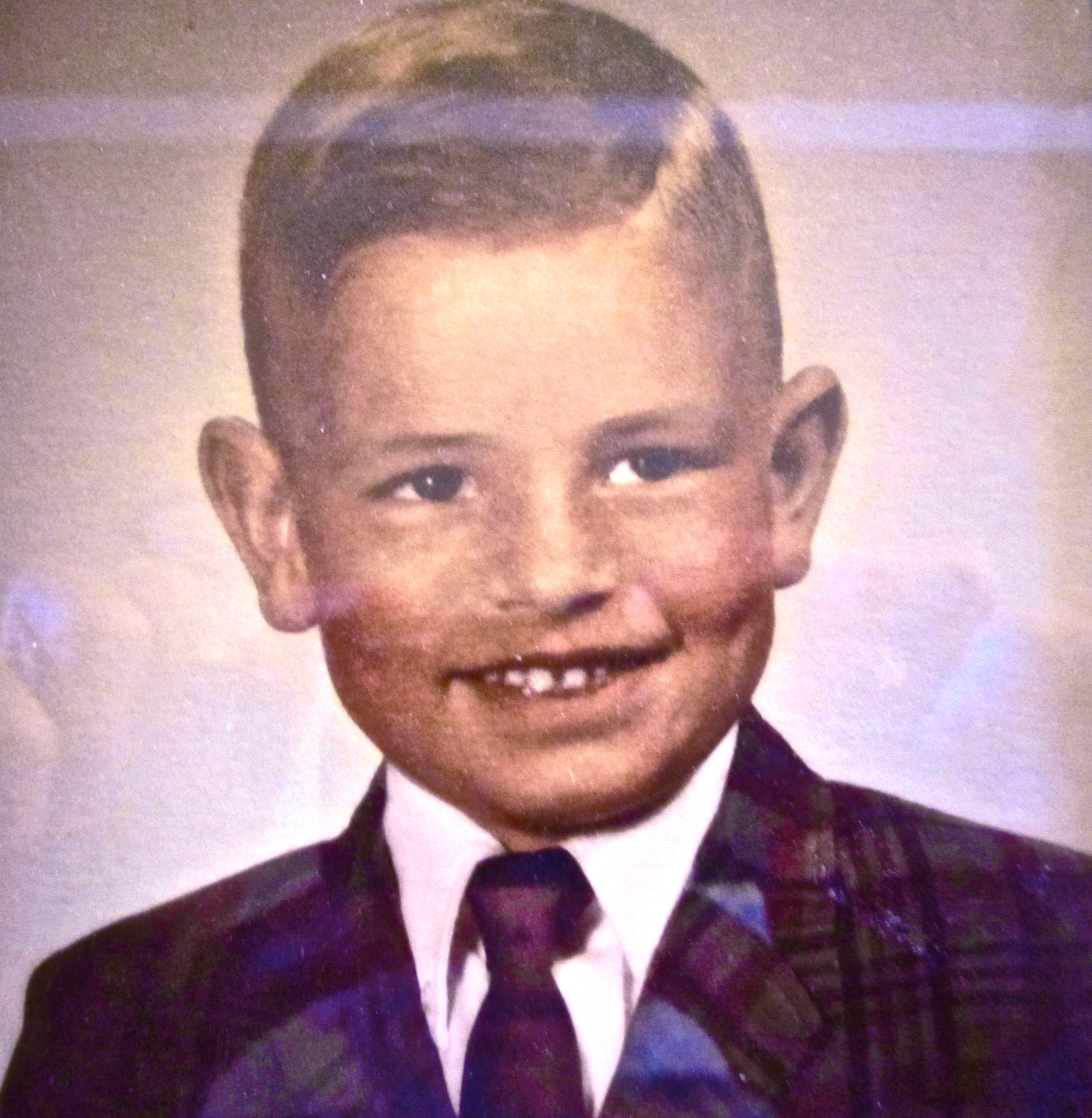
As an aspiring Stoic, I should embrace the new “old” reality, but that’s easier written than done. If I live as long as Steve Jobs, I have six years left; my dad, 19; Joe Paterno, 35; Jack LaLane, 46. The average of those four is 26.5. That’s kinda scary given how fast the last 50 have gone. Seems like just yesterday I was the most dapper dude in the first grade at Zachary Taylor elementary school in Louisville, KY. A dodgeball/kickball legend in my own mind. And yes, fortunately the rest of my gourd eventually caught up to my ears.

The key of course is making the most of however much time is left by listening a little more intently, by being a bit more observant, by putting my family’s needs before my own, by finding humor in things, by writing, by prioritizing friendship, by embracing nature.

At the risk of getting too sentimental, let me close by coming clean on that fact that I didn’t know how to spell “Niagra” Falls until using my dictionary app which offered up “Viagra” in it’s place. A few days ago at 49, funny, today at Fiddy, not so much.

Postscript—The Girls Club pooled their resources and got me the perfect gift.

Since I'm past the midpoint, it' can't be a mid-life crisis can it?

Brief Insanity, Compliments of Alaska Airlines

Previously I’ve written about one of my favorite reads of 2011—William B. Irvine’s A Guide to the Good Life: The Ancient Art of Stoic Joy. Irvine has a sub-section titled, “Anger—on overcoming anti-joy”. Here are my notes from that sub-section, mostly excerpts I wanted to remember:

Anger is another negative emotion that can destroy our tranquility. Seneca referred to it as “brief insanity” and said, “No plague has cost the human race more. A waste of precious time.” Punishment should be “an expression not of anger but of caution.” Calm correction; not retribution, but instruction (160). Need to fight our tendency to believe the worst about others and to overreact to little things. The more we eschew comfort and harden ourselves, the more likely we are to not get angry (161-2). Best counter is humor, choosing to think of the bad things that happen to us as being funny rather than outrageous (162).

We should contemplate the impermanence of the world around us.  When angered by something we should pause to consider its cosmic (in)significance. Also, remember our behavior also angers others. Seneca, “We must agree to go easy on one another. We should force ourselves to relax our face, soften our voice, and slow our pace of walking, then our anger will have dissipated.” (163). When unsuccessful at controlling our anger we should apologize, which has a calming effect on us and lessens the chance we’ll make the same mistake in the future (164). Seneca, “make yourself a person to be loved by all while you live and missed when you have made your departure.” (165).

This is the story of my recent epic failure at applying these insights. We were flying from Seattle to Santa Barbara to visit the in-laws for five days. My father-in-law was nice enough to drive an hour and a half to pick us up. Right before our Alaska Airlines plane was supposed to board we learned the gate had been changed. By the time we got to the new gate, discussed whether we needed to check in, and learned the “plane had been downsized,” we were what the airlines refer to as “shit-out-of-luck”. Our seats no longer existed and the flight was way overbooked. In years past airlines would offer more and more coin until enough people agreed to give up their seats. In the new economy, Alaska stops at 3 bills, and then says to their shit-out-of-luck flyers, “Sorry.”

Doesn’t matter that your father-in-law has already left to pick you up or that you paid Pujols-type money for the tickets. Agent, “We’ll fly you to L.A. and bus you to Santa Barbara.” To which Seneca would have said, “Wonderful, I love Los Angeles and the bus ride promises to be scenic.” But in a major setback to my pratice of Stoicism, I succumbed to “brief insanity” and said, “You’re kidding right?!!! You have to get more people off the plane!” “Sir, I can’t physically remove people.” “I’m not asking you to physically remove anyone, you have to offer them more incentives.” “We don’t do that.”

That initial exchange was first base in what turned into an inside-the-park anti-joy homerun. I didn’t swear, but got progressively more heated as I rounded second and was waved into third by the agent’s total lack of empathy. I told her I knew she wasn’t to blame for the last minute plane change, but her employer was and it was their policies that were so aggravating. Agent, “Sir, you’re not the only one ‘shit-out-of-luck’ (paraphrasing).” Turning to the twenty somethings behind me who were probably texting friends, “At Alaska gate. Out of a seat. Old dude has totally snapped, quite entertaining. LOL,” I said, “I can’t help it if I’m not as passive as everyone else.”

Finally, completely fed up with me, she said I should go to the Alaska customer service desk. Three hours later, four travel vouchers safely tucked away in the iPad case, we were on our way to Burbank. A high-speed “life flashing before your eyes” Supper Shuttle trip later, we were in Santa Barbara a mere five hours behind schedule.

In hindsight, given Alaska Airline’s short-sighted, bottom-line, customer-be-damned business practices, I don’t regret acting a fool. I do though regret two things. I regret my fellow customers rolled over probably assuring that Alaska will disrupt more travelers plans, and I regret I didn’t seek out the agent after returning from the customer service center. I would have apologized for taking my anger out on her instead of the spreadsheet reading Alaska Airlines execs who probably make ten to a hundred times more than her.

Stoic Insights on Materialism

Stoics knew, in Irvine’s words, that luxurious living only whets one’s appetite for even more luxury. Exhibit A, the GalPal and I need hotel upgrades now. Consequently, they practiced poverty or voluntary discomfort—whether fasting, sleeping on the ground, or purposely not dressing warmly for cold weather—to harden themselves against misfortunes that might befall them in the future. They did this to extend their comfort zone, reduce their anxiety about future possible discomforts, and better appreciate what they already had. They also sometimes gave up pleasurable experiences because they knew pleasure seekers lose some self-control and end up serving multiple masters. Having written about this exact thing before reading Irvine means I’m well suited to modern-day Stoicism.

Even ancient Stoics knew that maintaining luxuries takes a lot of time. Musonius argued that luxurious living must be completely avoided, but Seneca said it was okay to acquire wealth as long as one doesn’t harm others to obtain it. He also argued it was acceptable to enjoy wealth as long as one was careful not to cling to it. Most Stoic teachers advocated simultaneously enjoying and being indifferent to the things wealth makes possible. Seneca and Marcus thought it was possible to live in a palace without being corrupted. Similarly, Buddha said, “He that cleaves to wealth had better cast it away than allow his heart to be poisoned by it, but he who does not cleave to wealth, and possessing riches, uses them rightly, will be a blessing unto his fellows.”

Seneca said “life’s necessities are cheap and easily accessible” and “the man who adapts himself to his slender means and makes himself wealthy on a little sum, is the truly rich man.” Socrates said “we should eat to live, not live to eat” and dress to protect our bodies and not impress others. We should favor simple housing and furnishings too.

Seneca, Marcus, and Buddha would have supported the non-consumerist, simple living, social justice orientation of the Occupy Wall Streeters. On the other hand, they would have rejected their knee-jerk antipathy towards the well-to-do.