3. How 17 Outsize Portraits Rattled a Small Southern Town. Required reading—and viewing—for anyone trying to understand the (dis)United States today. Why are some people unable or unwilling to accept neighbors with different shades of skin and different faith traditions? Last night’s successful, hot date was at The Curry Corner. I don’t know what I would do if the east-Indian-American owners weren’t a part of our community.
I give high marks to Queen Elizabeth’s thinking and writing. Oh wait a minute, I watch The Crown, she probably had a wee bit of help with “her” official statement.
Is pervasive interpersonal conflict and invective on the rise or has it long been true that people do not get along with one another? If interpersonal conflict is on the rise, why? [This may prove a very helpful resource.]
Is protracted interpersonal conflict endemic to vast swaths of the United States or is it more pronounced in certain regions? If more pronounced in certain regions, why?
You don’t care that higher education is hemorrhaging jobs. You don’t care that you may end up living in a van down by the river. You’re determined to get a Doctor of Philosophy in Anthropology or Sociology. But you’re in need of a dissertation topic.
“Nextdoor is a social networking service for neighborhoods. Based in San Francisco, California, the company was founded in 2008 and launched in the United States in October 2011, and is currently available in 11 countries. Users of Nextdoor submit their real names and addresses to the website. Posts made to the website are available only to other Nextdoor members living in the same neighborhood.”
I’ve been a member for a few years and have concluded it’s a solid source for analyzing human nature and theorizing about it. For example, a recent post in my Nextdoor feed began thusly:
“To the fool driving the grey Lexus mini SUV today, tailgating me down Boston Harbor Rd. Can’t you see clearly that the roads are TREACHEROUS and icy today!?? Melting snow, causing severe ice, on roads that clearly have not been treated. You may have all wheel drive and feel safe. . . ”
The author, whose intro reads “I’ve been working in the Creative arts, music, video and ministry related field the past 18 years”, and lists “Westwood Baptist Director” as one of his titles, goes on to say he hopes the tailgater totals his car.
Leading to quite the kerfuffle. Keyboard warriors rushing into battle, angrily slinging words like arrows in The Game of Thrones.
A doctoral candidate in the social sciences could use textual analysis on Nextdoor messages to theorize about our modern state of affairs.
One would most likely draw an overarching conclusion from such an analysis. People do not know how to get along with one another. Interpersonal conflict is the new normal. People who enjoy harmonious relationships with others are outliers.
Invective, defined as “insulting, abusive, or highly critical language,” is the defining feature of Nextdoor communications. So much so, the only reason I’m still a member is I have a fear of missing out on the next “your horse is loose in our yard” or “your pig just ran into our barn” message that my urban self finds endlessly entertaining.
I’m not going to write the title for you, but here’s some words and phrases to help you get started.
An Examination of A Social Networking Site For Neighborhoods
Normally, I teach graduate secondary education teacher candidates; this month however, I’m teaching undergraduate elementary education candidates.
On the first day I canceled class in favor of a chill book club, now I’m the most popular prof of all time. We drink tea and eat donuts while reading half of Paul Tough’s How Children Succeed and all of Tracy Kidder’s Among Schoolchildren. Kidder is a non-fiction writing marvel. Like me, Among Schoolchildren is old; unlike me, it’s still really excellent.
Schools change so slowly, over three decades later, Among Schoolchildren still rings 90% true. The core of the book is one Holyoke, Massachusetts fifth grade teacher’s struggle with a particularly challenging student. Can she get him to cooperate and do some work without the herculean effort derailing the entire class?
This article, “New Peer Mentor Program at Centennial Elementary” just caught my eye because it was my daughters’ school and some friends work there. And because I was thinking about Chris Zajac, the teacher, and Clarence, her challenging student.
What if Clarence needs responsibility more than rules and restrictions. What would happen if Clarence, and Chris’s other challenging students she regularly struggles with, were asked to help some younger students with their school work? And to be role models of sort.
Would they rise to the occasion? Would they feel better about themselves? Could that create positive momentum; improve their school experience; and make Chris’s classroom a more peaceful and productive place?
A friend in Winnipeg is as gifted a punster as I’ve ever known. I guess that’s what happens when you teach middle school for a couple decades. Shortly after the Seahawks loss he wrote:
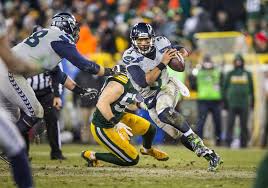
“Ah, the Seahawks! If one is going win at Lambeau, one has to be tougher than Rambo. Yes, Seattle did Russell up some points in the 2nd Half, But the Packers converted some Big 3rd Downs at the end, by Aaroning it out. It was a Gutsy Performance by both teams.”
It’s really too bad no one asked me for advice with 3:30 left. You can’t punt there because Rogers was routinely finding seams in the secondary.
I liked the decision to go for two and the standard second half rally. Wilson is special, when he’s done, we may never see the likes of him again in the Specific Northwest. Enjoy him while he lasts.
I didn’t like the predictably slow start and the very late drop.
That loss probably came down to the delay of game against San Fransisco which cost home field, and most importantly, a week’s rest.
“If the media paid more attention to Britain’s communities of color, perhaps it would find the announcement far less surprising. With a new prime minister whose track record includes overtly racist statements, some of which would make even Donald Trump blush, a Brexit project linked to native nationalism and a desire to rid Britain of large numbers of immigrants, and an ever thickening loom of imperial nostalgia, many of us are also thinking about moving.
From the very first headline about her being “(almost) straight outta Compton” and having “exotic” DNA, the racist treatment of Meghan has been impossible to ignore. Princess Michael of Kent wore an overtly racist brooch in the duchess’s company. A BBC host compared the couple’s newborn baby to a chimpanzee. Then there was the sublimely ludicrous suggestion that Meghan’s avocado consumption is responsible for mass murder, while her charity cookbook was portrayed as somehow helping terrorists.
Those who claim frequent attacks against the duchess have nothing to do with her race have a hard time explaining these attempts to link her with particularly racialized forms of crime — terrorism and gang activity — as well as the fact that she has been most venomously attacked for acts that attracted praise when other royals did them. Her decision to guest-edit British Vogue, for example, was roundly condemned by large parts of the British media, in stark contrast to Prince Charles’s two-time guest editorship of Country Life magazine, Prince Harry’s of a BBC program and Kate Middleton’s at Huffington Post, all of which were quietly praised at the time.
Her treatment has proved what many of us have always known: No matter how beautiful you are, whom you marry, what palaces you occupy, charities you support, how faithful you are, how much money you accumulate or what good deeds you perform, in this society racism will still follow you.”
“The President has a history of proposing to cut funding from the National Institutes of Health’s budget, which includes funding for the National Cancer Institute, an agency that leads, conducts and supports cancer research. The final budgets that Congress approved ended up being more generous than Trump’s proposals.
Florida Congresswoman Debbie Wasserman Schultz wrote on Twitter, in response to Trump, that ‘cancer rates dropped before you took office. Hopefully they keep dropping because Congress rejected your cruel research budgets, which sought billions in CUTS to @NIH and the National Cancer Institute. This is good news despite you – not because of you.'”
And so it goes, in these (dis)United States of America.
“How can we be winners, after all, if there are no losers? . . . What success can there be that isn’t validated by another’s failure? What heaven can there be for us without an eternity in which to relish the impotent envy of those outside its walls?”
Until recently, I dabbled with YouTube watching the occasional music video, Saturday Night Live skit, vlog, or epic mountain bike ride compliments of a helmet GoPro camera.
Then I watched Youngest watch YouTube content on our new whiz bang television, which I’d never done. So I followed suit and graduated from my desktop computer. It’s transformed my television viewing.
Despite being a technology skeptic who still savors some semblance of privacy, I’m down with YouTube’s algorithm.
It gets me.
For example, remember this description of one of my favorite television shows of all time from almost four years ago? I’m not sure how I’ve lived this long without it. I was equal parts gobsmacked and chuffed to bits when it appeared in my YouTube queue recently. I can’t believe it’s been going strong for the last four dark years, damn the Canadian Broadcasting Channel suits who decided to drop it.
Now I’m binging on it while trying to stay in some sort of cycling shape. Here’s an excellent sampler for your viewing enjoyment.
I’ve also enjoyed meeting Beau Miles a supe-cool Australian YouTuber with the right color hair. In this 17 minute-long documentary he tells a very different kind of marathon story.
If that was your cup of tea, brew one more.
Now, if you’ll excuse me, the bike and telly await.


 Pressing Pause