How Finland Gets People Biking Through Winter

This may not be a NEWS ALERT, but I’ve gone super soft.

When I lived in Norway for a few winter months, I commuted to the University everyday on a mountain bike. At times, like skiing in fresh powder, I had a lot of fun making virgin tracks in 10-15cm of snow on a dedicated bike path. Everyone says I have amazing bike handling skills. And they’re right.

Fast forward a decade and I spend the winter spinning easily indoors while watching Frontline documentaries.

I need a kick in the ass or a ticket to Oulu, Finland. Or both. Here’s how Oulu, Finland gets 27% of it’s population to cycle to and from work all brutal winter long.

I think Dan, Dan, Washington State’s Transpo man should accompany me on my trip to Oulu. He has so much to learn.

“Oulu’s bike lanes are the result of decades of municipal leadership. The city’s first cycling plan was developed in 1969. . . . It was understood early that walking and cycling [have] to be treated as equal modes of transportation.

In this context, winter maintenance of bike routes is a natural extension of investments in cycling infrastructure. . . . .Keeping cycling routes open year-round was there from the beginning. Citizens never had to fight for it. . . . It was very much a civil servant-driven process.

The local government continues to prioritize active transportation, especially when the temperatures drop. Starting in October, Oulu is launching a new level of ‘super’ maintenance for cycling infrastructure during the winter months. Essentially, 15 per cent of the network, or about 150 kilometeres, will be maintained 24 hours a day.”

Given his Midwestern mix of charisma and charm, I’m sure Dan, Dan, WaState’s Transpo man can convince MC and everyone else in Washington to pay more in taxes to replicate Oulu’s commitment to cycling infrastructure including a nice cushion for winter maintenance.

At which point I won’t have any excuses for being a full-fledged winter weather wuss.
Bonus vid.


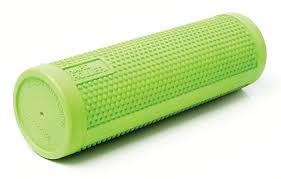
Thursday—Escape Fitness USA Ultra Flex Hard Foam Roller

If you’re under 40, move along. Over 40, read on and on.

I have a rich fantasy life. Por exemplar, I sometimes imagine being married to a massage therapist who schedules her clients around me. We’re talkin’ morning and evening massages.

Since there are no signs of the Good Wife getting a massage therapist license anytime soon, I have to roll my own with this, which I first experienced in the bowels of the Hotel Grand Pacific in Victoria. $47.00, less than the price of one massage, I use it after runs to aid in recovery. When it comes to my 1,000 mile/year streak, it’s an integral piece of kit.*

*Pardon in advance if my syntax becomes more Euro as a result of the British series I’ve been watching—The End of the F***ing World and Broadchurch on Netflix.

download.jpg


My Life as a Triathlete

Last night right before bed I got a text from downstairs, “Weren’t you supposed to do a triathlon today?”

A couple of weeks ago I told the Good Wife I was thinking about doing an Olympic triathlon in Portland on July 30th. But I’ve become so flaky about racing the last few years that comment didn’t register with her, so a couple of days ago she suggested that after church we go to Alderbrook for brunch with the in-laws. Which is how I spent imaginary triathlon day.

Once I had eaten my vegetarian omelete and killer breakfast potatoes at Alderbrook, cruised Steamboat Island, and returned home, I turned my attention to how a friend was doing at Ironperson Canada in Whistler, B.C. She was 90% through the run and in first place in her age group, so I sporadically checked in to see if she won and thereby qualified for the World Championship in October in Kona, which happily she did.

I also checked on the 55-59 year old men to see how I would’ve probably done. Because I’m experienced, time my training sessions, and often train with others who do race, I can estimate pretty damn accurately how fast I would’ve gone over the 140.6 miles. I would’ve finished second out of 29 geezers.

This is what I do. I train, I think about racing, but I don’t actually register for any events. I even have a built-in excuse for not racing in our local triathlon each June. Too short.

My hangups are many. I need a good sports psychologist if you have a recommendation. I need to either turn off my computer and put on my wetsuit or come to grips with what I texted back. “It appears as if I’m retired from competition.”

IMG_0760.JPG

A picture from my last triathlon.

Wise Advice For Young Female Runners

Or so says LetsRun.com. I’d revise that to read “Wise Advice for Anyone Trying to Find Their Way in Life”.

Beautiful, powerful essay by Lauren Fleshman, a recently retired professional runner to her high school self. The gist of it, short-term success is a trap, form healthful habits, and decide for yourself what’s most important in life.


World Naked Gardening Day

Sadly, this month’s most important celebration is crowded out by holiday stalwarts like Cinco De Mayo, Mother’s Day, and Memorial Day; not to mention, lower profile ones like May Day and Teacher Appreciation Week (8th-12th).

Are you ready for World Naked Gardening Day this Sunday? “It’s not about exposing your body to other people,” the founder explains. “It’s about body acceptance and being one with nature on your own.”

With apologies to Elaine, I’m in. Skin cancer be damned.

My New Thang—Avocados

Early in my dad’s business career he sold appliances for General Electric. Every year we got one new one, including allegedly, the first trash compactor in the country. And for some reason only my mom could probably explain, every last appliance was avocado green. Turns out those early avocado green kitchens did a number on my subconscious because recently I’ve turned into an avocado eating machine, putting them on damn near everything, as if I’m making up for lost time.

So I got a kick out of this, “Your New Avocado: An FAQ“.

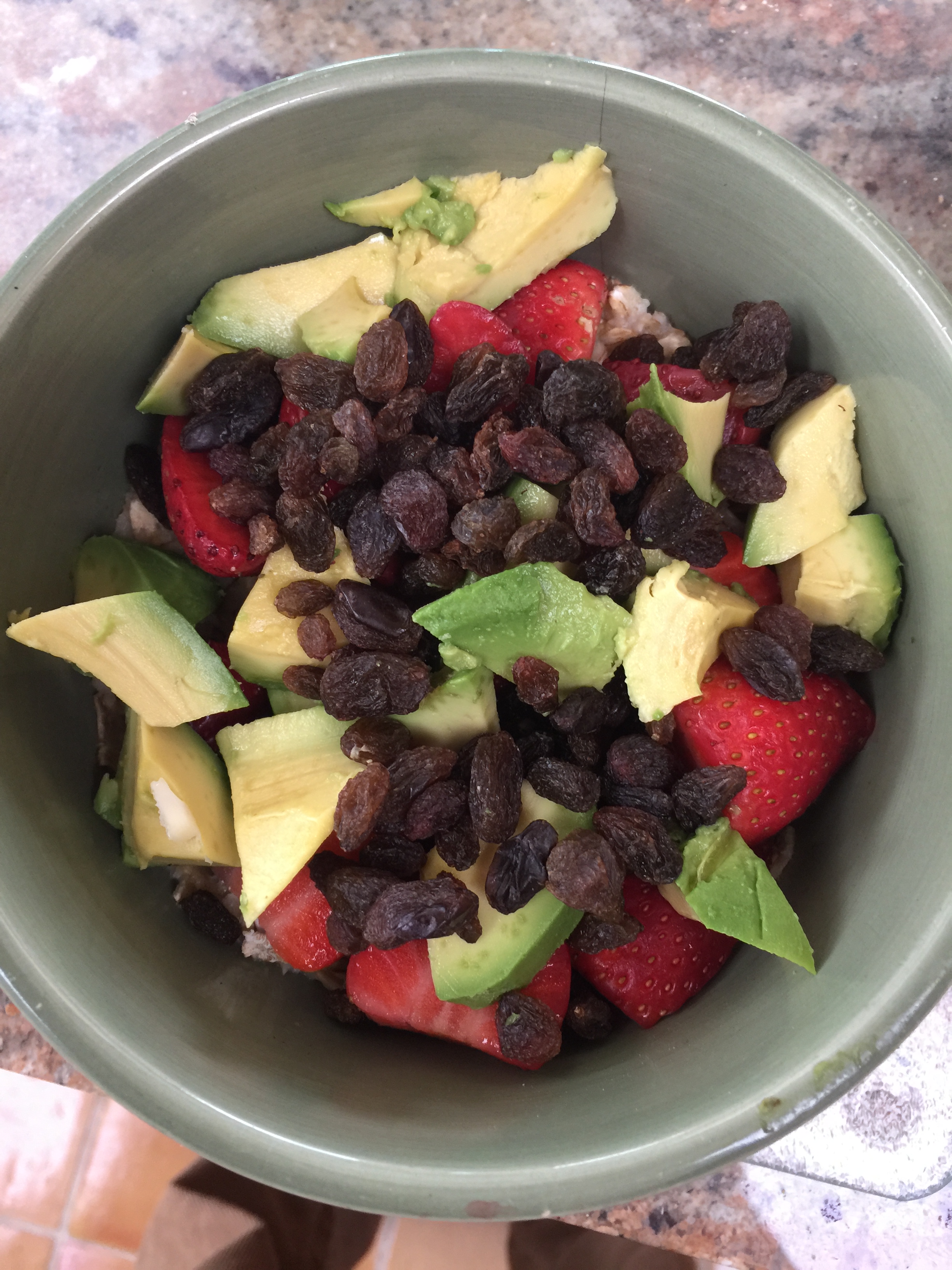
Below is a picture of today’s breakfast bowl of oatmeal which lies buried underneath the red and late 1960’s kitchen appliance green fruit goodness. Some mornings I borrow from professional cycling chefs and sub in two fried eggs. And always, I top everything off with a little butter and a lot of Kirkland Saigon Cinnamon (Costco doesn’t pay me for these egregious product placements, but they should).

Today’s philosophical question. At what point does the balance tip towards the add-ins and I can no longer accurately describe my breakfast as a bowl of oatmeal? That’s what philosophers refer to as a “Seinfeld episode worthy” question.

IMG_0793.JPG

That’s right, even our kitchen bowls are avocado green.

The Vitamin D Bandwagon

You on it? Ima gonna pass. Why Are So Many People Popping Vitamin D by Gina Kolata.

Related, below is an excerpt from an important new book by Richard Harris whose science reporting you may have heard on National Public Radio, Rigor Mortis: How Sloppy Science Creates Worthless Cures, Crushes Hope, and Wastes Billions.

The Breakdown in Biomedical Research.

Makes one wonder, why do we tend to put scientists and docs on pedestals?

The New Status Symbol

“The new status symbol,” according to a doctor at UC Berkeley, “is the single most effective thing you can do to reset your brain and body.” Can you guess? Need another clue?

“For years, studies upon studies have shown how bad sleep weakens the immune system, impairs learning and memory, contributes to depression and other mood and mental disorders, as well as obesity, diabetes, cancer and an early death.”

The rest of the story is here.


Is Fat Killing You, or Is Sugar?

The title of a recent New Yorker essay by Jerome Groopman.

The problem with most diet books, and with popular-science books about diet, is that their impact relies on giving us simple answers, shorn of attendant complexities: it’s all about fat, or carbs, or how many meals you eat (the Warrior diet), or combinations of food groups, or intervalic fasting (the 5:2 diet), or nutritional genomics (sticking to the foods your distant ancestors may have eaten, assuming you even know where your folks were during the Paleolithic era). They hold out the hope that, if you just fix one thing, your whole life will be better.

In laboratories, it’s a different story, and it sometimes seems that the more sophisticated nutritional science becomes the less any single factor predominates, and the less sure we are of anything. Today’s findings regularly overturn yesterday’s promising hypotheses.

On top of that:

. . . research seems to undermine the whole idea of dieting: extreme regimens pose dangers, such as the risk of damaged kidneys from a buildup of excess uric acid during high-protein diets; and population studies have shown that being a tad overweight may actually be fine. Even studying these issues in the first place can be problematic. Although the study of the Mediterranean diet, for example, reflects randomized controlled experiments, most nutritional studies are observational; they rely on so-called food diaries, in which subjects record what they remember about their daily intake. Such diaries are notoriously inexact. No one likes admitting to having indulged in foods that they know—or think they know—are bad for them.

What to do?

Amid the constant back-and-forth of various hypotheses, orthodoxies, and fads, it’s more important to pay attention to the gradual advances, such as our understanding of calories and vitamins or the consensus among studies showing that trans fats exacerbate cardiovascular disease. What this means for most of us is that common sense should prevail. Eat and exercise in moderation; maintain a diet consisting of balanced amounts of protein, fat, and carbohydrates; make sure you get plenty of fruit and vegetables. And enjoy an occasional slice of chocolate cake.

The problem with that, common sense is not common.