Points to Ponder

• From Jonathan Haidt in the Happiness Hypothesis-Finding Modern Truth in Ancient WisdomPleasure comes more from making progress toward goals than from achieving them.

• From The Atlantic: Loneliness and being alone are not the same thing, but both are on the rise. We meet fewer people. We gather less. And when we gather, our bonds are less meaningful and less easy. The decrease in confidants—that is, in quality social connections—has been dramatic over the past 25 years. In one survey, the mean size of networks of personal confidants decreased from 2.94 people in 1985 to 2.08 in 2004. Similarly, in 1985, only 10 percent of Americans said they had no one with whom to discuss important matters, and 15 percent said they had only one such good friend. By 2004, 25 percent had nobody to talk to, and 20 percent had only one confidant. [strong counter argument]

• From Sports IllustratedIt’s hard to come up with any measure sufficient to characterize the strength of the Kenyan marathon army, but try this: Sixteen American men in history have run faster than 2:10 (a 4:58 per mile pace); 38 Kenyan men did it in October.

Grit follow up. In Monday’s Boston Marathon, the dude on the far left, Michel Butter, from the Nederlands, was hangin with the Kenyans. Pre-race, the Dutch track federation told him if he finished in the top ten they’d put him on the Olympic team. He finished seventh because of training sessions like this one.

Correction from the exceptional The Science of Sport blog: Michel Butter’s requirement was either to run 2:10, or finish in the top 8 with a 2:12 or faster. He ran 2:16:38 for 7th. So he got the place, but missed the time, and hence the Olympic spot. That’s a bitter pill to swallow, because as I mentioned earlier, the elite men were 7.8% slower than last year’s times, and about 5% slower than their typical race times. Butter missed the target time by 5.1% (the 2:12 standard). Bearing this mind, and that Boston is typically a slower course than the flat races of Rotterdam, London, Berlin etc, I would use discretion and pick him anyway…

Iron-Distance Triathlon Training Update

Is it possible to write about triathlon training in ways that aren’t painfully narcissistic? To write about it as a means to more meaningful ends like greater self understanding, greater appreciation for health and nature, for self improvement more generally?

I’m a triathlete and I find most triathlon writing uninteresting. Too many triathlon writers assume others are as interested as them in the details of their training sessions, their equipment choices, what they had for breakfast at 4:30a.m. pre-race, who they happened to run into right before the swim, their frustration that everyone drafted on the bike, and “their amazing support crew.”

Maybe triathlon writing will never be of interest to people who would never think to string a swim, a bike ride, and a run together. I’m diving in based on the theoretical possibility that one can engage the non-triathlete world if the niche sport is a springboard for thinking more deeply about struggle, life purposes, and things social scientific. If this post gets more than average page views I’ll weave in occasional swimming, cycling, and running posts. If not, I won’t.

I’m four weeks into training for Ironperson Canada on August 26th, an athletic event consisting of a 2.4 mile swim, a 112 mile bike ride, and a marathon (26.2 miles, but you knew that already). The four weeks in March called for increasing volume beginning with 51% of max, then 58%, 65%, and 72%. This week, hallelujah, I’m dropping back to 58%. In March I swam 29.6 kilometers; rode 392 miles inside, 150 outside; and ran 167 miles. I’m giving myself an “A-” for the month. I hit the swimming and running targets, maintained some core work, even lifted a bit, but fell a bit short of the cycling targets. I’m blaming La Niña for that. If we have many more colder and wetter than normal weeks, I may snap.

I’m not too worried about being behind on the bike. In May, I’m cycling up and down the Eastern Sierras and then I’m riding up, down, and around Southern and Central Oregon in late July. Eventually, I will return to summer 2011 form. Last weekend the weather broke for 48 hours and I got out for the first long group ride of 2012. I got dusted on the climbs by people I dusted last summer. Of course they hadn’t run 10 miles beforehand, but still, I realize I can’t replicate the intensity of group rides when I’m soft-pedaling indoors while watching Downton Abbey (that’ll intimidate my competition).

On the plus side of the ledger, I’m doing a better job of embracing a process I’ve long resisted. I’ve made peace with my decision to go long. I’ve always considered iron-distance training and racing a form of lunacy. Here’s why it’s taken me so bloody long to dip my toes in the long-distance waters:

1) Long-distance triathlon training and racing confounds one of my more important life goals—to maintain balance between sleep, work, family, friendship, citizenship.

2) Long-distance triathlon has become a big business and participating in it confounds another goal—resisting mindless consumerism. For me, the incessant in-your-face advertising that accompanies the increasing commercialization of the sport takes away from the beautiful settings and the purity of the activity. Go ahead and call me inconsistent, but I acknowledge the benefits of capitalism while simultaneously disliking the conspicuous advertising that is integral to it.

3) Long-distance triathlon is exceedingly expensive and I already play one country club sport—golf. And a person, if they’re a 99-percenter, should only be allowed one country club sport. I’ve benefitted greatly from capitalism, and I don’t begrudge any business legit profits, but I don’t like contributing to the supply that enables the World Triathlon Corporation to charge exorbitant entry prices. More triathletes need to say enough already, I’m seeking out less expensive races, or I’m sitting out the season altogether.

4) Long-distance triathlon is a poignant example of peer pressure something we should grow out of, by say, fifty years-old. I like to think of myself as individualist, but I have to admit I wouldn’t have committed to this race if it wasn’t for my brother and Lance who I will no doubt be cursing at my lowest moments on game day. I’ve never heard anyone of their own volition say, “Next weekend I think I’ll swim for an hour, then cycle for six more, and then run for four or more.” Hey, can I join you? And I have an idea, let’s wait until it’s the hottest day of the year.

5) Admittedly paradoxical, but I suspect long-distance triathlon has detrimental effects on one’ health. Especially for those who make it a lifestyle and repeatedly go long. If one trains seriously and then swims 2.4 miles, rides 112, runs a 10k, and then rests a lot, their body probably benefits. It’s the last 32k of the run where the health tipping point is most likely crossed. Apparently, studies of veteran long-distance triathletes are already showing the health costs of their mania.

Now though, I’m viewing it as a one-off project. And its part and parcel of the interest and identity tweaking I alluded to in the previous post. I told the GalPal, unless I don’t perform to 90% of my (perceived) ability, it’s one and done. If I don’t race smartly and thereby am not able to capitalize on my training, I reserve the right to a do-over in Santa Cruz in fall 2013 or 2014.

Also, in reading a bit about aging, I’m learning it’s important to mix things up on occasion, to break out of one’s normal routines. It’s easy to get in a rut—at work, while working out, in the sack, in one’s relationships. It’s important to travel to new places on occasion, meet new people, experience new things. This is about experiencing a few related things—getting in the best physical shape of my life and discovering my mental and physical limits. And I’m curious about how well I can spread my effort out throughout the day and how long I can force myself to run. Six months of lunacy to learn more about my mind and body.

Correction. Only five more months of long-distance lunacy.

Happy “Half Century” Birthday to Me

By the time you read this, it will be too late to get me something for my 50th birthday. That’s okay though because I’m in permanent “declutter, give away things” mode. It’s never too late to drop by, wish me a happy b-day, and take something.

Recently Olympia’s semi-permanent winter blanket of low lying gray clouds parted so I headed out for a sun run with Regina Spektor pulsing through the iPod. Her “On the Radio” lyrics couldn’t have been more timely.

This is how it works
You’re young until you’re not
You love until you don’t
You try until you can’t
You laugh until you cry
You cry until you laugh
And everyone must breathe
Until their dying breath

I’ve always thought of myself as young. Younger than my sibs; younger than my betrothed; younger than Madonna; the 20-something high school teacher; the 30-something college professor. Like wooden barrels bobbing atop Niagara Falls, I’ve watched most of my friends disappear over the 50-year old ledge already. Now though older peeps aren’t enough to counterbalance Spektor’s undeniable truth—You’re young until you’re not.

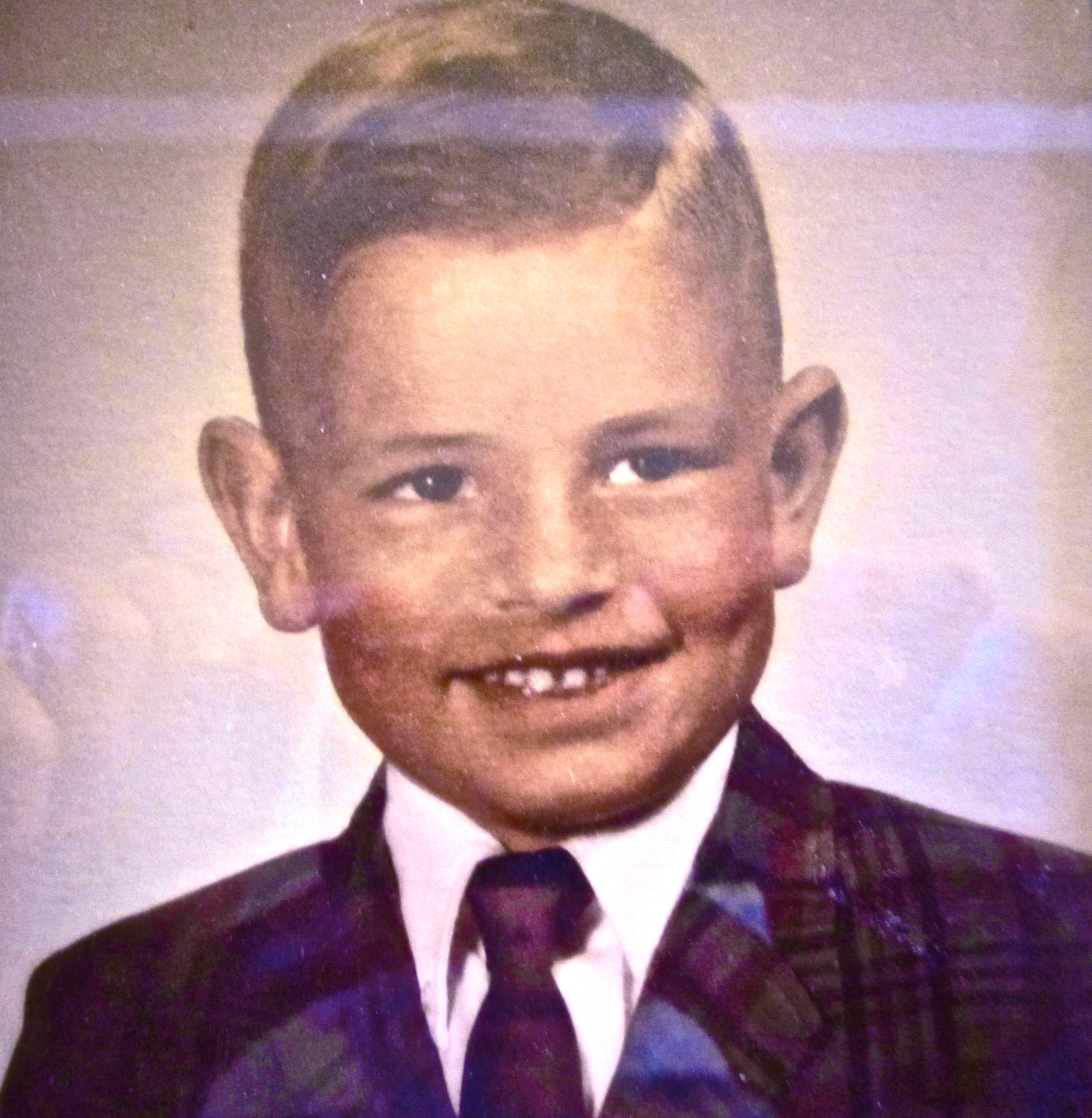
As an aspiring Stoic, I should embrace the new “old” reality, but that’s easier written than done. If I live as long as Steve Jobs, I have six years left; my dad, 19; Joe Paterno, 35; Jack LaLane, 46. The average of those four is 26.5. That’s kinda scary given how fast the last 50 have gone. Seems like just yesterday I was the most dapper dude in the first grade at Zachary Taylor elementary school in Louisville, KY. A dodgeball/kickball legend in my own mind. And yes, fortunately the rest of my gourd eventually caught up to my ears.

The key of course is making the most of however much time is left by listening a little more intently, by being a bit more observant, by putting my family’s needs before my own, by finding humor in things, by writing, by prioritizing friendship, by embracing nature.

At the risk of getting too sentimental, let me close by coming clean on that fact that I didn’t know how to spell “Niagra” Falls until using my dictionary app which offered up “Viagra” in it’s place. A few days ago at 49, funny, today at Fiddy, not so much.

Postscript—The Girls Club pooled their resources and got me the perfect gift.

Since I'm past the midpoint, it' can't be a mid-life crisis can it?

Battling Self-Doubt—Who to Believe?

When I was eighteen, nineteen, twenty, I remember being frustrated when home from college. I have three older siblings. One older brother is mechanically inclined, so whenever something needed fixing, it got fixed before I ever got the chance to swing the bat. And no one ever taught me how to work with my hands. Through teasing, I got put in a “mostly incompetent” box which hurt my confidence and zapped my initiative. Better not to try than to fail. A downward spiral of self-doubt. Alex Smith in need of a Jim Harbaugh.

Built like a pool cue, I was also labelled soft and spoiled. Truth be told, I shied away from physical contact, and by the time I came along, my parents were better off, the task master was often traveling, and Mother Dear had let her hair down. I did live a charmed life. I coasted through high school so much, my dad, who also thought of me as sheltered, discouraged me from going to college.

Proving him wrong was motivating. As a first year college student living on my own in a culturally diverse, challenging, and stimulating setting, I was transformed. Afraid of failing, I applied myself, studying intensely. I quickly improved as a thinker, writer, student. I gained confidence in communicating original ideas. I met lots of interesting people who had no preconceived notions about me. I spent a summer working at an inner-city Boston park and food bank with a dozen other college students from around the country.

Whenever I returned home though, time seemingly stood still. In the eyes of my family, I was still the mostly incompetent, soft, sheltered, spoiled seventeen year-old. The result was equal parts alienation and frustration.

So who to believe, others from the past or myself? Incompetent, soft, spoiled, sheltered, or increasingly capable, resilient, socially conscious, and experienced?

This “who to believe” dilemma is universal. Everyone has to contend with negative messages that go way back to parents, teachers, coaches, other authority figures, siblings. Why do some people succumb to long-running negativity and others rise above detrimental preconceived notions?

The single most important variable is whether you surround yourself with positive or negative people. A negative past can be blunted. Case in point, I love how my Better Half always goes into “compensation” mode and encourages me whenever I attempt to install or repair something.

Most of the time though, we have to confront our self-doubt alone. The way to do that is to build enough countervailing evidence to eventually tilt the balance from self-doubt to self-confidence. A marathon without shortcuts.

To illustrate, consider my preparation for IronPerson Canada in late August, a mere seven months away. Something about swimming 3.8 kilometers, riding 112 miles, and then running 26.2 sparks serious self-doubt. Athough I’m not building up for it yet, I can’t help but think about it from time to time. My mental prep is hampered by the fact that I’ve internalized the “soft” messages of my youth. I not only internalized them, I embellished them. Like a taller, skinnier Woody Allen, I even thought at times that I had a particularly weak constitution, and that I’d probably contract some chronic illness, and pass from the stage prematurely.

The self-doubt is playing havoc with my sub-conscious; consequently, I’ve had a series of disconcerting IronPerson dreams. In last night’s version, the brakes on my bike unravelled right before the start leading to the dreaded “DNF”—did not finish. I’ve had others where I swim completely off course and the race goes on without me. I probably haven’t dreamed about the most challenging leg yet because I haven’t worn out all the swimming and cycling nightmares.

Here’s the odd thing though, in the last two decades I’ve become an experienced open water swimmer, long distance cyclist, and marathoner. And while this is hard to admit publicly, I’ve gotten pretty good as an endurance athlete. Riding especially strongly at the end of RAMROD last July and my last half iron distance triathlon last September were major confidence boosters. Yet, I struggle to even write “pretty good” because deep down in my gut the cassette recorder quietly repeats “I’m soft, an impostor, a wannabe.”

I’m wrestling with who I am as an athlete. Ultimately of course, I’m an insignificant weekend warrior, but I have to get more specific to set goals and then devise and successfully implement a race strategy.

Am I still the third-grader who climbed down from the 10 meter platform too afraid to jump off, the scrawny junior higher who routinely got whupped in the 660 yard dash, the junior high cornerback who whiffed an easy tackle, the batter who was too chicken shit to hit a curve, or the long distance runner who was mentally tough and gutted out the last 10k of the 2010 Seattle marathon, or the cyclist who last summer got stronger the longer and tougher the mountain climb? If I’m more of the former, my goal should be the traditional “just to finish,” if more of the later, it should be to throw down with the fastest dudes in my age group.

Forget me and my inconsequential, irrational race. What negative messages limit your potential? Have you succumbed to the negativity of critical peeps from your past or are have you created a positive present?

[extra credit—What city is in the February header?]

If I Was President

Put your hands in the air like you just don’t cair if you think I need some hair extensions, a guitar, single speed bike, and vid like this one. Why should Wyclef Jean be the only one to imagine being president?

My betrothed was thrilled to score a Thanksgiving dinner invite. Didn’t have to cook a turkey or interact too terribly much with the normal one. Early on one of the seven adults at the very nice dinner lamented that getting to the pool in the morning to swim was just “too complicated”. About every 45 minutes, no matter where we were in the conversation, we’d return to that theme usually in the form of my betrothed suggesting alternative activities to our unmotivated friend. For each suggested alternative she presented separate complexities. She was a reminder that it’s a lot easier not to exercise regularly.

It’s been almost four years since I shared ten suggestions on how to create an active lifestyle. Since you didn’t click on that link you won’t notice the overlap in what follows.

If I were president, I’d charm Congress into passing a law requiring every physically able adult to engage in an hour of cardiovascular activity before 8 a.m. Employers would have to push back early starts. Based on personal experience and a constant stream of research, one hour of exercise makes the remaining 15 lots better. Benefits include lower health costs, increased productivity, improved community, and increased well-being. Brisk uncomplicated walking, running, swimming, cycling, water aerobics, elliptical exercises, rowing, or any combination of those for sixty minutes.

I joked with our “too complicated” friend that Betrothed sleeps in her bathing suit to simplify her morning routine. The night before swim mornings I pack my backpack and toss my jammers where I get dressed in the morning. By wearing them under my pants, I save a good 45 seconds in the Y locker room. Too much info I know, but the larger point being . . .

1.) An efficient, successful morning exercise routine begins the night before. Organize your gear so you can almost sleep walk out the door in predawn darkness.

Other suggestions:

2) Gradually pull the plug earlier at night, turn off the tube, forget the foreplay, close the book, and go to bed early enough to compensate for the earlier start.

3) If going somewhere with lockers, consider renting one to simplify what you have to cart back and forth.

4) Start right outside your front door or make sure you can get to your gym within five minutes. I believe a lot of indoor exercisers would be surprised by how much more fun it is to be outside if they invested in some technical fitness duds and were forced to do it by say. . . El Presidente. Of course we’re spoiled in Olympia with excellent sidewalks, street lighting, and bike lanes.

5) Most important of all, find anyone similar in ability to exercise with. Mutual accountability + evolving friendships = much higher success rates.

This challenge is similar to decluttering—logical suggestions aren’t enough to tip the sedentary scale (pun intended). Unless our “too complicated” friend finds a training partner who she enjoys spending time with, suggestions 1-4 won’t make much difference. The conundrum is until a person is able to compare and contrast what it’s like to be out of shape and in shape, they’re unlikely to muster up the self-discipline to change their daily habits.

Try it. Pick something at least semi-enjoyable, invite a friend to enjoy you, and gradually build to one hour, six days a week, before the day starts in earnest. You won’t regret it.

For the serial sedentary among us, I’m going to hire the cast from a very good, but brutal movie Betrothed and I recently watched, Sin Nombre, to enforce the law. Better start now in case I’m elected on 11/6/12. Trust me, you don’t want those hombres knocking on your door asking what you’re still doing in your pajamas.

2011 Seattle Half Marathon by the Numbers

1 2 3 4 5 6 7 8 9 10 11 12 13 .1
7:07 7:05 7:06 7:34 7:04 7:11 7:34 6:51 7:00 7:02 6:55 6:54 :43
7:24 14:31 21:36 28:42 36:16 43:20 50:31 58:05 1:04.56 1:11.56 1:18.52 1:25.53 1:32.47 1:33.30

52     degrees

6       ounces of Tillamook Vanilla Bean yogurt consumed pre-race

5       times I’ve been faster

136   seconds behind 2009 time

4       pieces of pumpkin and apple pie consumed in preceding days

3       pounds gained in preceding days

1       woman who changed out out of wet top next to me post race, posthaste

I Am the 1%

Not based on my five figure salary, my Kirkland Signature wardrobe, my penchant for water at restaurants, or my municipal golf courses of choice.

I am the “one percent” based upon health, meaningful work, beautiful surroundings, good friends, and a loving family.

Turning fiddy in a few months. My peers are showing varying degrees of wear and tear. Their setbacks help me appreciate how fortunate I am to be able to afford healthy food, to have time to exercise daily, to have access to quality medical care, and to feel younger than I am.

My work matters. How fortunate to get paid to help young people write, teach, and think through what they believe and how they want to live their adult lives. And remarkably, every seven years I get the ultimate gift, time to press pause and read, think, write, rest, renew.

Half the year I get to cycle in unbelievably beautiful mountain settings, swim in an idyllic next-door lake, and run on wooded trails and sleepy residential streets. In the summer it’s almost never hot or humid and there are no bugs that would prevent one from eating outside. There are no hurricanes and hardly any lightening, but I reserve the right to amend this post if I someday survive the overdue Shake.

I often climb the mountains, swim the lake, and run the trails with excellent friends. Fitness fellowship.

My extended family is a blessing. My wife and daughters especially so. Apart from one very bad leg, they’re healthy and happy. My Better Half and I just returned from visiting First Born at Leafy Midwest Liberal Arts College. Most nineteen year-old college students would be semi-embarrassed by visiting parents, but for some reasons ours was off-the-charts warm, inviting, and appreciative the whole time. Even invited her Spanish teaching mom to her Spanish class and took us to great student a cappella and modern dance concerts.

When we first arrived on campus, Spanish teaching mom went to meet her at the Language Building. I read in the “Libe”. At the appointed time I headed across campus to meet up with them. Turned a corner and there she was walking by herself to a piano lesson. Cue the killer off-the-ground hug.

We stayed in a room in this house which a woman left to the college with an unusual condition—that it always be available as a student hang out with the necessary ingredients to bake cookies.

Home Base

The suggested donation for staying there was $30/night. We had twin beds in a smallish room. The first hints of winter crept in through the window next to my bed. I could whizz while simultaneously brushing my teeth in the tiny bathroom.

But looks can be deceiving. No one would suspect that inside this humble house, in one of the modest rooms, a One Percenter slept contentedly.

Coaching’s Costs and Benefits

My Atul Gwande bro-mance or man-crush continues to build steam. He begins his most recent New Yorker essay explaining he’s been a surgeon for eight years and. . . for the past couple of them, my performance in the operating room has reached a plateau. I’d like to think it’s a good thing—I’ve arrived at my professional peak. But mainly it seems as if I’ve just stopped getting better.

He points out that top athletes and singers have coaches and asks whether you should too. He asks the question in the context of his own story of contacting his mentor from med school, a well-known highly respected doc, to see if he’d be willing to observe him in surgery and offer suggestions. I recommend the whole essay, but long story short, Gwande breaks through his plateau as a result of his mentor’s objective, insightful, detailed feedback.

Mid-point in the essay, Gwande explains how teacher-to-teacher coaching is one of the most promising reforms being implemented in some school districts.

He also acknowledges that many of his fellow docs and many teachers probably aren’t quite secure enough to open themselves up to pointed constructive criticism.

But he fails to mention another at least equally significant hurdle, sufficient money to compensate experts for their coaching time. School districts have to release coaches from their own classrooms meaning substitutes have to be paid for or everyone has to teach larger classes. And I can’t believe he expects teachers, lawyers, dentists, and other professionals making far less than professional athletes or elite singers to pay for coaching out-of-pocket. It’s unclear how financially strapped school districts and hospitals are supposed to add in coaching costs.

If only I had a magical “financial resource” wand. Now that I’m in better touch with my stubborn, self-defeating self-sufficiency, I see areas in my life where I could benefit from coaching.

In late August the personal trainers in mom’s swanky FL health club were doing some intriguing exercises with their clients. Made me want to toss medicine balls and run around with giant rubberbands around my ankles. And I’m sure I could benefit from swimming, running, cycling, triathlon coaching. Listening/marital bliss coaching. Cooking/nutrition coaching. Gardening coaching. Bicycle maintenance coaching. Golf coaching. Social media coaching. Parenting coaching. Writing coaching.

You get the drift.

Shortcut Nation

From the September 29th, 2011 Wall Street Journal:

Reebok International Ltd., a unit of Adidas AG, agreed to pay $25 million in customer refunds to settle charges of false advertising brought by the FTC over the shoemaker’s claim that its “toning shoes” could work better than normal footwear to whip muscles into shape.

Its TV commercials featured women with shapely legs prancing around in the shoes while doing everyday activities such as walking, vacuuming, browsing a bookshelf and cooking.

Such shoes were one of the footwear industry’s smash hits, generating more than $1 billion in revenue last year though sales have slowed this year.

“The FTC wants national advertisers to understand that they must exercise some responsibility and ensure that their claims for fitness gear are supported by sound science,” said David Vladeck, director of the FTC’s bureau of consumer protection.

Sound science?! Does that mean Rick Perry can’t lace up his toners and run for the Republican presidential nomination?

Amazingly, the FTC didn’t find proof for Reebok’s claims.

Mary Lee Wagner of Fairfax, Va., bought into the craze four years ago, paying $230 for a pair of sneakers. The 58-year-old wore the shoes religiously for six months with hopes of shaping up her thighs. “There was no difference whatsoever,” she says.

She decided to give toning shoes another try after they went mainstream, reasoning that bigger companies had figured out a way to develop a more effective shoe. Two years ago, she bought a pair of Skechers Shape-ups for $75. After three months of use, she switched back to her $35 Ryka walking shoes. 

And dig this. Different article, same paper, same day. Can’t make this stuff up:

Scented products, including crystals you sprinkle on your food and products you inhale before eating, can trigger your body to think it’s full, aiding weight loss, say companies who sell the products. Nutritionists and doctors who specialize in weight loss say the research conducted so far isn’t convincing.

SlimScents LLC of Marlton, N.J., sells a $50 set of three pen-shaped inhalers, which it says last four to six weeks before losing their scent. Glacier Point Solutions Inc., of Long Beach, Calif., sells an $18 package of three Happy Scent jars—peppermint, banana and green apple—which it says last a year. Both products are designed to be sniffed five minutes before eating.

Another method is crystals you sprinkle on your food before eating. A six-month “starter kit” of Sensa crystals, from Intelligent Beauty LLC, of El Segundo, Calif., costs $289. The kit includes a new set of two types of crystals—one for sweet and one for other food—each month. On its website, Intelligent Beauty says the crystals, which it calls tastants, are designed to “trigger your ‘I feel full’ signal.”

The idea that scent can help you lose weight is “intriguing,” says Louis J. Aronne director of the Comprehensive Weight Control Program at NewYork-Presbyterian Hospital/Weill Cornell Medical Center in New York. But the research done so far is “not adequate” to show the currently marketed products work, he says.

Better name would be Louis J. Killjoy.

Intelligent Beauty says participants lost an average 30.5 pounds over six months in a 1,436-person study conducted by Alan Hirsch, a scientist it describes as the “founder” of its weight-loss system. However, Intelligent Beauty—which puts Dr. Hirsch’s photo on its Sensa packages—declined to answer questions about the study or whether Dr. Hirsch is on staff at the company, whether he has an ownership stake or whether he receives financial compensation from sale of the product. Intelligent Beauty initially set up a phone interview with Dr. Hirsch and then cancelled it, citing an “urgent matter.” Dr. Hirsch, an assistant professor of psychiatry at Rush University Medical Center in Chicago, didn’t return a call seeking comment.

James O. Hill, co-founder of the National Weight Control Registry, a database of more than 6,000 people who have lost an average of 70 pounds and kept it off for six years, says there is no quick fix for people who successfully lose weight.

No. Quick. Fix. Damn you, James O. Hill.

Registrants exercise a lot and are “conscious of every morsel they put in their mouths,” says Dr. Hill, who is executive director of the Anschutz Health and Wellness Center at the University of Colorado in Denver.

That doesn’t sound like much fun.

I’m Registered for the 2012 Penticton BC Long Distance Triathlon

Assuming I’m alive and well, I will wade into Lake Okanagon around 6:45 a.m. on August 26th, 2012.

It’s only taken me about fifteen years to commit to going crazy long—2.4 mile swim, 112 mile bike, and 26.2 mile “run”. My brother, who calls it Ironman Canada, did it when he was in his early 40s. Me at 50, figure that’s a fair fight.

Why now when I haven’t been racing at any distance? A perfect storm of cognitive slippage, turning 50, watching my friends race all summer, getting stronger on the bike, and reflecting on the GalPal’s health struggles.

I’m more anxious than excited because it’s the most I’ve ever asked of my bod. The training is going to require unprecedented self-discipline and I’m going to suffer big time on race day. I’ve already lost some sleep with jarring images of the swim start and “running” for four hours plus in 90 degree weather after 112 miles in the saddle.

If it’s 90+ degrees on the run like it was this year, my brother’s family record of 11:45 is probably safe. I know he’ll be rooting for me. . . to blow up early in the run.

Can’t wait to embrace the triathlon subculture I’m so enamored with. I love the World Triathlon Corporation’s single-minded bidness focus so I’ve decided to rent myself out to the highest bidder. That’s right, I’m officially for sale. NASCAR has nothing on me. I’ve already been contacted by representatives from AAPL, Coca-Cola, and Tide. I’ll wear their logos, or if the price is right, have them permanently tattooed on the body part of their choice.

I’m going to use that revenue flow to hire a coach who I will pay more than two-thirds of the world’s people earn. Also, don’t tell the GalPal, but I’ll be tapping our retirement accounts to buy lots of very expensive bike equipment, shaving grams as I go. Hyperbaric chambers aren’t cheap either.

And rest assured, I’ll embrace the narcissism that often seems endemic to the sport. That means I’ll be posting pillions of pictures of myself getting fitter and fitter and blogging about all of my training details until every last reader’s eyes glaze over. And even though my brother looked roided up in 2002, I’ve decided to race clean, again in an effort to level the playing field.

Just kidding. My primary goal is to put in the necessary work without letting it take over my life. More easily written than done I suppose. Appropriately starting on April 1, just under five months of prep. Eight week build, followed by eleven weeks of high volume, and a ten day taper.

Ron Byrnes has agreed to coach me. And with the goal of not letting it take over my life, I don’t intend on blogging much about my prep. If all goes well, I will toe the line in the best shape of my life and then race smartly, meaning steadily.

Can I put in the work without breaking down or losing balance, survive the swim start, avoid tacks on Maclean Creek, run slowly all afternoon instead of walking, go sub 11:45, and get home without cramping up uncontrollably and driving off the road?

Stay tuned sports fans.