Layer Me Baby

The University of Chicago Law School for the win. It’s dean and new AI strategy more specifically which might be described as “both/and”. Becky Supiano explains in The Chronicle of Higher Education.

“Its policies are meant to ensure that students learn how to use AI responsibly and how to think without depending on it. As newer AI models prove adept at many forms of legal work, it aims to prioritize distinctly human contributions.”

No AI in first year courses. Then a combo of hybrid courses and AI-specific ones. All the following excerpts are from Supiano’s interview with the law school’s Dean, Adam Chilton.

“The emphasis that we have is: How do we teach students to think both without AI and with AI? That second part is important.”

Chicago Law’s smart approach to assessing the first year AI ban and their curriculum more generally.

“We’ll have to see how faculty and students feel about it and how the quality of discussion is.

Our goal is to be willing to re-evaluate everything that we’re doing more thoughtfully. The technology and the students’ uses of it — and also the way the legal practice is evolving — seems to be changing very fast.”

More points for a smart writing add-on.

“I’ve heard many people say essays and research papers are done, we can’t do them anymore. We added, for our substantial research projects, an oral-exam component. That helps to at least preserve the possibility of still having meaningful writing assignments, because the students know they’re going to have to defend it. The skill of defending your arguments through oral exchanges is a skill that everybody needs, but certainly lawyers.”

Enlightened thinking about AI integration.

“We’ve adopted what we’re calling a layered approach. We’ll have some assignments that you do entirely without AI — some in class, some out of class — and other assignments where explicitly you’re told to use AI. You know: Here’s an AI work product. Mark it up.

Even in that first year of law school, it’s true that when you’re sitting in your torts class, you won’t be allowed to have Claude up to ask it questions in real time, but you still have another class where that’s integrated directly into the curriculum.”

What about assessing the new curriculum more broadly?

“The feedback I’ve gotten from employers has been universally and overwhelmingly positive. Employers are thinking they want to hire people — and maybe they’re going to hire fewer people or people that they want to have different skills — and they want to make sure those people learned something. And so what the employer worries about is that they might hire someone who just took an assignment, pasted it into Harvey, edited it for 30 minutes, and then passed it off as their own. And the lawyer is thinking, If that’s all you’re able to do, what’s your value add over what our clients could already do themselves?”

If I was applying to law schools, and yes I probably should because the world surely needs another lawyer of my caliber, I would have the University of Chicago at the top of my list. Also because I could see my favorite sissy, who lives in NW Indiana, any weekend I wanted.
Positively Positive

I want an executive assistant like Trump’s “human printer”, Natalie Harp.

From Harp’s Wikipedia entry:

“She (Harp) often accompanied Trump when he played golf, bringing a printer and a laptop to show him articles; Harp’s use of a printer, which began from Trump’s preference for paper news, led to her being given the nickname of the ‘human printer’.”

What this excerpt doesn’t explain is that Harp only feeds Trump a steady diet of the best news coverage available at the time.

Yeah, I want someone just like Harp who would follow me around everywhere and provide a constant flow of unrelenting praise. Offloading self-compassion if you will. How great would that be?! Truly, this is an idea that only a stable genius could come up with.

Ironically, I played nine holes of golf for the first time in forever the other night. I somehow started out on fire but missed a short one for par on the par-5 fifth hole. How great would it be for my Natalie Harp to be sitting in a cart greenside at the ready to lift my spirits after a boneheaded bogey. Maybe handing me a printout that documents just how great my drive and five-wood were before the weak sand wedge and failed up and down that would soon be forgotten in all the praise for my amazing long game. And then, on the way to the next tee, she would whisper, “Many people are saying Ron, that was the best drive/five-wood combo this hole has ever seen. I know you’re going to make birdie on the next hole, so I’m just writing it in now.”

Yesterday, after an excellent group ride, I was day dreaming about my own Natalie Harp when I had an epiphany. I already have one in the form of my Strava AI assistant! Strava is a personal fitness app where people upload their workouts and applaud one another’s efforts. Think of it as a pseudo, cloud-sourced executive assistant/cheerleader of sorts.

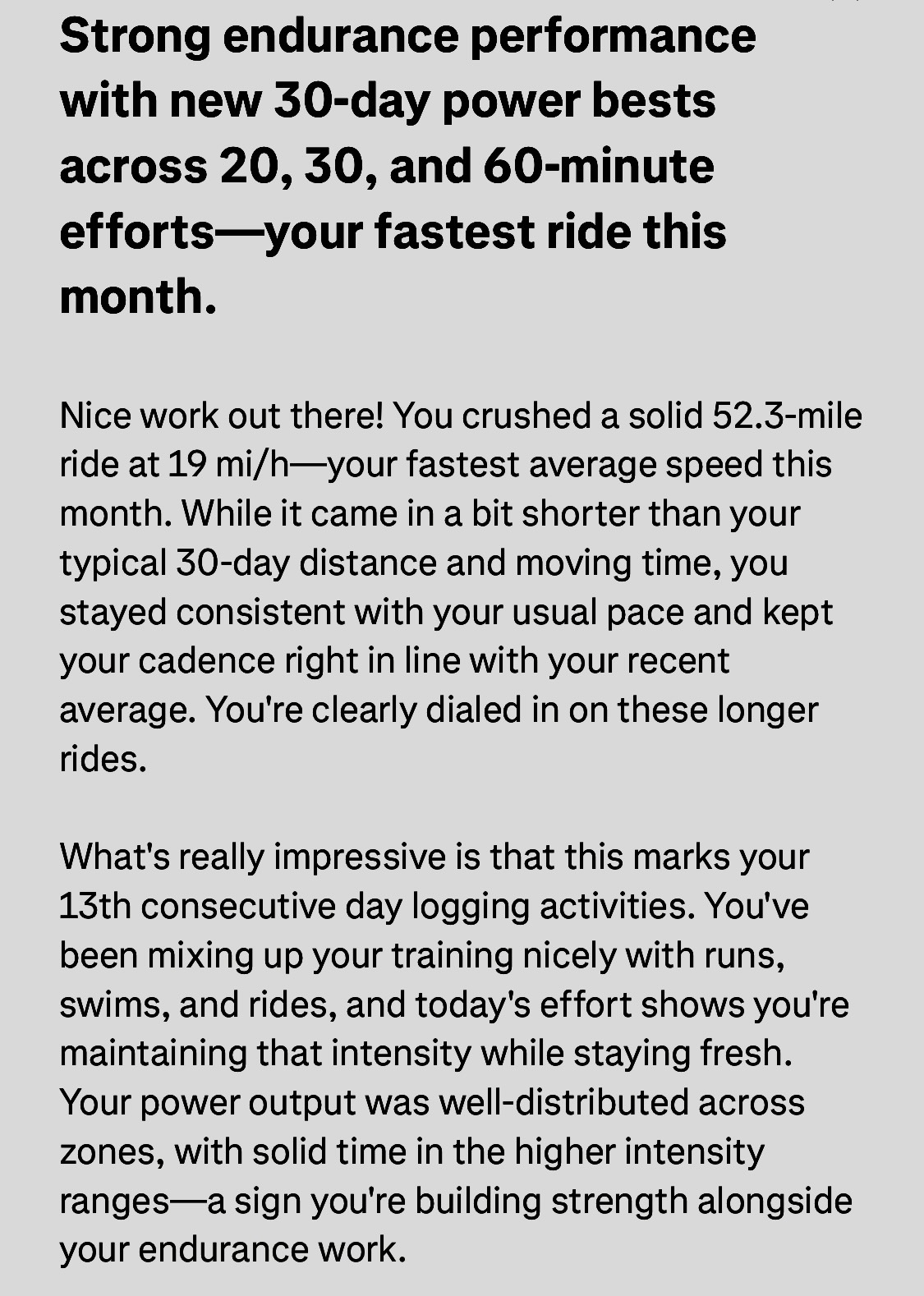
But with an AI overlay, distinguished by its toxic positivity, it’s even more. Dig this recap of my ride.

“Crushed it.” “You’re clearly dialed in.” “What’s really impressive. . . ” I’m blushing. Never mind that it’s only the fifth day of the month.

Now, if we press pause for just a little bit and reflect on a very real possible downside to continuous over the top praise, there’s ample evidence that one could become a narcissistic sociopath.

But that’s a risk I’m willing to take.

Kicking and Screaming Into The Future

Charlotte Alter on X writes, “Want to hear a horror story?”

My very sweet husband emailed me a couple dinner options for our anniversary coming up. He listed a couple different restaurant/picnic options and asked which I preferred. I started replying to his email and that’s when I noticed…That Gmail AI had the gall to DRAFT MY ANSWER FOR ME, the audacity to select a restaurant on my behalf.

It picked badly. It picked the restaurant that is most well reviewed. I want to go to the place that is special for us because we’ve had lots of nice memories there.

But the AI wouldn’t know that. Because it isn’t me, it hasn’t been married to my husband for 7 years, and it doesn’t know what we’ve been through recently and why I would want to go to our spot.

Which is why it should stay the fuck out of my email and my marriage.”

“Different restaurant/picnic options”?! The “very sweet husband” for the win.

I’ve Seen The Future And Eek

The Feed, whose motto is “Food for Athletes”, is a newish, trendy, growing biz where more and more endurance sports kids are getting their fuel.

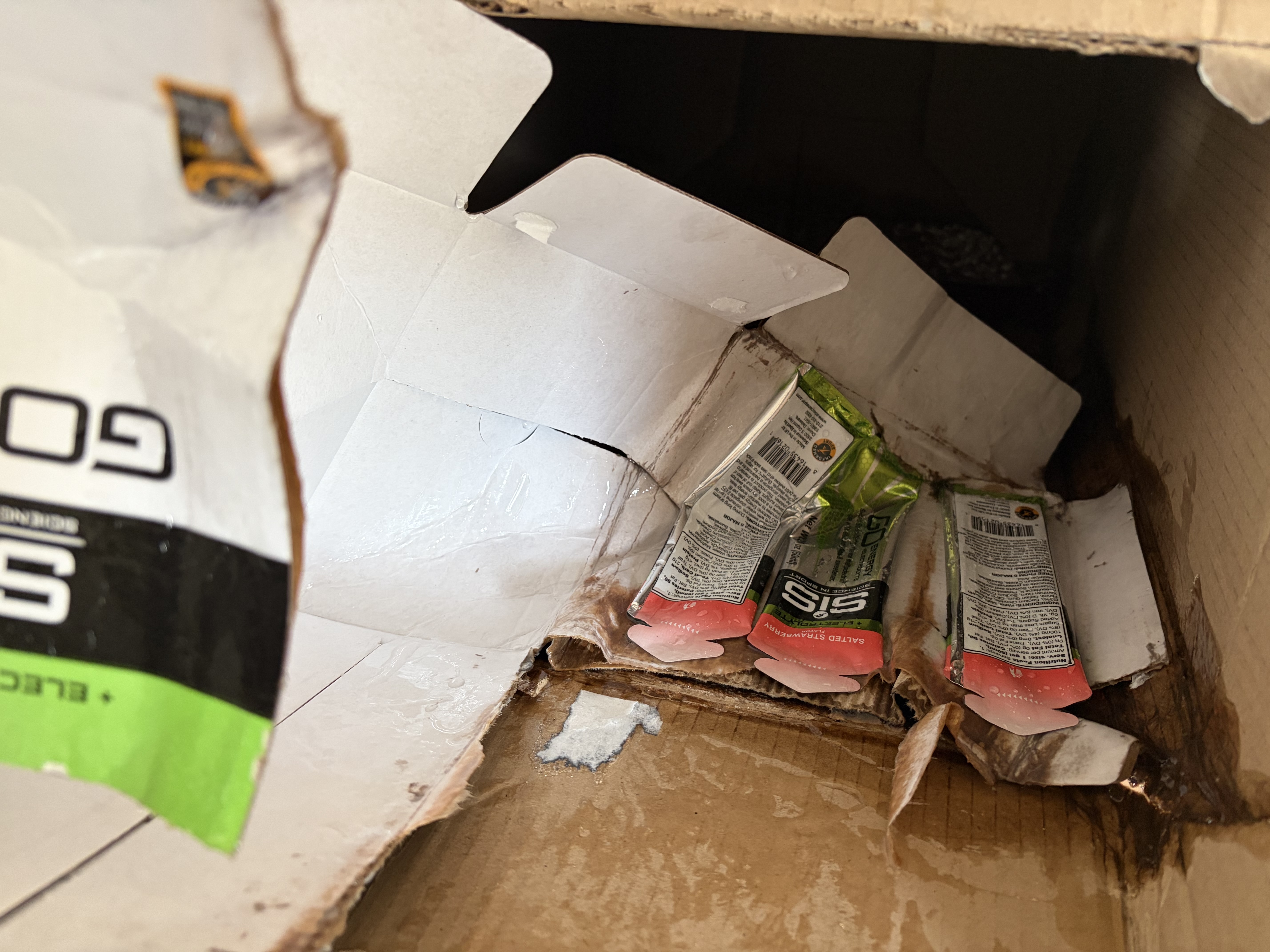
And if there’s any chance I might be a wee bit cool by association, I’m going to conform. So today, I received a text message from The Feed saying my most recent order of carbohydrate drink mix, energy gels, and engery chews had arrived.

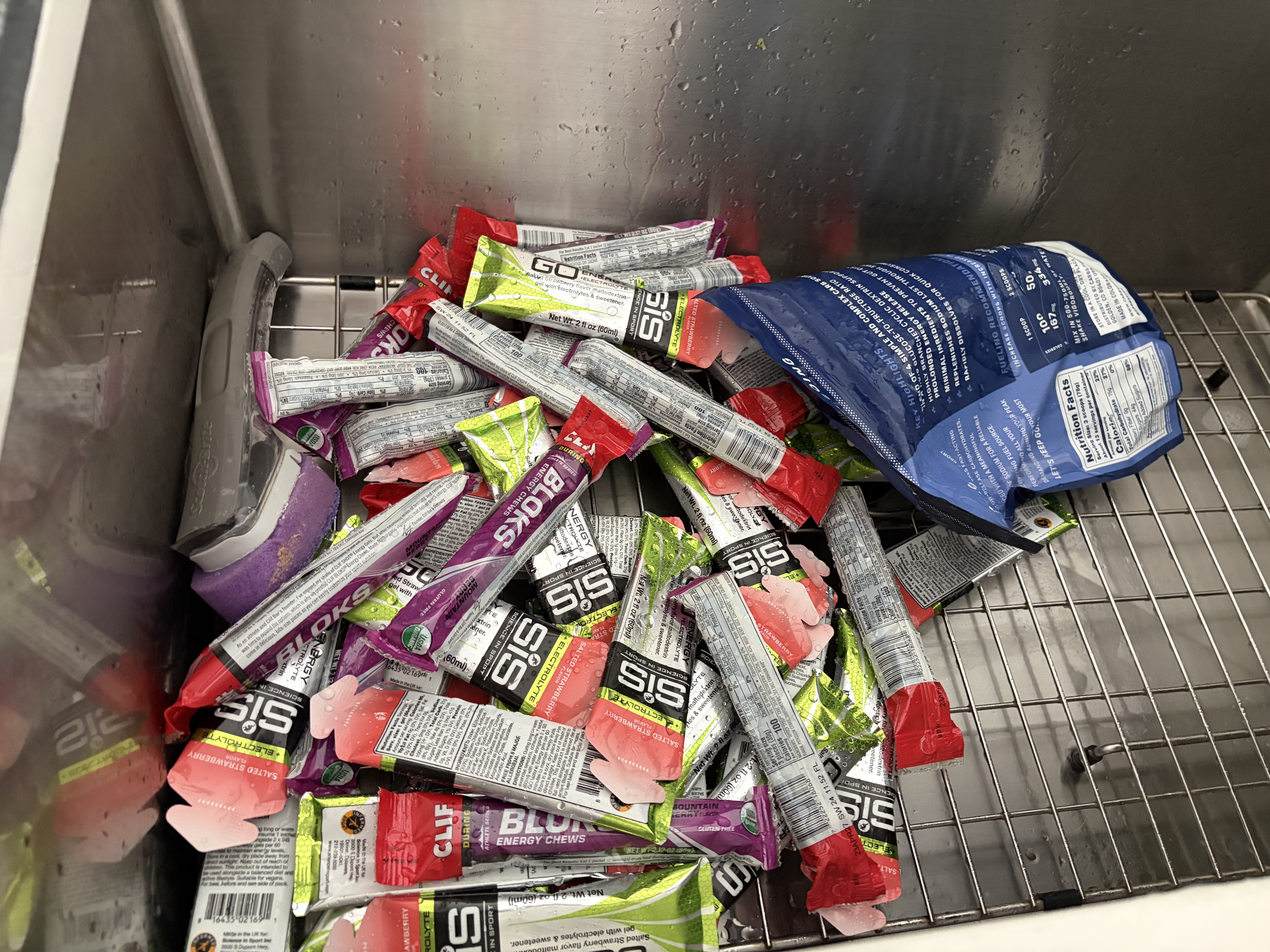
Lo and behold, when I opened the front door, the big ass box looked like it had been chewed completely open by a colony of beavers. Even worser, the smaller box of 30 gels was also opened. And somehow three of the large gels had opened and were all over everything in the box. Resulting in one very large, very gooey mess.

Somewhere, there’s a colony of beavers absolutely ready to rip some trees apart and drag them into a stream. Right now, everything I ordered is in the kitchen sink waiting to be rinsed and dried.

No, this is not remotely equivalent to the challenges you’re dealing with today. I’m not seeking sympathy for what is ultimately an inconvenience. This is a story about the future having arrived too soon. Or more specifically, about how shit early AI customer service is.

I emailed The Feed. Told them what happened. Shared the pics for emphasis. Asked for a new box of gels. Seemed reasonable.

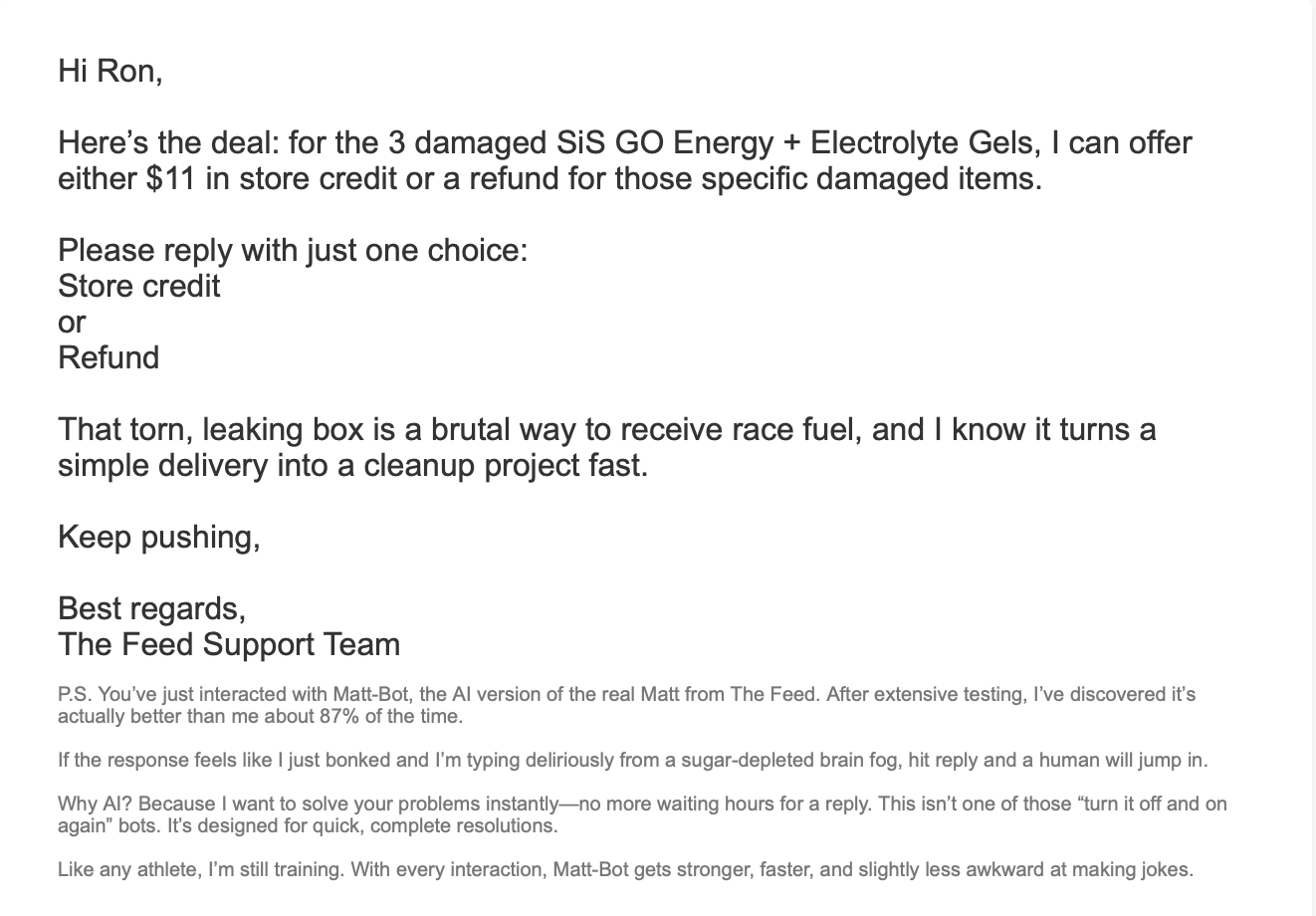
A minute later, “Matt-bot” replied:

The P.S. says Matt-Bot is better than a real live human being 87% of the time. LOL. The response I received falls squarely in the 13%. When they write that Matt-Bot is “designed for quick, complete resolutions” what they mean is we can employ far fewer people, lower our overhead, and increase profit margins for our shareholders’ benefit. At least in theory.

My fave part of the reply is the braindead closing, “Keep pushing”. Brah, all I was looking for was a run of the mill, “Very sorry for the inconvenience.” Well, and maybe a, “We’re committed to making it right. . .”

I switched from emailing an AI bot that strangely uses personal pronouns to emailing a human being. I wrote, “Really disappointing impersonal reply to my email and pictures about the gels arriving opened and getting over all the contents of the torn/opened big box.”

I have not heard back yet. Which is okay because I’d much rather have a slow, but thoughtful human reply than one from an uber-fast, weirdly impersonal AI customer service bot. I’m afraid, that in relatively short order, more deliberate, thoughtful, and humane responses may be a thing of the past.

Arrows Here, There, and Everywhere

I hit the road last week for the first time in 20 months. Drove a long, long ways. Overdosed on podcasts (Epstein Files, Artificial Intelligence, MF Doom–look him up). When the car came to a stop, I got on my bike and road it uphill in warm sunshine.

When my bike came to a stop, I titled a document, “What I’ve Lost”. It’s a shit inventory. If you’ve been reading me recently, you can correctly guess parts of my “What I’ve Lost” notes, but you would not guess this part, “Lost connection to PLU students—lost meaningful service, exercising unique skills, youthful exuberance.” I decided to stop teaching a year ago, but didn’t make it formal until a few months ago.

My timing on pulling the plug on work isn’t the best, but there would never be an easy time to let go of something that’s been so rewarding for so long. I hope the university will be okay.

Alison and Jeanette seem to be experiencing grief similarly to me. In waves. Or maybe, more accurately for me, waves of piercing arrows.

Something as simple as going out to dinner while on my inaugural road trip proved surprisingly fraught with unsuspecting arrows suddenly materializing out of thin air. Order a pizza. Then pass time in an eclectic shop next door. One that has very nice Valentine’s cards. Arrow One. Lynn called me the “Card King”. Like the flowers I’d get her, she always, always liked my cards. She kept most of them. “Now,” I think to myself as I start to get woozy from the loss of blood, “I’ll never get to buy her another.”

After pizza, gelato. I get a large cup with four different flavors. Arrow Two. “One more thing Lynn was right about,” I can’t help but think, “blackberry is the best”. I’ll never get to share a blackberry gelato with her again.

In the later parts of a recent bicycle ride, I got blindsided by Arrow Three. Never even saw the archer, but somehow stayed upright. Lynn and I had a silly ritual whenever I got home from a group ride. She’d excitedly ask, “Were you the Alpha Dog?” She’d be genuinely happy and proud whenever I said “yes” and incredulous when I’d say, “Some days you’re the hammer and some days you’re the nail.” Now, when I get home from a group ride, there’s no one to ask me how was the ride, who was there, what did you see? If no one asks about an activity, did it really happen?

Recently, Jeanette lamented, “I just don’t know where she is.” I offered that her mom was in our hearts, to the degree we emulate her. But, as these remarkably unremarkable stories illustrate, she’s almost always in my head too.

Paragraph To Ponder

From an excellent essay titled, “When A.I. Took My Job, I Bought a Chainsaw” by Brian Groh.

“In towns like mine, outsourcing and automation consumed jobs. Then purpose. Then people. Now the same forces are climbing the economic ladder. Yet Washington remains fixated on global competition and growth, as if new work will always appear to replace what’s been lost. Maybe it will. But given A.I.’s rapacity, it seems far more likely that it won’t. If our leaders fail to prepare, the silence that once followed the closing of factory doors will spread through office parks and home offices — and the grief long borne by the working class may soon be borne by us all.”

Kara Swisher And The Female Ego

I regularly listen to both of Kara Swisher’s podcasts, her own, and hers with Scott Galloway. As a result, I’m an expert on all things KSwish.

She’s a fascinating case study in gender because she prides herself in being atypically female. Her extreme self-confidence often tips over into bragging about herself. She makes no apologies for being the self proclaimed “best tech journalist” currently working. When you look up “swagger” in the dictionary. . .

She is good at what she does and she has accomplished a lot. At present, she’s on a nationwide book tour for her new book, Burn Book: A Tech Love Story, which is selling well. Among other things, people like that she’s so opinionated.

Normally, I think of her braggadocio as a harmless personality quirk, but her promoting of her book tour is proving way, way too much. The to-this-point undefeated male ego has finally met its match. Name an especially egregious male whose ego runs amok. KSwish would give that dude a run for his money.

Case in point. She recently bragged about doing the best job of anyone reporting on what really happened with Sam Altman’s firing and rehiring at OpenAI. She said something to the effect of, “It was cool to see I still got it. And that I can still be the best beat reporter going.” Swisher isn’t a reporter anymore because her ever expanding ego makes it impossible to defer to interview subjects. She has to be the story. End of story.

Maybe a women with an unbridled ego is alright, fuck the patriarchy and all, but I’m repelled by egomaniacs of either gender. I’m at an “advanced” stage of my life where I’m drawn to people who sublimate their ego in the service of others. Especially when that service takes the form of disciplined listening. Of choosing not to speak. Of looking, and listening, and learning.

That said, I am down with KSwish-like ambition. And even her admittedly excessive work ethic and intense focus on professional status. With the critical caveat that we keep Qoheleth’s Old Testament Ecclesiastes insight front and center—that’s there’s a season for everything. Including ambition, professional status, and ego.

In your 20s, 30s, and 40s, go crazy. Be ambitious. Work hard. Achieve things. Line your pockets. Increase your status.

But KSwish, like your Humble Blogger, was born in 1962. And listening to her promote herself over and over makes me wonder, when should one stop giving a shit? When is the time to cull our professional “to do” lists and create space for others?

Of course it’s a personal decision. KSwish would vehemently reject my suggestion that we think about our professional identities in terms of life chapters. She would profanely brush off my suggestion that we defer to our younger colleagues on their way up.

And that’s her prerogative.

I’m repelled by KSwish’s self promoting, look-at-me, in-your-face ego. But, but being the expert I am, I can say this with total confidence. She doesn’t give a shit about what I think about her. Which is her most appealing trait.

It’s 1995

Said one technology analyst this week on the heels of artificial intelligence chip maker Nvidia’s red hot quarterly results. Meaning just like when the internet caught fire in 1995, Nvidia is igniting a whole new technology whose trajectory requires educated guesses.

Let’s press pause and ponder whether we’re better off now than in the early 90s. Inevitably my privilege contributes to my belief that we are a lot better off. Partially because of convenience. Specifically, we take for granted the time we save on almost a daily basis from internet-based personal tech. Case in point. A friend recently posted a picture of himself on Facebook at the Westminster, CA Department of Motor Vehicles where I got my license 46 years ago and I thought, “Why the heck did he go in person?” because I can’t remember the last time I went to the DMV.*

Granted, not a substantive example of human progress, but I suspect it is the cumulative effect of relatively simple and smallish such examples that translate into an improved quality of life.

More meaningfully, here’s a far-out social media adventure I went on last week after an extended family member posted this gem to the ‘Byrnes Family’ group text.

That’s my oldest bro teaching me the sweet science in Muhammad Ali’s hometown. As I looked at it, my attention drifted to the background and my best friend’s house. Jimmy D and I were in separable from ages 3-9. Heartbroken over the end of our friendship, when we moved from Louisville to Ohio I sobbed in the back seat halfway there.

Where the heck is Jimmy fifty-five years later I wondered? A quick google search turned up his dad’s obituary from 2020 including his and his sister’s places of residence. A few seconds later, I was on Jim’s Instagram page looking at his island home just off the Maryland shore that he and his husband were selling.** Then I watched a video from inside his home art studio where he talked about his process. Another quick search turned up his new location. After scouring his instagram and admiring his big white fluffy dogs, I visited his sister’s Facebook page and saw a picture of Jim and his elderly mom. And then back to the obituary and some remembrances including an amazing picture of a very young Jimmy with his parents and sisters on the back brick patio of his Cardiff Rd home. . . the one in the picture.

A miracle of modernity.

I listen a lot to people on the forefront of large language models and my take-away from their predictions is that this technology will greatly accelerate economic productivity and further save people time to pursue more non-work interests and activities.

Not all boats will rise to the same degree, because they never have, but artificial intelligence will in all likelihood induce a much higher tide. White collar people in particular will work less while enjoying simple and smallish and quite possibly complex and more substantive improvements to their quality of life.

BUT will any of us be happier? One way to get at that is to reflect on whether we’re happier now than in the early 90s. Despite internet-fueled economic growth, there’s lots of evidence that we are not. In fact, some would argue that a large part of the internet’s legacy, especially among the young, is steadily worsening mental health. And a coarsening of civic life.

Another way to approach the question of whether we’ll be happier in a post AI world is to consider whether it will foster stronger interpersonal connections. Will it, I wonder, enable us to enjoy the company of more close friends? I also wonder whether it will enable us to slow if not reverse the environmental degradation that threatens our well-being. And will we, I wonder, experience more art that moves us more often, and in the end, makes us feel more alive. Alive in ways that renewing car tabs on-line and skimming friends’ Instagram pages never will.

In the same space of time, 29 years from now, in 2053, I suspect we won’t be much if any happier than we are right now. I would like to be wrong and still around so that you can recall this post and roast me for not being nearly optimistic enough.

*needed to do an eye test to renew his license

**someone in my fam asked if I knew Jimmy was gay, “LOL,” I said. “We were six, I don’t think I knew what ‘gay’ was.”

Artificial Intelligence Paragraph to Ponder

Few are as intelligent on A.I. as Tyler Cowen. He’s largely optimistic.

“I am reminded of the advent of the printing press, after Gutenberg.  Of course the press brought an immense amount of good, enabling the scientific and industrial revolutions, among many other benefits.  But it also created writings by Lenin, Hitler, and Mao’s Red Book.  It is a moot point whether you can ‘blame’ those on the printing press, nonetheless the press brought (in combination with some other innovations) a remarkable amount of true, moving history.  How about the Wars of Religion and the bloody 17th century to boot?  Still, if you were redoing world history you would take the printing press in a heartbeat.  Who needs poverty, squalor, and recurrences of Ghenghis Khan-like figures?”