Stop Trying to Control Things Outside of Your Control

William Irvine, in A Guide to the Good Life, explains we’re susceptible to negative emotions like anger, fear, grief, anxiety, and envy because of our evolutionary programming. Each of those negative emotions increased our earliest ancestors’ odds of survival, so overtime, they became engrained in us. For example, early humans who weren’t afraid of lions were less likely to survive long enough to pass on their genes. Similarly, those that didn’t worry incessantly about having enough to eat were less likely to survive long enough to pass on their genes.

Irvine explains the good news. Since we can reason, we can understand our evolutionary predicament and take conscious steps to at least partially escape it. For example, the pain associated with a loss of social status isn’t just useless, it’s counterproductive. We need to learn to “misuse” our intellect to override the evolutionary programming that makes us susceptible to negative emotions.

In short, Stoics pursue tranquility. The major impediment to tranquility is our evolutionary programming. Tranquility and inner joy is achieved by “misusing our reasoning ability” via repeated practice at using specific Stoic psychological techniques.

For example, we must overcome our evolutionary tendency to worry by determining which things we can’t control. Irvine labels this the “trichotomy of control.” Once we identify those things we have no control over, we can use our reasoning ability to eradicate our anxieties related to those things. Doing that improves one’s chances of gaining tranquility. To better understand the trichotomy of control, take a piece of paper, and using a ruler or folding it, make three columns. Label the first “absolutely no control”, the second, “total control”, and the third “some control”. It’s easy to quibble with “absolutely” and “total”, but work with me.

Here are some possible items for each column just to get your wheels turning. No control—the weather, the eventual death of loved ones, our own gradual physical decline, and how fast a competitor might show up at your next race. Total control—to eat nutritious food, to exercise daily, to get adequate sleep, to marry or not, to have children or not, to vote or not, to wear boxers or briefs. Some control—to shape your children’s values, to reduce your commute, to make your work environment more pleasant, to protect the environment.

It doesn’t take long into this exercise to realize the lines between the columns should probably be dotted since there’s often blurring. Not as fancy sounding, but a continuum of control would be better than Irvine’s “trichotomy”. The whole point is to learn to let go of everything that makes up the “no control” anxiety-producing end of the chart or continuum. Accept the fact that if you live in the Pacific Northwest it’s going to be overcast for seven or eight months of the year. And there’s going to be an incessant light rain for those seven or eight months. I originally wrote, “incessant, annoying light rain,” but that’s the exact point. Only things we have some or a lot of control over should have the potential to annoy us.

One last example of learning to let go of those things beyond one’s control. One night last week I asked Seventeen what she was swimming in the meet the next day. “The 50 and 100 free I think.” Internal dialogue. “What?! That’s what the beginners swim. That’s embarrassing for a fourth-year co-captain.” Actual response, “Really?!”

Parenting fail. She could feel my disappointment. In a bathtub (too much information too late alert) partially filled with very warm water, I replayed our brief exchange in my mind. I realized I could give in to negative emotions and be frustrated that she doesn’t approach high school athletics they way I did or the way I think others should or I could recognize that she’s an independent young adult who can choose not to train until the season and who thinks of athletics first and foremost as another way of having fun with friends.

It doesn’t matter whether she swims a slow 50 or a fast 500. Positive parenting rests upon unconditional love. Post bath I attempted a recovery. “I’m really looking forward to watching you swim the 50 and 100 tomorrow afternoon.” “Good!” she said in a way that communicated forgiveness. All was well with Seventeen. And the world.

How to Live?

That’s the question my writing students and I are focusing on this semester. I can’t think of a better age to craft a philosophy of life. Most of them are on their own for the first time in their lives. Having to make many, many more decisions by themselves and find their way.

William Irvine, philosophy professor and modern day Stoic, argues you’re likely to waste your life away without a well thought through philosophy of life. Here’s his argument.

You have three choices in how to live. One is “unenlightened hedonism” in which you thoughtlessly seek short-term gratification. Think Faber College, 1962.

A second is “enlightened hedonism” in which you seek to maximize pleasure in the course of your lifetime. People practicing this philosophy of life will spend time discovering, exploring, and ranking sources of pleasure and investigating any untoward side effects they might have. Then they’ll devise strategies for maximizing pleasure.

Regarding hedonism, Irvine writes, “In my research on desire, I discovered nearly unanimous agreement among thoughtful people that we are unlikely to have a good and meaningful life unless we can overcome our insatiability.” He adds, “There was also agreement that one wonderful way to tame our tendency to always want more is to persuade ourselves to want the things we already have.”

But I digress. The third and final choice in how to live is to carefully think through what you most want out of life and then organize your life accordingly. Not the goals you form as you live day-to-day, but one “grand goal in living”. Of the many goals in life you might pursue, which one do you believe to be most valuable?

Most people have trouble naming their grand goal in living because our culture doesn’t encourage thinking about such things. Instead, it provides an endless stream of distractions so they won’t ever have to. To their credit, some people swim against the stream of distractions by journaling, taking digital sabbaticals, enrolling in my writing seminar, and going on silent retreats.

If determining a grand goal of living isn’t challenging enough already, it’s only half the battle. The other half is developing effective strategies for attaining it. These strategies will specify what you must do, as you go about your daily activities, to maximize your chances of gaining the thing in life you take to be of most value.

This is where Irvine says Christian pastors and the ancient Stoics differ. Most Christian pastors, Irvine argues, focus on what people must do to have a good afterlife. Pastors, he says, have far less to say about what people must do to have a good life. That’s why, he notes, it’s tough to distinguish among the religious and non-religious.

For his own philosophy of life, Irvine chose to update Roman Stoicism for modern times. Stoics claim that many of the things we desire—most notably fame and fortune—are not worth pursuing. Instead they developed strategies for achieving tranquility and inner joy by eliminating negative emotions like anger, grief, anxiety, fear, and envy.

Eight years ago, when I was on sabbatical, I took time to write a guiding paragraph that I can’t find anymore in my computer files. I can remember most of it, but it’s okay I misplaced it, because it’s time to update it. And then reference it way more regularly.

If your curious about my philosophy of life, just eavesdrop on me as I live my day-to-day life. Because actions, of course, speak louder than words.

Apple Inc. and the Betrayal of the American Dream

Big week for Apple fanboys and girls. New iPhone. You better keep up with all the cool people and buy one. It will change your life. Well, maybe not, but you’ll be the envy of all those iPhone 4 losers. “Wow dude,” you can say to them, “that’s one short, thick, throwback phone.”

A recent book by two Pulitzer Prize winning investigative reporters titled, “The Betrayal of the American Dream,” criticizes Apple for outsourcing too many of its jobs. Here’s a National Public Radio story on the authors and their book.

Even though I’m an Apple fanboy and investor, I believe the bigger the company and the greater its influence in the world, the more we should hold it accountable for being transparent, honoring workers’ rights, and protecting the environment. Apple’s marketing, products, and momentum can bedazzle at the expense of critical inquiry.

I’ve been swapping emails with my friend—Dan, Dan, the Transportation Man—about driverless cars. The last one I sent him linked to an article that suggested, initially at least, driverless cars will cost around $300k. “Just do what Apple does” he wrote back sarcastically, “and outsource it (the manufacturing of the driverless car) to China.”

In the United States, especially during election season, knee-jerk criticism of outsourcing is legion. Few of the critics take any time to consider how much more they’d have to pay for their toothbrushes, clothes, iPads, bicycles, and cars if they were all completely manufactured in the United States. Heaven for bid if we connected a few dots.

In their critique of Apple, I wonder whether the “Betrayal” authors factor in the daily benefits of its products to users around the world. I made light of the newest iPhone, but you’d have to pry my MacBook Pro from my cold dead fingers.

Also, outsourcing is an abomination only when economic nationalism prevails. It’s possible, theoretically at least, to think more globally without sacrificing love of country, and therefore, to cheer job growth irrespective of political borders. Especially given global economic interconnectedness and the fact that most of Apple’s foreign-based employees buy some U.S. imports.

The authors would chuckle at my naivete. They’d point out we continue to run a tremendous trade deficit with China because international trade is conducted on a grossly uneven playing field. China has far fewer labor and environmental regulations, pays workers far less (even when adjusted for cost of living), and places protective tariffs on our imports. The uneven nature of the international trade playing field is a pressing problem.

But I wonder what the authors would say about the charitable giving the GalPal and I will be doing the next few years as a result of recently selling some Apple shares that had quadrupled over the last four years.

For me, the jury is still out on what kind of corporate citizen Apple is. I value critical analyses, but at present, I will continue to use its products and invest in it. I am not a model to follow. Apple’s fate will be determined by the individual and collective decision-making of technology users around the world.

For cutting edgers like me, there’s just one decision left. A black or white iPhone 5?

The Disciplined Pursuit of Less

I wish I had written this insightful post on decluttering not just our closets and garages, but our lives.

Here’s an example of the ideas in action via John Gruber and Kottke:

I like this as a basic theory for understanding Apple’s exceptional success. Steve Jobs was famous for his pride in saying “no”. At All Things D in 2004, asked about an Apple PDA: “I’m as proud of the products that we have not done as I am of the products we have done.” (Other examples here and here.)

Tim Cook, at the 2010 Goldman Sachs technology conference:

We can put all of our products on the table you’re sitting at. Those products together sell $40 billion per year. No other company can make that claim except perhaps an oil company. We are the most focused company that I know of, or have read of, or have any knowledge of.

We say no to good ideas every day; we say no to great ideas; to keep the number of things we focus on small in number.

Ironperson Canada 2012—Almost “Go Time”

As ready as I guess I’ll ever be to swim 2.4 miles, cycle 112, and run 26.2 on Sunday, August 26th in Penticton, British Columbia.

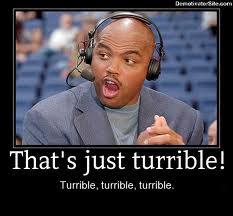
I’m assigning myself an “A-” for my prep. I’m most proud of the fact that without being accountable to a coach, or anyone, I put the work in. I’m fit. There have been times in the last five to ten years that I’ve been faster in the water, faster on my bike, and I’ve ran faster, but I’ve never been as strong in all three disciplines. I am trained for a steady and solid all day effort. I’ve gone from doubting whether it’s possible to run a marathon off a long swim and bike, to dialing in the salt supplements, and thinking I can. When I get in trouble during the day, I’m confident I can pullback, regroup, and continue on. The half grade deduction is due to the record amounts of sugar I’ve consumed over the last few months. I’ve blown through pack after pack of Costco cookies and thoroughly tested a wide range of Dreyer’s ice-cream flavors. Someone asked Charles Barkley what he thought of my nutrition and his answer is below.

The four consecutive recent Tampa, FL runs were more important than meets the eye. It took me 15 of the 30 miles to learn to slow down and sustain anything through the heat and humidity. Mid-day Friday in Olympia I ran for an hour steadily and fairly hard in a long sleeve winter shirt. I couldn’t have done that before FL. I feel fairly acclimated to heat, an achilles heel of mine. Then again, it was 94 in Penticton yesterday. If it’s that warm on race day, all bets are off.

Recently, I met two people who couldn’t understand why anyone would voluntarily subject themselves to such extreme physical activity. I’ve wondered the same thing for years, but have made peace with my motivation which I’d describe as one part peer pressure and two parts the lure of trying to pace such an event correctly.

I am an ordinary age group athlete, but I am above average at pacing events correctly. I love the challenge of spreading out my effort as evenly and efficiently as possible. That’s part of my competitive advantage. I first learned to pace a 10k well, then a half marathon, then marathons, then half irons, then rides around Mount Rainier. This event intrigues me because it will be the ultimate test of that skill. The line between my “all day” pace and “too fast” is razor thin especially on the run. Even 10-15 seconds a mile too fast in the opening miles could very well cause me to blow up in the middle or late stages of the run.

The question is do I have sufficient self-understanding and body awareness? No power meter or heart rate meter for me, just g.p.s. and intense attention to my “perceived rate of exertion”. Put differently, for eleven hours I’ll be closely assessing whether I’m breathing too hard. I have a hard time living in the present for 11 minutes, here’s hoping I can do it for 11 hours.

My physical ordinariness is evident in the fact that true fish make me look silly in the water; I can’t hang with Cat 1, 2, and 3 cyclists; and the fifty year-old down the street would have to spot me at least 30 minutes in a marathon. But 90% of triathletes have a weakness. In contrast, I’m decent across the board. That’s another advantage. Being 50.5 in the 50-54 year old division is yet another.

Given my successful training and those advantages, what are some realistic goals? I’m conflicted. Half of me feels conventional, I want to start the run right around the seven hour mark and finish 10th in my age group (last year there were 245 in my 50-54 age group). The other half wants to have a spiritual experience and learn more about myself and life independent of the race clock. That’s vague because it’s not a goal as much as a tough to articulate feeling.

Recently, a friend and fellow long distance athlete had an epiphany. He realized that racing is about learning to set goals and persevere in attaining them and then applying those skills and discipline to his non-athletic life. For me, that’s too linear, or for lack of a better term, too Western. I want to experience something of the divine. Is that asking too much?

Post race I’ll share my more specific pre-race goals and my unconventional mental prep. Ultimately, finishing 10th in my age group will come down to one thing, being able to run steadily for the whole marathon leg. In training, salt tabs have been a godsend, keeping my chronic cramps at bay. I expect them to work on race day too. So then, only two things will determine my relative success, smart pacing, and mental toughness, or guts.

Do I have sufficient guts? I think so.

p.s. Noticed the dearth of pics lately? I gave my camera to 19 for her 20th b-day. I will buy a new one soon and jazz the place up. In the meantime, I will deputize 17 and 20 as race photogs.

Breakfast With Marvin

Mother Dear just moved into a very nice apartment building for seasoned citizens in Tampa, FL. My Betrothed and I are ensconced in a guest apartment on the third of five floors.

Mother Dear isn’t answering her door and the Gal Pal is on a walk. So I’m recovering from my “hot as Hades” morning run by watching the Olympics in the internet cafe. Next, I head to breakfast with the Tampa Tribune sports page. Dallas Clark, the Bucs new tight end, is healthier than expected.

I eventually glance up, and when I do, there’s a grey haired man staring blankly at me. I set the paper on the floor and chat up Marvin, a former technical writer from New York City. He’s happy to answer my questions, but doesn’t ask any. Come on Marv, work with me.

On one level, Marvin is living large. There’s about four or five women for every man in this joint and he’s more mobile than most. But on the other side of the ledger, his memory is failing him. That, in combination with being surrounded by elderly people, makes me think about getting older.

I ask Marvin how old he is and the wheel in his head spins wildly just like when I asked about his apartment number and what his daughter teaches. He was embarrassed he couldn’t remember either one. He also couldn’t recall his age, but he knew he was born in 1933. I told him he was 79 and that brought a smile of recognition. In hindsight, given all the eligible women he’s constantly surrounded by, I should have written his apartment number down for him.

The end of life isn’t really funny. The body breaks down. And the mind. The past, a source of strength for most people, inevitably blurs. Friends die. Loneliness looms. And there’s no promise of watching future Olympics or seeing grandchildren marry.

But with the support of family and friends, it doesn’t have to be overwhelmingly sad either. My sister has pressed pause on her own life and taken my mom under her wing for the last month. Spending day after day wading through her too many possessions, the move would have been impossible without her. My sister’s daughter, my niece, decided to attend the University of Tampa in part to provide Mother Dear moral and practical support. She’s partnering with my sister to smooth the move.

Sitting here, post-waffle, back in the internet cafe once again watching NBC commercials interspersed with athletic competition, I can’t help but think about my own future. How long will I live? How about my Betrothed? Will I lose my ability to walk unassisted? To drive? To live independently? Will I lose my memory? The answer to the last four questions is most likely yes. The passing of time is the great equalizer.

I don’t want to be a burden, but when the time comes that I can’t remember my age, will my daughters press pause on their lives long enough to help me pass into the final chapter of my life as peacefully as possible? More importantly, will I live this next week, month, and year to the fullest given the limits of time? Will I take risks, teach well, love deeply, live purposely?

A sunny, early August Tampa morning filled with many more questions than answers.

Why Are You Preoccupied With How Others Perceive You?

The real question of course is why do we care about how people, in many cases whom we don’t even know well, think about us? Odd how often we willfully hand over how we feel about ourselves to the vagaries of total strangers.

Kraznic has an excellent chapter on money in Wonderbox. He writes eloquently on how status anxiety begets mindless consumerism. We all suffer from status anxiety in different ways and to different degrees. I’m convinced we all suffer from it more than we realize or are willing to admit. Who me? Status anxiety?

When Sixteen spends half an hour on her hair before school, her status anxiety is easy to detect. And developmental psychology helps us understand the normalcy of that, but I will probably never fully understand women and their hair. I realized this anew after receiving an email from my sissy about my mother whom she’s helping move into a new apartment building for seasoned citizens. Today Mother Dear was getting her hair “done” for the first time by the new apartment building’s stylist. And my sissy provided the long distance play-by-play:

Mom is sure the girl will be horrible. We had R take photos from every direction of her newly done hair last week, put it on the iPad and I just showed the photos to the hair girl. She has been doing hair for 42 years so we’ll see.

Picturing the picture taking and thinking about my mom’s anxious pessimism made me chuckle, but then just as quickly they made me think about how we never entirely stop caring about our status.

What are others going to think about me when they see my hair? What about the lawn? How does it compare to the neighbors? The car? The wardrobe? The size of the ring? My waistline, muscles, curves, complexion? The kitchen countertops? The gas grill? The cupboards? The whole damn house? How about the social calendar? The number of friends? The friends’ status? The job title? The salary? The vacation destination? The long-distance triathlon finishing time? The blog readership? The children’s athletic success, academic success, college choices? Their job titles? Their salaries? And the beat (down) goes on.

Madison Avenue is genius at playing on our status anxiety, but it’s too simplistic to blame advertising execs for the sum total of it. There’s something deeper at work, something rooted in human nature. In prehistory, I imagine there was fire envy. “Damn, just look at that family’s raging fire. Yeah and their spears are insanely sharp and hella lethal.”

The goal isn’t to not care at all, it’s to care much less especially about what anonymous others think. When Nineteen was seven her second grade teacher asked me to do a guest lesson on China which I had recently visited. Knowing Seven’s social life was hanging in the balance, I planned a meticulous lesson based on three open-ended questions and some slides from which her classmates and she could deduce answers. Afterwards I bent down and asked, “How’d it go?” And I’ll never forget her words because they were the highest praise I’ve ever received as a long-time, successful educator. “You were perfect Dad.” I want my students to like my courses. And I want my Saturday morning running friends to laugh at my ribald jokes. But I care most about what my wife and daughters think about me.

Tonight, when fifteen other cyclists and I hit the base of Bordeaux in Capitol Forest, and the climb is on in earnest, all we’ll hear is one another’s heavy breathing. The prize for being the first one to the top? Status as the “King of the Mountain”. The same game I lived to play in construction sites forty plus years ago. Everyone will know who the biggest badass is on the return into town.

If I start providing other examples of how I routinely succumb to status anxiety, this post would be my all-time longest, and no one wants that. So let me end with a twist on status anxiety just to illustrate how irrational its grasp can be at times.

I wrote once before that, in 2008, I bought a seal gray Porsche Cayman. It was beautiful and drove entirely different than any other car I’ve ever owned. Mother-Dear says, “You can’t love something that can’t you love back,” so suffice to say, I liked it a whole, whole lot. Originally, that is. Over time, I grew self conscious, increasingly uncomfortable about what other people thought of me when they saw me in it. Did they think that I thought I was better than them because my car was way faster, more expensive, and stylish? A lot of people probably buy Porsches exactly for that reason, but I couldn’t shake the self consciousness. And so I sold it. To a German Microsoftie.

Why did I care so much about what people at church or work thought about what I drove when they don’t really know me? [Dear Microsoftie, I’d like a do-over, a Porsche-based exercise in overcoming status anxiety. Make like Carly Rae and Call Me Maybe.] Ultimately, why do I care about what anyone outside of my family thinks about my (amazing) hair, my (splendid) kitchen counters, my (now completely forgettable) car, or my (still-to-be-determined) triathlon time?

Recovering from training with la ultima status symbol—Australian labradoodle extraordinaire.

A More Gentle Pace

I recommend Roman Krznaric’s “The Wonderbox“. From the book flap:

There are many ways to improve our lives: we can turn to the wisdom of philosophers, the teachings of religion, or the latest experiments of psychologists. But we rarely look to history for inspiration—and when we do it can be surprisingly powerful. Uncovering the lessons that can be learned from the past, cultural historian Roman Krznaric explores twelve universal topics from work and love to money and creativity, and reveals the wisdom we’ve been missing. There is much to be learned from Ancient Greece on the different varieties of love; from the industrialising British on job satisfaction; and ancient Japanese pilgrims on the art of travel.

I just finished Chapter Five titled “Time”. I appreciate your making the time to “read me,” but my guess is you won’t follow the book link, let alone read the book because you don’t have the time. Here’s one pgraph from Chapter Five to give you the flavor flav of the book:

My adventures with time are not simply a rejection of the clock, but an embrace of absorbing the world at a more gentle pace. When I got to an art gallery, I try to visit only two or three paintings. Each morning I walk in the garden and search for something that has changed—perhaps a bud that has opened or a new spiderweb—which helps bring a stillness to the beginning of the day. I attempt to eat slowly, savouring the flavours. Almost everybody laughs at my tiny diary, which give each day a space half the length of my little finger. As it is so easily filled, it helps keep down my number of appointments. Artificial? Absolutely. But it works for me. The best way I know to have more time, to feel less rushed, and appreciate life to the fullest, is to plan fewer activities.

Krznaric doesn’t wear a watch, programs his phone and other gadgets so the time doesn’t show, and covers the built-in clocks on his kitchen appliances in an effort to resist modern society’s all encompassing artificial demarcations of time.

You may do the same a few days or weeks a year when on vacation. There’s nothing much more liberating than, temporarily at least, disconnecting from time.

Most people equate minimalism with decluttering and that’s an integral part, but planning fewer activities may be even more essential to living more slowly and simply. My North American, upper middle-class suburban peers are particularly susceptible to over planning because they fear their children will be disadvantaged if they don’t participate in nearly every extracurricular activity including sports, music, theater, religious youth or service groups, and family travel.

Chock-full family calendars, found in most suburban kitchens, are testaments to hyper-activity. Consequently, most children really don’t know what to do with “free time”. Especially, screen-free free time.

An insight worth repeating. “The best way I know to have more time, to feel less rushed, and appreciate life to the fullest, is to plan fewer activities.”

The audacity. Slate’s Rachel Larimore disagrees with Krznaric and myself. In Defense of Busyness.

How ’bout you?

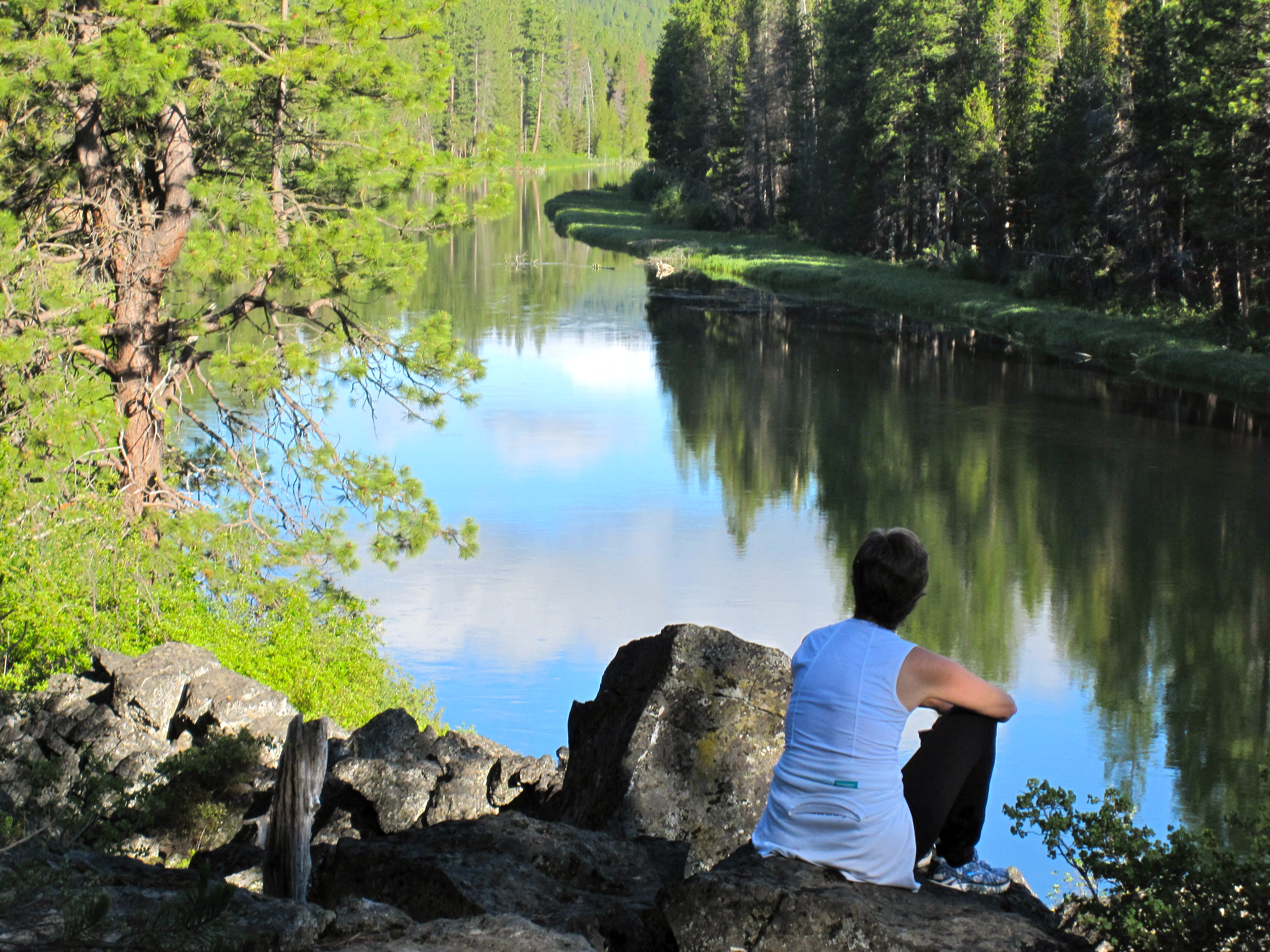
Slowing to a complete stop recently on the Deschutes River in Sunriver, Oregon

The GalPal’s morning “to do”—sit by the river.

Uncle!

Growing up, that’s what I had to scream to get my older, more muscle-brained brother to temporarily stop pulverizing me. The other night, the youngest, the oldest-Betrothed, and I streamed an episode of Wonder Years. I said to youngest daughter, “Every time you watch Wayne, think Uncle D because they’re one and the same.” If you don’t know Wonder Years and aren’t familiar with Wayne, fix that.

One time, in my late elementary or junior high years, I frantically called my mom, a secretary, at work, “This time he means it! He’s really gonna kill me!” Her somewhat shaken co-worker said, “Aren’t you going to go home?” To which she replied, “No, he’ll be fine.” Yeah, if by “fine” you mean found unconscious in the fetal position on the kitchen floor. Once, when the most mad I had ever been, I remember “Wayne” saying to me, “If you hit me, you better knock me out, because if I get up I’m going to kill you.” What’s the statue of limitations on something like that?

Our last fight was when he was 19 or 20 and I was 16 or 17. All I remember is flying across the family room. My girlfriend was aghast. Everyone of the innumerable beatdowns will fuel me when racing Iron-person Canada in late August as I desperately try to level the score by beating Wayne’s time.

But I digress. My most recent reason for crying uncle has nothing to do with my knumbskull older brother. It has everything to do with this picture, taken while on the Eastern Sierra climbing trip I blogged about a month ago.

Living REALLY large

If you’re a regular reader, you know I’ve been going through a transformation of sorts—a reordering of my life based upon an amalgam of ancient philosophy, minimalism, and discontent with mindless consumerism. All of that exhausting, status quo fighting non-sense is now in my RV rearview mirror, thanks to a reverse Paul of Tarsus-like conversion inspired by seeing this badass rig up close and personal.

Uncle! I give up on trying to live more simply so that others may more simply live. My new motto is “You only live once. Embrace the bling. Less is less, more is more.” Admittedly, a tad wordy, but in the spirit of my conversion, if some words are good, more are better!

My plan is to find a similarly equipped rig on Craigslist. Well, maybe a little bigger. If you know of one that has a flip down plasma t.v. built in so that I can watch Will Smith movies outdoors, holla’.

A smaller ecological footprint be damned. Greater energy independence be damned. As one of my friends says, “Only when we’ve used up all the carbon-based energy, will we have real incentive to find alternatives.”

If you’ll excuse me. I’ve got a lot of shopping to do for the inside of my new rig-to-be. And no bro, you can’t roadtrip with me. You should have considered the possibility I’d end up living really large when you were floating like a butterfly and stinging like a bee.

In Da’ Club

The title of a thumpin’ Fiddy Cent track.

It’s well known that adolescents place great importance on fitting into groups. It’s less well known that we never outgrow our need for affiliation. Our happiness isn’t contingent on being in da’ club, but in clubs, as the following experiences have recently reminded me.

Cycling up and down Washington State’s mountains. The roads we cycle routinely attract motorcycle and car clubs. No motorized vehicles for ten minutes then whoosh, whoosh, whoosh—twenty five Miatas, Nissan Cubes, or Christian Harley riders. Interesting how special interest groups form around a common interest—like climbing mountains on bicycles—or by driving a common car or motorcycle.

Working out at the Y. The Y is teeming with clubs including traditional aerobics, yoga, water aerobics, Masters swimming, 5:30a.m. basketball, spinning, and the retiree coffee klatsch.

Reading a Sojourners Magazine interview with Rebecca Barrett-Fox who wrote her doctoral dissertation on Westboro “Baptist Church” which just protested at our state capitol and local high school. Here’s the relevant excerpt: SojournersDid the actual church service resemble mainstream Christian worship? Barret-Fox—I saw a lot of circling the wagons, with sermons about things like Noah and the flood and how only eight people got on the ark. This church is the ark, so if you’re a part of this church you’re getting on. The sermons are actually very typical of themes addressed in Calvinist teaching: questions of how you know that you are in or how you know that they are out. Sojourners—So the attraction is the appeal of being part of the “in group.” Barret-Fox—Exactly. And I could see the attractiveness of that in a world that is fragmented and scary, especially if you are not okay with doubt or gray areas.

Westboro isn’t a spiritual community, it’s a sociological one. Members have distinct identities—chosen hate mongers. The hate-filled rhetoric, signage, and protests are shared experiences that reinforce a distinct group mindset. Barret-Fox adds: . . . church members create a culture that makes it uncomfortable to leave, and that becomes a high hurdle. They’ll take you off the church rolls, so you are excommunicated, but it amounts to more than simply excommunication from church services; it is de facto shunning because, as one member has said, “We don’t have time to talk to people who aren’t part of the church.”

I’m not the clubber that more extraverted peeps like the GalPal are—church council club, Spanish book club, and a coffee klatsch among others. I have a small group of friends I run with a few mornings each week (known affectionately as the Baboons, after a homeless woman yelled angrily at us “You look like a bunch of baboons!” while we were running shirtless on a hot summer morning on 4th Street) and another that I cycle with a few evenings each week for half of the year. Add that to my list of oddities, the bulk of my clubbing takes place at between 7 and 24 miles per hour.

Suburban neighborhoods—where I’ve spent too much of my life—conspire against community. There’s the occasional neighborhood garage sale or July 4th potluck, but suburbanites are usually stuck driving to fitness centers, grocery stores, post offices, and the bulk of their small groups activities. We need more urban planning that promotes community—with walking and bike trails, parks, and small accessible stores and service providers.

Once safely ensconced in a group most teens forget about what it feels like to be on the outside. Too often, we don’t outgrow that either. One thing I’ve always admired about Betrothed is she’s always conscious of people who are new to church or a social gathering and she goes out of her way to introduce herself and talk to them. The world is a tad more humane and friendly as a result of her presence.

Once securely in a group, we tend to adopt specific behaviors to signal that we’re “in da’ club”. At my Iron-distance triathlon in late August, there will be a ginormous merchandise village at which nearly everyone of the 3,000 participants will load up on t-shirts, sweatshirts, jackets, visors, and all things fitness to “signal” they are “in da’ club”. Dig the sweatshirt—I am an Ironperson, you’re not. (To which the ambivalent clubber in me says, “Big whoop. So you’re well-to-do, over-exercise, and probably suffer from early onset narcissism.)

At Lutheran churches we sometimes signal we’re “in da’ club” by referencing all things Garrison Keiler and Norwegian. Numb to the fact that “inside references or jokes” make newcomers who aren’t Scandinavian feel less than full members of the community.

Self-important academics (sorry for the redundancy) are especially skilled at drawing circles around their clubs which are usually tied to specific disciplines. Among other methods, they create and use elaborate terms and acronyms that leave outsiders wondering exactly what the hell they’re talking about.

We should acknowledge our need for group affiliation and build neighborhoods that promote the formation and success of small groups. We need more people like my Better Half who are especially conscious of those not “in da club”. And we would be well served by reflecting more regularly on the ways our clubs sometimes exclude others.