
Erring on the Side of Student Smarts

When asked what was most memorable about high school, my first year university students talk about play performances; athletic competitions; service club activites; and jazz band, choir, or orchestra concerts and trips. Their coursework is forgettable, too often even mind numbing. Why?

In part, because they’re rarely asked difficult open-ended questions upon which reasonable people in the “real world” disagree. Too few adults respect students’ intelligence. Also, we lazily and artificially carve up the subject matter into smaller pieces called math, science, language arts, social studies, foreign language, and art—and thereby fail to frame lessons, units, and courses around especially challenging questions.

I’m in the earliest stages of a new project—curriculum writing for a team of explorers who hope to engage large numbers of students in different parts of the world through their expedition to the South Pole in eleven months.

My plan is to err on the side of student smarts and engage middle and high school students through a series of challenging case studies that rest on open-ended questions upon which reasonable people disagree. If successful, the cases will help teachers help students not just learn factual information about fresh water flashpoints around the world, but also to listen, read, and write with greater purpose; think conceptually; and develop perspective taking, teamwork, and conflict resolution skills.

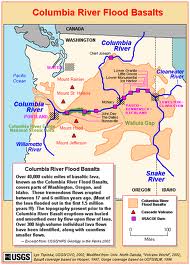
I’m just getting started. Last week I finished an excellent book about the Columbia River that I highly recommend, A River Lost: The Life and Death of the Columbia (second edition). The author, Blaine Harden, is an excellent story teller. It’s required reading if you live in the Pacific Northwest. The primary question raised by Harden is what’s the best way to operate the world’s largest hydroelectric system? Harden’s story centers on a confounding mix of economic interests, biological imperatives, and environmental values.
imgres

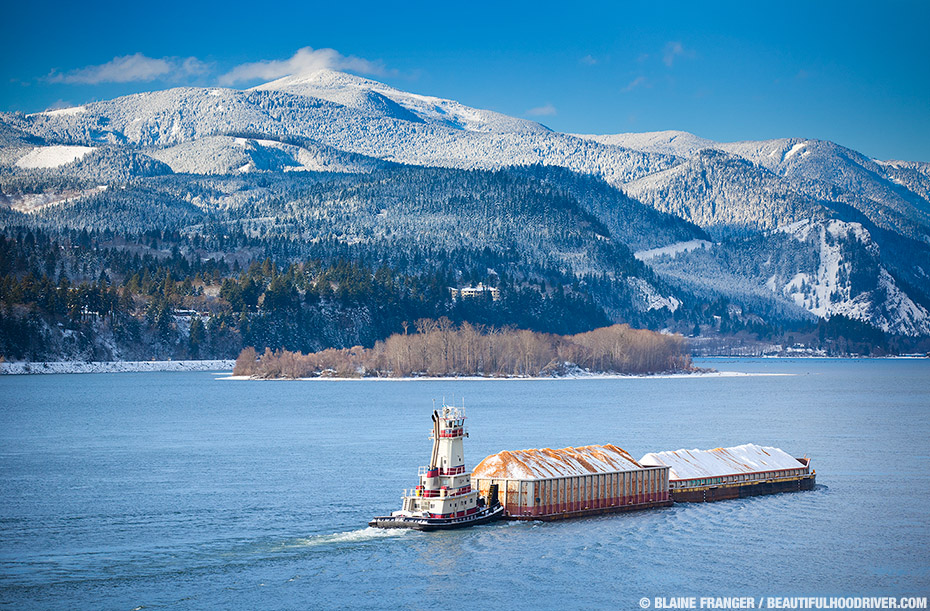
Most of the players in the drama defend the numerous dams that have turned the Columbia into a “machine river”—electric utility providers; irrigators and farmers; tow barge operators; boaters, windsurfers, and waterskiers; Google, Amazon, and Microsoft with their newish server farms; and elected officials and lobbyists who look out for the interests of utilities, irrigators, the internet goliaths, and other river users. The “other side” consists of Indians whose economic, nutritional, and spiritual lives were built around salmon, and fish biologists and Western Washington environmentalists who advocate for environmental restitution.

Students will research, debate, and decide among three possible outcomes:

  1. In the interest of maximum economic growth and inexpensive electricity, maintain the status quo of the “machine river”.
  2. In the interest of compromise and moderate economic growth, allow more water to flow over the dams thereby slightly reducing the total electricity available while simultaneously increasing the number of salmon in the river.
  3. In the interest of environmental restitution, the return of historic salmon runs, and revitalized Indian life, remove the dams and allow the river to return to it’s natural state.

Teachers will assess the relative thoroughness and thoughtfulness of each team’s proposed outcome. More specifically, they’ll be deciding which is most persuasive and why. Interestingly, this “Machine River” case study has real urgency because a federal court in Portland has given the National Oceanic & Atmospheric Administration until January 1, 2014 to submit a plan on how best to proceed. Many people whose livelihood’s will be dramatically effected by the outcome are anxiously awaiting the Court’s plan.
columbia_river_gorge_barge_snow_mg_8363_3

Even more challenging than evaluating the costs and benefits of the different possible outcomes, is extrapolating “lessons learned” from the Columbia to other river systems in other parts of the world. For example, Vietnam is upset that Laos is planning to dam the Mekong River. Here’s a question upon which I’ll base an “extension” or “enrichment” activity: Based on Columbia River “lessons learned”, how would you advise Laotians and Vietnamese officials to proceed on the Mekong River? Why?

Even more challenging than applying Columbia lessons to the Mekong is developing a set of principles for 21st Century development more generally. How can local communities, sovereign nations, and international groups maintain healthy economies without compromising natural environments? Or more simply, how do we build vibrant, sustainable communities?

I have more questions than answers. Which is the single best formula for revitalizing schooling.

580px-Grand_Coulee_Dam_Panorama_Smaller

Compared to Teaching, Charles Barkley’s Job is Easy

In a round about way, this provocative Selena Robert’s piece about Tiger Woods highlights what’s unique and especially challenging about teaching well. Robert’s quotes Brandel Chamblee, a former PGA Tour player who isn’t afraid to speak his mind and ruffle feathers. Most damning, Chamblee says Tiger extracts from the game but doesn’t give back to it.

Usually, the most popular analysts and critics—whether in sports, the arts, or politics—are extremely opinionated. People like analysts and critics who aren’t afraid to rip a failing player, actor, or elected official. In sports, Brandel Chamblee is simply following in the footsteps of Howard Cosell and Charles Barkley.

What the best teachers do 180 days a year is infinitely harder than what Chamblee and Barkley and other popular analysts and critics do. Teachers have to thoughtfully provide constructive criticism to young people with whom they work closely day-after-day. Young people whose self esteem is a work-in-progress.

Chamblee knows he’s never getting invited to Tiger’s pad to have dinner so what does he have to lose? When Sports Illustrated wrote about Michael Jordan’s gambling problem he never spoke to any of their writers again. Which of course made it even easier for them to be critical. It’s easy for analysts and critics to rip failing public figures from the safety of their websites, studios, and media stages.

Teachers, on the other hand, often have to tell students up close and personal that their work doesn’t measure up. And most challenging of all, students are sensitive in different ways and to differing degrees meaning teachers have to continuously tweak their message. The best ones challenge students to do better without crippling their confidence or harming their relationship. It requires a mix of respect, tact, diplomacy, and care that the public doesn’t understand or appreciate. I’m most successful at it when I lead with students’ strengths. Encouragement makes everyone more receptive to how they can improve.

Parents face similar challenges on a daily basis. They often have to tell their children, “Sorry, that wasn’t thorough, thoughtful, or responsible enough.” The most successful ones do it in loving and supportive ways that are educative. Their actions communicate, “I want you to become more competent and independent”  rather than “Don’t forget I’m in charge.”

Compared to the teachers at the school down the street from you, Brandel Chamblee’s and Charles Barkley’s television jobs are a piece of cake.

imgres

Continuous Improvement

A bullshit workplace notion. Midway into artistic or athletic activities, jobs, careers, relationships, life, we plateau. Shortly thereafter, energy ebbs, and our performance erodes.

We improve for a bit, we plateau, we decline.

I observed a good second year math teacher today at the independent middle school. Then we conferenced. After listening to him reflect on the pre-algebra lesson, I listed his many strengths. Then I made a few suggestions. Call on Ben as soon as he puts his head on his desk. Give Robin your marker, take her seat, and have her teach everyone her prime factorization method by illustrating it on the board. Have two more students explain and illustrate their methods and then ask, “Which is most efficient and why?” Let the kite string out a bit and “guide from the side” for awhile. Remember, the educative effect is greater when students do something than when something is done to them.

He told me he likes it when I observe because he’s reminded of effective teaching methods that he has let slip. He’s a good second year teacher who has started to plateau because he’s rarely observed, and rarely gets to observe other, more accomplished teachers.

A small number of the very best teachers, artists, athletes, and people continue improving considerably longer than their peers by seeking out expert, critical feedback; by investing progressively more time and energy; and by surrounding themselves by other positive, hardworking people, who are trending upwards.

And the wisest teachers, artists, athletes, and people have a sixth sense for both when they’ve plateaued and when their performance has begun to decline. And then the wisest, most selfless, most financially secure of them, step aside to provide the next generation opportunities to improve, plateau, and decline.

On Honesty, Rigor, and Success in College

Recently, I spoke to a group of AmeriCorp volunteers at Peace Lutheran in Tacoma, WA. Many were University of Puget Sound graduates working in K-12 classrooms and tutoring after school at the church. I was told they wanted to know the answer to two questions. What is learning? And how do students learn?

The fact that these whip smart young people didn’t think they knew the answers to those questions communicates a hell of a lot about schooling today. Specifically, too few teachers take time from “teaching to the standards” and “collecting and analyzing data” to think together with students about the learning process.

The cynic in mean assumes self-assessment and student-led conferences are en vogue because some policy analysts think they’ll lead to higher test scores. What’s needed is a genuine, substantive commitment to intrapersonal and interpersonal intelligence. Too few teachers “press pause on the class DVR” and ask what went well in today’s activity? What could have gone better? Which aspects of your group’s work went especially smoothly? Which parts were most challenging? When working with classmates, what do you do well? How do you know that? What could you improve upon? Why? What contributes to your learning? What thwarts it?

I asked the AmeriCorps to list a few meaningful things they’ve learned in the past. Looking for patterns and themes, I then asked them to reflect on how they learned them. “I’m learning how to cook,” one offered up, “by hanging out with roommates who are really good cooks.” We could have spent the entire two hours mining that gem of an anecdote.

When I turned to assessment, I implored them to honestly evaluate the quality of their high schoolers’ work. I said many of the secondary students they tutor get very good grades because they distinguish themselves by attending class regularly and turning in their work. Their simultaneous nodding communicated they understood this rarely talked about dilemma for many urban and rural poor districts and schools—you can’t fail the majority of your students, so students who attend and submit work get passing grades without nearly enough attention paid to the quality of their reading, thinking, math, and writing skills. Understandably, college admissions’ offices know and adjust for this, but that complicates those students’ transition to college.

Absent rigor, many students start to think of themselves as “A” students. But grade point averages can mislead. So it’s understandable that they’re sometimes devastated when they receive “C’s” on their first college assignments. Which is why I keep a box of kleenex handy in my office.

How can teachers, tutors, and parents help high schoolers come to grips with the fact that they may not be ready for college level work without those students giving in to a debilitating hopelessness? There’s no easy answer to that question, but passing students along without honestly assessing the quality of their work is inefficient and uncaring. Here are three starting points:

1) Impress upon them that their commitment to improving their skills is the single most important variable in determining whether they’ll catch up to their college bound peers and that closing the gap will take months and years of tireless work.

2) Invite successful college students from their community back to tell them that they too can overcome the same long odds if they commit to working hard and taking advantage of the resources available to them.

3) Make sure resources are in place, whether it’s well funded public schools, Peace Lutheran-like after school tutoring programs, or intensive summer remediation programs hosted by college campuses admitting first generation college students.

Hope I Can Believe In

Please don’t slam the door. This is not a political message. I wouldn’t do that to you at this stage of things. That would be like throwing snow balls on top of you while buried under an avalanche (of incessant mailings and recorded phone messages).

You’d enjoy visiting either of my Pacific Lutheran University Writing 101 sections titled “The Art of Living” because each has developed a fair amount of trust and they’re pretty darn thoughtful when discussing challenging, consequential, open-ended questions like: Does one need a philosophy of life? Why is it so difficult to maintain a sense of gratitude for what we hold most near and dear? And what’s the relationship between wealth and happiness?

I like teaching writing which makes me an outlier. Most of my colleagues probably don’t because you have to read a lot of papers of uneven quality and there’s no formula for teaching someone to write. Also, it probably wouldn’t be much fun if you lacked self-confidence in your own writing.

I like it because learning to write well is transformative. I would have written “life changing”, but as a writing teacher I have to avoid cliches. Also, Writing 101 faculty get to choose their own themes and 18-19 year olds are at a fascinating stage of life—neither child nor adult, neither dependent nor independent. First years have to make a steady stream of consequential decisions mostly by themselves.

That realization inspired my current course, “The Art of Living”, which is based on a series of weighty questions upon which reasonable people disagree. The course consists of the following subtopics—Philosophies of Life, Gratitude, Education, Vocation and Money, Family and Friendship, Wellness, and Aging and Death.

During one class activity, I shared that I’m the King of Nicknames, which immediately led one student to request one. As is often the case after bragging, I was off my game and resorted to a weak formula, first initial, first syllable of last name. Understandably, KMitch wasn’t overly impressed, but as it turns out, there’s some WRIT 101—11:50a.m. greatness contained in that formula—EBai (pronounced EBay), KBum, EJack, and ALutt (pronounced A Lute, PLU students, for reasons I doubt I’ll ever understand, are referred to as Lutes)

KMitch, EBai, KBum, Ejack, and ALutt have a choice for paper four. They can agree or disagree with Krznaric’s paragraph to ponder highlighted in my last post or describe a personal, week-long experience with voluntary deprivation. From the syllabus:

Irvine advocates voluntary deprivation or periodically forgoing opportunities to experience pleasure because it has a dark side. In his view, we should sometimes live as if bad things have happened and embrace hardships like not having enough money for life’s essentials. That way we harden ourselves against misfortunes that might befall us in the future. That way we extend our comfort zone, reduce anxiety about future possible discomforts, and learn to appreciate what we already have. Absent self- control, we’re unlikely to attain our life goals. Irvine also suggests that forgoing pleasure can itself be pleasant. In preparation for writing this paper, practice voluntary deprivation for a week or longer. Repeatedly forgo some opportunity to experience pleasure (e.g., warm showers, three daily meals, wearing shoes, being connected to the internet). Next, reflect on your experience and explain what you did, why, and what you learned from it. Also explain whether and why you’re more or less convinced of Irvine’s recommendation that people periodically practice voluntary deprivation.

I didn’t know if this class would fly. I wondered if the students would get into the texts, William Irvine’s A Guide to the Good Life and Richard Krznaric’s The Wonderbox. And would they make time to think and then share openly and honestly with one another? Fortunately, on both accounts, most have, most of the time. I probably benefit from how few weighty questions are posed in standardized test-crazed secondary schools today. And by how few dinner conversations crack the “news, weather, and sports” surface. The students seemingly appreciate the opportunity to think aloud about substantive stuff and to learn what their peers are thinking.

When it comes time to communicating substantive ideas on paper their two greatest challenges are using specific nouns in place of vague ones (the favorite is “things” and variations of it, something, everything, anything) and writing more concisely. My goal is to help them grow vagueness and wordiness antennae.

It’s a privilege to work with young people who give me hope in the future.

Homework Wars

French president Francois Hollande wants to ban homework. Borrowing from Slate:

Hollande suggested the take-home-study prohibition as part of his plan for education reform. The recently elected socialist party leader said “an education program is, by definition, a societal program. Work should be done at school, rather than at home.” He added that the homework ban was a matter of equality, since wealthier children have parental support at home and poor children do not.

When writing previously about teacher-parent relations, I failed to pinpoint homework as a major source of frustration and conflict. Even the GalPal and I, former public school teachers and teacher advocates, get frustrated with the constantly shifting nature of our daughter’s homework. Last year in 11th grade she spent two to four hours on homework nearly every night. This year, in 12th grade, with just a slightly less rigorous courseload, she typically has no homework.

Even though two-thirds of France opposes Hollande’s ban, he’s right that homework complicates equal educational opportunity. In schools that lack academic rigor and parental involvement, teachers start out assigning homework, overtime though, when a majority of students don’t do it, they quit assigning it. Which partly explains the achievement gap.

I’ve also observed in schools in poor communities where teachers sometimes only have one set of textbooks, meaning they can’t leave the classroom. In stark contrast, in the interest of back health and extended learning, a few of my daughters’ teachers checked out two texts per student so they could keep one at home and one in their school locker. So much for equal educational opportunity. And for equal opportunity more generally, the supposed lynchpin of American life.

You’re thinking let’s figure out how to raise the homework floor not lower its ceiling, and of course that makes more sense, but how do we raise the floor if a lot of children don’t have even one adult who knows and cares about whether their homework is completed?

To defuse the growing teacher-parent-homework divide, schools should stop leaving homework decision-making up to every individual teacher to do as they please. That’s what leads to extreme unevenness. Elementary school principals should help grade-level teams decide together on a philosophy of homework. Secondary principals should help academic departments do the same. Then grade-level teams and academic departments should work towards a consensus on a school-wide “Philosophy and Practice of Homework Guide” for parents and students.

And to reduce the number of tearful late nights, it would help if every teacher took time before the end of class to do the first ten percent of so of the assigned homework with students to make sure everyone understands it.

What’s the right amount of homework? The guideline I’ve always liked is ten minutes per night per grade, so an hour a night in sixth grade, and two hours in twelfth. However, parents will adjust to more or less if its purposes are clearly and convincingly communicated and they know what to expect in advance.

The sort of “Philosophy and Practice of Homework Guides” I’m recommending would also help parents make more informed decisions about where to enroll their children. Different guides will resonant with different parents’ educational philosophies.

I suppose there are two other ways to defuse the homework divide. One is to return to the 1970’s of my youth and build a “study hall” into students’ school schedules. Another is to put a proposed ban to a vote of the nation’s students.

The Rise of Expert Recommendations

Saturday night, after enjoying a falafel and pear cider with friends at Olympia’s Fish Tale Brew Pub, I read Washington State’s 39 page charter school initiative which will allow up to 40 public charter schools in Washington State over a five-year period. We’re one of nine states that doesn’t allow charter schools. Bill Gates and other charter school advocates are hoping the third time is the charm.

My reading was preparation for a forum discussion I was invited to lead Sunday morning at St. Mark’s Lutheran Church in Tacoma. My instructions were to take 20-30 minutes to provide some context for the initiative and then explain the arguments for and against it. Then the plan was to spend the remaining 30-40 minutes with the forty or so church members in an open-ended question and answer back-and-forth. I could have invited my right wing nut job of a neighbor who also happens to be one of my better friends. We’ve been debating the initiative during our early morning, pitch-black runs. That definitely would have been more entertaining, but I didn’t want to split the honorarium with him.

I was amazing. Like Fox News, “fair and balanced.” Today’s Tacoma News Tribune* probably describes my presentation as a Romney-Biden mix of preparation and passion**. I started with a joke. I said I think my wife came with me to make sure I wasn’t playing Chambers Bay—a golf course a few miles away, the site of the 2015 U.S. Open. Chuckles all around.

About five minutes into the larger context of education reform, the first hand, a middle-aged woman. “How are you going to vote?” What the heck I thought, I hadn’t even handed out the “Yes on 1240” and “No on 1240” handouts. “Like a good social studies teacher,” I said, “I think I’d like to wait until the very end to answer that.” “But I have to leave early,” she fired back. In the interest of maintaining some semblance of objectivity and suspense, I wiggled out of answering her. After I finished my presentation, an animated discussion ensued. With about ten minutes left, someone else popped the question. “So how are you ready to tell us how you’re going to vote?”

Since I still think like a social studies teacher, my initial thought was, come on people, don’t be lazy, think it through yourselves. But on the drive home, I thought about how I also depend upon expert recommendations. For example, when I first started thinking about how to invest my savings, I read John Bogle’s book, “Bogle on Mutual Funds: New Perspectives for the Intelligent Investor.” Here’s the updated version. Boggle turned me into a passive, index investor. He convinced me I wasn’t smart enough to invest in individual stocks or time the market. Instead of studying the financials of individual companies, I bought Vanguard mutual funds Bogle recommended.

That wasn’t laziness, it was thinking smarter, not harder. Increasingly, we’re all susceptible to information overload. We don’t have enough background knowledge or time to always learn enough to make perfectly informed decisions. So it makes sense to turn to connoisseurs. It makes sense to say to the egg-head education professor who knows public schools and spent Saturday night reading the initiative, “How should I vote?”

It’s a slippery slope though. It’s possible to be too dependent upon expert recommendations. Especially considering “experts” often have a vested interest in how you vote, invest, or spend money. Seconds after this Tuesday night’s Presidential debate, an army of political pundits will try to tell you what you should think about what you saw and heard. Odds are you and I and our democracy would be better off if we unplugged and talked to one another.

Modern life requires some dependence upon expert recommendations, the challenge is figuring out just how much.

At this point, my Washington State readers are wondering, how should they vote. I’ll make you a deal. There’s lots of things you know more about than me. Offer me an expert recommendation (via comments or email) and in return, I’ll tell you how to vote on I-1240.

* It appears as if the Seahawks amazing come from behind victory over the New England Patriots bumped our I-1240 forum from the front page.

** The Presidential and Vice-Presidential debates should be like an athletic tourney—win and advance. Romney and Biden advance to the winner’s bracket and Obama and Ryan to the losers. Given recent events, who wouldn’t want to see Romney v Biden. Then again, Obama v Ryan would be a real snoozer. Another idea. A tag-team format. Whenever you’re getting beat down you tag your partner and he comes to your rescue. Just like we used to do during especially rowdy sleepovers in grade school.

The Art of Science Teaching

Legions of teachers do amazing work with an incredible mix of young people every school day. Very few people are aware of just how amazing.

I’ve been hired by an independent middle school to help nine faculty strengthen their teaching, develop individual professional development plans, and map the school’s curriculum. Groovy stuff.

Last week I observed a former public high school science teacher who has a reputation for spending an inordinate amount of time in his classroom. A pro, who probably outworks every critic who think teachers have it easy, he spends his summers with other teacher leaders at a midwest university writing case studies and teaching other science educators how to teach them.

The class I observed was sublime. The unit is “Osmosis and Diffusion.” The case, based on true events, was titled “Agony & Ecstasy”. It revolved around three college friends who took their fourth friend to the emergency room after she started foaming at the mouth and shaking uncontrollably the morning after a party. The students assumed the role of the medical intern who had to figure out what was wrong with the sick woman. They thought of important questions to ask the friends, first by themselves, then with a partner, and then as a group. Had their friend been behaving oddly before the party? What was her prior medical history? Did she use alcohol or drugs at the party?

Eventually, the students learned they used Ecstasy at the party the previous night. After a short explanation of brain cells during which the teacher used his fingers, hands, and arms to illustrate how neuro transmitters work, the students logged onto Mouse Party, a University of Utah website designed for middle and high school students to learn about how drugs affect the brain. Using information found on Mouse Party the students filled out a data table on how Ecstasy works and listed what else they needed to know in order to figure out why the young woman was so sick.

Next the class will examine her blood work and learn about why salt/water imbalances lead to tissue and brain swelling. In the end, they’ll learn the young woman drank a tremendous amount of water to blunt the drug’s impact and suffered from hyponatremia.

This brief description of the class doesn’t begin to capture the teacher’s skill. He brilliantly tapped the students’ prior knowledge without getting bogged down on too many tangents, he grouped the students so that they’d work well together, he continually checked in on how each group was doing, and he modeled continuous learning by saying things like “I don’t know” and “You know what I’m curious about”. And he used technology so effortlessly that you may not have even thought about it had you been observing.

Best of all, he really wants my help in getting even better. And there’s always ways to improve. Every class, every day. Among a couple of other ideas, I suggested he “sell” the case better by putting one or more of the students names in it and by explaining that it’s an emergency situation so they have to work especially hard to solve it within two class periods. The only limit to enlivening it, I said, was his creativity. His eyes widened and he started talking excitedly about working with the theater teacher and incorporating props.

I had to wait to conference with him because Claire’s lizard had died the night before. He listened patiently, and repeated, “I’m so sorry.” He and Claire discussed the bad things that happen in lizards’ stomachs when they eat sand. He told her he was going to bring a lizard to the classroom so that her friend and her could have a positive experience. “What kind?” she asked. “A gecko lizard,” he explained.

She left without thanking him, but that didn’t ruffle his feathers. He’s used to it.

The 90% Preparation Principle

Forgive me for I have fibbed. At the end of the last post when I said I didn’t know how to build team chemistry. The post was plenty long and I needed to pull the plug.

One of the secrets to building team chemistry is the 90% prep principle. Any residential painter worth her weight will tell you painting is 90% prep. Come on, there’s some female house painters out there aren’t there? The 90% prep principle is why, when our crib needs painting, I write a check. Inadequate patience. But I digress.

The best elementary teachers apply the 90% prep principle at start of the school year. They figure, “Even if it takes around 10 days to build a sense of community and teach the rules and procedures, we’ll accomplish far more than we otherwise would over the remaining 170 days.” Visit a local elementary school at the beginning of the year and you’ll likely see some expert teachers calmly saying to their students, “Nope. Try again.” And then watch the students return to their seats and line up table-by-table for recess or lunch a second, third, and maybe fourth time. Equal parts firmness and kindness.

In the same spirit, the best leaders take time when their teams are first formed to build community and establish decision-making norms. Community building, of course, can take many forms, but the common thread is team members getting to know one another better. Horizontals embrace community building activities more than Verts. Very early on, agreed upon expectations and decision making processes are made explicit.

Savvy leaders know that maintaining team chemistry requires ongoing community building activities, whether shared meals, celebrations, or retreats. They also know decision-making norms need to be revisited on occasion. They know their team’s success depends upon members genuinely respecting one another.

Families, athletic teams, theater troupes, church councils, school faculty, government agencies, and multinational corporations that consciously build community and spell out decision-making norms enjoy greater espirit de corps, and experience far less in-fighting, complaining, and malaise. Consequently, they’re more productive.

There’s an alternative that lots of teams revert to, ignore community building and decision making norms and hope and pray the common work is engrossing enough that people get along just well enough, just long enough to finish the work. Like running on a balance beam on fire. Run fast enough and you might just get to the end without getting burned or falling off.

And now my friends I bring teamwork week to an end with some self-disclosure. I’m most often a Horizontal; however, not when travel planning with the GalPal. How can I put this so that she keeps taking trips with me? Her travel decision making process is a tad bit drawn out for even me. When having to decide on destinations, dates, modes of transpo, departure-arrival-return times, etc., I transform into a Vertical. When it comes to group decision-making, we’re all probably switch hitters of sorts.

Thanks, as always, for reading.

Why is Team Chemistry So Elusive?

Why do so many married couples divorce? Why are so many homeowners’ associations riddled with conflict? Why do so many parents involved in youth sports organizations butt heads with one another? And why is group decision-making so problematic for school faculty and other workplace teams?

Because everyone of us brings imperfect interpersonal skills to our teams. Multiply my social shortcomings and quirks with yours and the next women’s and the next guy’s and it doesn’t take long to understand why positive team chemistry and enlightened group decision making is so elusive. Every team of two or more are dysfunctional in different ways and to varying degrees.

Also, every team has an uneven mix of what I refer to as “Vertical” and “Horizontal” members. Verticals have little patience for processing others’ feelings, talking through differences of opinion, and consensual decision-making. They’re often quite comfortable with someone above them making unilateral decisions. In contrast, Horizontals prefer consensual decision making and the sometimes extended discussions they require. They’re sensitive to other members feelings and often distrust superiors to make unilateral decisions.

When a couple, community group, or workplace suffers challenges that result in hurt feelings, Verticals emphasize focusing on the present and “just getting back to work”. Before returning to work, Horizontals feel compelled to work through what went wrong and attend to team members’ hurt feelings. Trying to negotiate these different orientations becomes another challenge in and of itself.

So every team member is screwed up in his/her own way. And eventually, crises put extraordinary pressure on the team’s decision-making processes. Then some team members want to talk things through, others don’t, and those different perspectives add fuel to the fire. Is it any wonder that lot’s of couple’s divorce, the CIA and the FBI don’t get along, and some work environments turn toxic?

And there’s more. Many teams—whether couples, community organizations, or workplaces—aren’t nearly thoughtful or intentional enough about fostering understanding of one another’s unique contributions to the team effort and the mutual respect that engenders. Instead, a mutual sense of being misunderstood and under-appreciated spreads.

Add to that the fact that teams rarely, if ever, build in time to talk openly and honestly about decision-making processes. Which the Verticals are cool with, but not the Horizontals. For the Horizontals, when there’s little to no opportunity to reflect on decision making processes and surface the occasional hurt feelings, meeting fatigue sets in.

These multi-faceted challenges often overwhelm teams’ collective interpersonal skills. Which results in more resentment. Team members succumb to passive-aggressive behavior, not talking in meetings but complaining bitterly out of them, and walk around with invisible backpacks on, into which they repeatedly stuff hurtful exchanges from the near and distant past. Eventually, in the interest of self-preservation, they retreat to their own corner, cubicle, classroom, office. Making team chemistry even more elusive.

And now I should probably do what all bloggers are supposed to do if they want to grow their readership—help readers. Instead of bullshitting you though, I’m going to be honest. On this Sunday evening, my insights into team chemistry and decision-making dysfunction greatly exceeds my feel for promising fixes.

But I know for a fact that some of you are team leaders who know more about building and maintaing team chemistry than I do. And some of you are members of healthy teams who can offer helpful suggestions on how to maintain team chemistry—whether a couple, a small organization, or a ginormous company. Your turn.