What Home Buyers Get Wrong

Six months on in the new crib, I’m ready to educate my brother who is allegedly studying design. This is for him, but I’ve been posting so infrequently of late, feel free to eavesdrop. Bro, just send a check for whatever you think my insights are worth.

Home buyers focus too narrowly on total square feet, too often thinking the bigger the better. We moved to a slightly smaller home, but it feels larger because we regularly use much more of the total area. In other words, there’s no wasted space. And even though there’s less total square footage, the kitchen is quite a bit larger. The beauty of the kitchen layout is you can open every drawer and the dishwasher and the refrigerator and still have two-three feet all around. No more sucking everything in when moving the silverware from the dishwasher to the drawer. In fact, now there’s nothing stopping me from packing on an extra 40-50 lbs this winter.

Our new master bathroom is about 60% the size of our former one. And it’s perfect. That other 40% was wasted space for the purpose of what, a slightly higher sales price? The new one has just enough room to do everything comfortably, and when it comes time to clean, it’s a breeze because damn near everything is in reach.

Homebuyers don’t realize small things make a big difference. Especially when combined together. Case in point, dimmable lights. Mercy me, how did I live in an on-off world all those years? There’s nothing like entering the bathroom at 5:30a, flipping the switch, and being met by a faint pre-dawn-like light. Same when preparing to retire at night. There’s nothing like brushing one’s teeth under a faint post-sunset-like glimmer. Every light should be dimmable.

Another lesson. You can’t put a value on genuine quiet, and on natural beauty, and on the edifying result of the two combined.

Another lesson. You can’t have genuine quiet and natural beauty without sacrificing some community. There are always trade-offs. Long time readers of the humble blog will know I value community. Is sacrificing some community worth the return in quiet, natural beauty, peace? Stay tuned, time will tell.

What else do home buyers get wrong?
 

Paragraph to Ponder—Trump Downward Spiral Edition

If you’re like me, the worse Trump does, the better you feel about the country’s future. So despite it being gray outside, I woke up Saturday a bit more bullish about things. But thanks to John Cassidy of The New Yorker for the proverbial, political science slap in the face:

“Another argument you hear from Trump supporters, and even from some nervous Democrats, is that the polls might be understating his chances. That could be the case if pollsters are systematically underestimating the likely turnout among groups who like Trump, or they are systematically overestimating the likely turnout among groups supportive of Clinton, or both. It’s also conceivable that some Trump voters are reluctant to reveal their support for him to pollsters. These sorts of things can happen. Look at Brexit. Most of the polls in Britain got that result wrong, partly because their assumptions about turnout turned out to be mistaken.”

Ta-Nehisi Coates on O.J. Simpson

I hadn’t yet learned that black people are not a computer program but a community of humans, varied, brilliant, and fallible, filled with the mixed motives and vices one finds in any broad collection of humanity. More important, I did not understand the ties that united Simpson and the black community. When O. J. Simpson ran from justice, returned to it, was tried for murder, and eluded justice again, it was the most shocking statement of pure equality since the civil-rights movement. Simpson had killed Nicole Brown Simpson and Ron Goldman. I suspected that then, and I am sure of it now. But he’d gotten away with it—in much the same way that white people had killed black men and women for centuries and gotten away with it.

The essay in its entirety.

How To Win The Presidential Debate

Recognize most people watching have a built-in wariness of anyone wanting to “run” the country because the ambition needed to apply for the job is mind boggling. Many wonder, what kind of person thinks they’re qualified to lead the country? Most, understandably conclude, only a serious ego-maniac. Therein lies the challenge. Ego-maniacs make poor leaders because effective leadership requires humility and the ability to respect and work with diverse groups of people.

Broad policy ideas are important, but the details are likely to be forgotten in a few days time. Don’t trot out any preplanned lines that you hope are especially memorable because the most successful one-liners are always a mix of spontaneity and authenticity. If you’re focused and lucky, the spirit of spontaneous, authentic, memorable lines may strike you at some point. That’s the best you can hope for.

To gain respect of voters, choose self respect over political science, and refrain from counter-punching when attacked. Convey a sense of gratitude for the opportunity to serve the nation.

Present the most positive vision for the country and you’ll win the debate. More specifically, present the most convincing plan to continue closing the gap between our stated ideals and challenging realities and you’ll win. Convince voters you have the necessary mix of character, confidence, and humility to improve people’s quality of life, and you’ll win.

I’ll be watching.


Sentences to Ponder

Emma Brown in the Washington Post:

A growing number of California teachers have started driving for Uber on weekends and in the evenings, the Nation reported this month. In San Francisco, the average teacher would have to spend two-thirds of her salary to afford the city’s astronomical median rent of $3,500, according to the San Francisco Chronicle.

Adult Onset Seriousness

Playfulness is a wonderful attribute. One I’d like to revive.

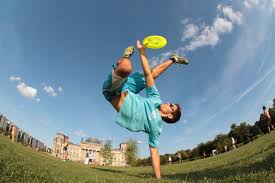
Last Thursday afternoon. Lunch swim workout in the books. Walking across Foss Intramural Field back to the office. One of those perfect, sunny, 60-ish, post summer/pre-fall September days in the Pacific Northwest that you wish you could bottle. Frisbees filled the air.

Somewhere between young adulthood and adulthood I stopped playing frisbee. I used to be a SoCal legend in my own mind. At SoCal beaches my signature move was to huck it way above the waves like a boomerang into the onshore wind and then, hours, minutes, maybe 15 seconds later, catch it to the delight of hundreds, my girlfriend and a few other friends, myself. I don’t think our frisbee even survived the recent move.

Somewhere in adulthood I stopped playing, not just frisbee, everything it seems. Yes, swimming, running, and cycling can be child-like activities, but not the way I tend to do them. I train. I have distance and time goals. And tiny gps-enabled computers and apps that tell me how far, how fast, and many other things in between. Yesterday I ran home from church, 7.5 miles in 56 minutes and change, for a 7:30/m average (first half, downhill). At one point, I saw two good friends walking the opposite direction. We said “hello”, and even though we haven’t talked for a month, I kept going. You know, the average pace and all.

Hell, I don’t even PLAY golf anymore. And I’m not alone. Do any adults ever think “What a nice day, I should ask the rest of the office to chuck the frisbee for awhile.”? And yet, nothing is more natural for young adults on college campuses than to stop and play.

How to cultivate a playful spirit? What might my swimming, running, and cycling look like if I approached them as play? What about other non-work activities?

Before you suggest low hanging fruit like mountain biking, you should know I sometimes struggle staying upright even on intermediate trails. With that caveat, I’m open to any other suggestions.

What do you do, if anything to maintain a sense of playfulness?

imgres

The “Secret” to Success

Apart from my good looks, unusual charm, and cardiovascular health, there’s nothing exceptional about me. I did well in school and I’ve done okay in life for one primary reason. Growing up I had a gaggle of caring adults around me who I didn’t want to disappoint. Teachers, older siblings, coaches, mom and dad, youth pastors, family friends, mom and dad.

Most kids who do poorly in school and/or life are just as capable as I was, they simply lack the network of supportive, caring adults. “If no one gives a shit,” they often end up thinking, “why should I?”

The Answer gets it:

“That’s the only thing that got me here is my teammates. My teammates and my coach. That’s the only reason I’m here. All those guys sacrificed their game and sacrificed different things for me to be honored like this and what I’ve done. Without them, it wouldn’t have happened. Without my coaches putting me in a position to succeed … Larry Brown molded me into an MVP and a Hall of Fame player. Without those guys I wouldn’t be here. Without those guys, man. I didn’t do this by myself, man. It was so many people, so many fans that came in there and cheered for me, night in and night out. So many people supported me and believed in me. They made it so easy for me to believe in myself because I didn’t want to let them down. I wanted my fans and my family and my friends to be proud of me.